How did everything work this year?

This is one of my favorite times of year.  It’s not the cool temperatures, the fall colors, or even the fall migrations of birds and insects coming through.  Instead, I like this time of year because it’s time to figure out how this year’s prairie management worked and start planning for next year.  Closing that adaptive management loop (gleaning lessons from one field season and applying them to the next) is really fulfilling for me.  I get to learn something and then put it right to use.  The only downside is waiting another year to see how things turn out again!
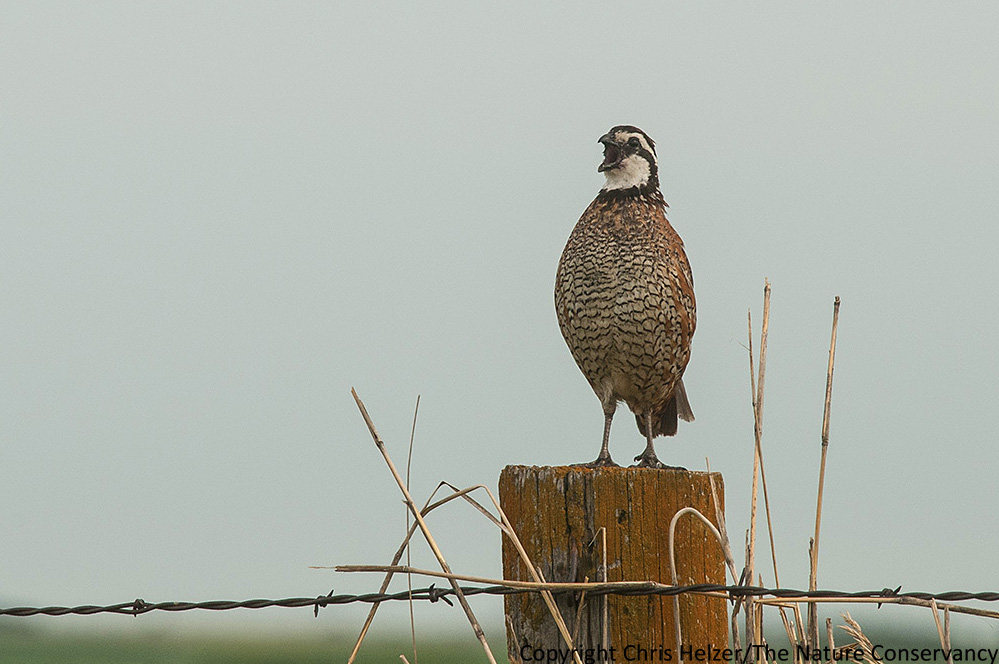
Northern bobwhite on fence post. Helzer family prairie near Stockham, Nebraska.

This northern bobwhite was calling from a fence post along the edge of our prairie earlier this summer.  Bobwhite are abundant in our prairie, probably because of the wide variety of habitat types available.

Earlier this week, I walked through our family prairie and tried to capture the results of 2015.  I wasn’t collecting data.  Instead, I took a few photos, wrote a few notes, and looked back at some photos and notes from earlier in the season.  I mainly tried to measure what I saw against the basic habitat objectives we have for our prairie.

Helzer Prairie Habitat Objectives

1) HABITAT HETEROGENEITY.  Provide patches of habitat that cover the spectrum from short/sparse to tall/dense vegetation, with areas of mixed-height structure in between.

2) PLANT DIVERSITY.  Increase plant diversity over time by allowing all plant species a chance to bloom and reproduce every few years, and periodically suppressing grass dominance to allow wildflowers a chance to maintain or expand their “territories”.

In general, I was pretty happy with what I saw this week.  There was definitely a wide range of habitat structure across the prairie.  We began the season by grazing most of the prairie pretty hard to knock back the vigor of smooth brome.  After that, we put the cattle into about 1/4 of the prairie for the month of June and then gradually gave them access to more of the prairie as the season progressed until they were grazing about 3/4 of the site by September.
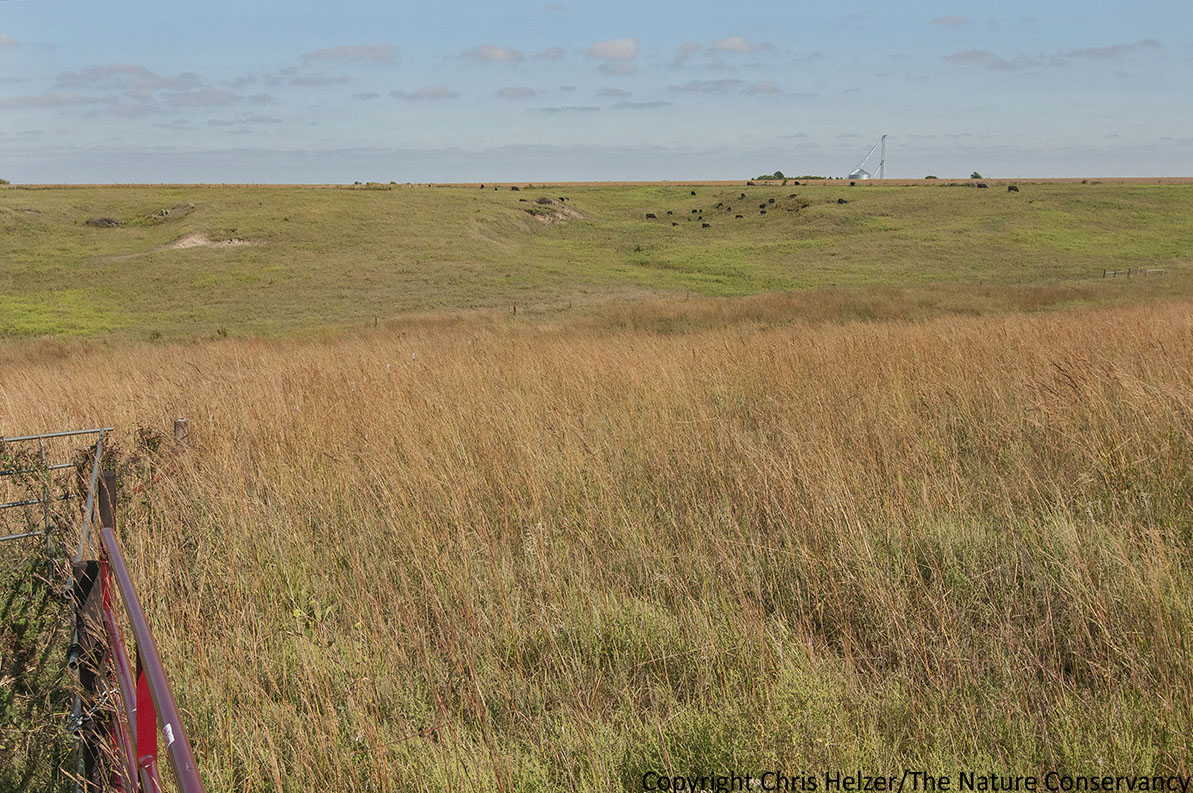
Helzer prairie grazing. Pasture #2 se of water tank

This photo from earlier this week shows the contrast between the area in the foreground that hasn’t been grazed since May and the background where cattle have been grazing since late July.

Helzer prairie grazing. Pasture #1 nw of water tank

Some of the areas opened up to grazing late in the season weren’t grazed very hard because the grass was pretty mature by the time cattle came in.  However, the cattle did graze in patches, and also knocked down the vegetation as they walked around – altering the habitat and making it easier for both wildlife and people to walk through.

The grasses in the 1/4 of the prairie we grazed in June stayed short all season, and many of the wildflowers were also cropped off.  However, some of those wildflowers had a chance to grow back as we spread the cattle out across a larger area and they became more selective about what they ate.  Other plants went ungrazed, or only lightly grazed, all season.  As a result, the habitat structure was a mixture of short grasses and medium to tall forbs.  In July, I found a family of upland sandpipers feeding in that part of the prairie – their still-flightless chick searched for insects in the short grass while staying near the protective cover of the taller forbs.
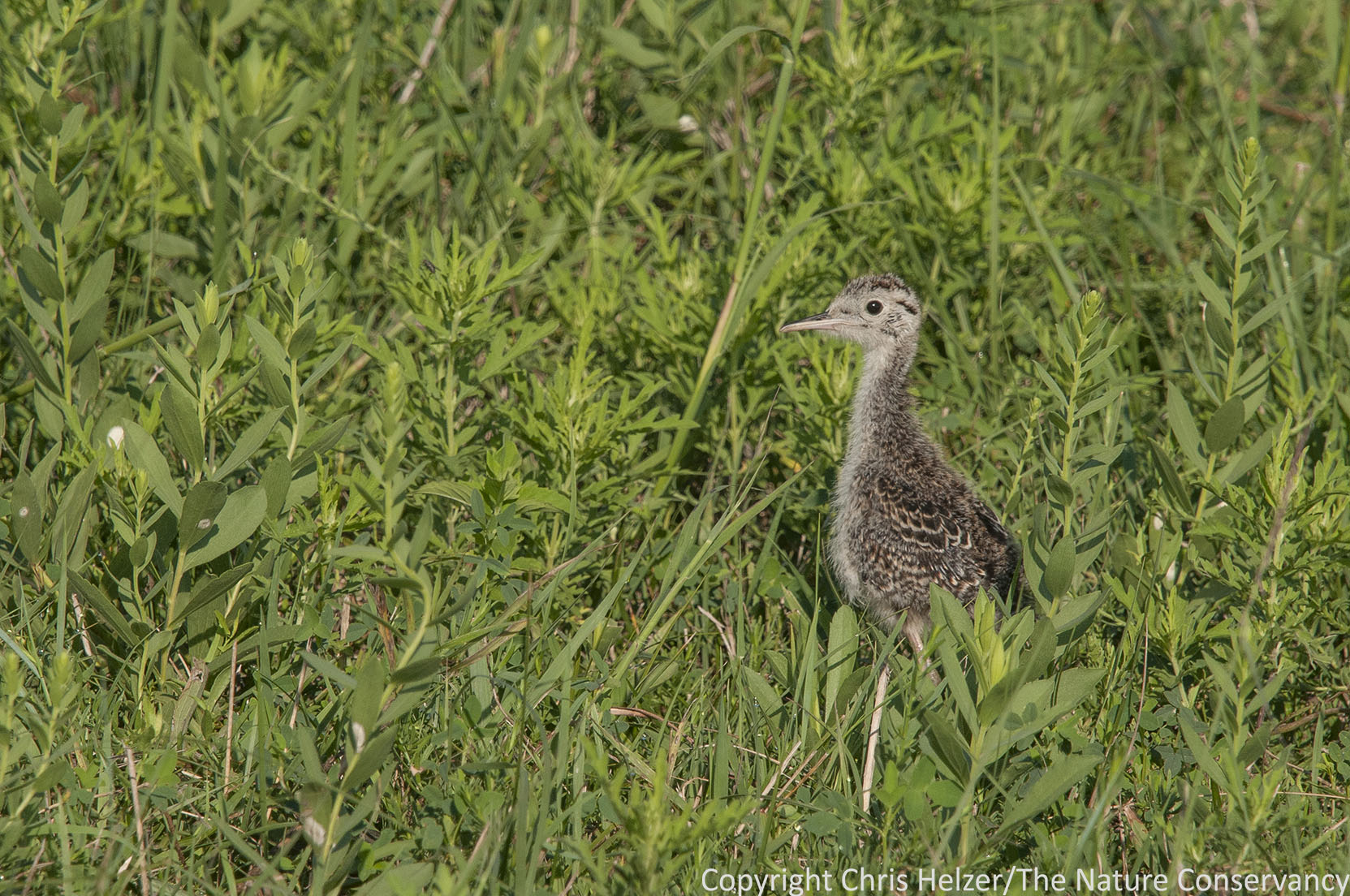
Young upland sandpiper. Helzer family prairie. Stockham, Nebraska. USA

This young upland sandpiper and its parents were enjoying a part of the prairie where cattle had been grazing most of the season, keeping grasses short but allowing some forbs to grow tall.  The chick could feed in the open but remain close to protective cover.

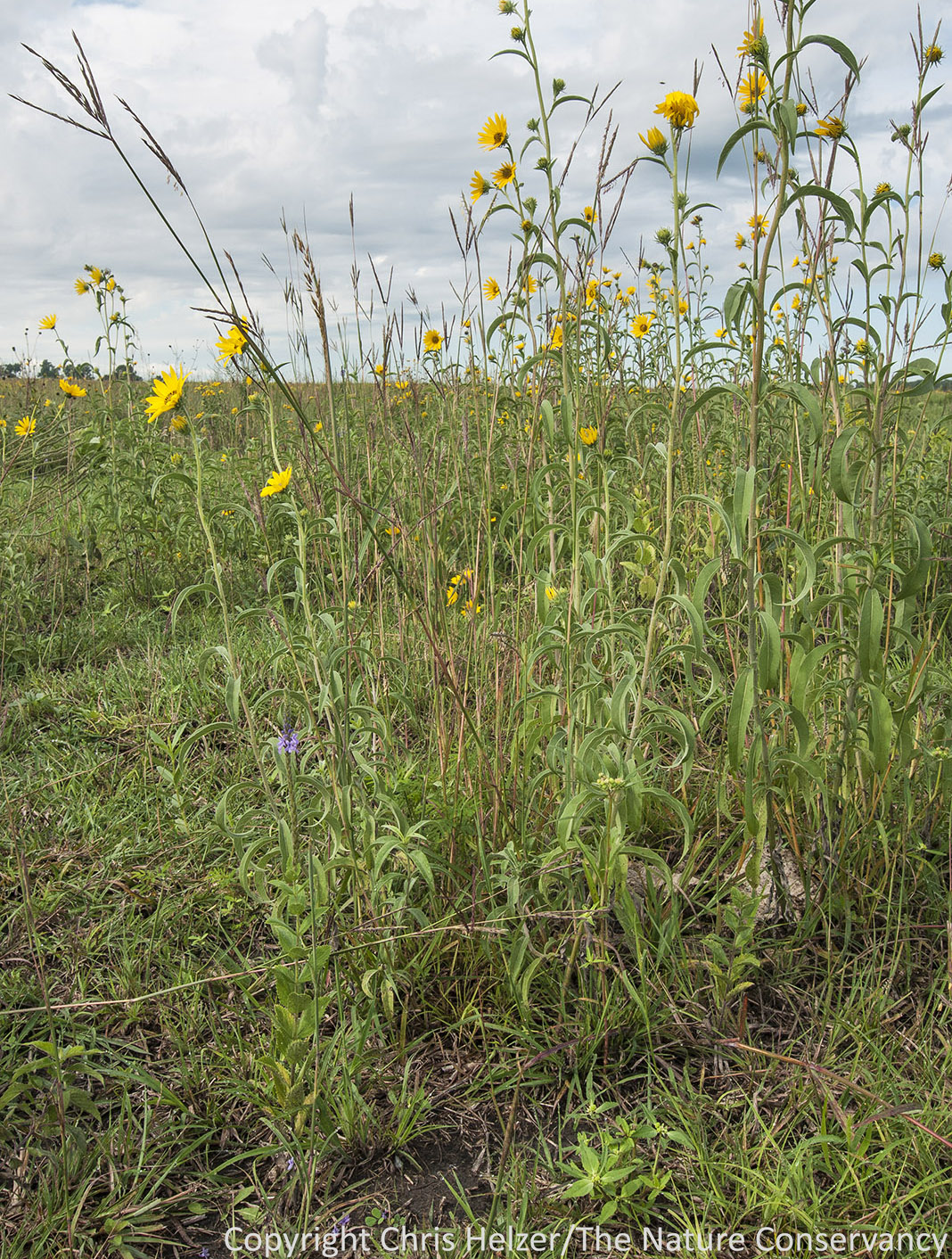
Elsewhere in the prairie, the height and density of the vegetation varied by how much grazing pressure it received.  Areas that were rested much of the year were dominated by tall warm-season grasses, while areas grazed from July through September had much shorter vegetation.  Despite the fact that we’re still trying to boost plant diversity across the site (which consists of small prairie remnants surrounded by former cropland planted to grasses by my grandfather in the early 1960’s) there were good numbers of wildflowers blooming through the whole season.  In the more intensively-grazed portions, only a few species such as hoary vervain (Verbena stricta), ironweed (Vernonia baldwinii), goldenrods (Solidago sp.), native thistles (Cirsium sp.), and other species panned by cattle were flowering.  However, there were many other wildflowers blooming across the rest of the site, including purple prairie clover (Dalea purpurea), leadplant (Amorpha canescens), stiff sunflower (Helianthus pauciflorus), several milkweed species (Asclepias sp.), and many others.  The most abundant wildflowers were found in the portions of the prairie the cattle had grazed intensively in 2014 – grass vigor was still suppressed in those areas, allowing both “weedy” and “non-weedy” forbs to flourish.
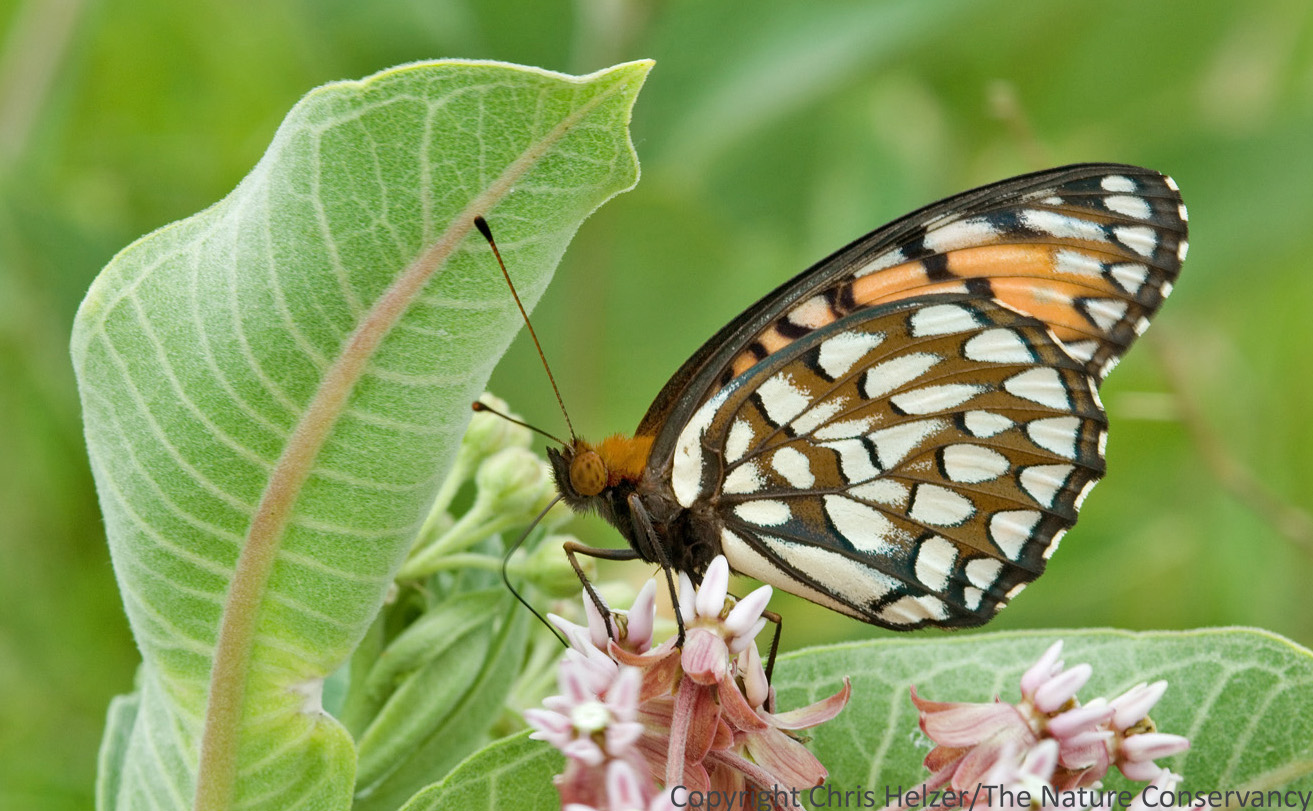
Regal fritillary butterfly on milkweed at Helzer prairie, south of Aurora, Nebraska.

Regal fritillaries and other butterflies are common in our prairie. I photographed this one a few years ago as it was feeding on common milkweed in part of the prairie was only lightly grazed that year.

During 2015, just about any animal species should have been able to find what they needed in our 100 acre prairie.  Regal fritillaries had violets for their caterpillars and monarch butterflies had milkweed for theirs – and both found abundant nectar plants, including in the most intensively-grazed areas.  The varied vegetation structure supported a wide range of grassland nesting birds, including grasshopper sparrows, upland sandpipers, western meadowlarks, northern bobwhites, dickcissels, sedge wrens, and others.  Small mammal trails were abundant, as were burrows of the badgers and coyotes that hunt those mice, voles, and ground squirrels.  Best of all, there were myriad bees, grasshoppers, katydids, prairie cicadas, spiders, and countless other invertebrates doing their jobs to support and nourish the plant and wildlife communities.

I haven’t yet worked out all the details of next year’s management plans, but I know a few things.  The portions of the prairie that were grazed hardest this year will be rested for most or all of next season.  We’ll likely bump the cattle stocking rate up a little because of this year’s abundant rainfall and strong grass growth.  I’ll try to make sure cattle have early summer access to the areas where I saw lots of first-year sweet clover plants this year – grazing those areas will greatly reduce flowering and seed production.  Finally, I’m thinking about letting the cattle stomp around for a week or two in one of the wet areas they’re normally excluded from because the vegetation is getting excessively thick there.

I’ll meet with my grazing lessee (the guy who owns the cattle) in late fall or early winter.  Between now and then, I’ll likely change my mind several times about some of my plans and come up with some new ones.  Next season we’ll make adjustments on the fly as we see what happens with rainfall, grazing behavior, invasive species, and all the other factors that influence management decisions.  Then, about this time next year, I’ll be walking around the prairie, trying to interpret the results of all those ideas and adjustments.

…and I’ll be having just as much fun as I am now.
What I Look For When I Walk Through My Prairies

Back in August, I posted some questions to readers about what they look for when evaluating their own prairies.  I got some excellent responses, which I really appreciated.  If you missed them, you can re-read that post and those comments here.

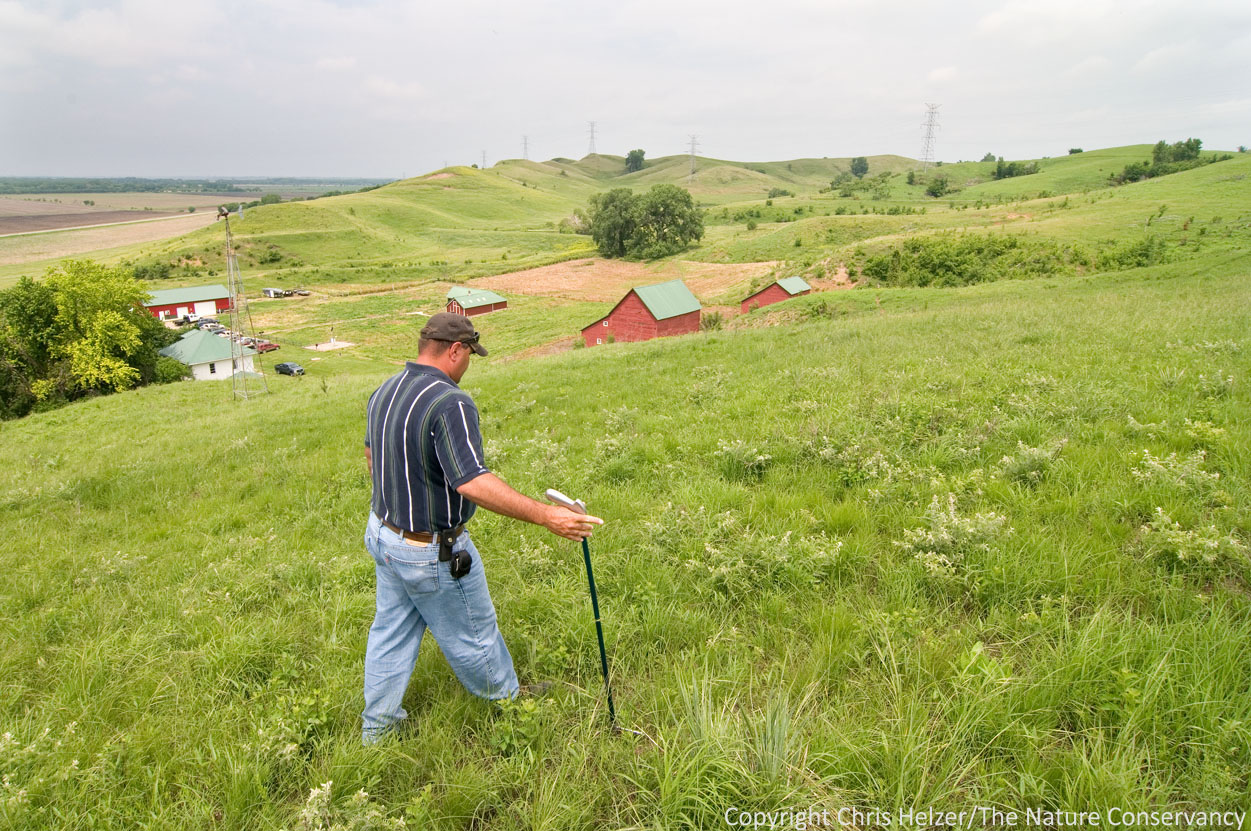
Walking around a prairie and getting a read on what's happening is probably the most important part of prairie management.  This is Scott Moats, The Nature Conservancy's Broken Kettle Grasslands, Iowa.

Walking around a prairie and getting a read on what’s happening is probably the most important part of prairie management. Scott Moats, The Nature Conservancy’s Broken Kettle Grasslands, Iowa.

As a follow up to that, here is more detail about what I think about as I walk around my family prairie, or one of our Platte River Prairies.  Of course, sometimes I just hike around and enjoy the day, but this post is about what I focus on when I’m evaluating our management and considering ideas for next steps.  We collect some relatively formal data on some sites, but most of our management decisions are really based on the kind of observation and evaluation I lay out here.  I’m certainly not trying to talk you into doing exactly what I’m doing – especially because what I look for is tied to my particular objectives, not yours.  Instead, I’m hoping that I might spark some ideas you can incorporate into your own decision making processes.

To start with, the basic objective at both my own prairie and those I help manage professionally is the same.  I want to provide a shifting mosaic of habitat structure patches (short, tall, mixed-height, etc.) so that the quilt pattern of those patches looks different each year.  I assume that a dynamic management regime like that will support high plant diversity because it doesn’t allow static conditions that allow a few plant species to become dominant.  I also assume that those shifting habitat patches will facilitate a healthy community of insects, birds, mammals, reptiles, and other life – above and below ground.  These are not blind assumptions; they are based on my own experience and research, along with that of many others.  (You can read more about those assumptions here.)

Grazing can create very important habitat structure such as this short grass/tall forb habitat at our Platte River Prairies.

Grazing can create very important habitat structure, including this short grass/tall forb habitat at our Platte River Prairies.  This habitat allows for easy movement along the ground, but provides plenty of overhead cover as protection from predators and the hot sun.

Not surprisingly, the first thing I look for, then, as I walk around a prairie is the pattern of habitat structure.  I hope to find the full range of variation, from tall and dense vegetation to almost bare ground.  Even more importantly, I want to see some of the important intermediate habitat types – especially short-cropped grass with tall forbs (wildflowers), which is incredibly important for many wildlife and insect species.  If I can find all of those habitat types, and they’re in different places than they were last year, I feel pretty good.

Next, I look at the plant community.  Plant diversity is an important foundation for invertebrate and wildlife diversity, so I want to see a rich diversity of plants as I walk around.  I also want to see that diversity at both large and small scales.  Across the whole prairie, I’d hope to find at least 100-200 plant species (though I certainly don’t count them every time) but I should also be able to count at least 10-15 plant species within arms’ reach if I kneel on the ground.  These numbers vary, of course, based on geography, soil type, etc., so they may or may not be reasonable at your particular site.

As I look at plant diversity, I want to see habitat patches with an abundance of “opportunistic” plants.  These are species that thrive in the absence of competition.  Depending upon your point of view, you might also call them “colonizers” or even “weeds”, but when they are abundant, it means that nearby dominant plants have been weakened.  We try to periodically knock back the vigor of dominant plants (especially grasses) through fire, grazing or mowing, to help less dominant plants maintain a foothold in the plant community.  A flush of opportunistic plants is an indicator of success because it shows that we successfully opened up that space and other plants are taking advantage of it – and not just the weedy ones.  Finding seed heads, and even new seedlings, of slower-to-colonize plant species (purple prairie clover, entire-leaf rosinweed, leadplant, etc.) within those weedy patches makes me feel even better.

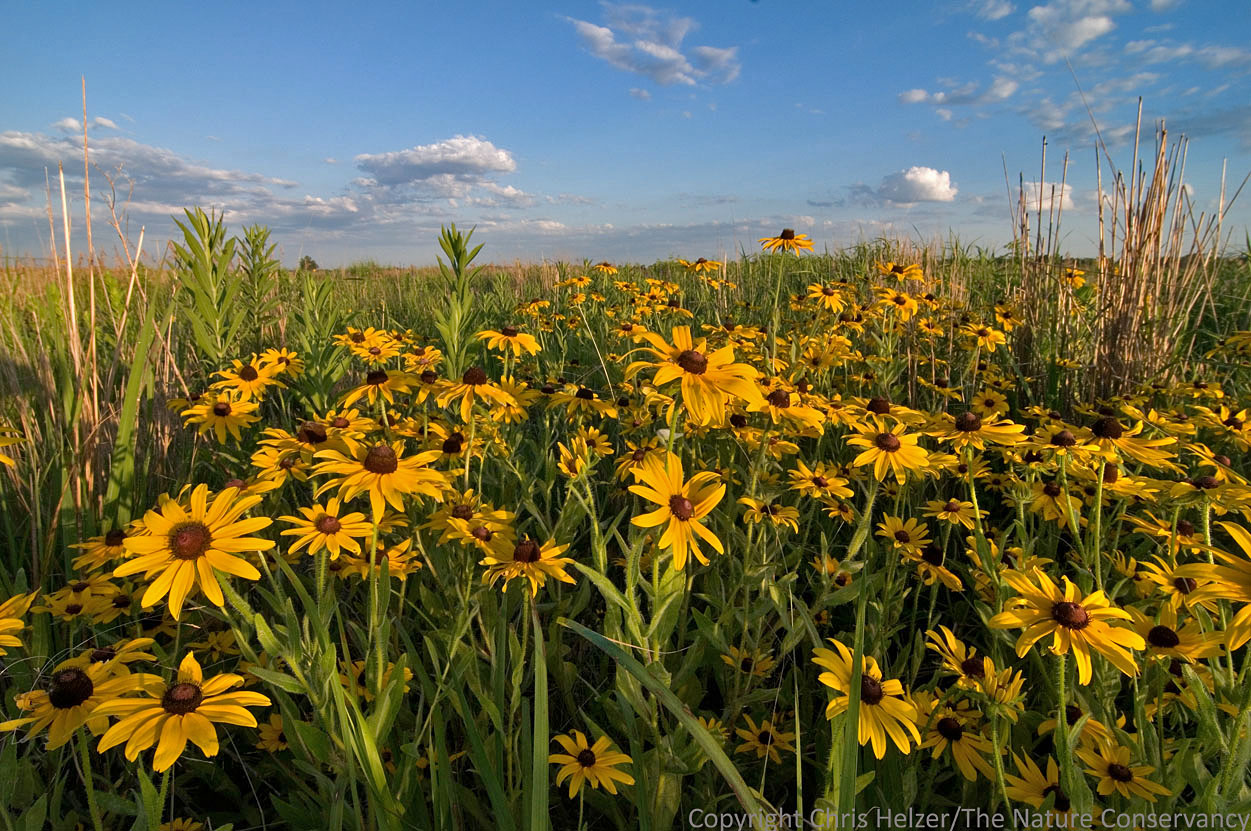
Black-eyed susan  is a showy example of an opportunistic plant species that thrives when surrounding vegetation is weakened.  Other species I look for include ragweeds, hoary vervain, annual sunflowers, ironweed, ragwort, annual thistles, and many others.

Black-eyed susan is a showy example of an opportunistic plant species that thrives when surrounding vegetation is weakened. Other  opportunists I look for include ragweeds, hoary vervain, annual sunflowers, ironweed, ragwort, annual thistles, and many others.

In sites where cattle are present, I spend time looking at what they’re eating and not eating, as well as which parts of the prairie are being grazed most and least.  In our patch-burn grazed prairies, we expect most grazing to take place in recently-burned areas, so I check to see if that’s happening.  Often, cattle target their favorite grass species first and then graze wildflowers only if they’ve already eaten the best parts of those grasses.  If I see something other than that pattern, it can tell me a lot about our stocking rate or other issues – not necessarily in a bad way.  There are also a few plant species that our cattle can’t seem to resist (some milkweeds, rosinweed, Canada milkvetch, and spiderworts) and we like to make sure those species get a release from grazing pressure every few years.  As a result, I pay special attention to whether or not – and how intensively – those plants are being grazed.  If I notice that they haven’t been allowed to grow and bloom for a few years, it’s time to change up our management and give them a rest.

The other group of plant species I look closely at is invasive species.  At our sites, invasive grasses such as smooth brome, Kentucky bluegrass, tall fescue, and others get special attention because of their ability to form monocultures, but there are plenty of others to watch as well.  I look not only at the current abundance and density of invasive plants, but also compare what I’m seeing to previous years to see how things are changing.  Finally, I pay attention to whether or not there are conditions that appear to be giving invaders an advantage.  For example, it would be important to know if cattle are grazing all the plants EXCEPT those invaders, allowing them to encroach upon weakened competition.

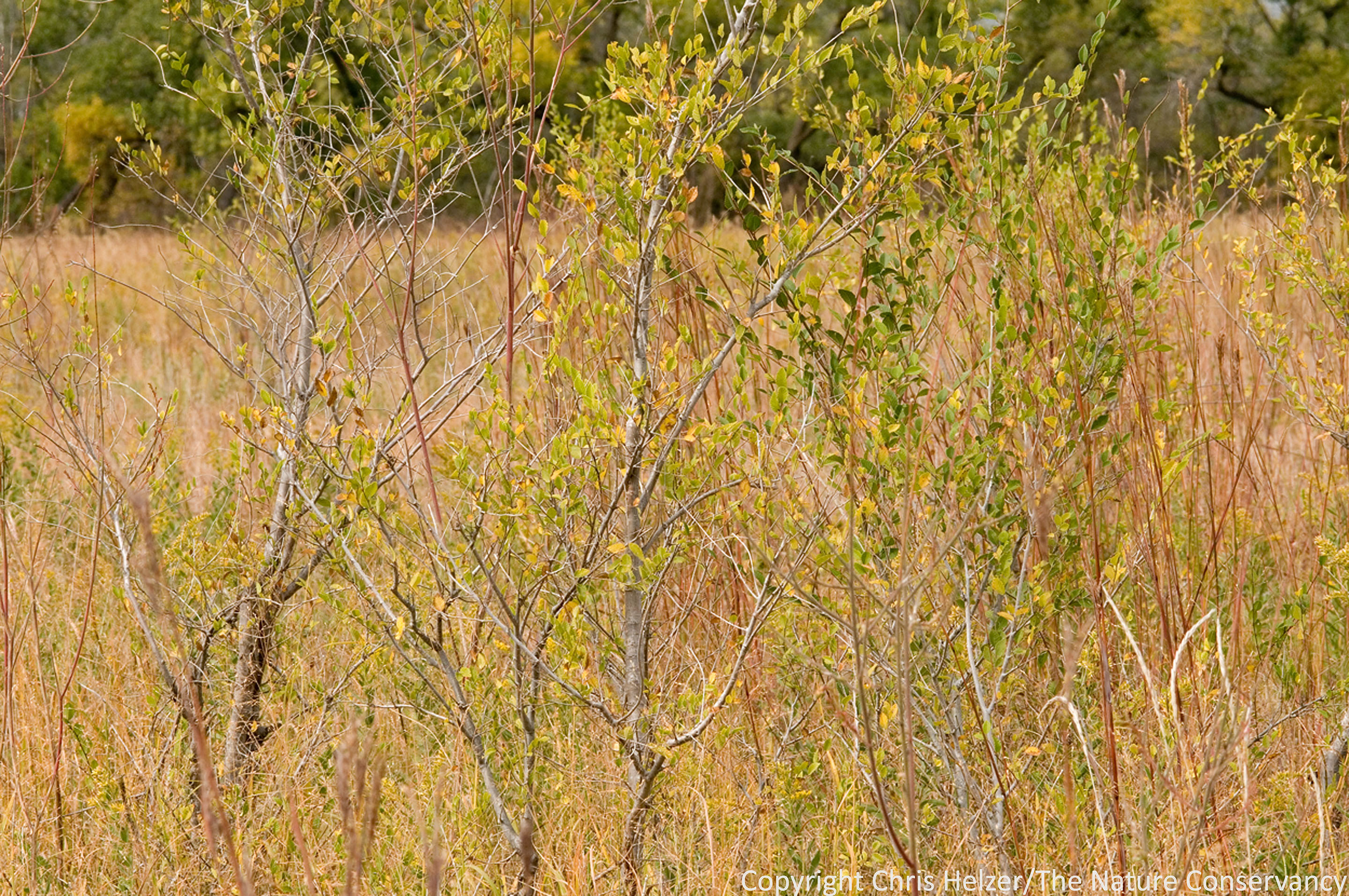
Siberian elm trees are a major pest in our prairies, and one we track closely and try to keep up with.

Siberian elm trees are a major pest in our prairies, and we have to be careful not to fall too far behind in our control efforts.

Field notes and photos are really helpful when trying to decide whether populations of invasive species are expanding or not.  They can also be helpful when comparing grazing impacts, responses from opportunistic plants, and other interesting phenomena.  I sometimes flip back to last year’s notes while I’m in the field to see if there’s anything I saw then that I should pay attention to.  Then, when I periodically enter my field notes into the computer, I can look at all the notes from other years and look for patterns.  I don’t take extensive field notes, but try to write enough to be useful.  (See here for more on field notes).

As I continue to learn more about the way various animal and invertebrate species see and utilize prairie habitat, I’ve gotten better at looking our prairies through the eyes of those species.  I wrote about wearing “bee goggles” a while ago, but I also try to step back and think about what life would be like in our prairies if I was a grasshopper, mouse, coyote, or other species.  Could I find food all year round?  Are there places to feed/hunt or hide/escape?  If the habitat I’m living in changed dramatically because of fire or grazing, would I be able to find and travel to other habitat nearby?  It’s a really interesting exercise, and helps me think about habitat needs in new ways.

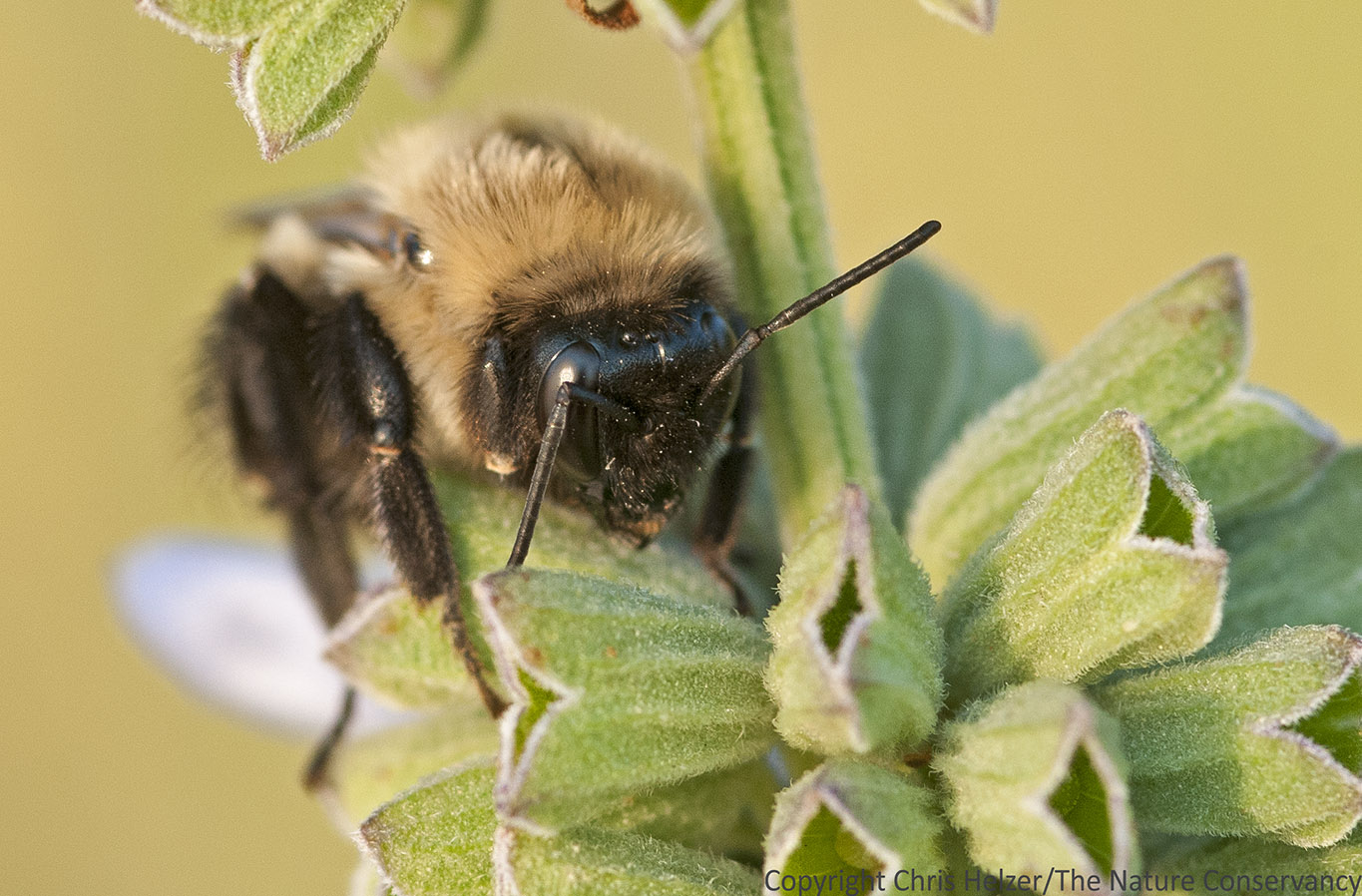
Looking at a prairie through (cute!) eyes of bees or other species is a great way to broaden your perspective.

Looking at a prairie through the eyes of bees or other species is a great way to broaden your perspective.

Finally, I try to look across the fences and note what is happening on neighboring lands.  In some cases, the prairie I’m walking in is the only real prairie habitat in the neighborhood, so it really needs to provide everything for every species living in it.  In other cases, there is more grassland habitat nearby, and I can think about how our prairie can help supplement and complement what’s available in those other sites.  For example, if all the neighbors graze pretty intensively, I might prioritize tall vegetation structure a little more than if that was the predominant habitat in the neighborhood.

So there you go – a quick look inside my head, for what that’s worth.  As I said at the beginning, what you look for should be tied to your objectives, but I also enjoy tagging along when other prairie managers walk their sites because I learn a lot from how they think.  I’d love to hear how similar or different my thought processes are from yours.