
At the beginning of the 2025 growing season, I picked out three sites I could visit repeatedly to photograph/document how a prairie responded to having been grazed the previous year. That turned out to be overly ambitious, but I did manage to focus on one of those sites – an 80×80 foot square marked out at our family prairie – and visited it frequently throughout 2025. I really enjoyed the project and happy to finally share a lot of my favorite photos from it.
One of the reasons I wanted to do this project is that many people have very limited experience with “conservation grazing”, or grazing that is aimed at achieving particular conservation objectives. That’s understandable if your only exposure to cattle grazing comes from seeing overgrazed pastures. As with most things, there’s a lot of variety out there. While it’s not hard to find examples of poorly-grazed grasslands across the Great Plains, there are also countless examples of very thoughtfully-applied grazing that create both good habitat for wildlife/pollinators/plant communities and profitability for ranchers. It’s important to highlight those examples and show that prairies can thrive under well-managed grazing.
Grazing has long been a significant component of prairie ecology. Today, it is still an important part of many prairies, particularly in the Great Plains. Grazing can be used to influence the competition between plants and determine the composition and diversity of the plant community. It can also shape habitat structure, creating areas of short, tall, and patchy vegetation, respectively. A mix of those various habitat types supports a diverse community of animals – large and small.
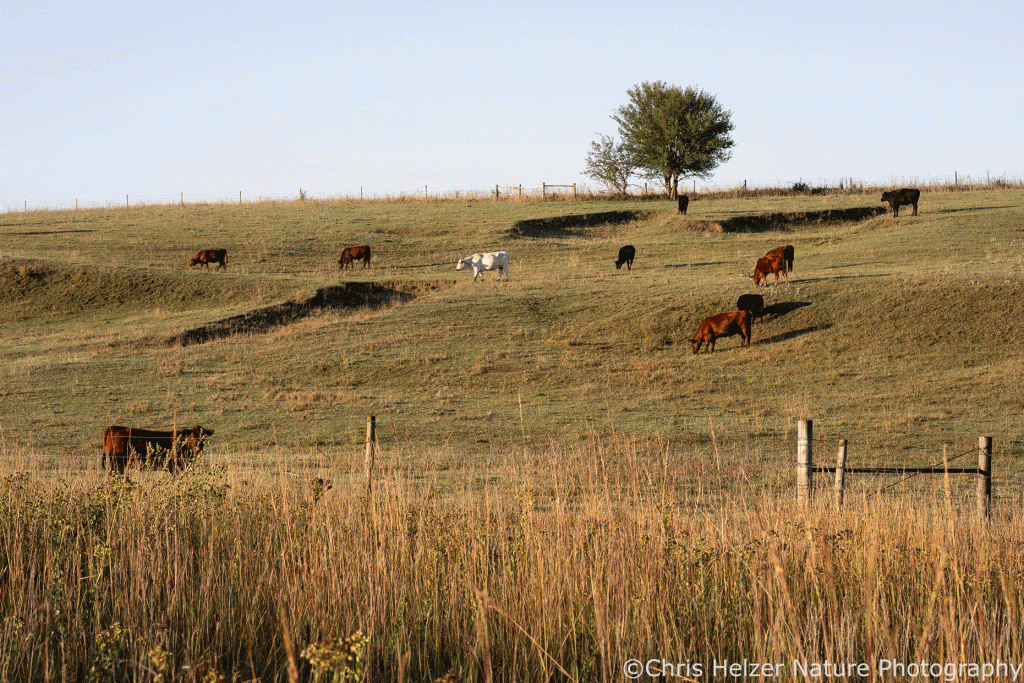
Much of the cattle grazing we’re experimenting with right now, both at The Nature Conservancy/Nebraska and at my family prairie, involves long periods of grazing followed by long periods of rest. There are lots of reasons for this approach, which I won’t go into here, but the biggest objective is to create a broad range of habitat structure across a prairie, without compromising the diversity and richness of the plant community. It’s about creating habitat heterogeneity and ecological resilience.
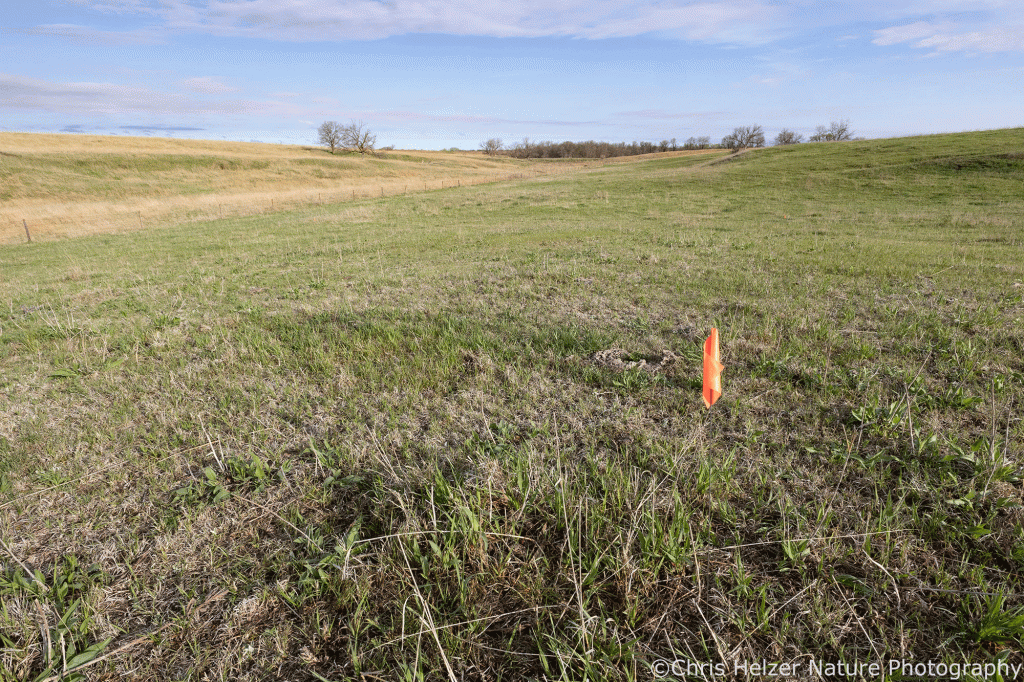
We’ve been managing our family prairie over the last 10-15 years with open-gate rotational grazing, which has a lot of similarities to patch-burn grazing but isn’t driven by fire. The 80×80 foot plot I photographed in 2025 had been grazed hard most of the previous season (June through October 2024) and part of the season before that (July through Mid-August 2023). By October 2024, it was uniformly short, with a fair amount of bare ground exposed (see the first photo of this post, which shows the plot at the beginning of the 2025 season).
This kind of grazing may sound (and look) irresponsible to people who are either uncomfortable with cattle grazing overall or who have been taught that you should never graze more than half of the biomass of a pasture before moving cattle out. An important point, though, is that the same pasture was rested for two full years prior to 2023/2024 and will be rested for two more full years before it is grazed again. That’s a lot of time for grazed plants to regain their energy and vigor. We’re also looking at how soils respond to this grazing pattern and are seeing positive results (more on that when the data is fully analyzed).
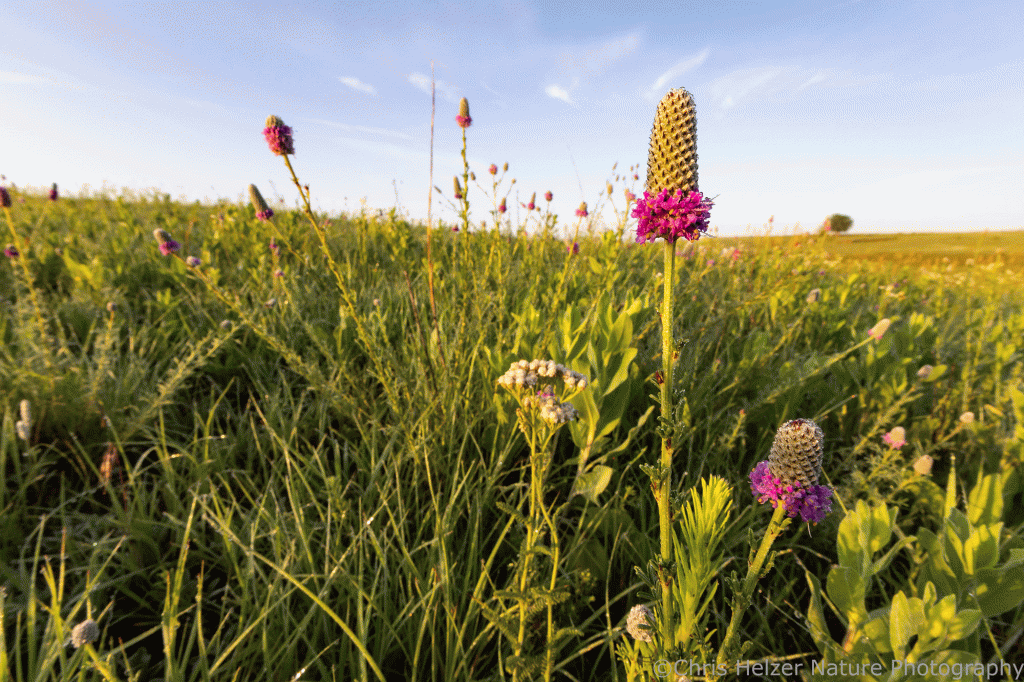
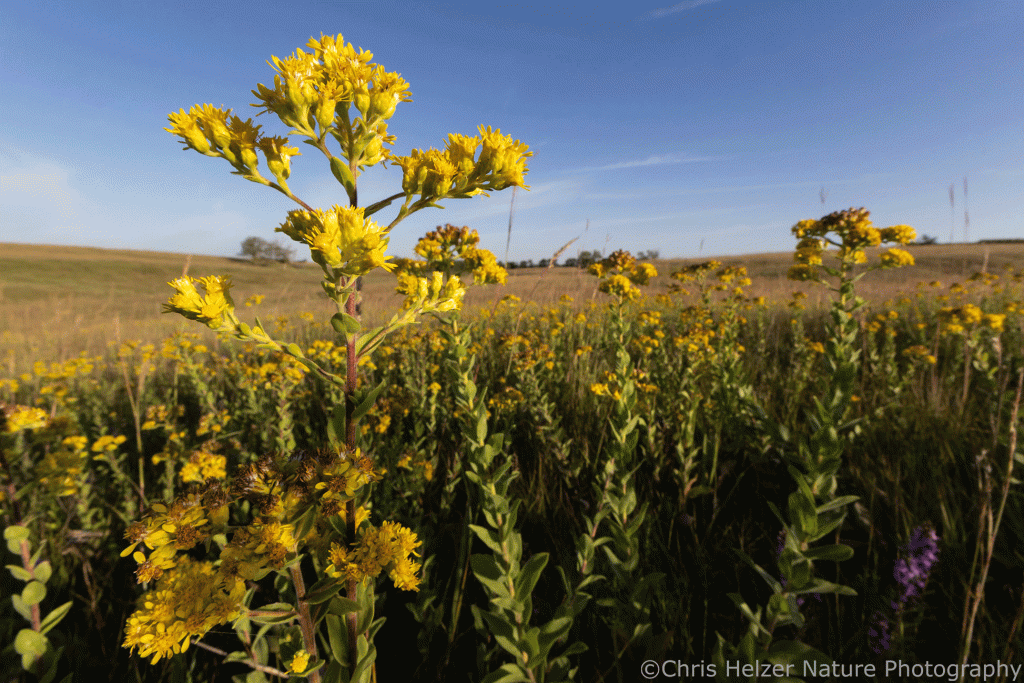
My favorite part of grazing approaches like open-gate rotation and patch-burn grazing is the way the prairie community responds in the first year after a long season of grazing. The vigor of the typically-dominant plants (tall grasses, in particular) has been temporarily suppressed, releasing many other plants from that competitive pressure. This usually results in a big wildflower party, including both long-lived perennials and a lot of short-lived plants who are taking advantage of a short window of opportunity to germinate, bloom, and die while the big grasses aren’t able to prevent them from doing so.
The resulting habitat structure is terrific for many animal species, large and small. The reduced height and density of grasses means that it’s easy for animals to move through the vegetation. At the same time, other plants grow tall, creating a kind of miniature savanna, where tall wildflowers are like trees, surrounded by shorter vegetation. Animals can move from sun to shade easily to regulate their temperature. They can also can feed in open areas but quickly retreat to cover when they want to. This supports a huge abundance of invertebrates. It also draws in many larger animals, attracted both by the habitat structure and the food source (invertebrates).
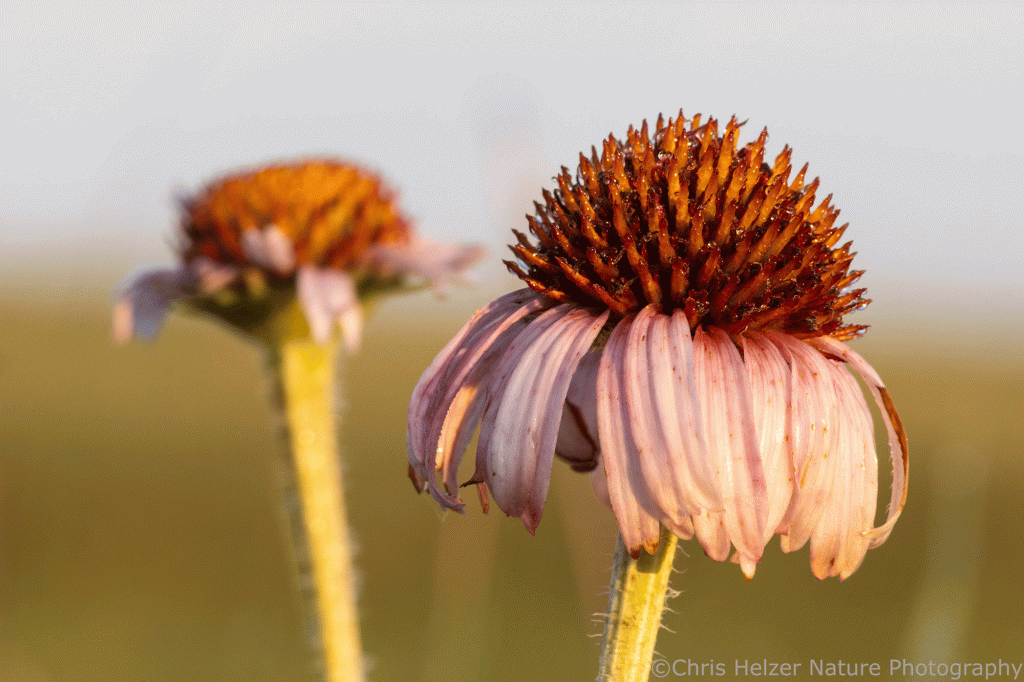
One highlight of the year was that I found purple coneflower in my plot (two different plants). I’ve only seen the species a few times during the 30 years or so I’ve been involved in the management of our family prairie and it had been a while since my last sighting. I wish I could tell you whether it was there because of some overseeding I did a few years ago or because it had been there a long time without me noticing it. Either way, it was really nice to find it.
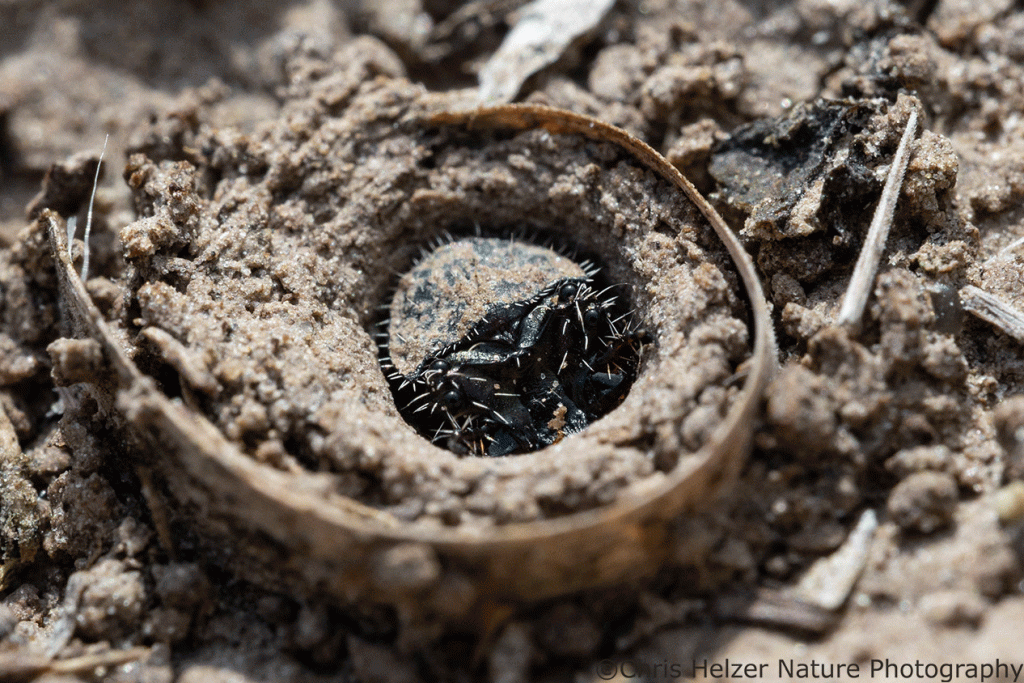
Access to bare ground is crucial for many animals, including a lot of ground nesting bee species, bandwing grasshoppers, various invertebrate predators, and lots of others. Some of those need areas nearly free of any vegetation, but many just need places where the soil isn’t covered by a thick layer of thatch. Last year’s grazing removed most of the plant material from this part of the pasture and also tempered the growth of dominant grasses. The result was that there was lots of great habitat for species that need both bare soil and abundant sunlight.
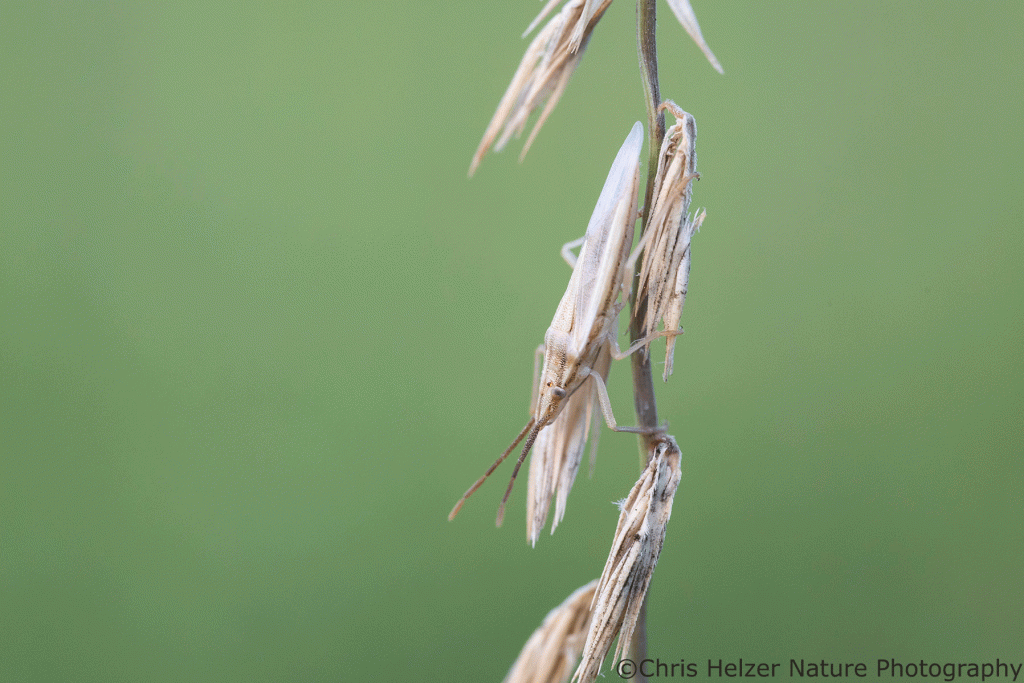
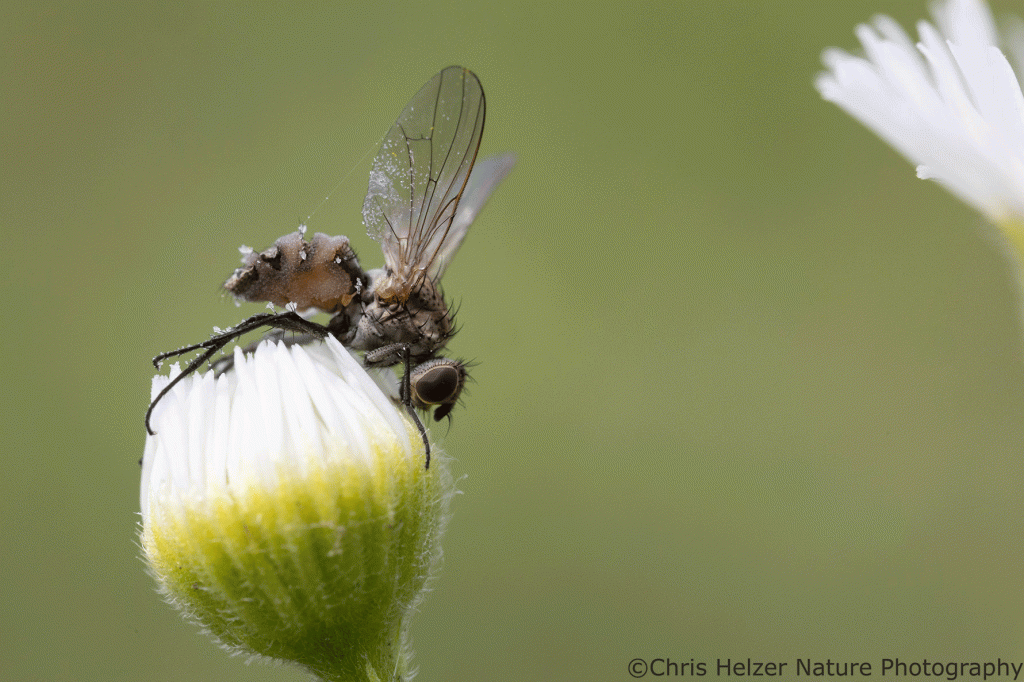
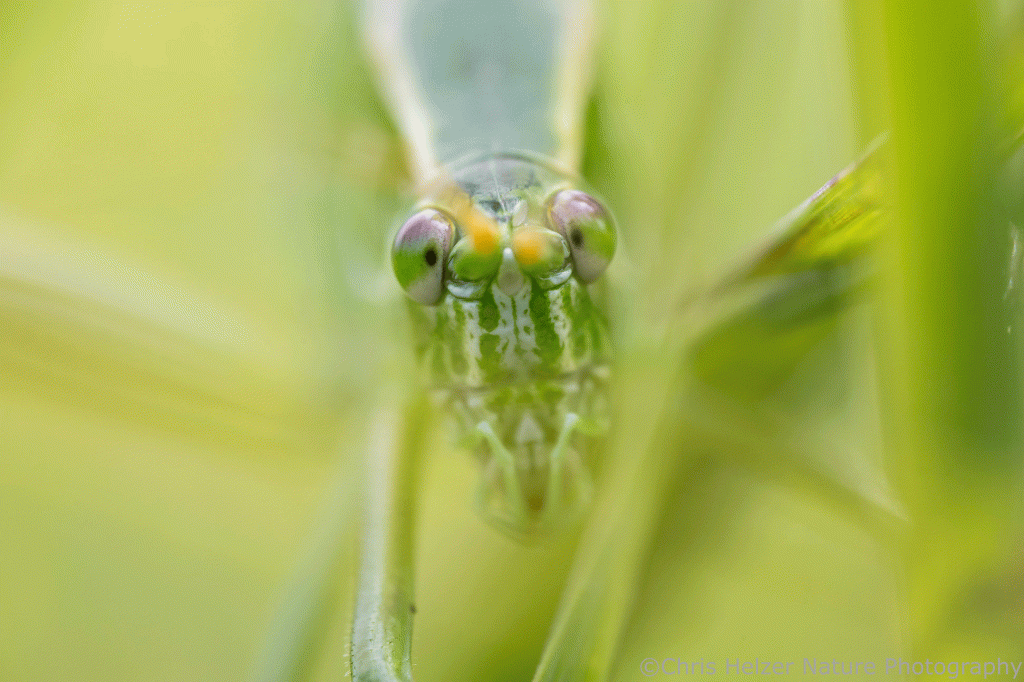
The following slideshows provide a visual journey through the 2024 season, from May through October. There are also two additional slideshows at the end, featuring lady beetles and crab spiders. If you’re reading this in an email, these slideshows will display as grids of images. If you click on the title of the post at the top of the email, you’ll be able to view this post online and will be able to scroll through the slideshow and see larger versions of the photos.
May Slideshow
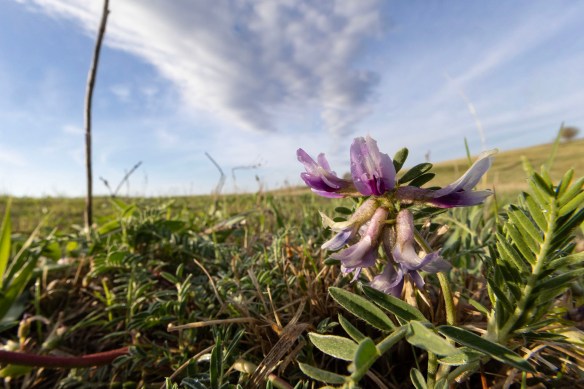
Ground plum (Astragalus crassicarpus). 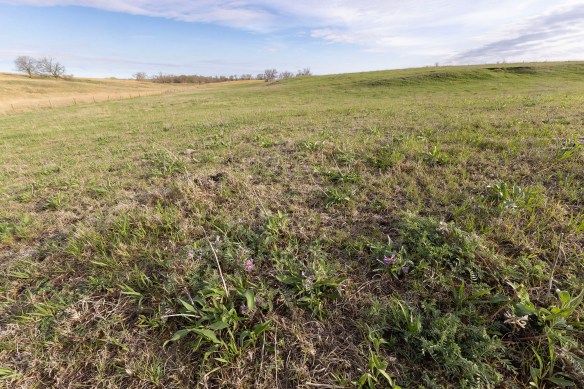
A patch of ground plum on May 1 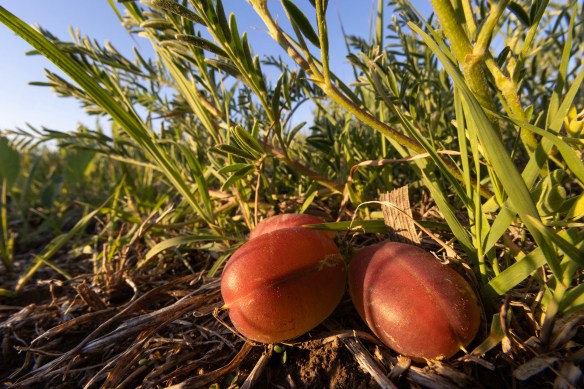
Fruits of ground plum 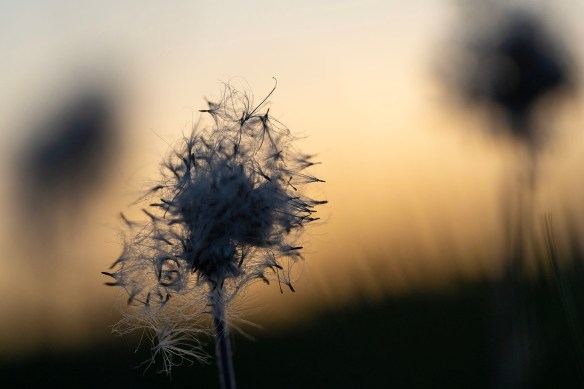
Pussytoes (Antennaria neglecta) 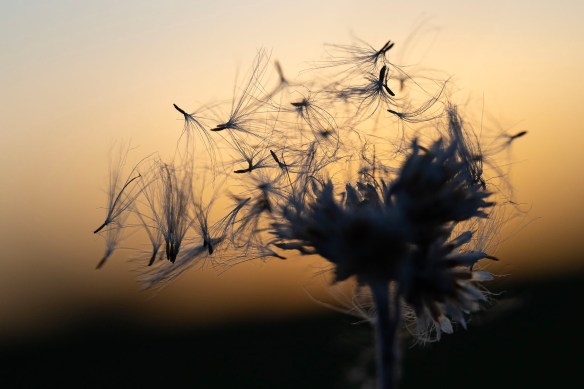
Pussytoes (Antennaria neglecta) 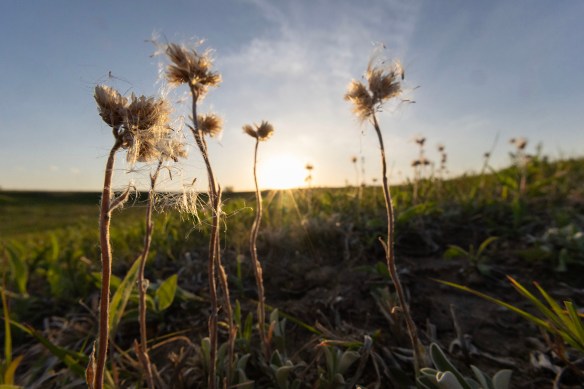
Pussytoes (Antennaria neglecta) 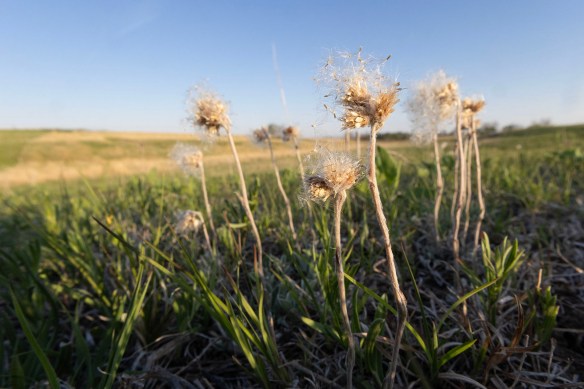
Pussytoes (Antennaria neglecta). 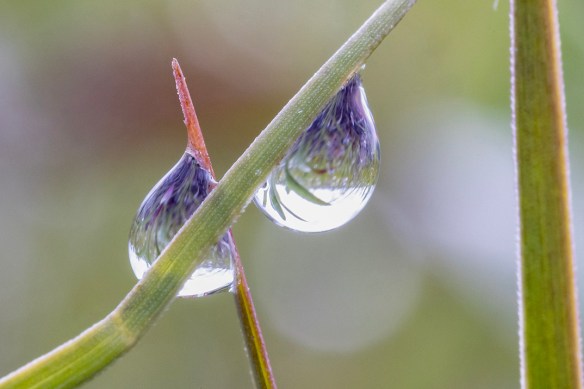
Water drops. 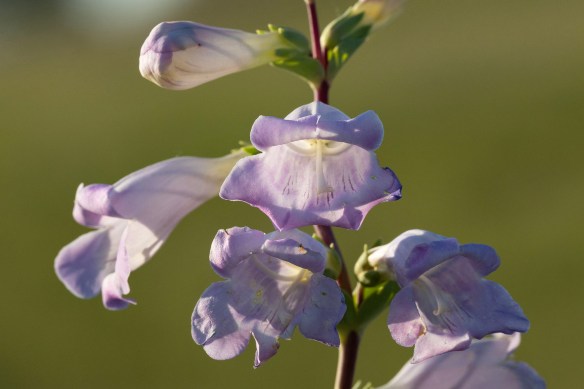
Shell leaf penstemon (Penstemon grandiflorus). 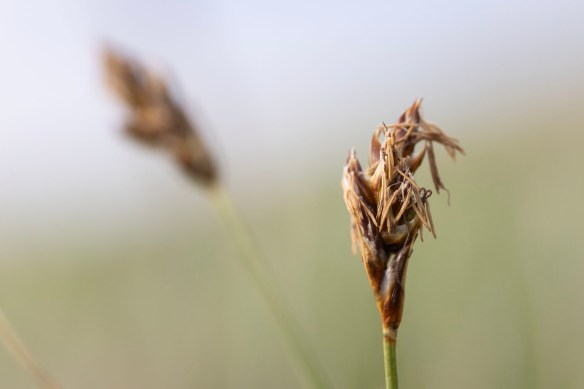
Sun sedge (Carex heliophila). 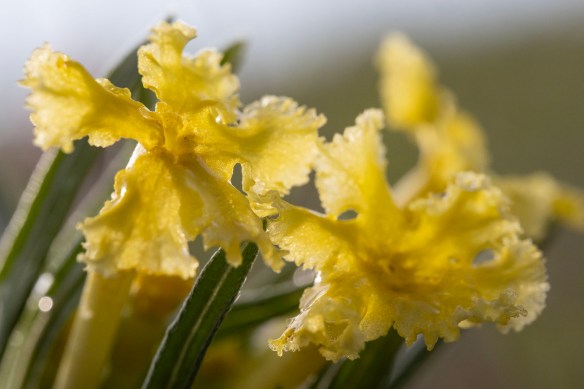
Fringed puccoon (Lithospermum incisum). 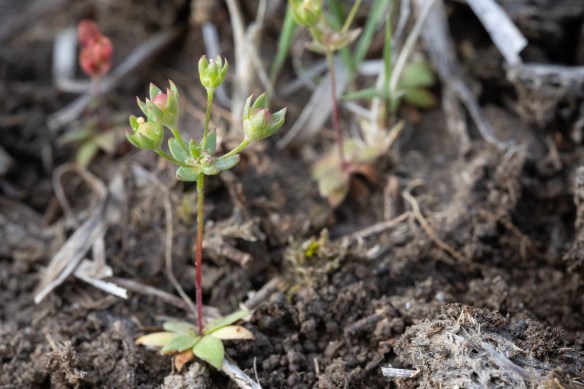
Western rock jasmine (Androsace occidentalis). 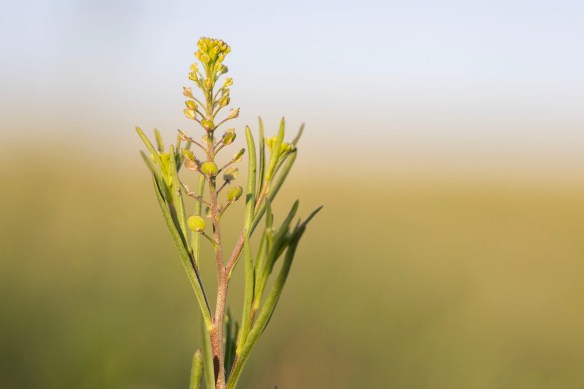
Peppergrass 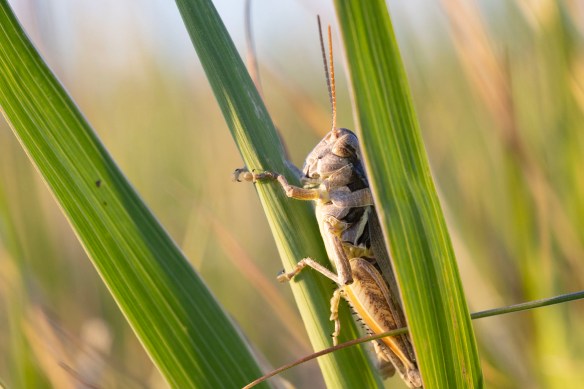
Grasshopper nymph. 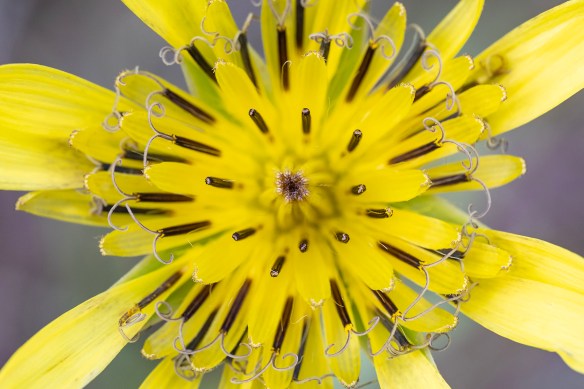
Goatsbeard, aka salsify (Tragopogon dubius). 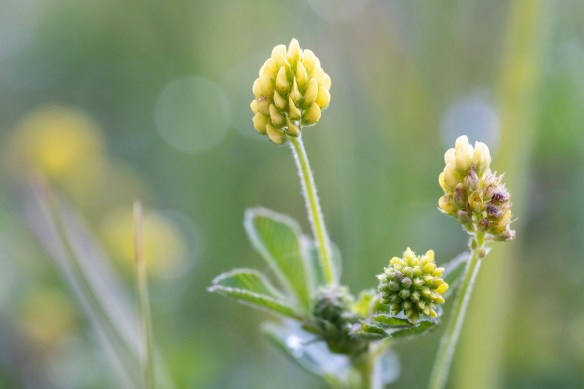
Black medic (Medicago lupulina). 
Beetle on yarrow leaf 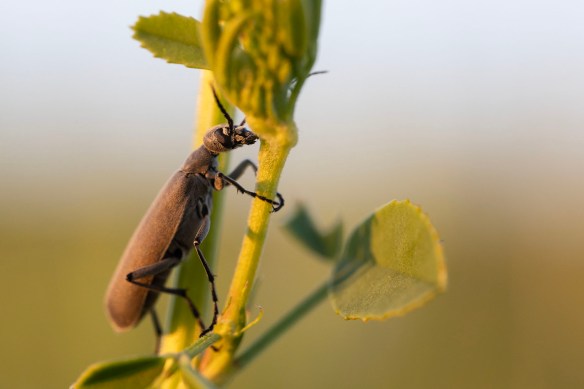
Blister beetle on sweet clover.
June Slideshow
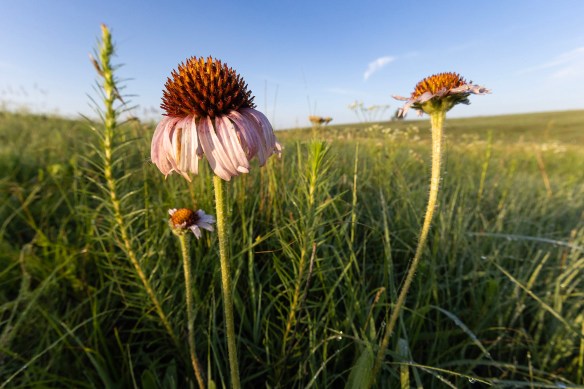
Purple coneflower (Echinacea angustifolia) 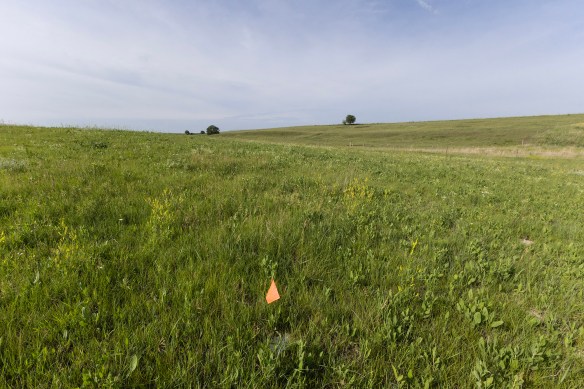
June 14 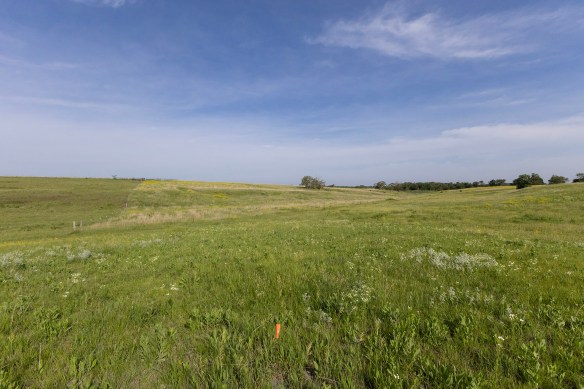
June 14 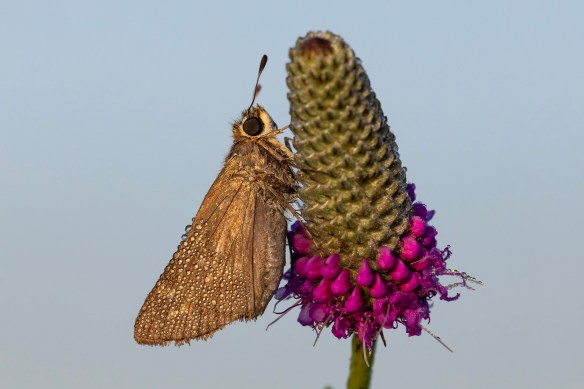
Skipper butterfly on purple prairie clover 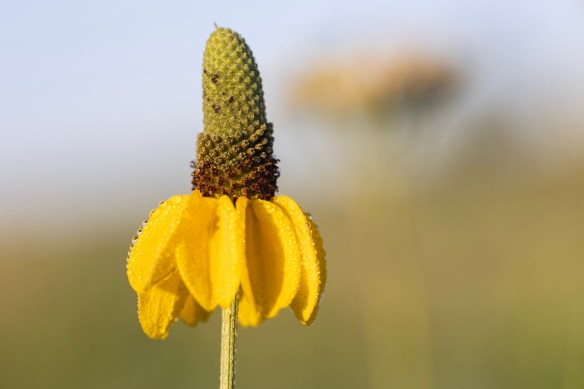
Upright prairie coneflower (Ratibida columnifera) 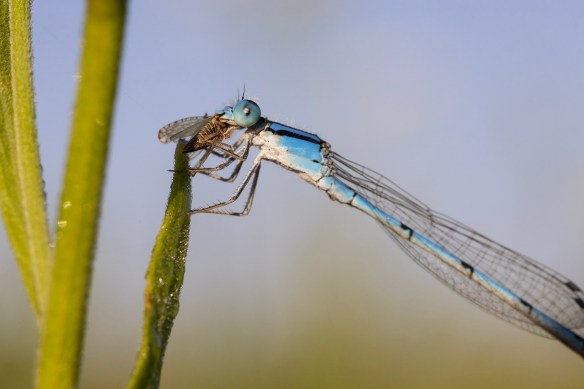
Damselfly with captured insect 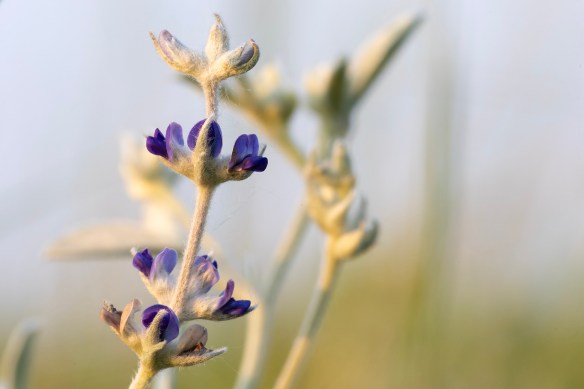
Silver-leaf scurfpea (Pediomelum argophyllum) 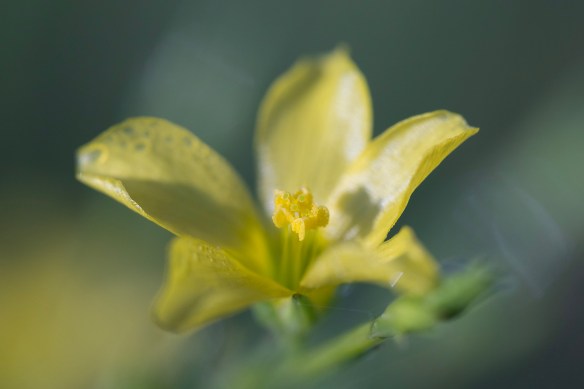
Flax 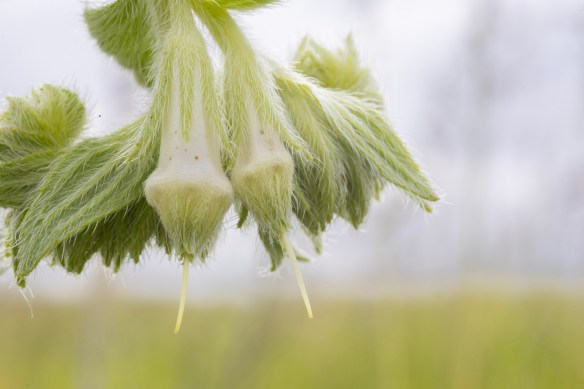
Marbleseed (Onosmodium molle) 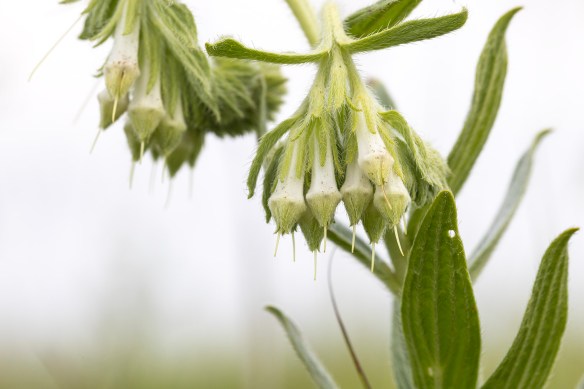
Marbleseed (Onosmodium molle) 
Wolf spider 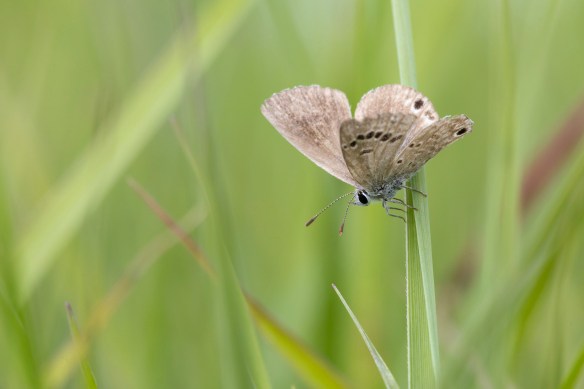
Reakirt’s blue butterfly (Echinargus isola) 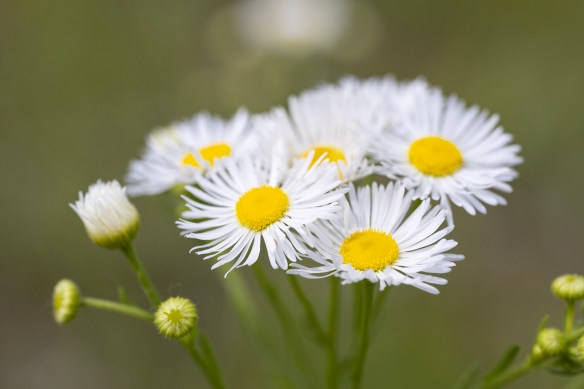
Daisy fleabane (Erigeron strigosus) 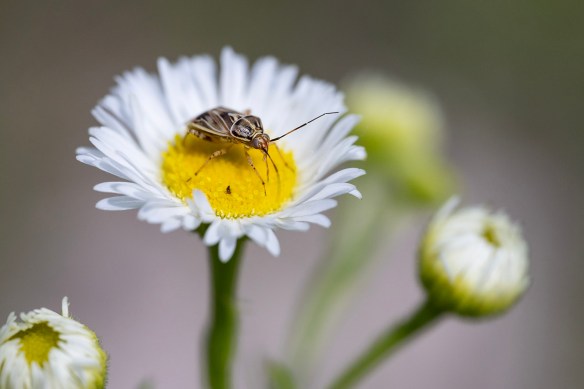
Bug on daisy fleabane (Erigeron strigosus) 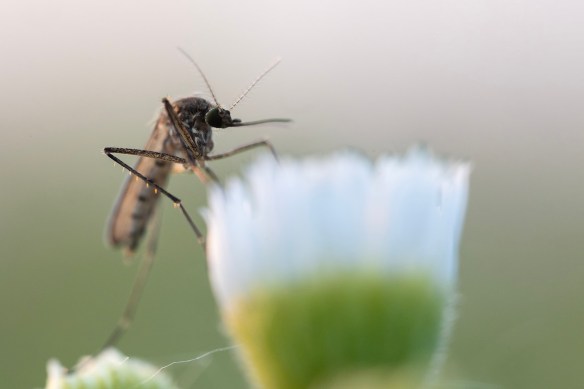
Mosquito on daisy fleabane 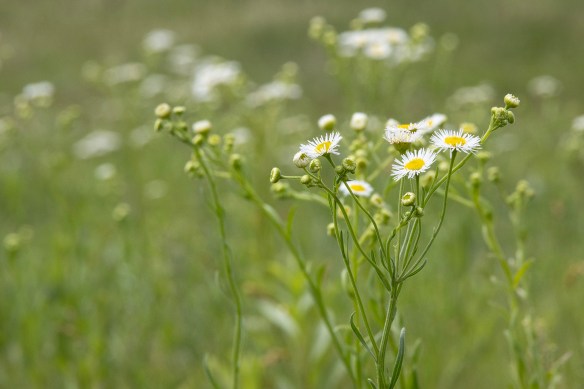
Daisy fleabane (Erigeron strigosus) 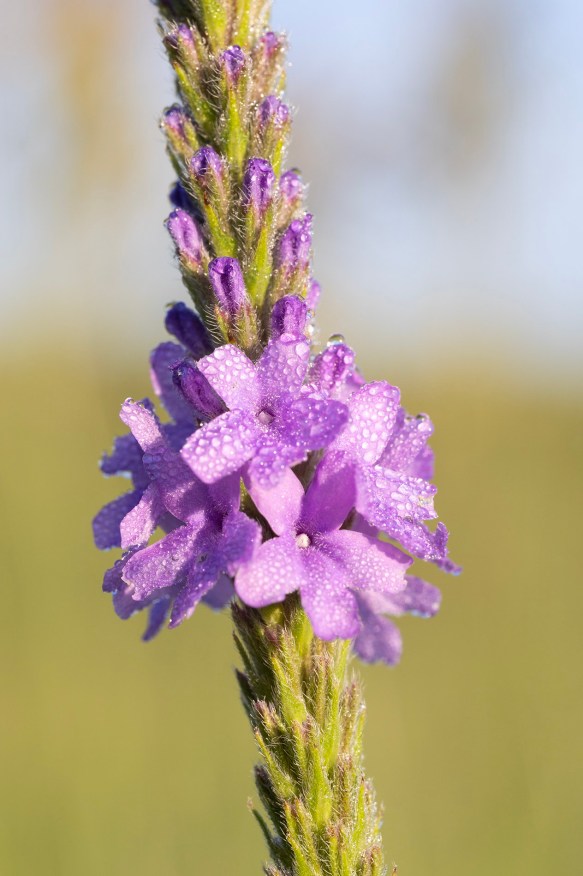
Hoary vervain (Verbena stricta) 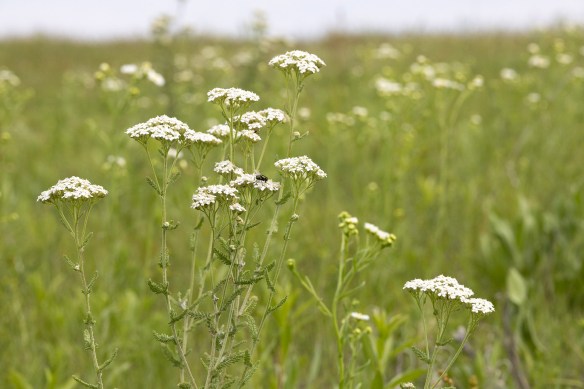
Yarrow (Achillea millefolium) 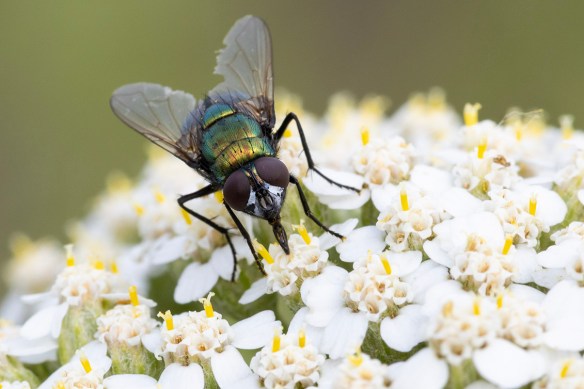
Blow fly on yarrow 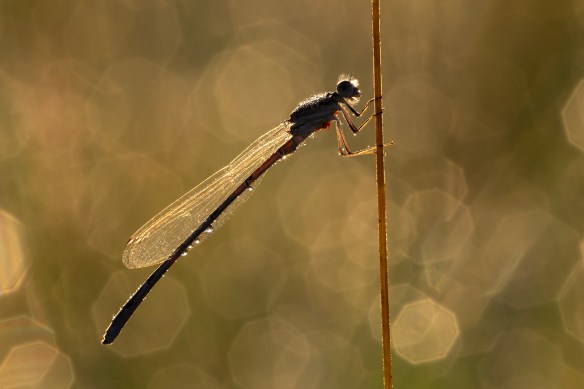
Damselfly 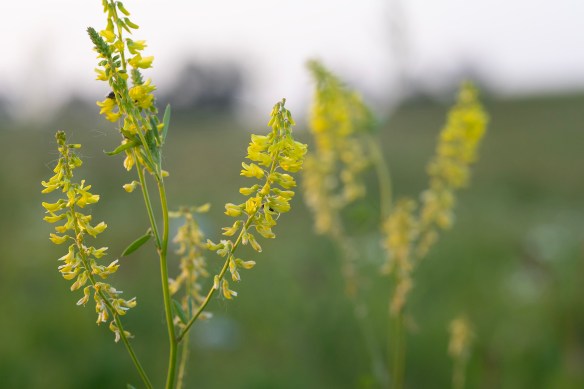
Yellow sweet clover 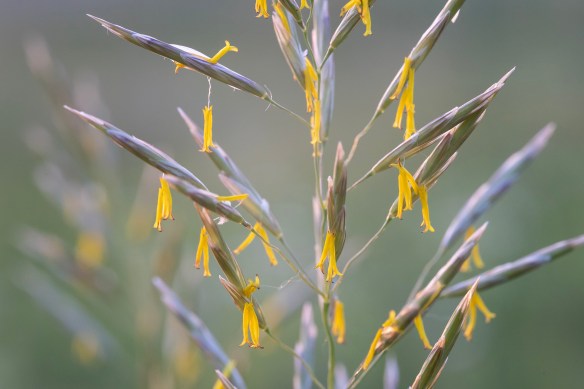
Smooth brome 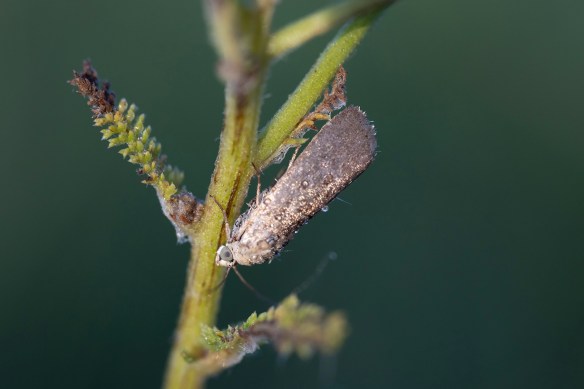
Tiny moth 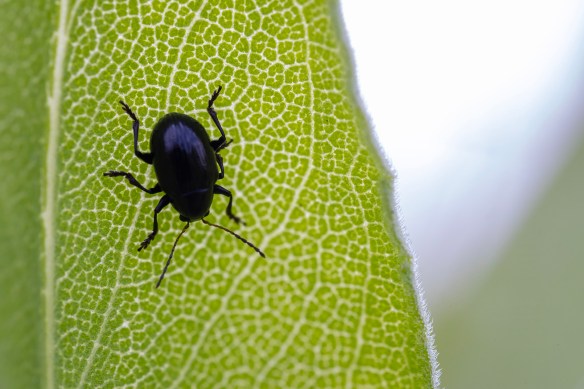
Beetle on stiff goldenrod 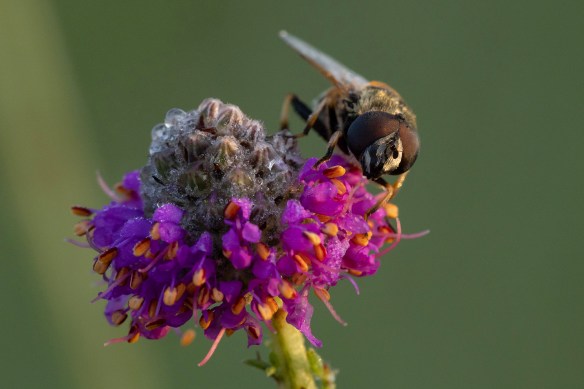
Drone fly on purple prairie clover 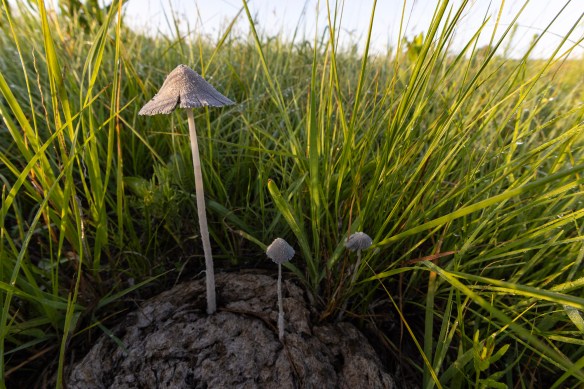
Mushrooms on cow manure 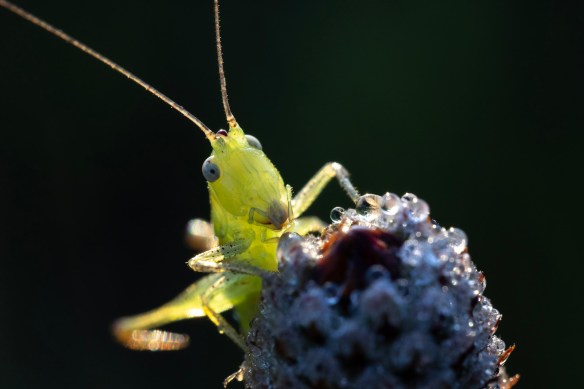
Katydid nymph on purple prairie clover 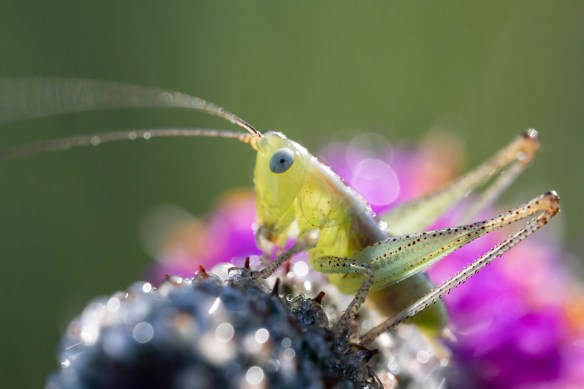
Katydid nymph on purple prairie clover 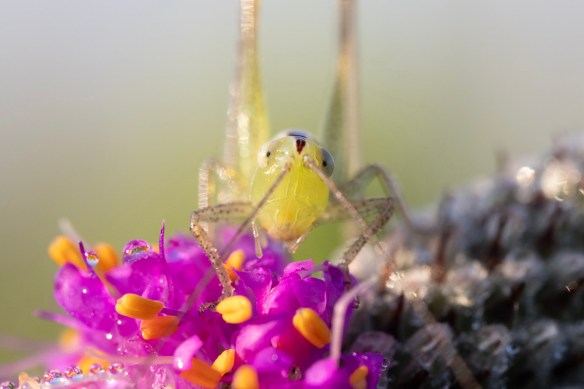
Katydid nymph on purple prairie clover
July/August Slideshow
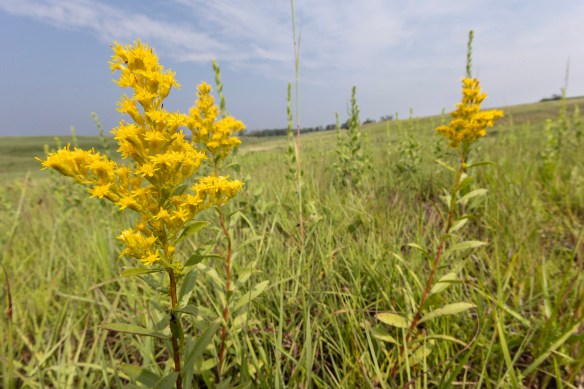
Missouri goldenrod on August 2 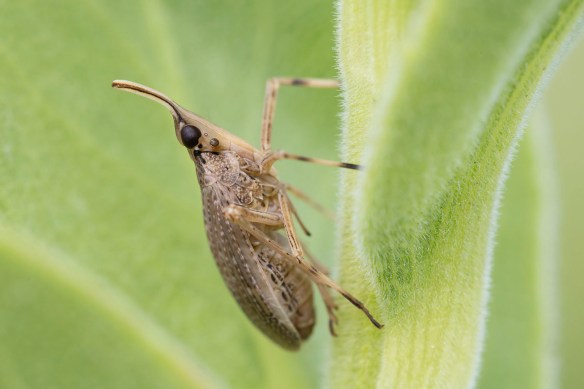
Planthopper 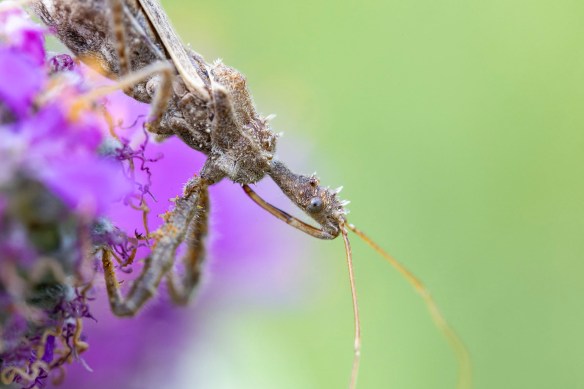
Assassin bug on purple prairie clover. 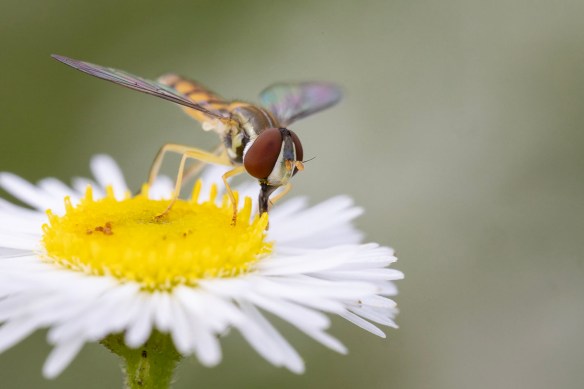
Hover fly on daisy fleabane. 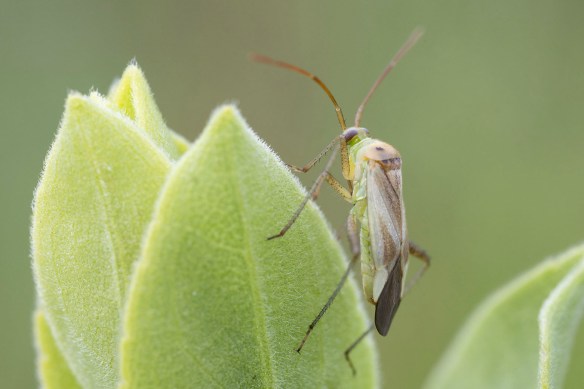
Bug on stiff goldenrod 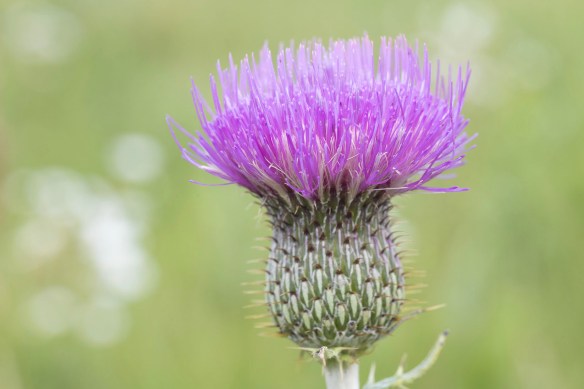
Flodman’s thistle (Cirsium flodmanii) 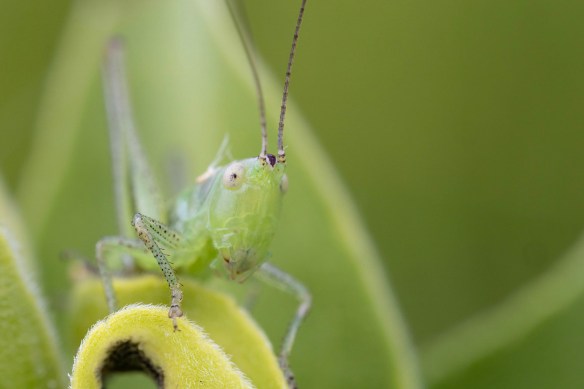
Katydid nymph. 
Band-winged grasshopper on bare ground 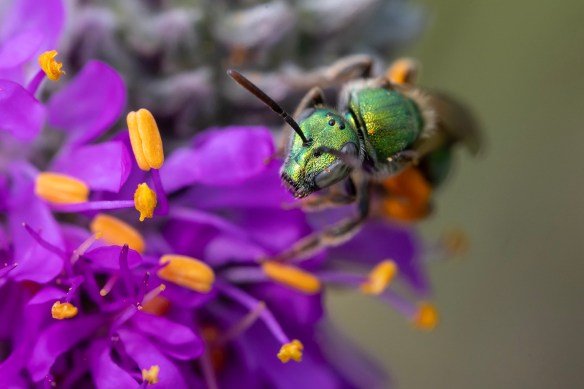
Sweat bee on purple prairie clover 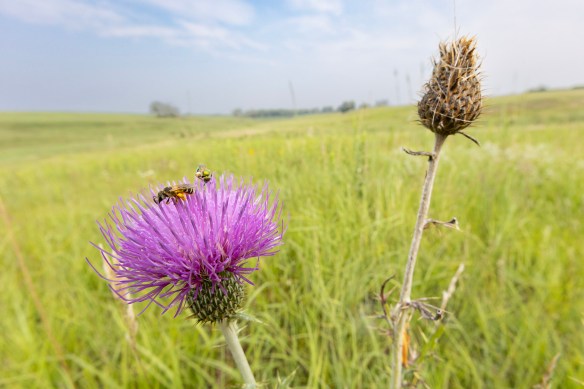
Halictid sweat bee on Flodman’s thistle 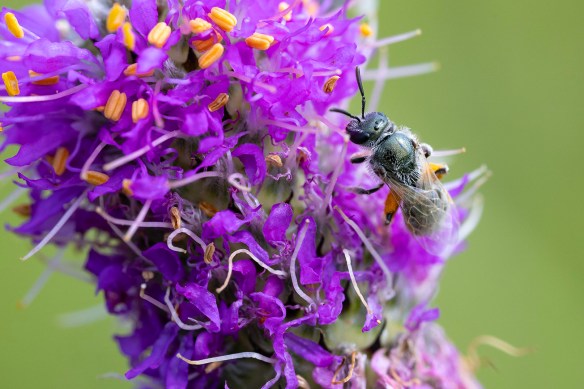
Sweat bee on purple prairie clover 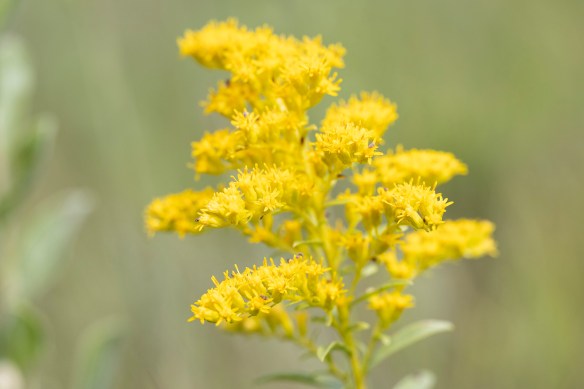
Missouri goldenrod 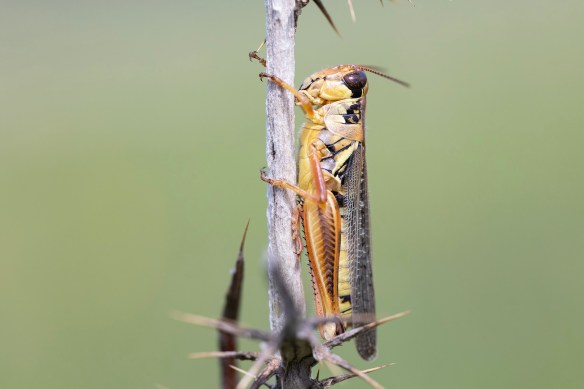
Grasshopper 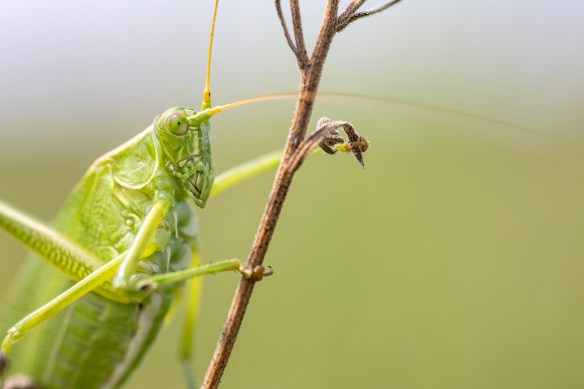
Bush katydid 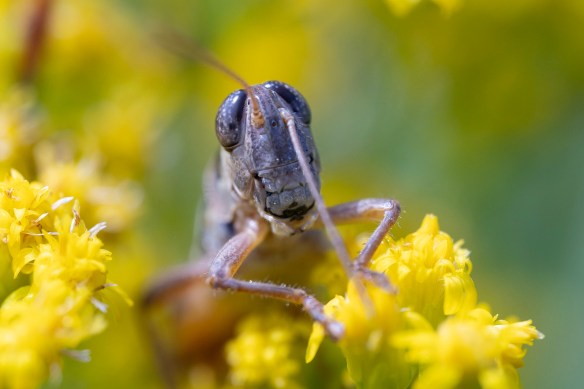
Grasshopper on Missouri goldenrod 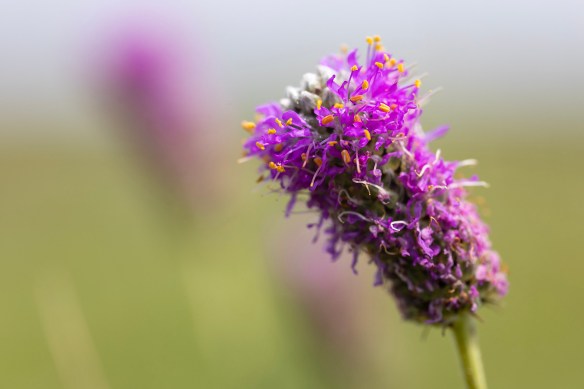
Purple prairie clover 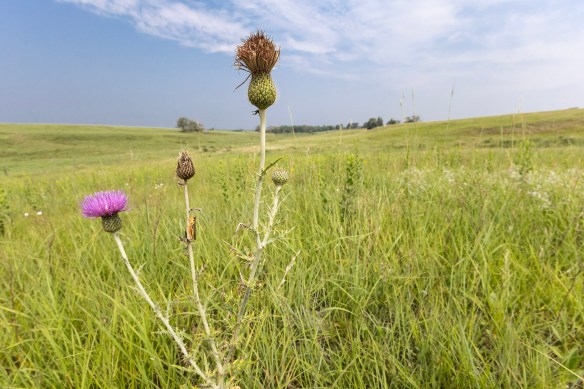
Flodman’s thistle on August 2 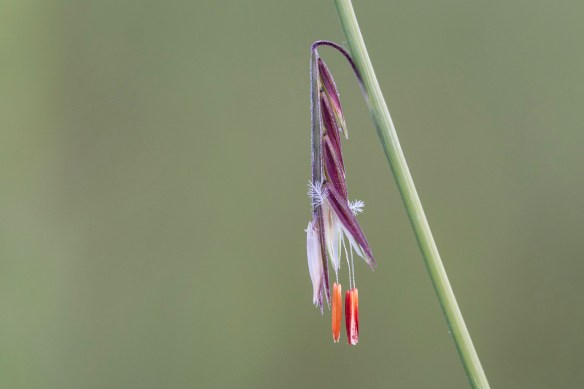
Sideoats grama (Bouteloua curtipendula). 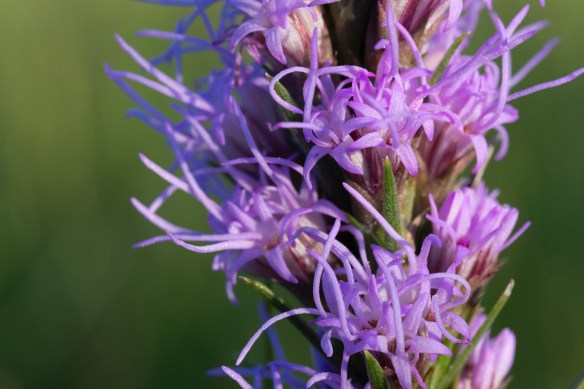
Dotted gayfeather (Liatris punctata) 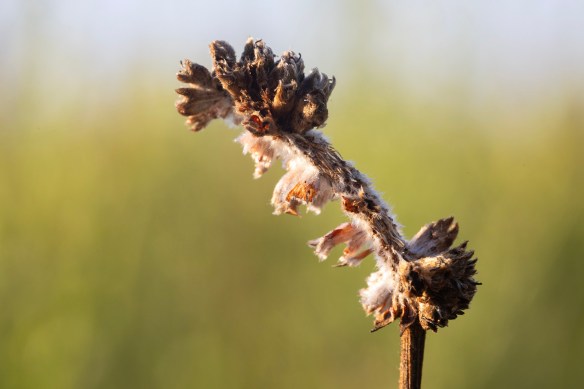
Purple prairie clover eaten by grasshoppers (probably) 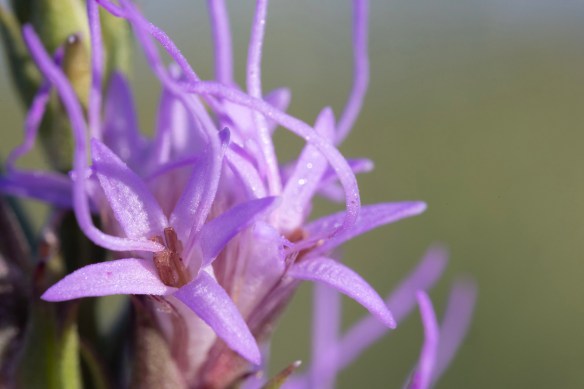
Dotted gayfeather (Liatris punctata) 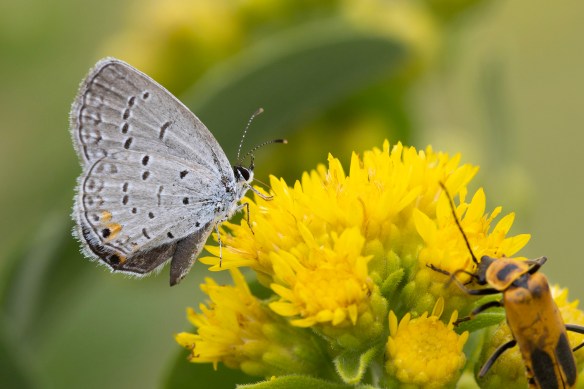
Eastern tailed-blue butterfly and goldenrod soldier beetle 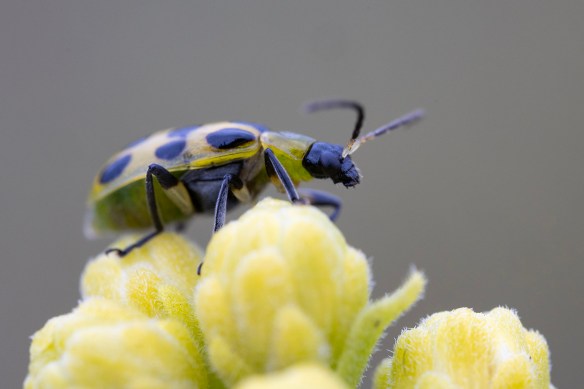
Cucumber beetle on stiff goldenrod 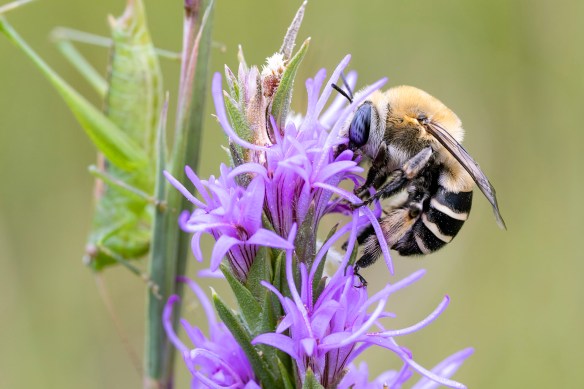
Digger bee (Anthophora sp) and katydid 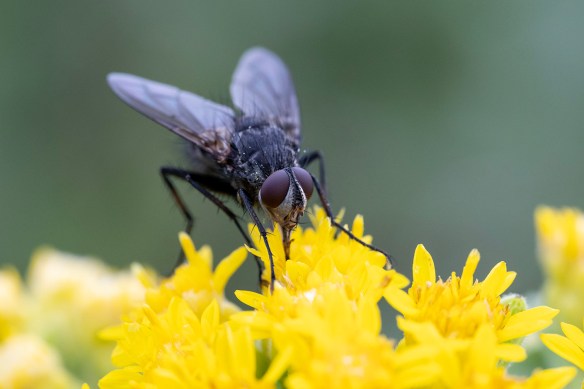
Fly (Tachinid?) on stiff goldenrod 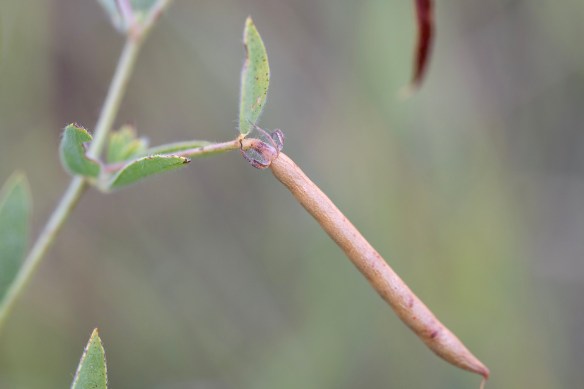
Deer vetch (Lotus unifoliolatus) 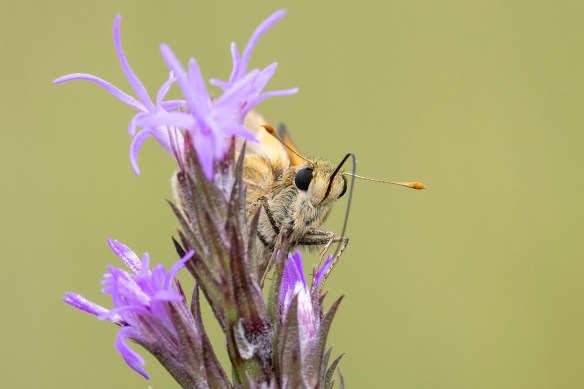
Skipper butterfly on dotted gayfeather 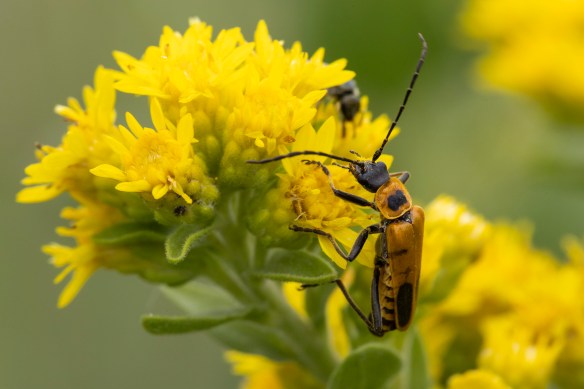
Goldenrod soldier beetle on stiff goldenrod 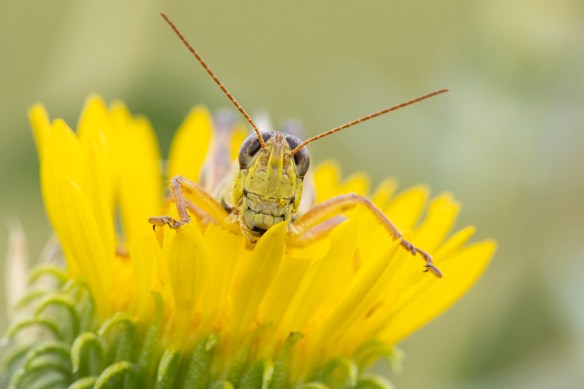
Grasshopper on curly cup gumweed 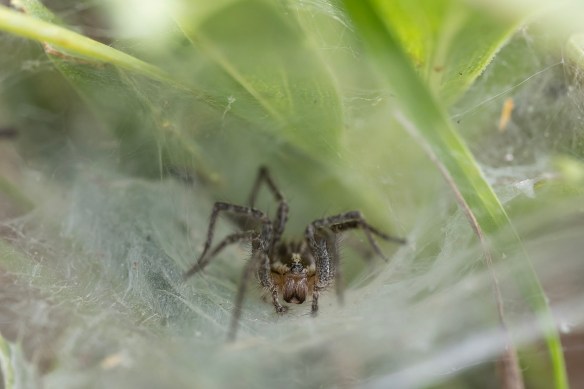
Funnel web spider
September/October Slideshow
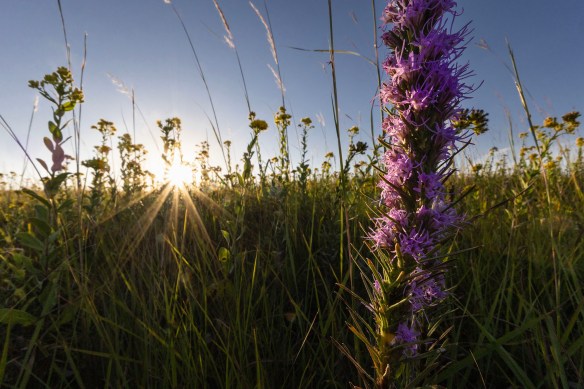
Dotted gayfeather and stiff goldenrod 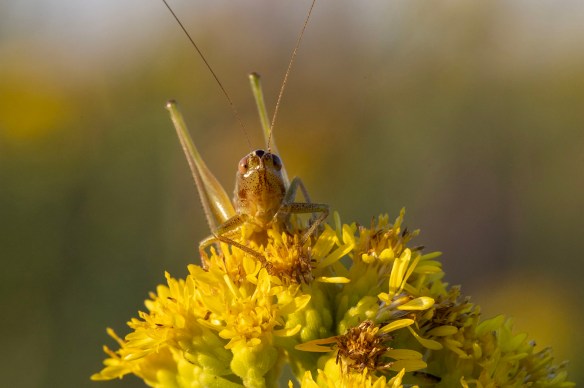
Katydid on stiff goldenrod 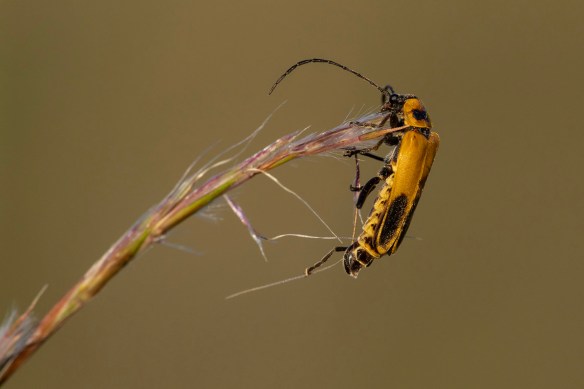
Soldier beetle. 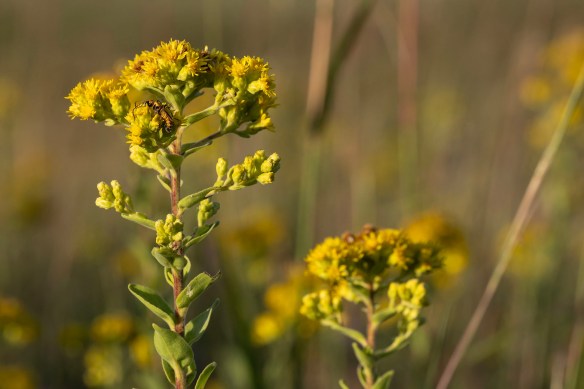
Stiff goldenrod (Solidago rigida). 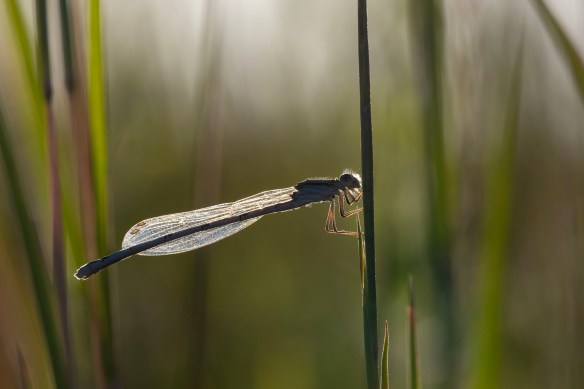
Damsefly 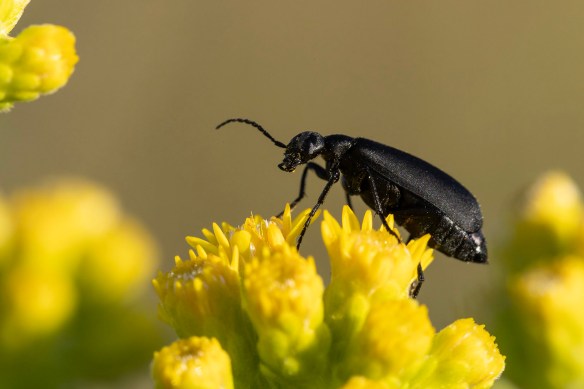
Blister beetle on stiff goldenrod 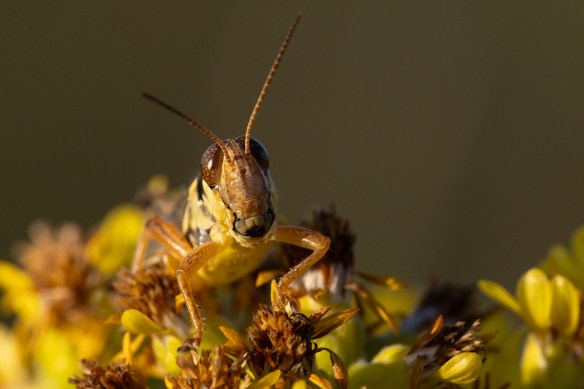
Red-legged (or related) grasshopper 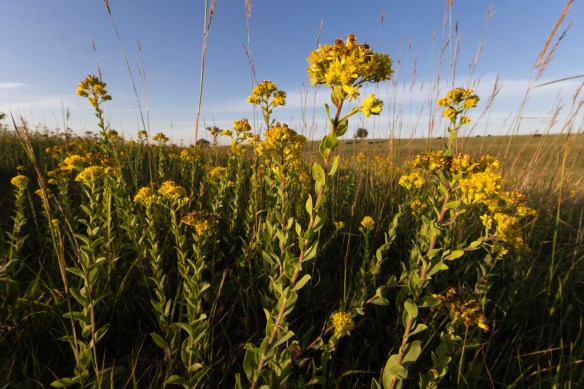
Stiff goldenrod (Solidago rigida). 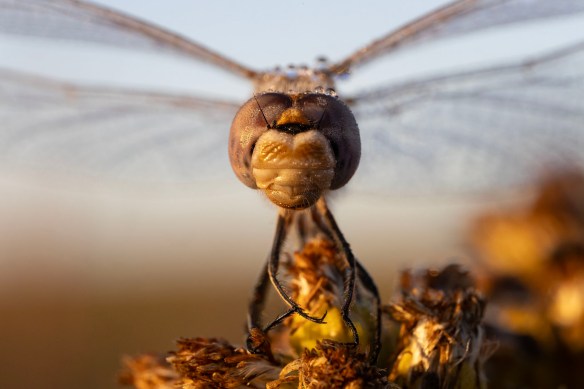
Variegated meadowhawk dragonfly 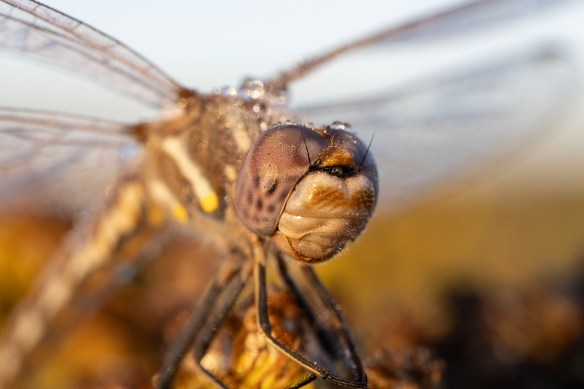
Variegated meadowhawk dragonfly 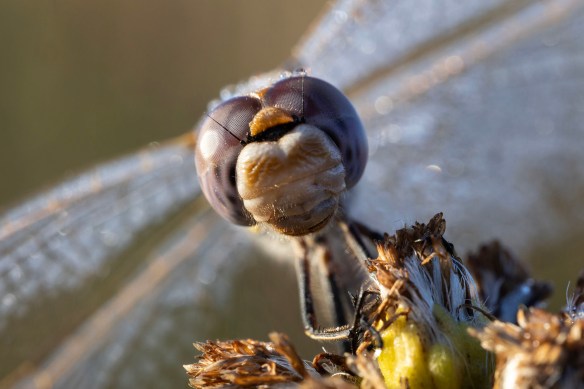
Variegated meadowhawk dragonfly
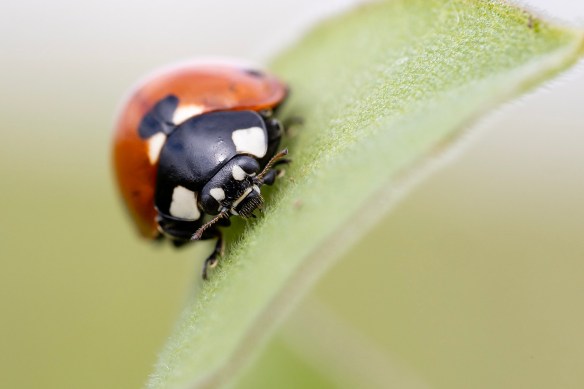
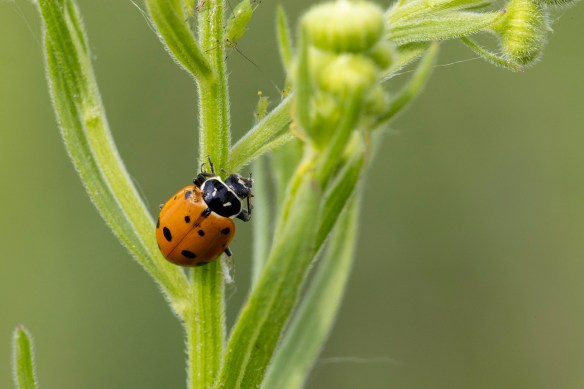
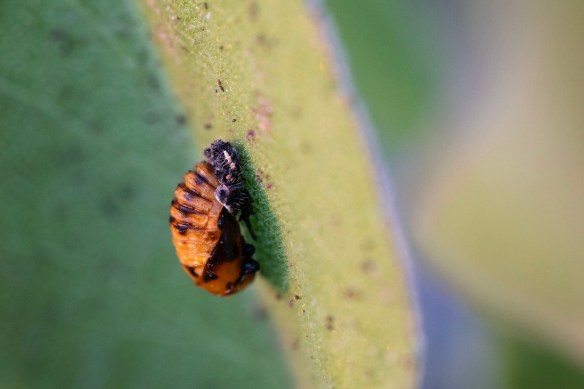
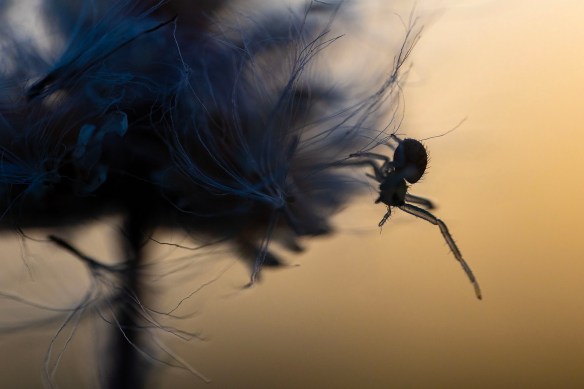
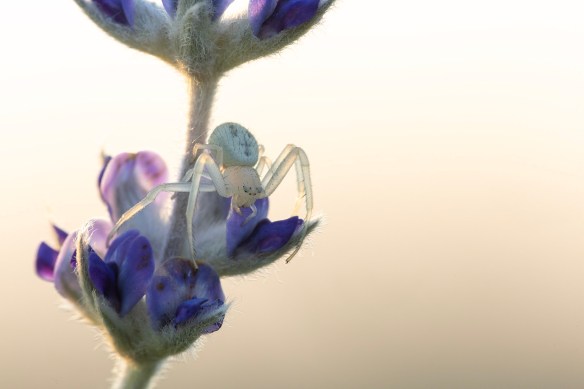
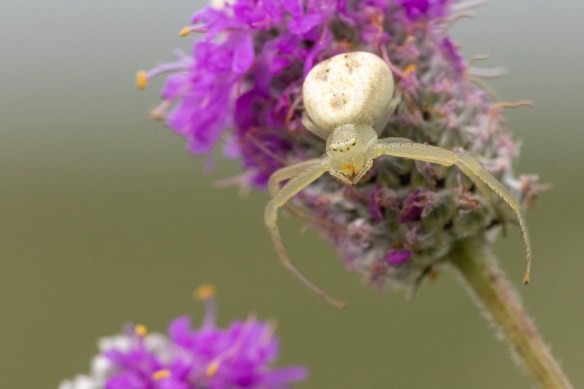
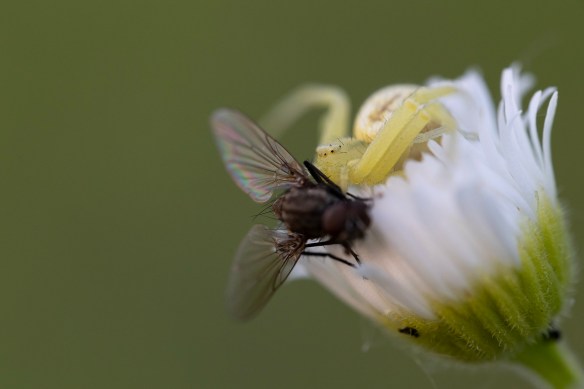
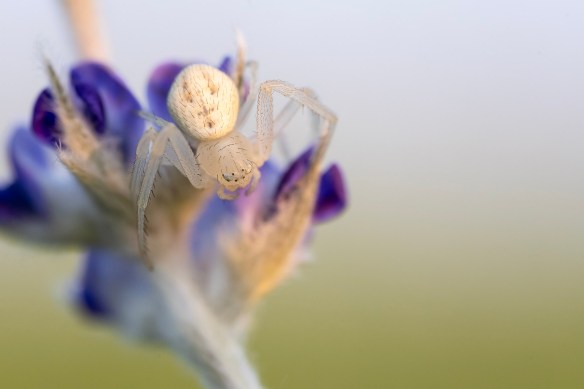
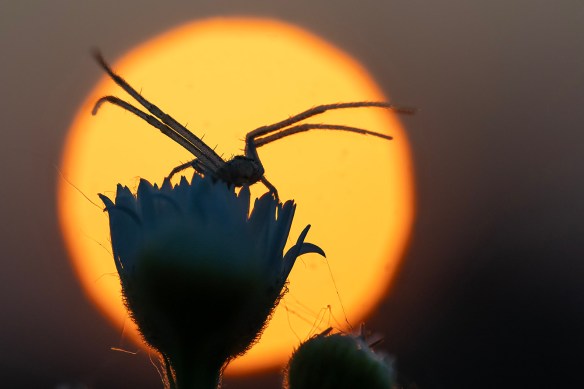
Finally, here are two last (short) slideshows featuring lady beetles and crab spiders. Why did I choose to highlight these two groups separately? That’s a great question. We all make decisions, don’t we?
Lady Beetles
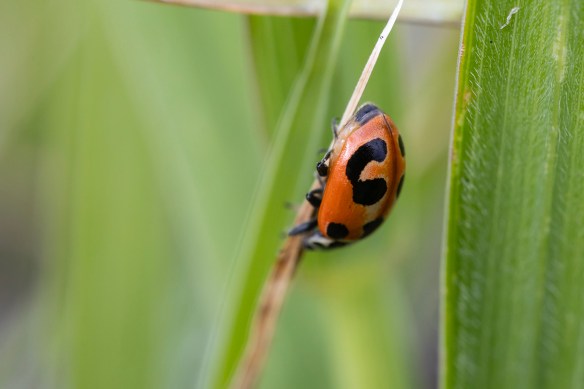
Crab Spider Slideshow
For any of you who made it this far, I hope you enjoyed the results of this project. For me, it was a like a more relaxed version of my square meter project, in that I visited the same spot over and over through the season. An 80×80 foot plot seemed like a whole universe compared to that square meter, though.
Hopefully, the photos helped you visualize the ways in which a prairie can respond to cattle grazing. This single example, of course, shouldn’t be used to predict how other prairies might respond to similar management, though it was pretty typical of what I’ve seen on numerous sites in central Nebraska.
The most important message is that prairies have a lot of resilience built into them and it’s fascinating to watch that resilience on display. There are lots of good/right ways to manage prairies, depending upon your objectives, and we surely haven’t explored all of those yet. It’s ok to experiment with new approaches to see what happens. How else will we learn?

 The Prairie Ecologist