Niobrara Valley Preserve Field Trip

Last weekend, I helped with an event up at our Niobrara Valley Preserve.  Neighbors and members of The Nature Conservancy were invited to visit the Preserve, enjoy some home-grown bison burgers, and tour some of the 56,000 acre property.  I got to take my two sons up with me, which made the trip even better.

Here are some photos from the weekend.

Richard Egelhoff led a tour of the east bison pasture (10,000 acres).  A little light rain didn't stop us from having a great bounce through the sandhills, and we found the first group of bison about 5 minutes in.

Richard Egelhoff led a tour of the east bison pasture (10,000 acres). A little light rain didn’t stop us from having a great bounce through the sandhills, and we found the first group of bison about 5 minutes in.

.

It was overcast and sprinkling off and on through much of the weekend, but the sun popped out just long enough on Saturday morning for me to capture the light hitting this shell-leaf penstemon.

It was overcast and sprinkling off and on through much of the weekend, but the sun popped out just long enough on Saturday morning for me to capture the light hitting this shell-leaf penstemon flower.

.

Rainwater gathered in the leaves of the shell-leaf penstemon - adding a little extra beauty to these gorgeous plants.

Rainwater gathered in the leaves of the shell-leaf penstemon – adding a little extra beauty to these gorgeous plants.

.

Jocelyn Olney, a graduate student at UNL came and talked to the group about her work tracking greater prairie chickens in the sandhills.  She brought a display bird to show how radio transmitters are attached.

Jocelyn Olney, a graduate student at UNL came and talked to the group about her work tracking greater prairie chickens in the sandhills. She brought a display bird to show how radio transmitters are attached.  It was pretty popular with the crowd.

.

Jocelyn also demonstrated how to find the tags, and my sons both got a chance to try it out.  Here, Jocelyn instructs John on the technique.

Jocelyn also demonstrated how to find the tags, and my sons both got a chance to try it out. Here, Jocelyn instructs John on the technique.

.

As he honed in on the transmitter hidden in the grass, John attracted a crowd of supporters.

As he honed in on the transmitter hidden in the grass, John attracted a crowd of supporters.

.

Got it!

Got it!

.

Richard got a chance to try it out too.  If you know Richard,  you can guess how entertaining that process was.

Richard got a chance to try it out too. If you know Richard, you can guess how entertaining that process was.

.

After lunch, I led a hike up in to the hills.  We found all kinds of things to look at, including kangaroo rat burrows, spittle bugs, wildflowers, grasshoppers and katydids, wolf spiders, scenic views, and much more.

After lunch, I led a hike up in to the hills. We found all kinds of things to look at, including kangaroo rat burrows, spittle bugs, wildflowers, grasshoppers and katydids, wolf spiders, scenic views, and much more.

.

After the event ended, my boys and stuck around for another day to explore.  We went over to the north side of the river to see how the woodland areas there were recovering from the 2012 drought and wildfires.  Most of the ponderosa pine are dead, but the majority of bur oaks are resprouting vigorously from their bases.

After the event ended, my boys and I stuck around for another day to explore. We went over to the north side of the river to see how the woodland areas there were recovering from the 2012 drought and wildfires. Most of the ponderosa pine are (still) dead, but the majority of bur oaks are resprouting vigorously from their bases.

.

The sun finally popped out Saturday night and the boys and I got to get pretty close to a group of bison.  Not quite close enough for unobstructed photos, however.  On the other hand, we had better looks at bison than the porcupine we chased through a sumac patch (we were in a vehicle).

The sun finally popped out Saturday night and the boys and I got to drive up pretty close to a group of bison, but not quite close enough for unobstructed photos. On the other hand, we had better looks at bison than the porcupine we chased through a sumac patch (we were in a vehicle).

.

Sunday morning started with a beautiful infusion of sunshine and scattered clouds.  Spiderwort, puccoon, and western wallflower decorated the sandhills nicely.

Sunday morning started with a beautiful infusion of sunshine and scattered clouds. Spiderwort, puccoon, and western wallflower decorated the sandhills nicely.  The color of wildflowers and vibrant green vegetation were beautiful reminders of the resilience and recovery of the prairie from the severe drought and wildfire in the summer of 2012.

.

Pocket gophers play a huge role in the ecology of the prairies at the Niobrara Valley Preserve.  Researchers have found that nearly 1/5 of the prairies are turned impacted by gopher mounds in some years.

Pocket gophers play a huge role in the ecology of the prairies at the Niobrara Valley Preserve. Researchers have found that nearly 1/5 of the prairies are turned impacted by gopher mounds in some years.

.

Hairy puccoon (Lithospermum carolinense) was resplendent in the morning light.

Hairy puccoon (Lithospermum carolinense) was resplendent in the morning light.

.

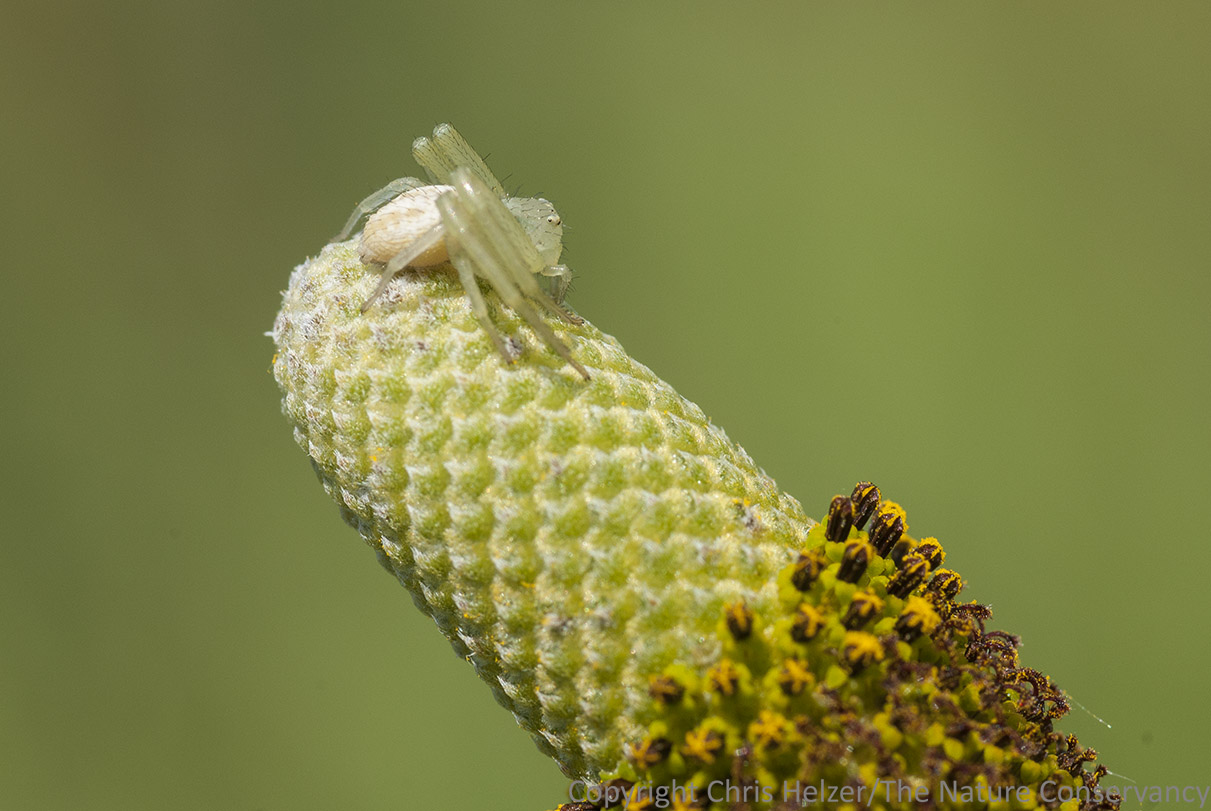
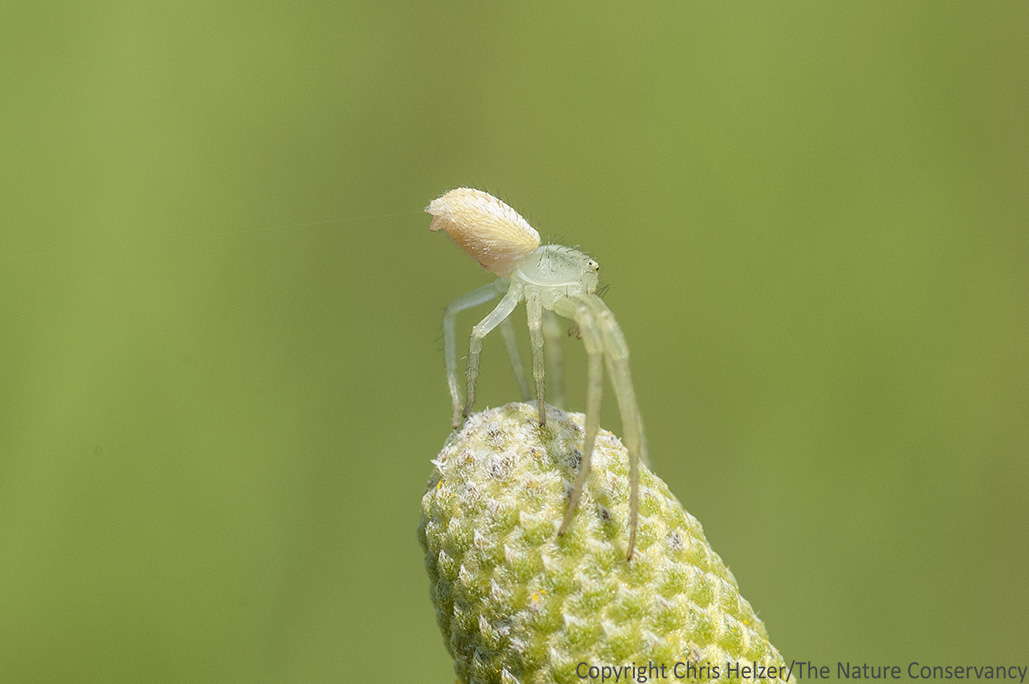
Crab spiders (of course) were waiting for unwary pollinators of the puccoon flowers.

Crab spiders (of course) were waiting for unwary pollinators of the puccoon flowers.

.

Just before we left, my sons and I appreciated the beauty of this goldsmith beetle that had been hanging around the visitor's center lights the night before.  I'd put it in a container to save for the boys to see when they got up, so we released it before we left and it graciously hung around for a few photos.

This goldsmith beetle had been hanging around the visitor’s center lights the night before, so I caught it and put it in a container so the boys could see it when they got up in the morning.  Just before we left the Preserve, we released it – and it graciously hung around for a few photos.

We left just before the rain started up again at the Preserve, and got home and into the house just in time to watch a nice soaking rain through the windows there.  Thanks to all the staff up at the Niobrara Valley Preserve and everyone else who organized the event.

Photo of the Week – May 30, 2014

I made another trip up to Griffith Prairie last week.  It looked pretty much as it had the week before – still lots of ragwort blooming –  but the photographs I returned with were very different.  This time, I came home with a bunch of photos of dumb invertebrates.

(I don’t mean that invertebrates as a group or concept are dumb, rather that the particular individuals I photographed seemed not to be very smart or savvy.  I’ll explain in a minute.)

Since I’d spent quite a bit of time photographing landscapes on my previous visit, I decided to put my macro lens on the camera and look for insects this time.  It was immediately clear that the long winter had dulled my insect photography skills…

First, I had to get my brain refocused on the idea of finding small creatures.  That part actually came back fairly easily.  Second, however, I had to work on my approach once I spotted those small creatures (come in low and slow).  I started by tracking some damselflies that were flitting just ahead of me as I walked.  I’d wait for one to land, then creep slowly toward it.  Unfortunately, just as I’d set my tripod down and lean forward to focus, the damselfly would fly about 2 feet further away and I’d have to repeat the whole process.  That highlighted the third aspect of insect photography I had to recapture… patience.

This was not the first damselfly I tried to photograph...just the one that finally let me get close enough to get a picture of it.

This was not the first damselfly I tried to photograph…just the one that finally let me get close enough to get a picture of it.

I did finally manage to get a photo of a damselfly.  I think it was a matter of following several different ones until I found one that wasn’t as skittery.  Of course, that’s probably a bad sign for the potential survival of that individual damselfly, since skittery is a good tactic to avoid predation.  I often wonder whether the insects I photograph are the ones that are not long for the world…

This returns us to the “dumb insect” topic.  Do you suppose smart insects look different from dumb ones?  I’ll probably never know because the only invertebrates I can photograph are the ones that are too dumb to run, jump, or fly away!

Here is a selection of some of the invertebrates that hung around on ragwort flowers long enough for me to photograph them last week.  I wish them the best, of course, but I’m not optimistic about their long-term survival…

This tiny beetle was on several ragwort plants.  Most of the beetles turned away or jumped to safety when they saw me coming, but this one didn't.

This tiny beetle species was on several ragwort plants. All of the other similar-looking beetles turned away or jumped to safety when they saw me coming, but this one didn’t.  It appeared to be enjoying its pollen dinner too much to bother running away.  It’s probably inside a bird or spider by now.

.

Not a very smart little fly...

Not a very smart little fly…

.

I must have seen two dozen crab spiders before I got this photo.  All the rest of them crawled beneath the petals when I approached, or dropped to the ground if I kept coming.  This one just sat there.

I must have seen two dozen crab spiders before I got this photo. All the rest of them crawled beneath the petals when I approached, or dropped to the ground if I kept coming. This one just sat there.

.

I got several photos of various individuals of this bug species (a true bug - Hemiptera).  Maybe the whole species is not so smart?

I was able to photograph several individuals of this bug species (a true bug – Hemiptera). Maybe the whole species is not so smart?

It was pretty neat to see the diversity of insects and other invertebrates using this one species of wildflower.  There were quite a few more than I’m showing here because most of them didn’t stick around long enough to be photographed (the smart ones).  I’m grateful to those that did.

…and I bet there are some grateful predators out there too.