
Wow, this was a hot week. About the time I stopped hiking hills and collecting data at the Niobrara Valley Preserve yesterday, my truck’s thermometer said it was 111 degrees Fahrenheit. Sure, it was really hot, but I figured the truck was probably estimating a little high until Kim said she looked at the official weather report from Valentine (nearby town) and it said the high recorded temperature there was 112 degrees. That’s pretty hot for northern Nebraska.
One of the reasons I was trudging through the hills in the heat was to look for lizards, but I’m pretty sure they were smarter than I was and were hanging out in cool shady places, because I didn’t see any after about 11 am. The insects in the prairie seemed less affected by the heat, however, and I saw lots of them, including quite a few gorgeous red assassin bugs.

These assassin bugs didn’t seem to be affected by the extreme heat. I spotted them near where I parked my truck on a hill and they were still there over an hour later when I finished walking my transects.
Wasps also seemed to be particularly abundant this week, especially on the blossoms of sand milkweed and other wildflowers. I enjoyed looking at the diversity of wasp species, but my enthusiasm diminished very suddenly when one of them (I’m pretty sure) stung me in the back. I think it must have gotten itself wedged between my pack and my back. It wasn’t MY fault it got stuck there, but I now have a large ugly welt anyway. Man, that hurt! A lot.
The day before I got stung, I spotted a wasp (probably not the same one) in a patch of bare sand, and thought about photographing it. I glanced down at my bag just long enough to extract my camera, but when I looked back the wasp had moved a few feet and was now grappling with one of those red assassin bugs.

Just because the wasp is on top of the assassin bug doesn’t mean it was getting the upper hand, as you’ll soon see.
Actually, grappling is probably a misleading term because it looked like a pretty one-sided battle. After a half minute or so, the assassin bug flipped the wasp over and it was clear who was winning.

Getting stung by a wasp on a super hot day wasn’t fun, but this wasp was having a worse day than I was having. You can see the assassin bug’s proboscis inserted into the abdomen of the wasp, and the bug’s toxin is apparently pretty fast-acting because the wasp was done twitching by this point.
I photographed the scene quickly and then got up to leave. I must have moved too suddenly for the assassin bug’s liking, though, because it took off and flew a few yards away, leaving the wasp behind. Even after I kept moving away and left the area alone for a few minutes, the assassin bug didn’t return, so I came back and took one final photo of the dead wasp. I’m hoping maybe the bug returned to finish its meal later. I feel bad…

The dead wasp.
I think the wasp pictured above is a male, though I’m not confident of that. I don’t see a stinger, anyway. While I was driving home yesterday (with the air conditioner blasting pleasantly), I wondered to myself whether or not assassin bugs can tell male wasps from female wasps. Apparently wasps can tell the difference, so it doesn’t seem completely crazy that other insects could as well. It would sure be handy to know whether you’re about to attack a stinger-wielding female or an unarmed male…
Everyone thinks about this kind of thing while they drive, right?
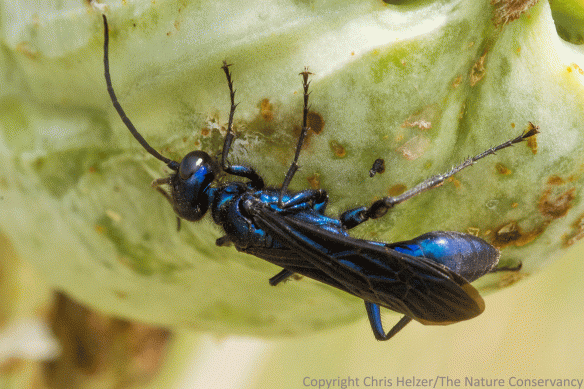
This wasp hung out on a yucca pod just long enough for me to photograph it.
I’m definitely a generalist, rather than a specialist, when it comes to ecology and natural history. I know a little bit about a lot of species rather than a lot about a selected group. If I had to narrow myself down, though, wasps would be a group of organisms I’d like to study. I mean look how cool the blue one above is! Or maybe I could study assassin bugs. They’re pretty amazing too. Or moths… Or grasshoppers… Or flea beetles?
Maybe I’d better stick to being a generalist.


