Hubbard Fellowship Blog – Carp Fishing

Guest Post by Anne Stine, one of our 2013-14 Hubbard Fellows:

The carp are so thick in one of our restored creeks near the Platte that their top fins stick out of the water like a shark’s and you can see small schools of their long bodies grubbing around nose-down in the shallows.  Fish over a foot long fling themselves into the air above the creek’s slow pools when they’re spooked, seemingly at random.  I noticed this abundance on my first day out on the prairie with Chris.  With his blessing, it became my mission to harvest a quantity of this invasive fish-flesh in our stretch of creek near the crew quarters.

My fishing spot.  Photo by Anne Stine.

My fishing spot. Photo by Anne Stine.

I found a beautiful fishing spot on a bridge over the pinch between two large pools.  From the bridge, you could see carp and gar loitering below.  The view of our pastures to the west of the bridge promised a lovely sunset for an evening angler.  I baited my hook with corn kernels and cast it in.

Less than ten minutes later I’d hooked a carp as long and meaty as my forearm.  Supposedly tricky to catch, these trash fish do love corn.  The carp pulled and struggled while I attempted to tire the fish before hauling it in.  I was wary- I’ve snapped lines before by reeling in too soon.  One fish had gotten away after breaking my line above the bobber.  I watched him tow my bobber around and continue to forage for the rest of an evening, the red bobber dragging behind him like a balloon on a string.

Carp are an invasive species for much of the United States.  They are considered problematic because they become over-abundant and eat food used by native fish, and their foraging method stirs up mud and increases turbidity in the creeks, rivers, and ponds where they are established.  It used to be illegal to throw them back in Minnesota.  Nebraska and Iowa still host a “Carp-O-Rama” bowfishing tournament, with prizes awarded based on the highest total weight and the highest total number caught.

Carp’s bad reputation is bolstered by its arguably inferior flavor.  Carp are generally considered trash fish because they can have an earthy taste partially sourced in a ‘mud vein’ running along their sides.  They also have a complex bone structure that makes filleting a challenge.  Common recommendations for preparing carp fillets include scoring the fillets in the diagonal strips so the small bones are softened enough to eat with ease.  Smoking carp is also frequently recommended for the same reason.  Naturally, I didn’t read any of this and assumed that Americans were just being snobby by snubbing this fish that is widely eaten in Europe and Asia.  After catching two moderately sized carp, I went home to fillet the fish and fried them up for my coworkers.
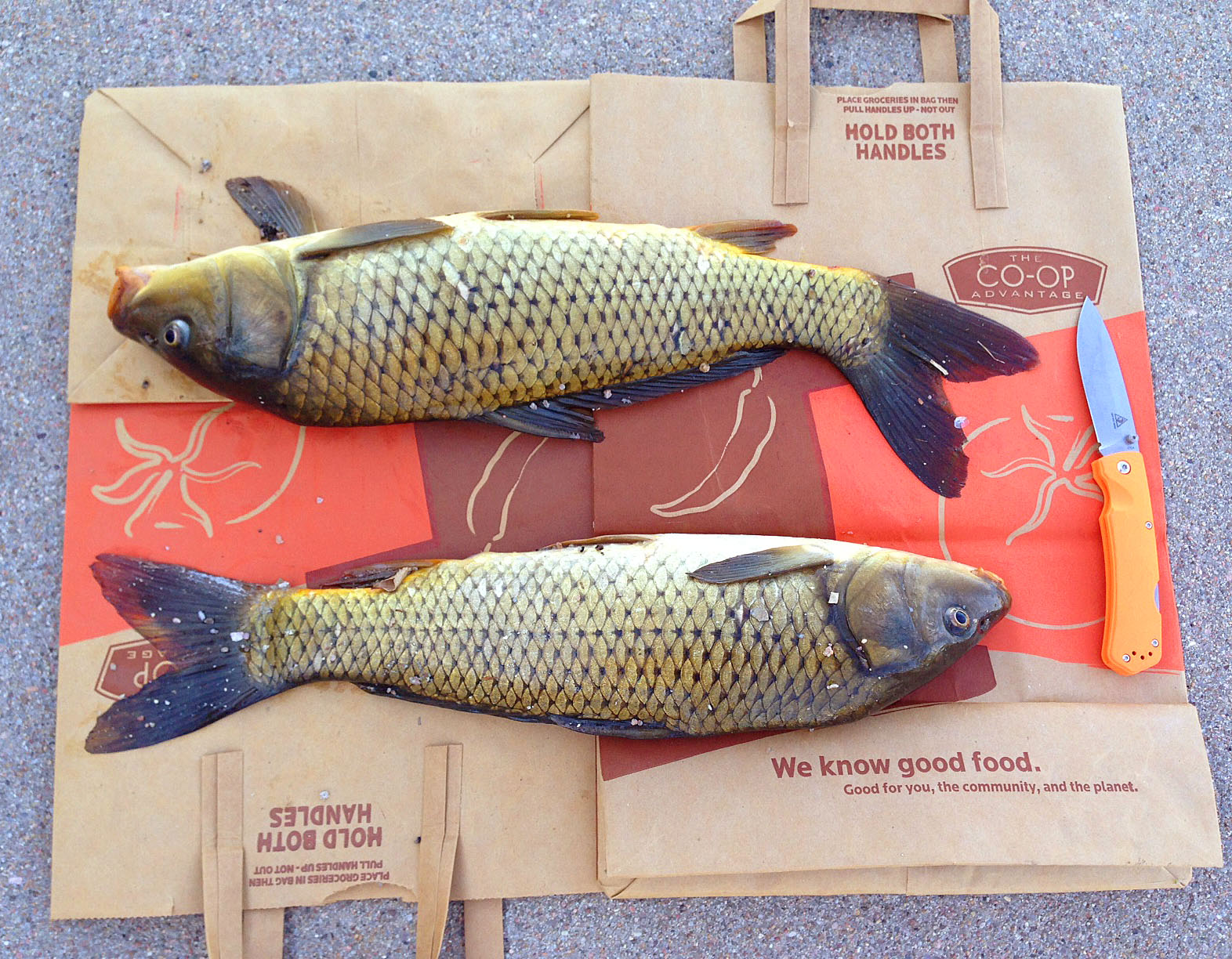
Dinner!  Photo by Anne Stine.

Dinner! Photo by Anne Stine.

I want to say the carp were delicious.  I want to say “Everyone! Go out and help yourself to amazing, readily available fish. Do your river a favor and eat carp.” Frankly, carp is bony with a muddy aftertaste.  I’ll try a few more prep methods, but my enthusiasm for utilizing this neglected resource is greatly diminished now that I’ve had it.  Hopefully bunnies this fall will be easier on the palate.
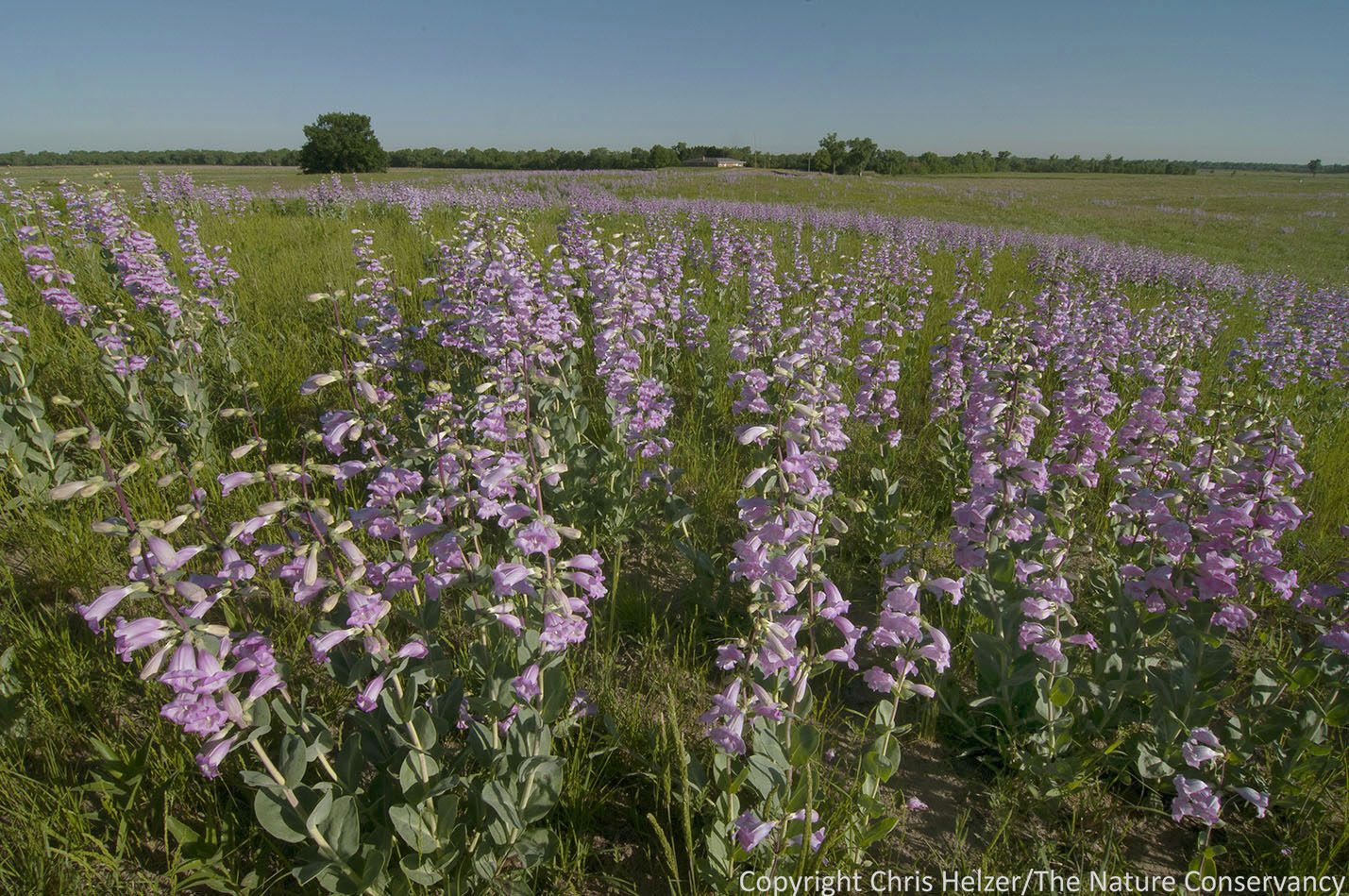
Photo of the Week – June 7, 2013

Prairies demonstrate their resilience regularly, but usually in a fairly subtle way.  They tend to adjust their plant composition after fire, grazing, or drought in ways you might not notice unless you were a botanist.  Once in while, however, prairies take it to the next level and really show off.

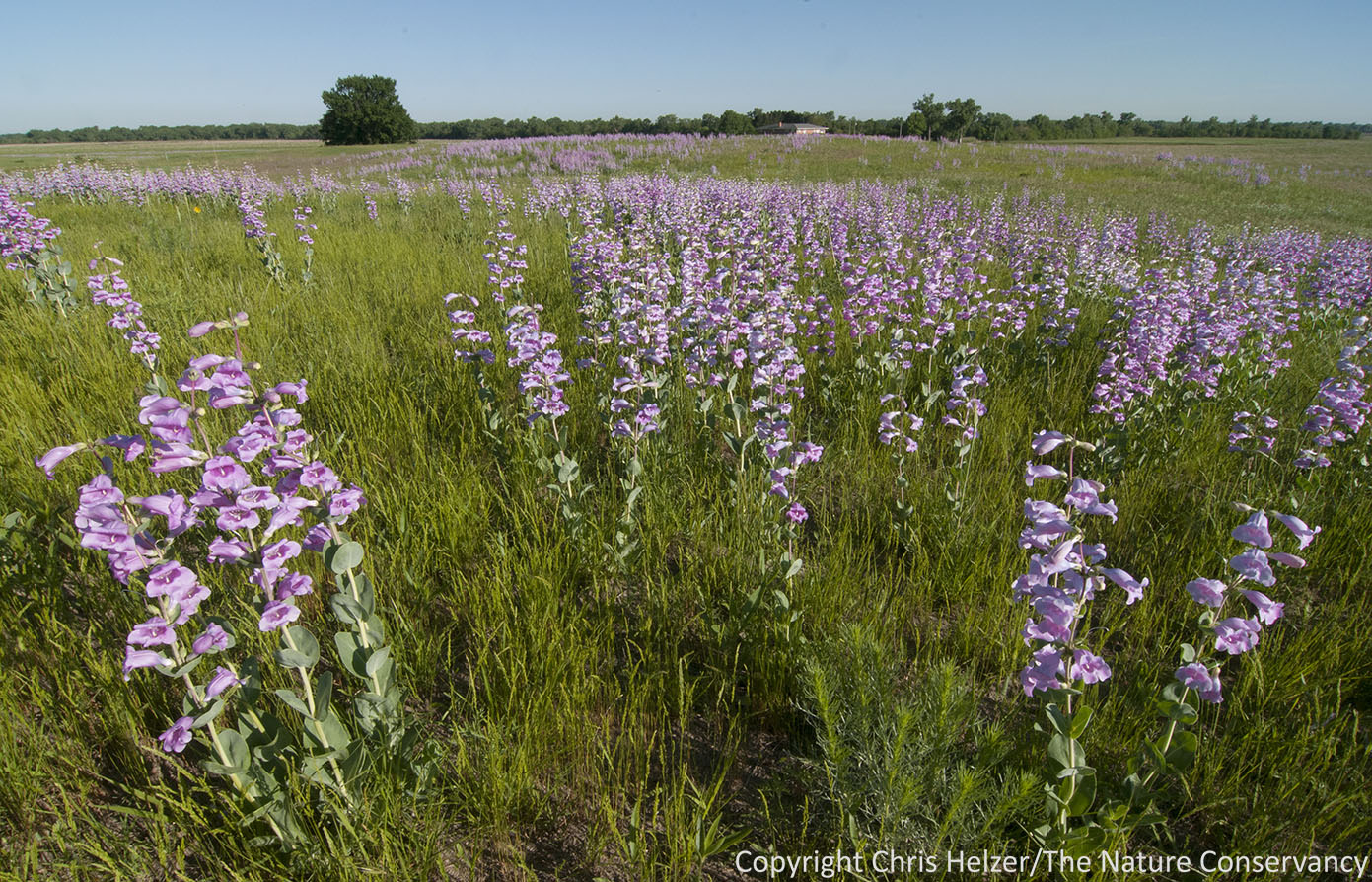
A profusion of penstemon in restored sandhill prairie at The Nature Conservancy's Platte River Prairies.

A profusion of penstemon in restored sandhill prairie at The Nature Conservancy’s Platte River Prairies.

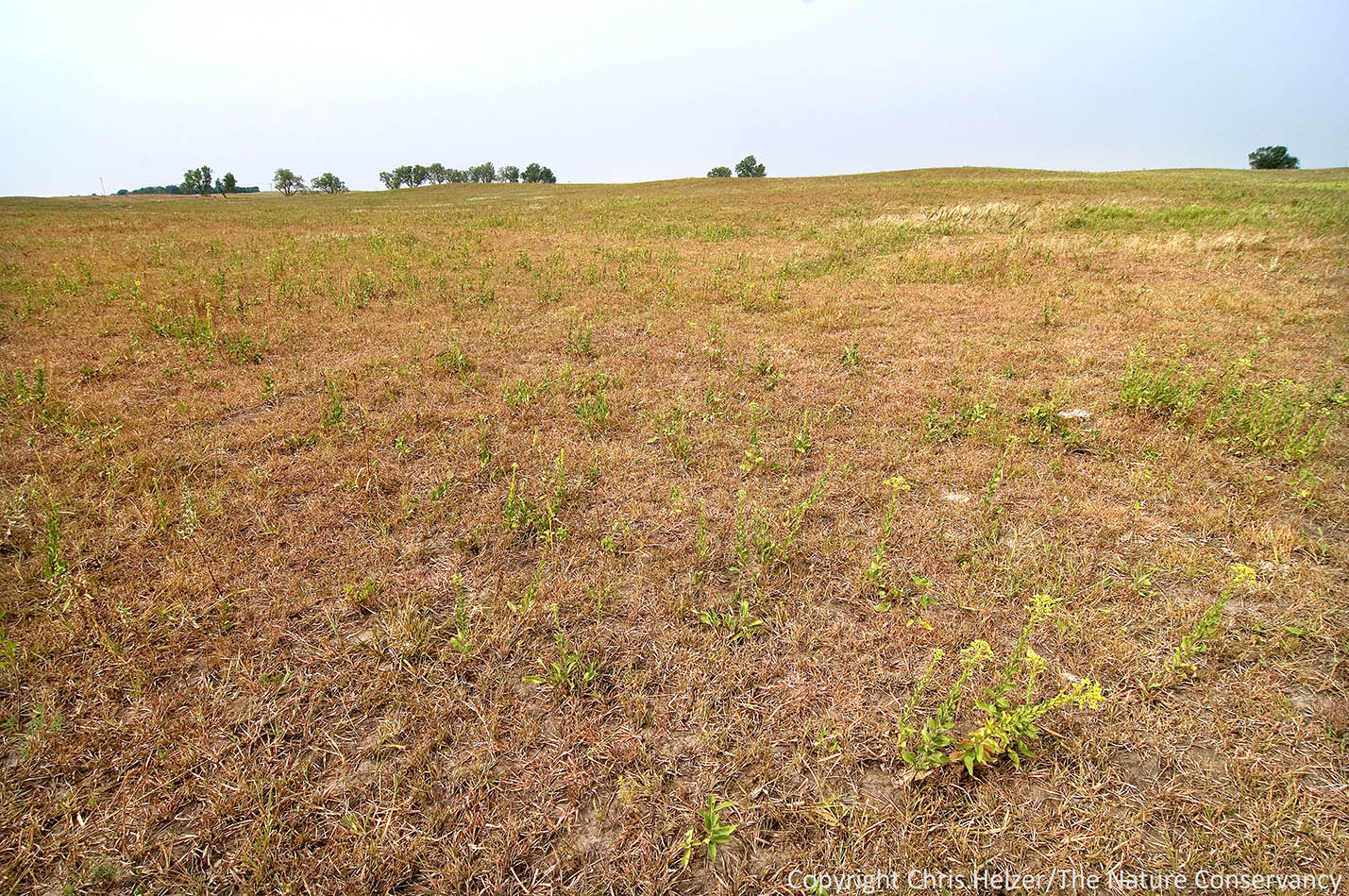
Last year was the driest year on record for this area.  We had less than half of our average annual rainfall, and most of that came early.  By late August, very little green was left in most of our sites.  The prairie shown above had been burned in the spring and grazed most of the season.  Many people seeing it for the first time would have assumed it was dead and gone (see photo below).

This is the same portion of prairie shown in the first photo, but this images was taken August 24, 2012 after a year of fire, grazing, and severe drought.  Most of the green in the photo is western ragweed and a little goldenrod.

This is the same portion of prairie shown in the first photo, but this images was taken August 24, 2012 after a year of fire, grazing, and severe drought. Most of the green in the photo is western ragweed and a little goldenrod.

I’ve written about the ecological resilience of prairies before, and have presented long-term data showing how our prairies fluctuate in plant composition over time in response to drought, grazing, fire, and various combinations of those factors.  Many plant species rise and fall in abundance as conditions change (opportunistic species) and others tend to maintain a steady population size, though they may be more or less visible in particular years.  It’s one thing to see that in graphs and tables, but it’s also fun to see a spectacular green-up and explosion of wildflowers in person, especially after a long dry (brown) year.

In the sandhill prairie shown above, last year’s drought caused most of the perennial plant species to enter dormancy by July – effectively giving up on that season’s growth and reproduction potential and saving their remaining energy for the next year.  Before they went into dormancy, however, the perennial grasses had already been weakened by relatively intense grazing, reducing the size of their root masses and opening up space for opportunistic species to take advantage of.  One of those opportunistic species is the short-lived perennial shell-leaf penstemon (Penstemon grandiflorus) which is obviously thriving this season.  Shell-leaf penstemon has been generally increasing in abundance since this prairie was seeded in 2002, but it took a gigantic leap forward this year.  Based on what I’ve seen in other prairies, I expect it to decline in abundance over the next couple of years as the dominant grasses and other long-lived perennials recover from last year’s stress.  In the meantime, we’re happy to enjoy the prairie’s flamboyant demonstration of resilience.

Junegrass (Koeeria macrantha) is also having a great year, and provides a beautiful counterpoint to the penstemon in this photo.

Junegrass (Koeeria macrantha) is also having a great year, and provides a beautiful counterpoint to the penstemon in this photo.

If you’re in the area, now is a great time to come hike our trails.  Both the upland and lowland trails through the Platte River Prairies cut right through huge patches of penstemon.  If you’ve never been to our trails, you can find directions and more information here.

The mowed hiking trail through sandhills provides excellent exposure to the penstemon profusion this season.

The mowed hiking trail through the sandhills takes you right through penstemon profusion this season.