Post-Grazing Party: Part 3 – Helzer Family Prairie

As I said back in early May, I’m spending a lot of my photography time in three 80×80-foot plots this summer. Each plot in part of a prairie that was grazed intensively most or all of last year. I’m hoping to highlight why I enjoy exploring places where the growth of normally-dominant plants (especially grasses) is temporarily suppressed from last year’s grazing.

Space and opportunities are opened for other plant species to flourish for a year or so until those dominant species hit full strength again. Generally, I see all the perennial plants I’m used to seeing, but they’re joined (temporarily) by a flush of short-lived plants as well.

In addition, the habitat structure is unique and interesting – especially as the season progresses. It often resembles a kind of miniature savanna, with wildflowers instead of trees towering over short grasses. It’s a habitat type preferred by many invertebrate and vertebrate wildlife species.

Pussytoes (Antennaria neglecta) went to seed in mid May at our family prairie. This is a long-lived rhizomatous plant that definitely enjoys the short habitat structure created by grazing.

Today’s post features the 80×80 plot at my family prairie, where I’m experimenting with the open gate rotational grazing. This is basically a big photo dump from about the last month or so. To make up for the large number of photos, I’ve kept the text to a minimum, but have hopefully included enough to give you some context. There’s a lot happening, and every visit I’ve made has resulted in some terrific photos.

Pussytoes and sunset.

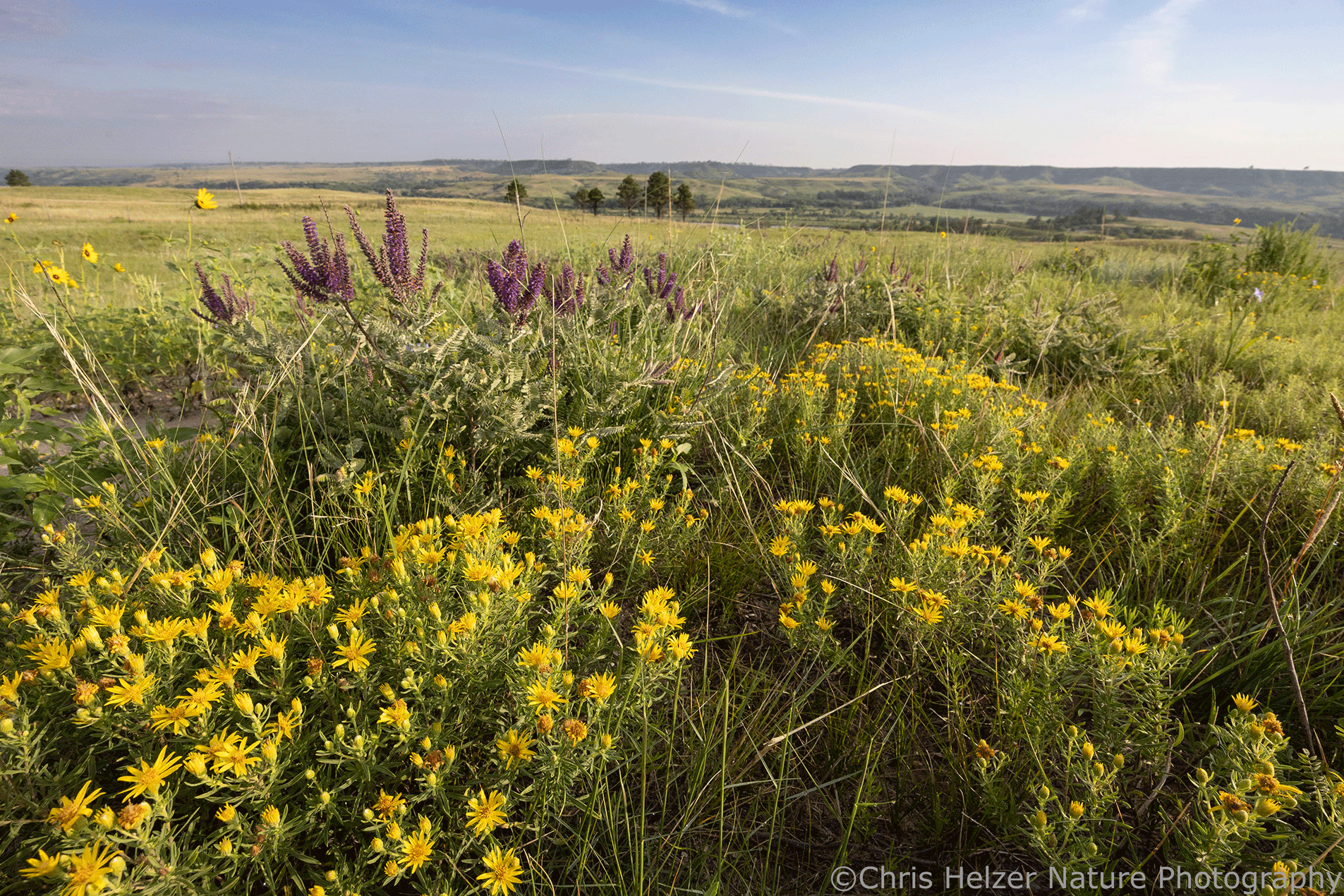
Early in the season, the vegetation was pretty uniformly short. Pussytoes, only 6 to 8 inches tall, towered over the surrounding landscape. By mid-June, though, things have changed, with opportunistic wildflowers like yarrow and daisy fleabane growing more than two feet tall and providing an interesting mix of tall and short vegetation structure. That means animals have lots of choices between open, sunny areas and cool, shady cover.

Yarrow (with fleabane in the background) growing tall, surrounded by short grasses.
Mid-June in the part of our family prairie that was grazed intensively all last season. The orange flags mark the corners of my 80×80 foot plot.

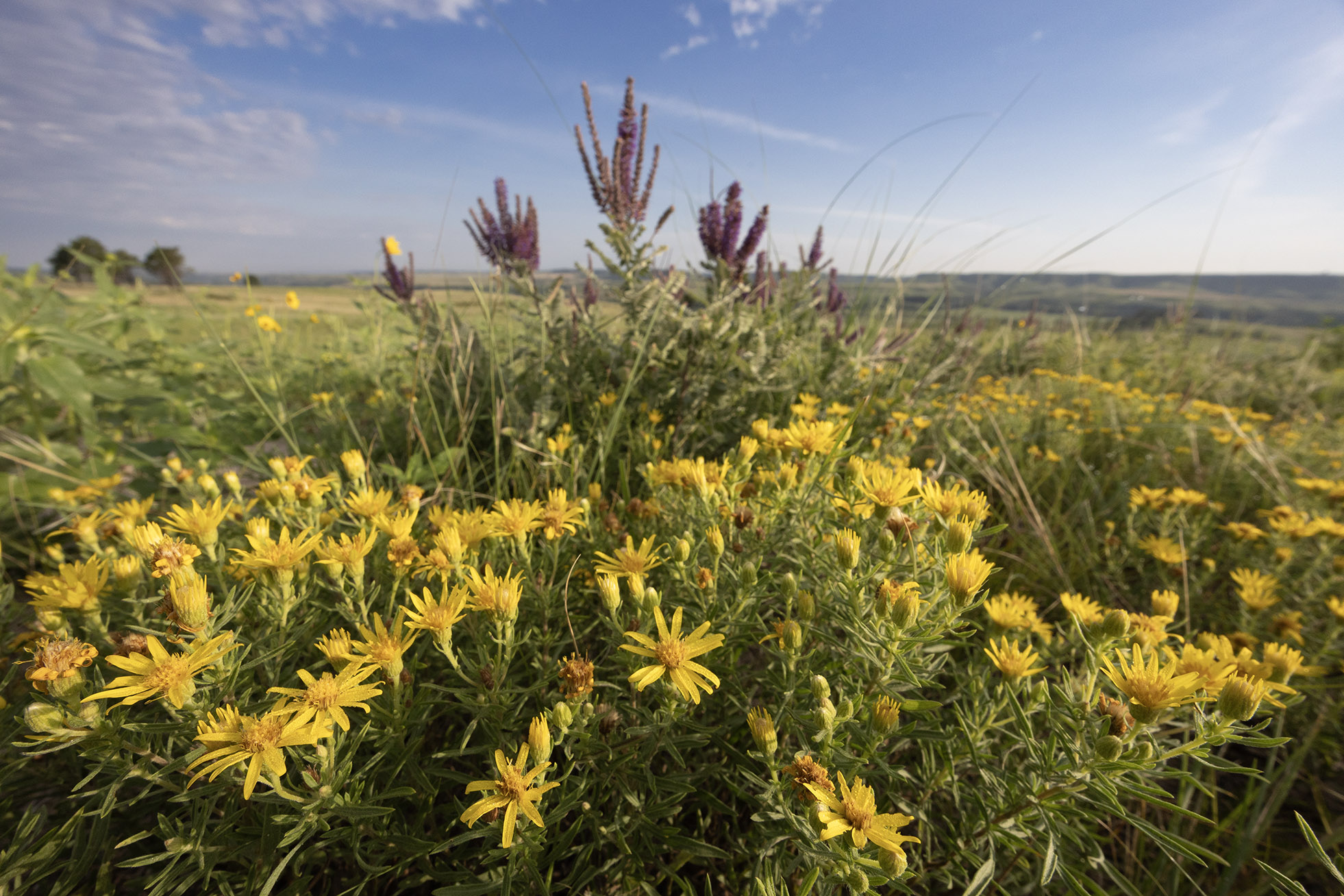
The 80×80 foot plot at our family prairie is located on a slope I believe to be remnant (never plowed) prairie. There have been a lot of wildflower species blooming, and a lot more are getting ready. Many are native, but a few aren’t – though none are invasive or problematic.

Shell-leaf penstemon (Penstemon grandiflorus) is a species I’ve seeded into the prairie in recent years (from seed harvested nearby).
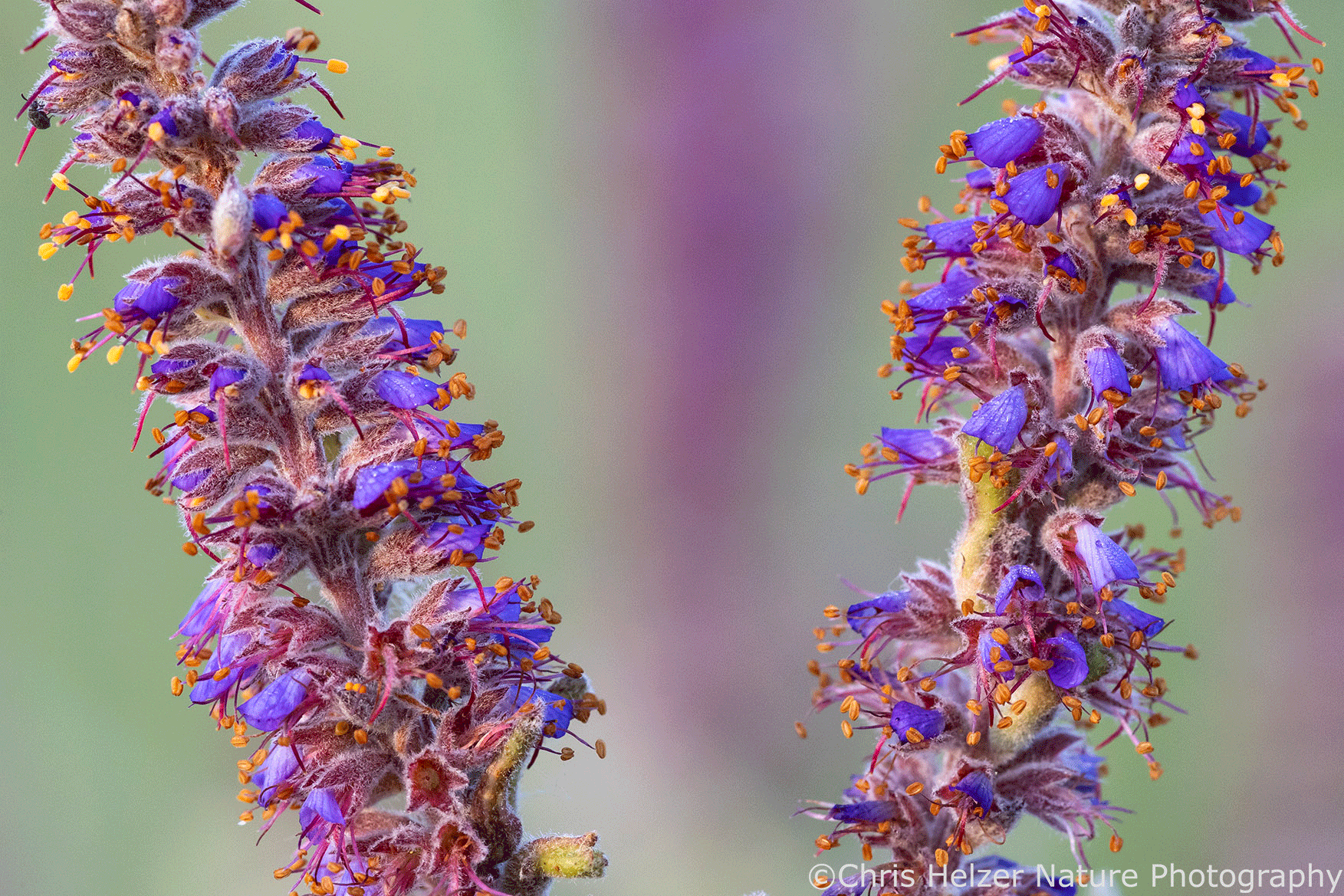
False gromwell, aka marbleseed (Onosmodium molle).
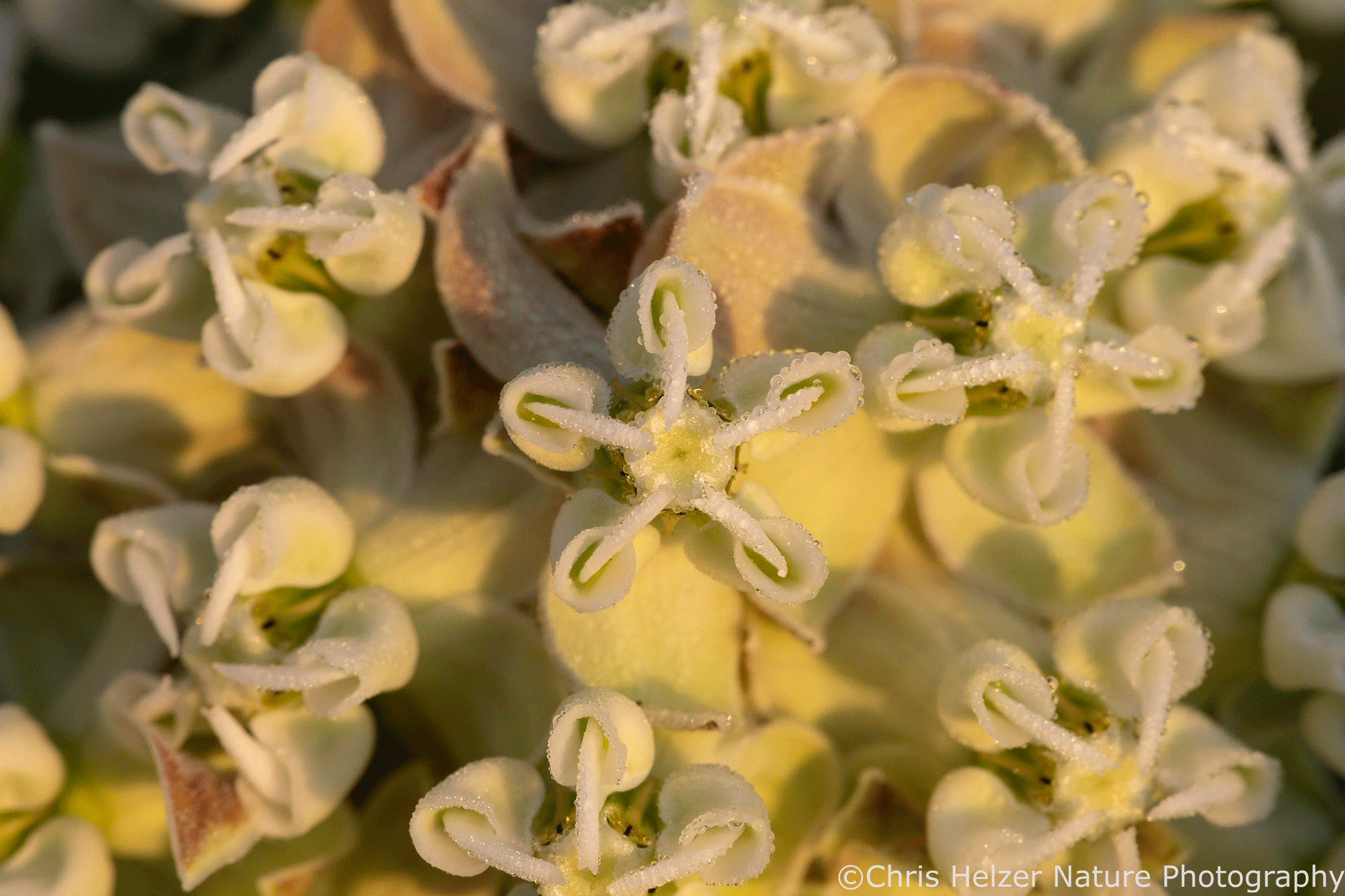
The flowers of false gromwell are closed at the tip, restricting pollinators to those strong enough to force their way inside and/or those with long tongues.
A lot of daisy fleabane (Erigeron strigosus) germinated last year during the grazing and is blooming happily this year before dying at the end of this season.

I’ve paid attention to how much fruit has been produced by ground plum in places that were grazed and ungrazed last year. The grazed areas, including my plot, have way more fruits on the plants than I see in the ungrazed sites. I wonder if that’s because they bloomed more prolifically, were pollinated more, or something else (or, likely, a combination of factors). Either way, it’s a stark difference.

Ground plum, aka buffalo pea (Astragalus crassicarpus) fruits.
Silver-leaf scurfpea (Pediomelum argophyllum) is a long-lived perennial that seems unaffected by grazing.
Peppergrass (Lepidium densiflorum) is a neat little annual that is doing well with the abundant light and low grass competition.
Goatsbeard, aka salsify (Tragopogon dubius) is a non-native wildflower I enjoy. It’s short-lived and profits from less competitive grasses.
The non-native legume black medic (Medicago lupulina) is one of the big winners in all three of my 80×80 foot plots this year. Next year, it will be drastically less abundant as grasses recover their vigor.
The invasive smooth brome (Bromus inermis) is found in pretty much every Nebraska prairie these days, but while it bloomed in my 80×80 plot, its minimal vegetative production showed how little competition it was able to provide in the community this spring.

The abundance of invertebrates is one of my favorite aspects of these post-grazing areas. They seem to be drawn to the combination of sun and shade in close proximity, which allows them to easily thermoregulate. A bonanza of wildflowers also draws a lot of pollinators, and that’ll become even more apparent over the next month or two as prairie clover (a particular favorite of bees) starts blooming.

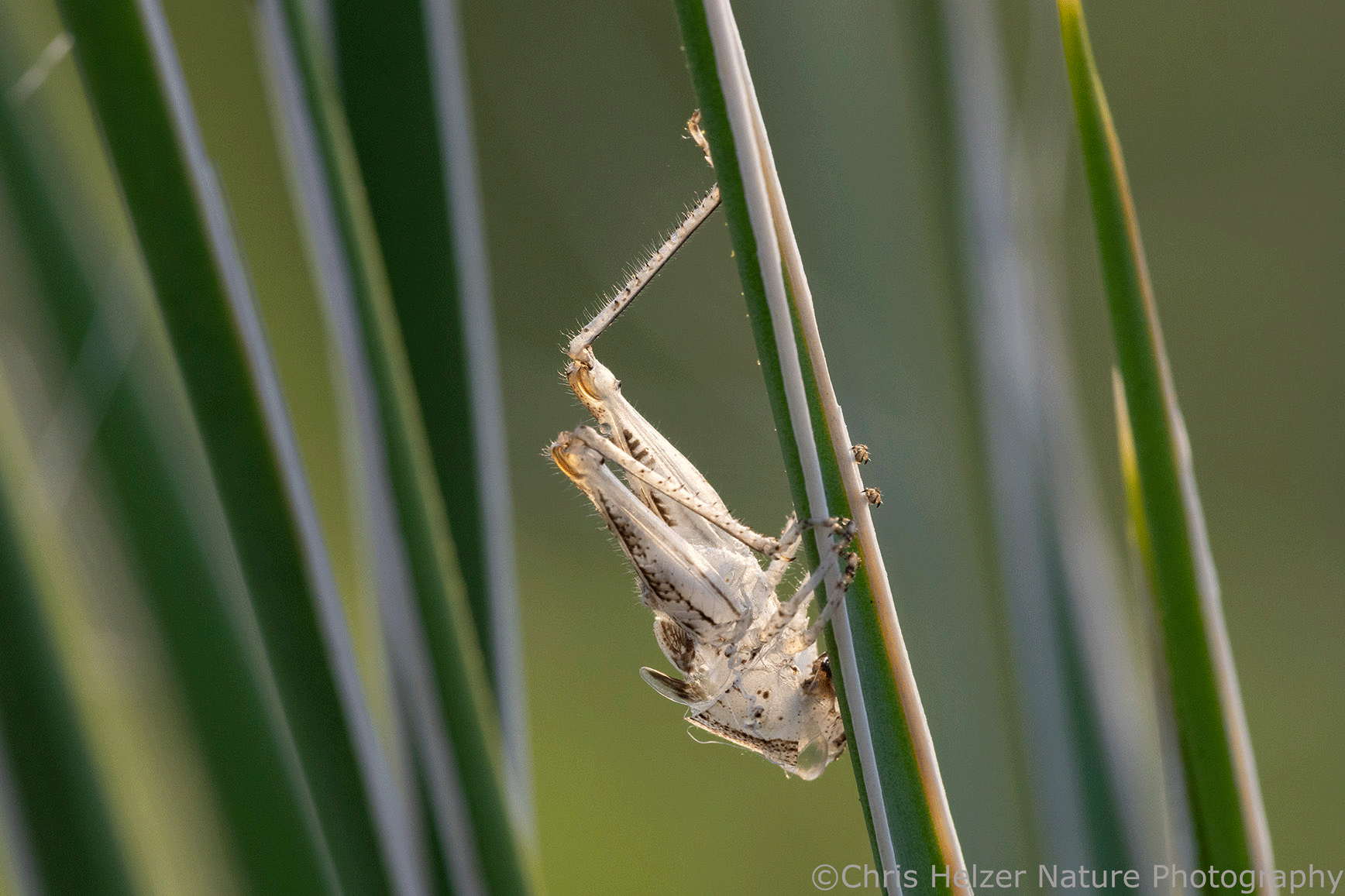
Katydid nymph.
Grasshopper.
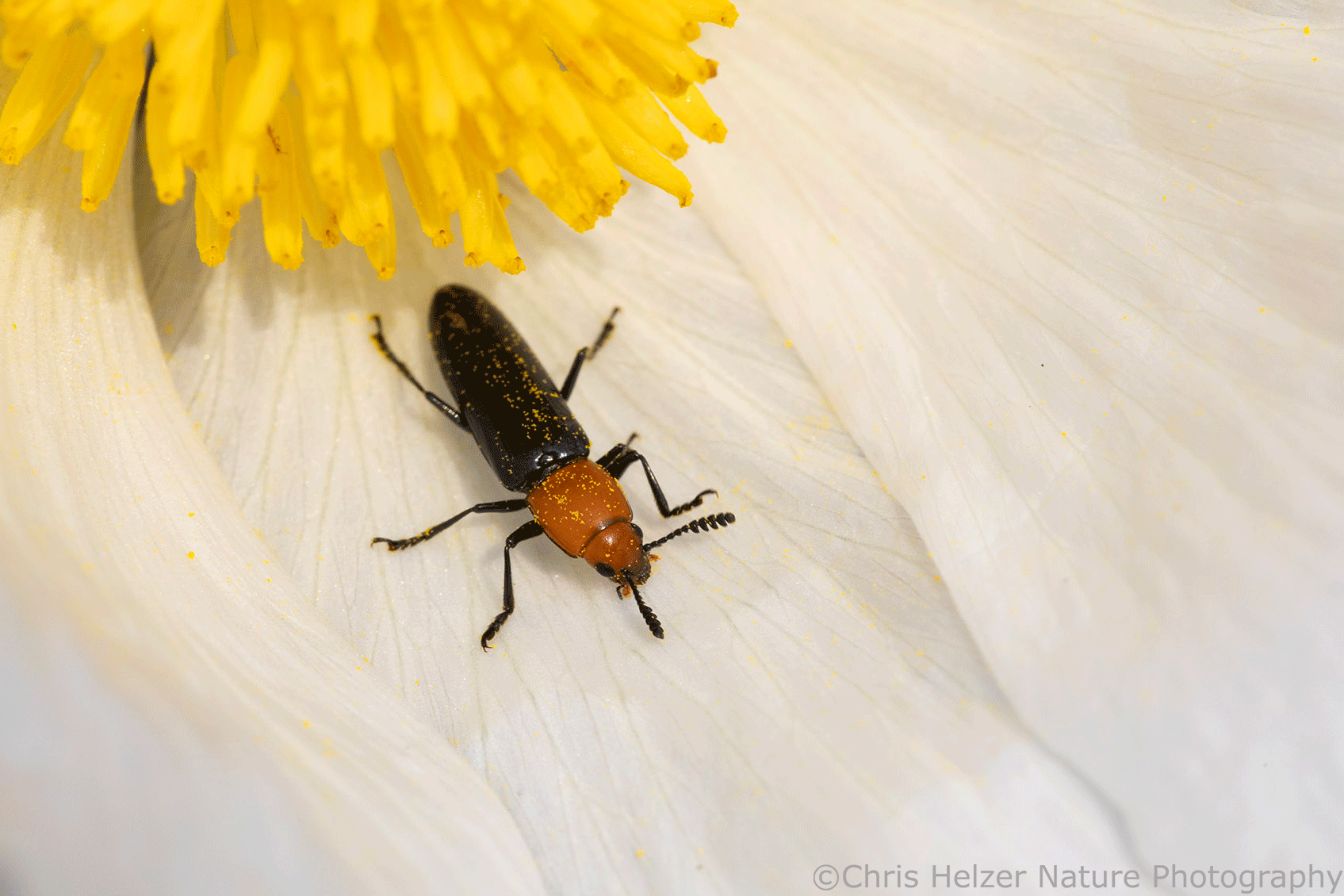
A blister beetle (Epicauta sp.)

I’ve photographed three ladybird beetles (ladybugs) in the plot so far this year, including the non-native seven-spotted ladybird and two native species.

Seven-spotted ladybird beetle (non-native)
Convergent ladybird beetle (native) on daisy fleabane, with an aphid, its favorite prey, shown at the top of the photo.
Parenthesis ladybird beetle (native).
Tiny beetle on stiff goldenrod (Oligoneuron rigida).
Reakirt’s blue butterfly.
There have been lots of wolf spiders running around on the bare soil.

There’s lots of patchy bare ground in the post-grazing portion of our prairie this year. That makes for great habitat for many invertebrates. It should also be great for ground-nesting bees. The other day, I saw what I thought was probably the entrance to a small bee’s nest and hung around to see if I could get a photo of the bee coming or going. I did manage to spot and photograph the resident, but it turned out not to be a bee. Instead, it was the larva of a tiger beetle – a group of species whose larva and adult stages both enjoy hunting in areas of bare ground.

Tiger beetle larva entrance.
Tiger beetle larva ready to hunt. If you click on the photo to get a bigger/clearer version you can get a much better view of its face.

I mentioned daisy fleabane earlier. It’s definitely one of the plant species that has benefitted greatly from last year’s grazing. While many people consider it “weedy” because it’s a biennial, it’s attractive and I’ve enjoyed watching all the diversity and activity taking place on it this spring.

Daisy fleabane (Erigeron strigosus)
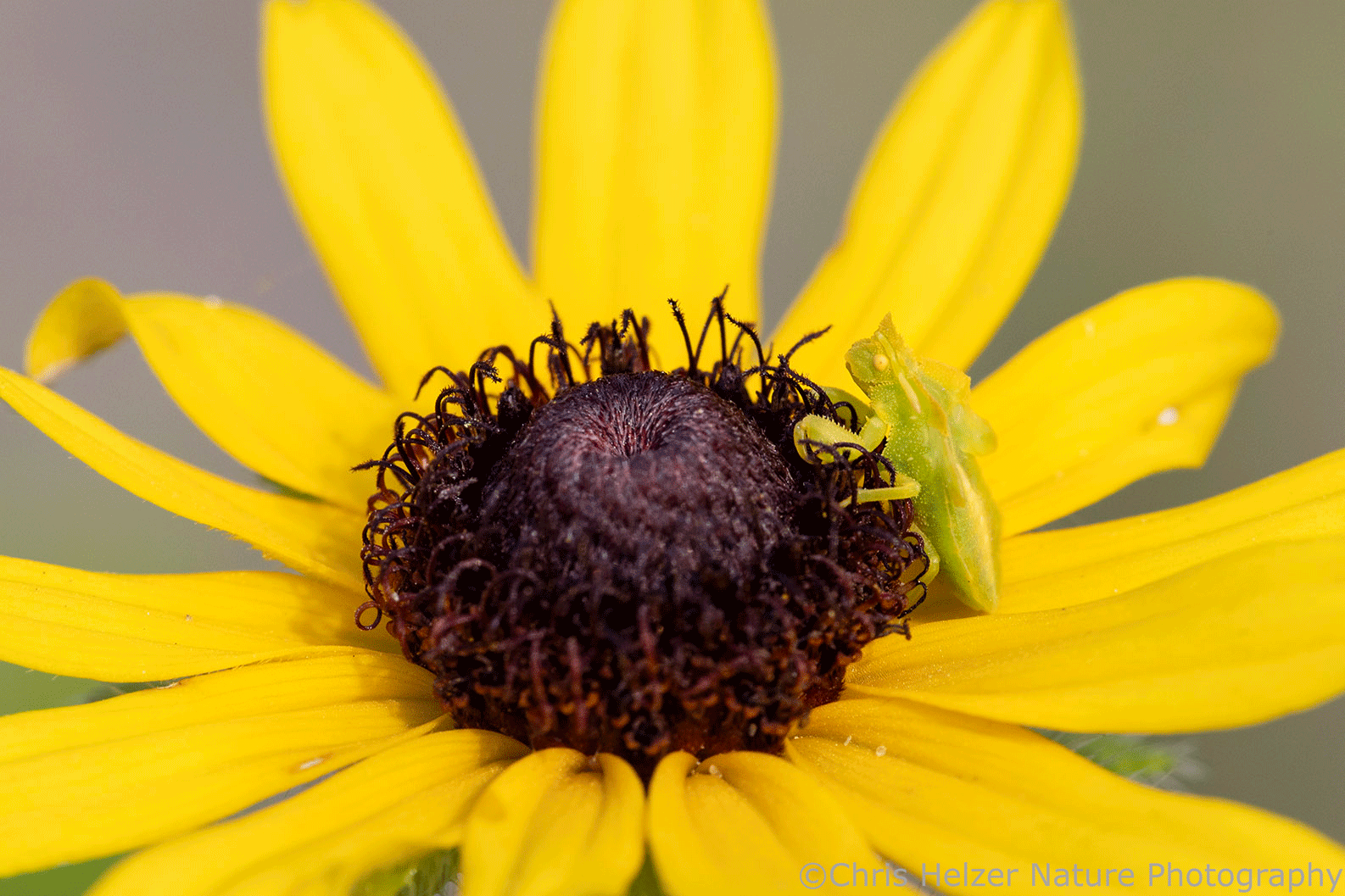
A bug (showing its long mouthpart) hiding behind a flower.
A tiny bug (Lygus lineolaris?) feeding on daisy fleabane.
A fly infected by the Entomopthora muscae fungus. Read more here: https://prairieecologist.com/2024/06/25/early-summer-natural-history-stories/
Fly feeding on yarrow.

I’ll finish with a barrage of crab spider photos from this site. It’s been a great year for crab spiders at many of the prairies I’ve visited, but they seem particularly abundant here. They’re hanging around on lots of different flowers, hunting the many invertebrates coming to visit those blossoms.

Crab spiderling on pussytoes.
Crab spider on yarrow.
Crab spider on daisy fleabane.
Crab spider on silver-leaf scurfpea.
Crab spider on daisy fleabane.
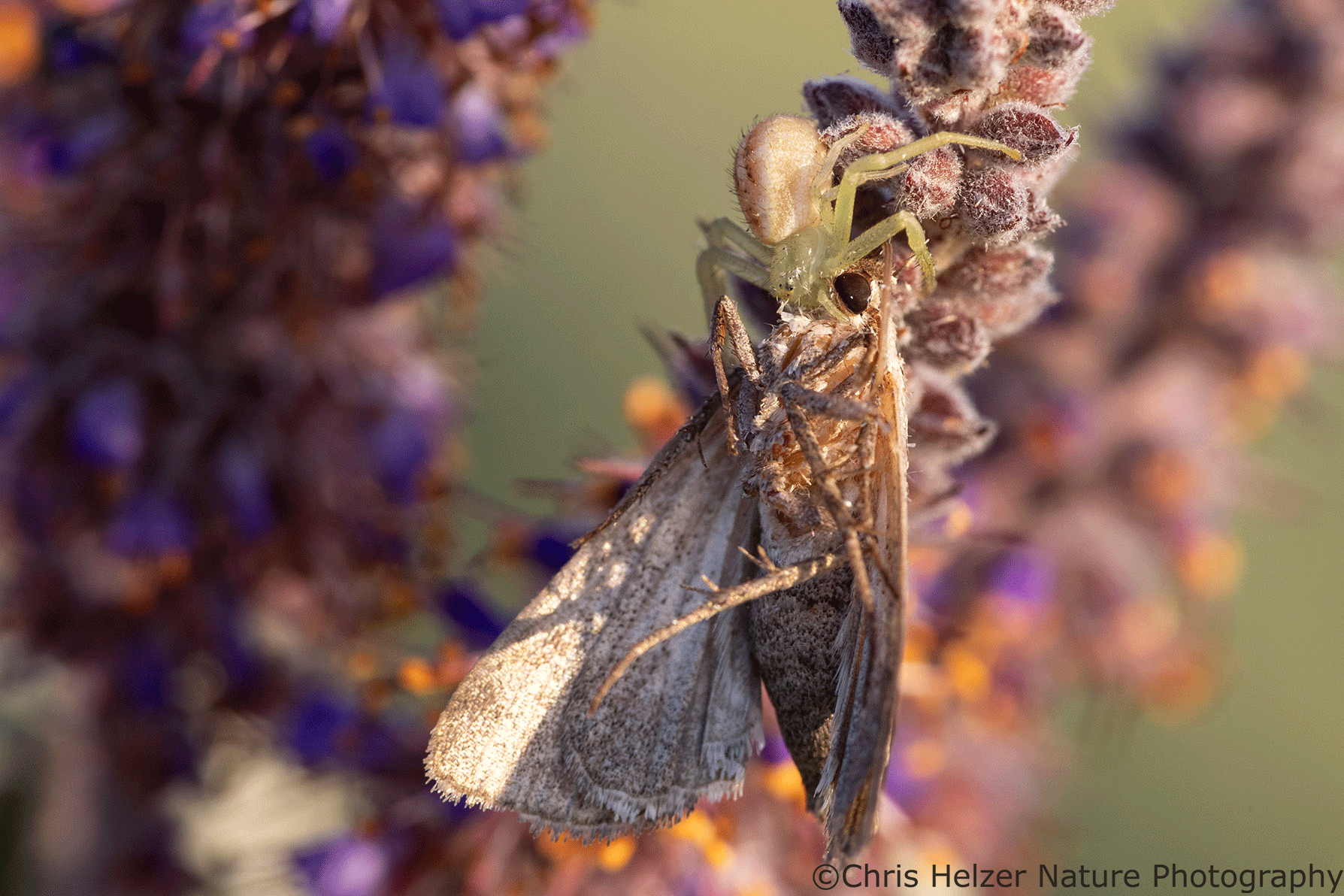
Crab spider on daisy fleabane with captured fly.
Crab spider (male) on daisy fleabane with a setting sun behind it.

Photos of the Week – May 8, 2025

This week, I’ve found two different brief opportunities to poke around some local prairies with my camera. Both prairies were nice remnant (unplowed) grasslands with a good diversity of early season wildflowers, native sedges, and other little treasures.

My first stop was at Gjerloff Prairie, a terrific loess hills prairie owned and managed by Prairie Plains Resource Institute. It’s only about 20 minutes north of my house here in Aurora, so it’s a site I know pretty well. I usually try to visit at least once or twice each spring because it has some wildflower species I don’t see often in other prairies near home.

Showy vetchling (Lathyrus polymorphus) at sunrise.
The same plant, photographed at a slightly different angle to get the sun behind it.
Big portions of Gjerloff Prairie were burned this spring, and recently enough that there weren’t yet any flowers blooming in those burned areas. That meant I had to walk further than usual to get to some unburned areas and open flowers.
Prairie ragwort (Packera plattensis) is a terrific little biennial.
I have a hard time not photographing showy vetchling when it’s blooming.
More from the same patch of showy vetchling.
False Solomon’s seal (Maianthemum stellatum) is a confusing plant to me (I still love it) because I first learned it as a woodland plant but it does well in the middle of some open prairies as well.

Later in the week, I took a break from other projects and wandered around one of our sedge meadow/prairie sites (Caveny Tract) at The Nature Conservancy’s Platte River Prairies. It’s a site with sandy alluvial (river deposited) soils, but still has a fair amount of overlap with Gjerloff Prairie in terms of plant species blooming right now. Prairie ragwort, pussytoes, and fringed puccoon are just a few examples. (For some reason a lot of the current wildflowers are yellow.) However, there are lots of different plants as well.

Prairie ragwort with a tiny moth at the Platte River Prairies.
Fringed puccoon (Lithospermum incisum)
Yellow stargrass (Hypoxis hirsuta) is a “locally common” wildflower along the Platte River. It’s not in all sites, but can be very abundant in some.

The Caveny Tract includes more than 350 acres of prairie that is adjacent to hundreds of acres more. There are lots of little sedge meadow habitats embedded in the prairie, mostly in old swales formed by the meandering Platte River hundreds or thousands of years ago. Those swales are now close enough to groundwater to host a mixture of wetland and mesic prairie plants. Those sedge meadows, not surprisingly, contain both an abundance and diversity of sedges. In many places, you can stand still and see half a dozen sedge species within a few yards of your feet.

That’s assuming you’ve spent enough time with a dichotomous plant key to learn to identify some of the different sedge species. If you’ve never used a dichotomous key to identify plants, you’re missing a terrific opportunity to be overwhelmed by botanical terminology. I know enough to recognize differences between most sedge species and can identify the more common ones on sight. Every once in a while, I’ll grab a sample of one and run it through the key to stay in practice (and try to confirm my identification guess). It can take a while, mostly because I have to keep referring to the glossary to remember what a lot of the words mean.

If I did it more often, of course, I’d be better at keying plants. On the other hand, there are other things I’d rather be good at, so it’s all a matter of perspective and prioritization. I’m an ecologist, not a botanist, entomologist, or ornithologist. I don’t have to know all the species within any particular taxonomic group. I just need to know enough of them that I can recognize interactions between them. Or, at least, this is what I tell myself when I don’t feel like keying out plants.

I’m pretty sure this is Carex tetanica, one of many sedge species in the wet meadows of the Caveny tract and surrounding areas.

Here’s an example of what I mean about the terminology needed to quickly run through a plant key. The sedge pictured above is probably Carex tetanica. I think that because its lower pistillate spikelets appear to be loosely flowered, as compared to those on Carex meadii. Both species have perigynia with 2 strong marginal ribs and are glaucous at maturity. Their pistillate scales are also usually purplish brown on each side of the midrib.

If you’re a botanist, all the words in that paragraph probably make perfect sense (though you may also tell me that the pictured plant is Carex meadii rather than C. tetanica and I won’t argue with you). If you’re an ecologist like me, you’re content to live with a little uncertainty and keep some brain space reserved for other words and ideas.

These buttercups were thriving in a particularly low/wet part of a slough where a tree clearing/thinning project recently took place along the south edge of the Caveny tract. What species of buttercups are they? I have no idea. They’re really pretty, though.

The photographic highlight of my Caveny Tract exploration was a big patch of pussytoes (Antennaria neglecta) going to seed. I spotted the pale patch of fuzzy plants from 50 yards away or so. Growing right in the middle of it was a lone prairie ragwort plant. I found the combination of the two species really attractive and spent a lot of time photographing the ragwort flowers surrounded by the pale fluff.

Prairie ragwort and pussytoes

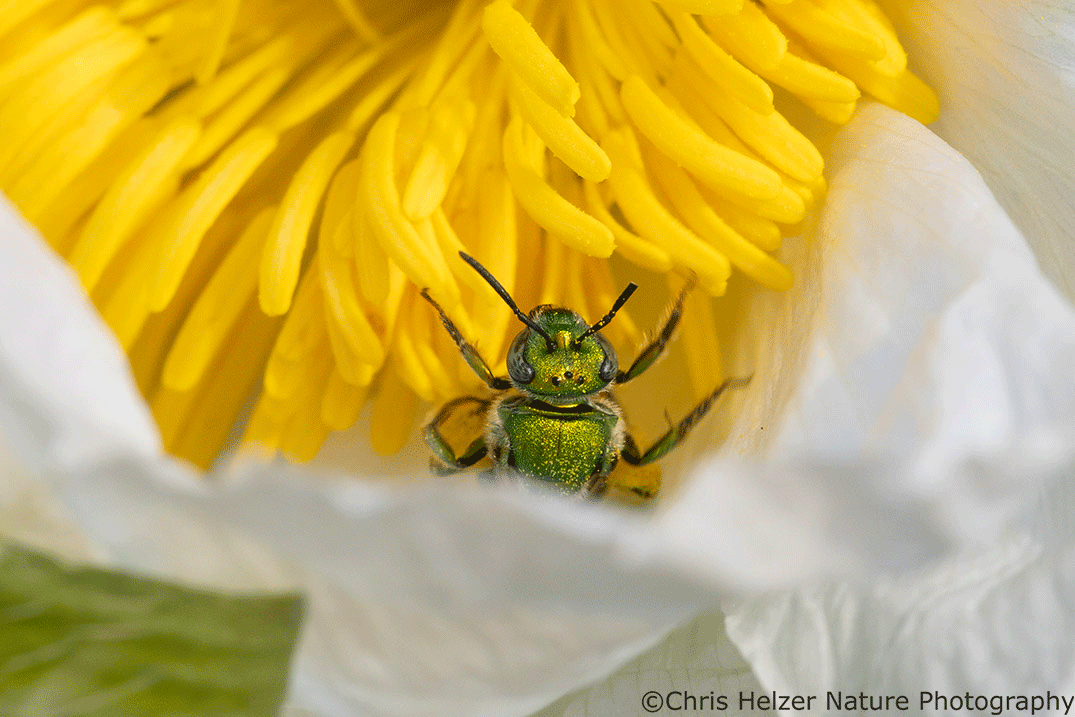
These are just a few of the many photos I liked from the myriad composition options I played with. I used three different lenses to photograph the flowers, including a wide angle, a macro telephoto (180mm) and a longer telephoto (400mm). After I’d been shooting for a while, a little sweat bee arrived on the scene and kept me captivated for a few more minutes.

Prairie ragwort and pussytoes with a sweat bee for fun

Later in the season, both of these prairies will have much bigger, more abundant, and showier flowers. Right now, the short stature and scattered nature makes most of the blooms are hard to see from the road. From that perspective, it doesn’t look like much is happening in the grasslands. Once you start walking, though, wildflowers are dotted around throughout and each one is a joy to come across. That’s especially true if you’re just appreciating their beauty and not worrying about whether their achenes are tuberculate or not.