Photos of the Week – March 22, 2026

I’m sorry not to have posted much lately. It’s not you, it’s me. Well, to be fair, it’s also the roughly 1 million sandhill cranes that come through the Platte River each spring and all the people who come to watch them.

If you’ve never visited the Central Platte River in March, it’s hard to describe what you’re missing. Eighty five percent of the world’s sandhill cranes pour into a fairly narrow reach of the Platte and each bird spends a few weeks or more eating as much as they can. They’re building fat and energy before continuing north to their breeding grounds where they’ll likely be setting up nests in a frozen environment without a lot of available food. While on the Platte, they spend their nights on the river and their days split between corn fields and grasslands, mostly eating corn and various invertebrates.

You can see the cranes by just driving back roads in the area, but the best experience comes from watching them come to the river at night or leave the river in the morning. Check out the websites of our good conservation partners – National Audubon Society’s Rowe Sanctuary and the Crane Trust – to learn more about how to get into a viewing blind along the river bank. If you’re a member of The Nature Conservancy, we also offer a limited number of crane blind tours each spring as a thank you for your support. You can call our Omaha office in January or early February to learn more.
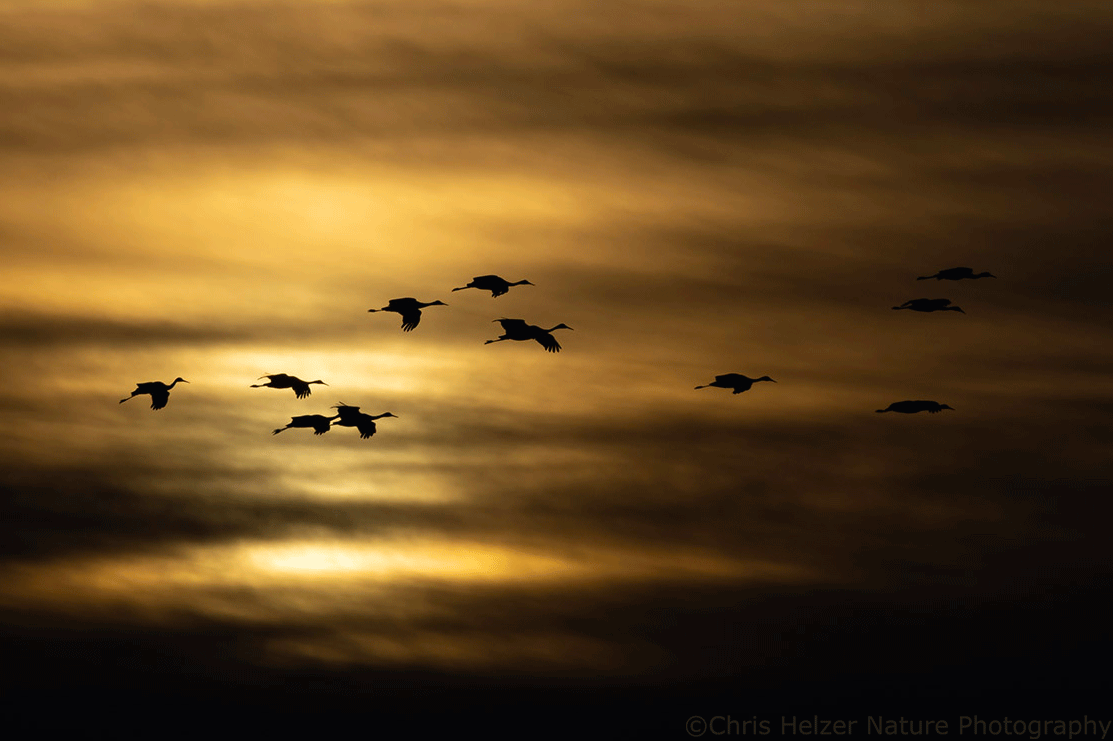
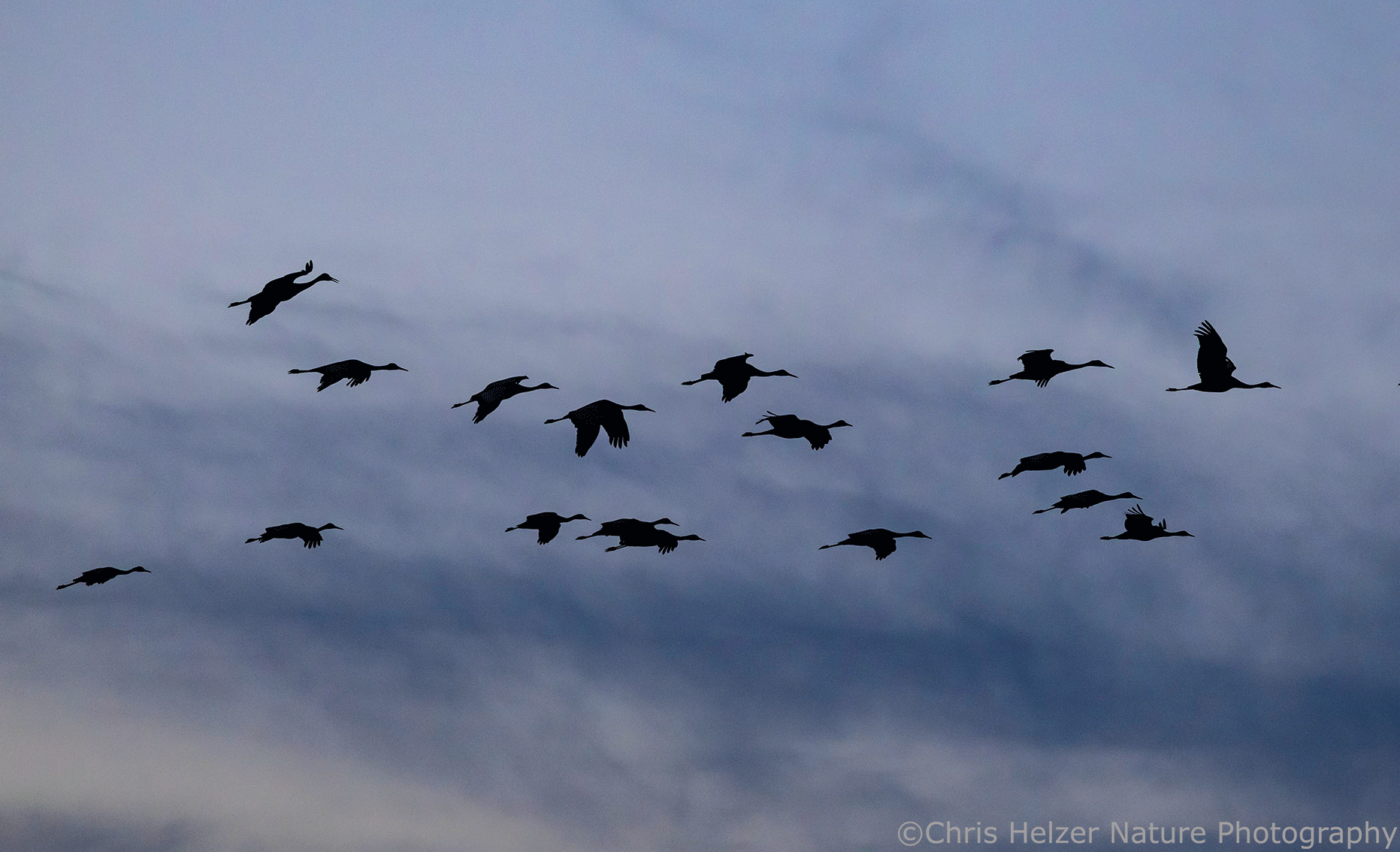
Sandhill cranes coming to the river on a cloudy night near sunset.

I’ve gone out to the blinds with several groups of guests this year and have given presentations to even more groups about this amazing ecological phenomenon. I’ve managed to get a few photos of cranes during a couple of those river bank visits and am sharing some here, hoping to encourage you to come the birds for yourself.
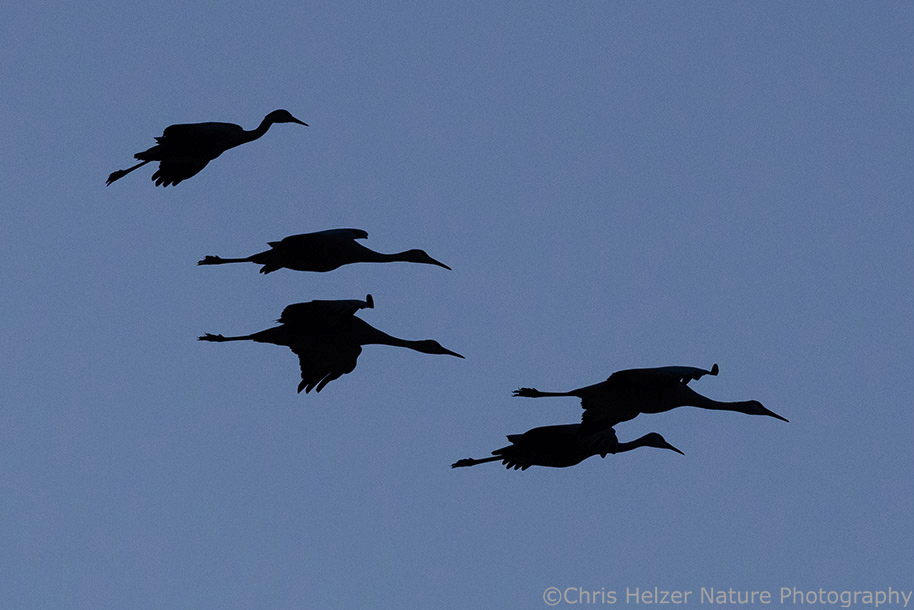
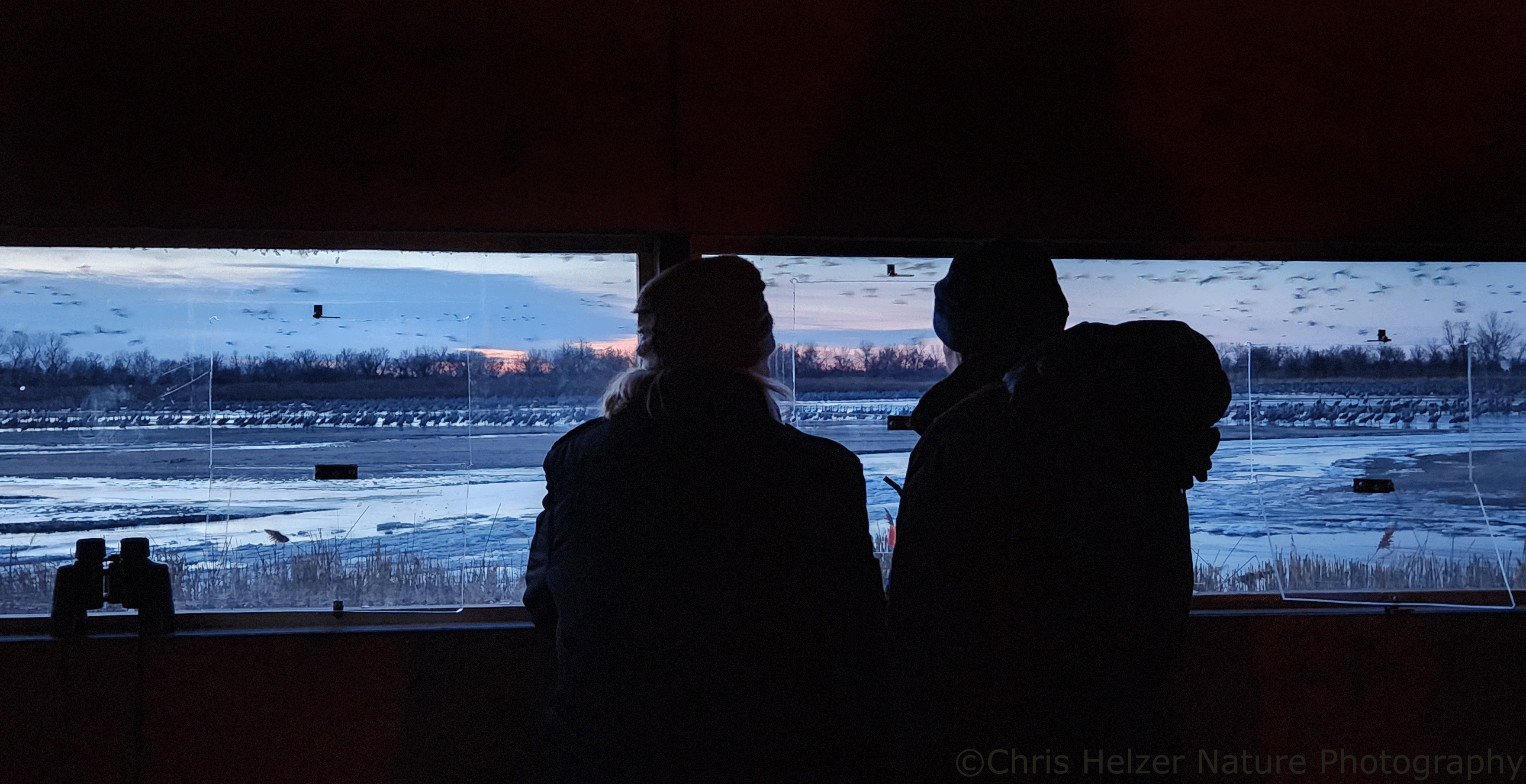
Cranes silhouetted against the cloudy sky after sunset.
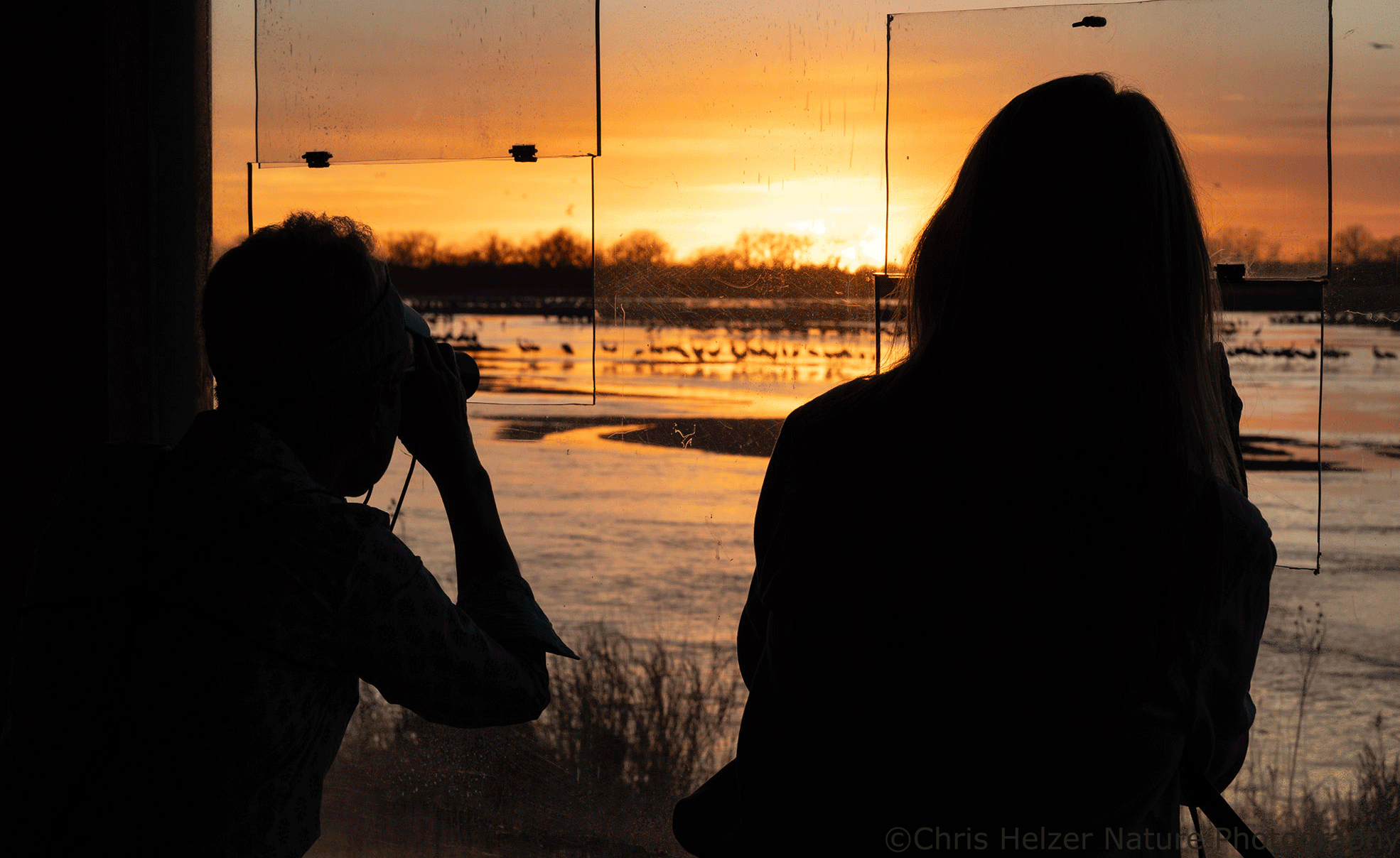
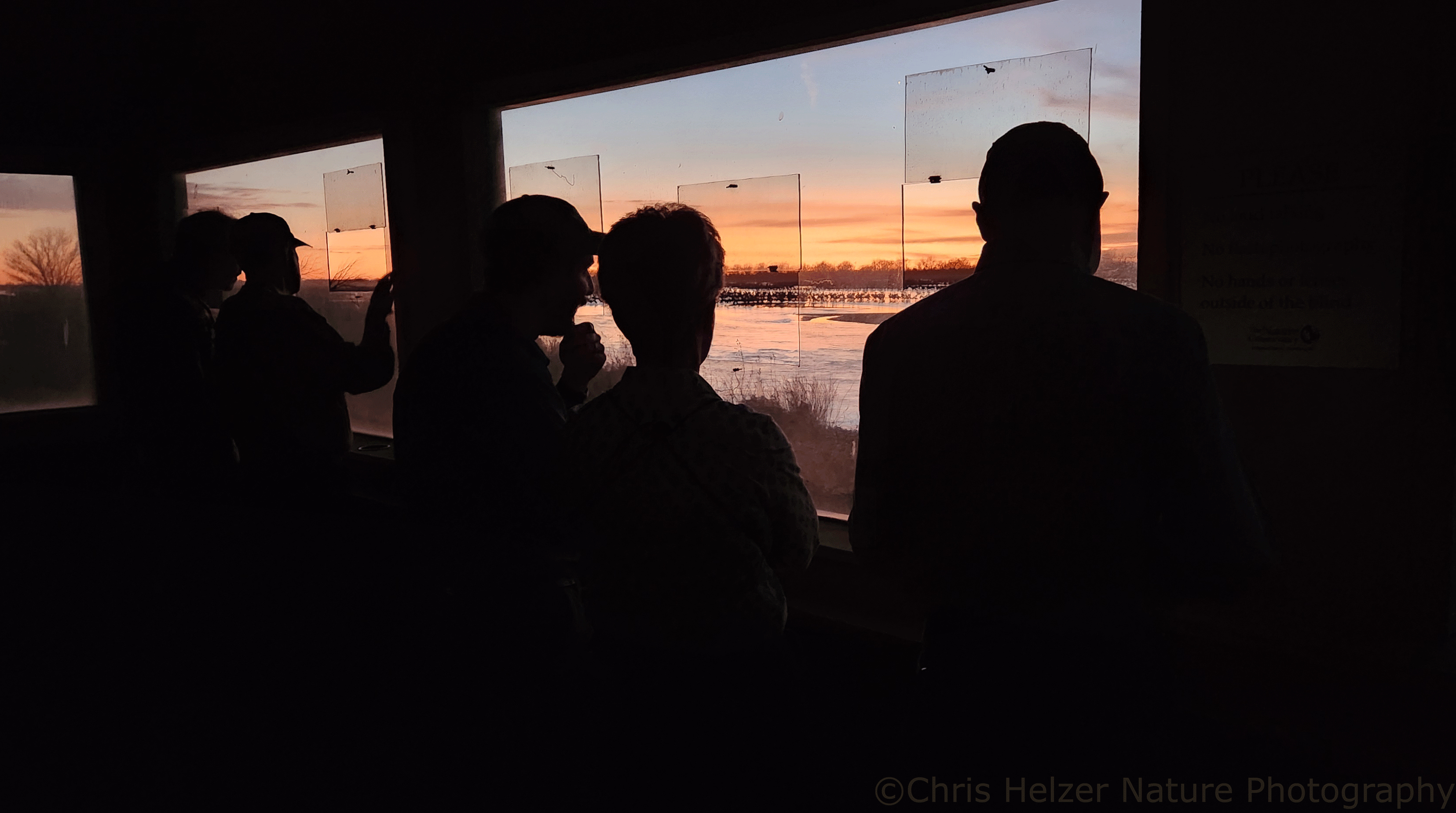
Post-sunset viewing from one of our blinds as the cranes settle in for the night.
More silhouettes against the dark cloudy sky.
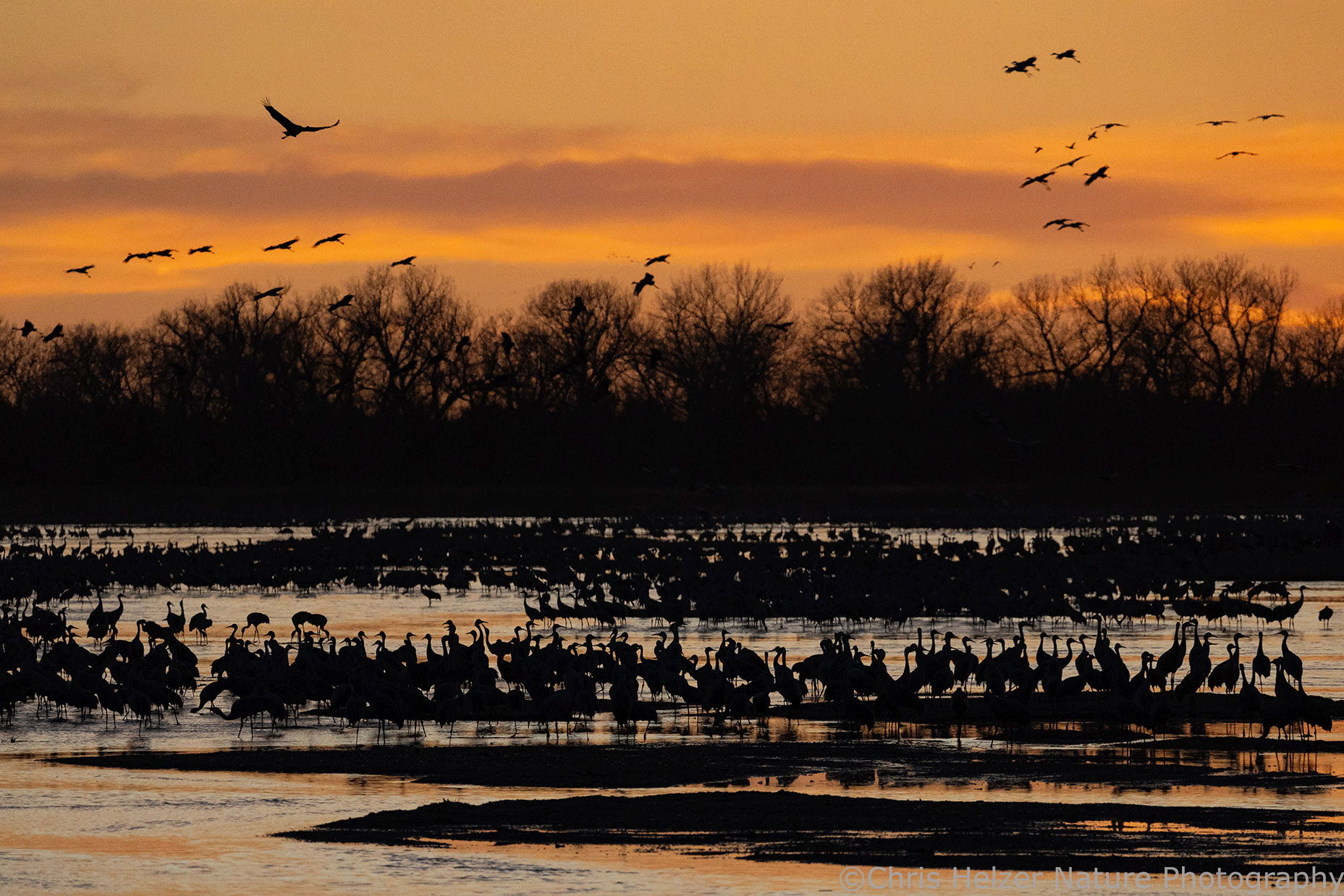
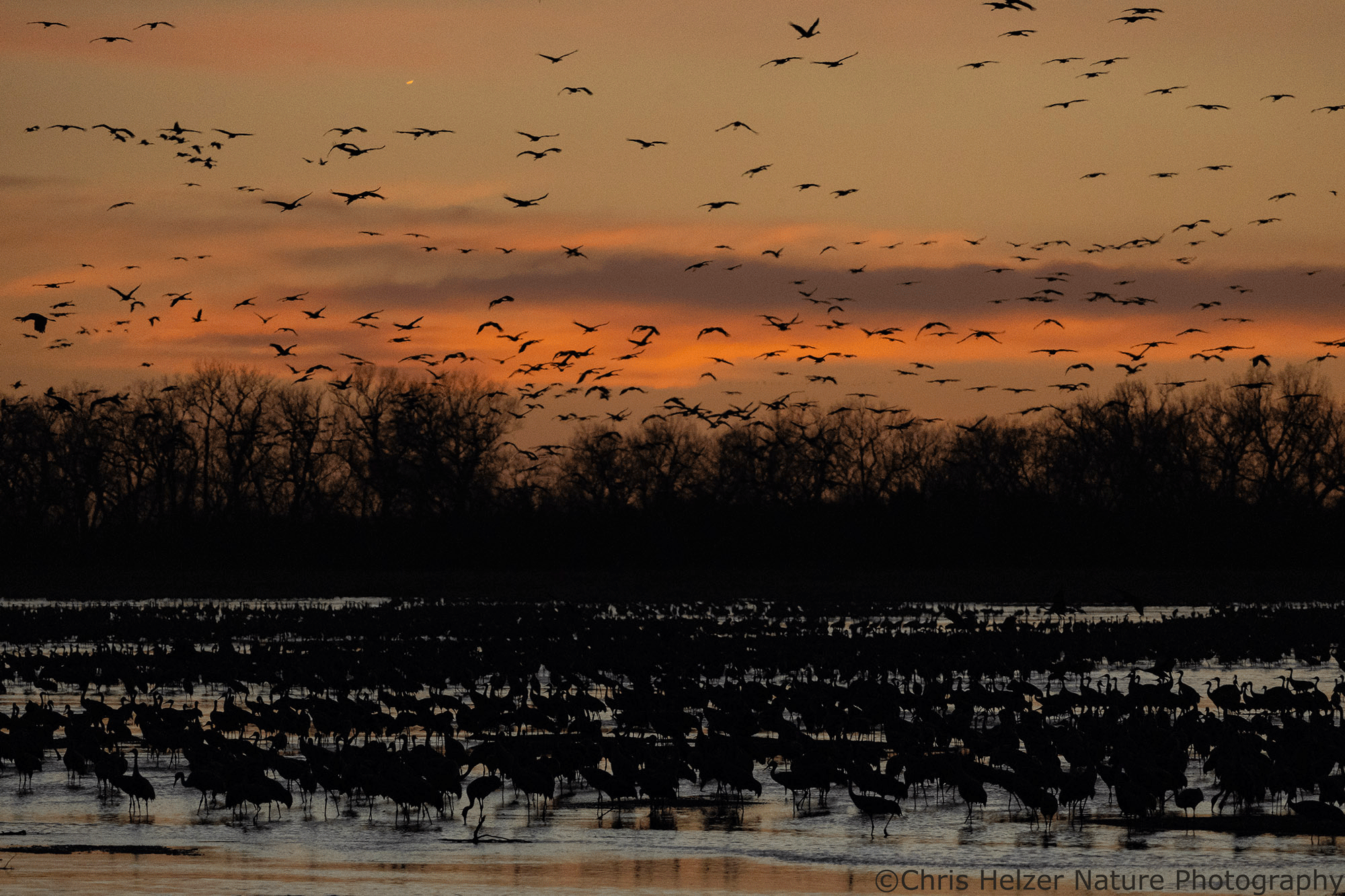
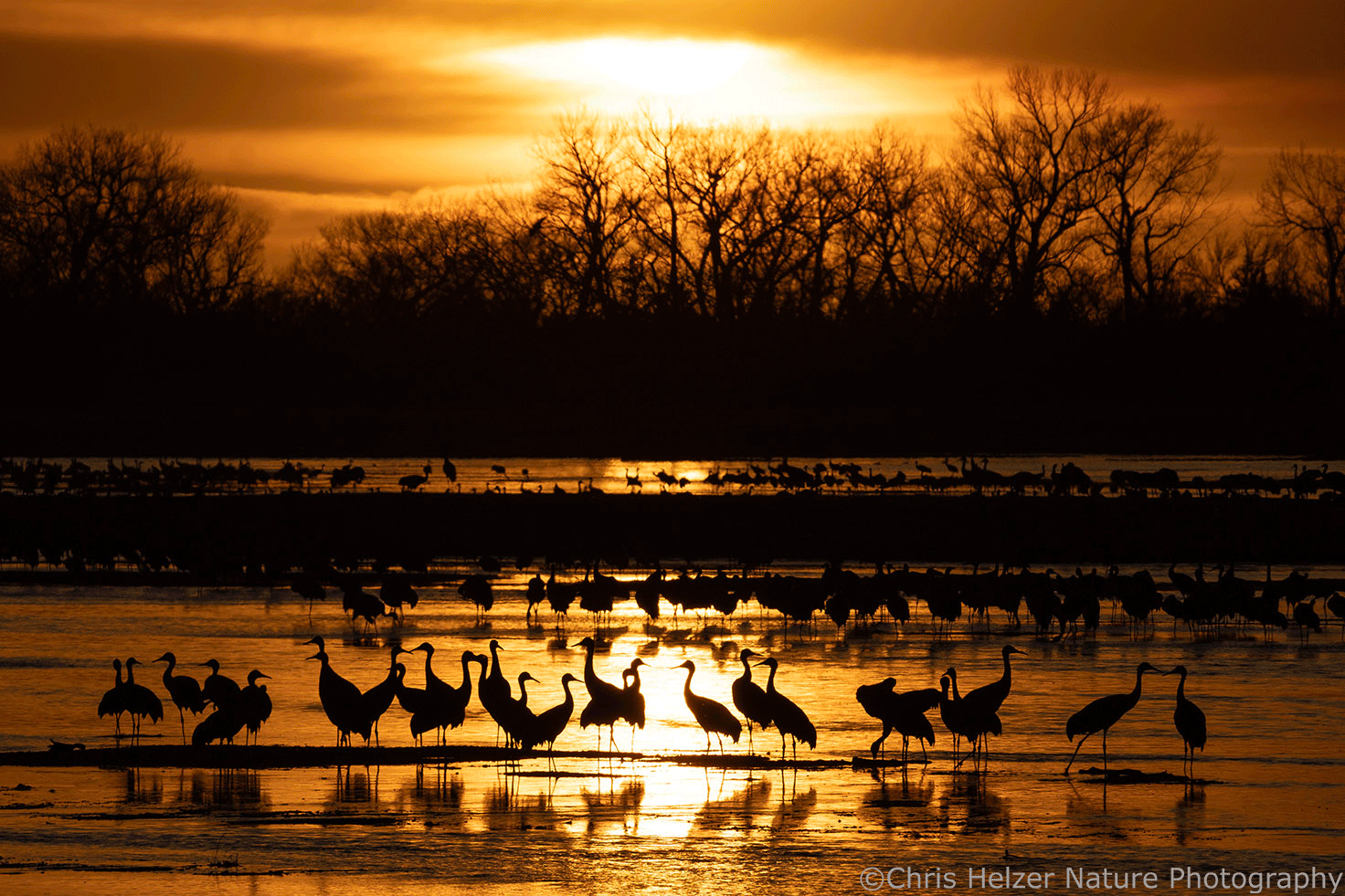
It’s always fun when the cranes come in on a night with a terrific sunset.
The same sunset and cranes as above.

Because the birds decide when and where to roost for the night based on a lot of different factors, we never know for sure what kind of show we’ll get to see from the viewing blind. About a week ago, we watched them crowd against the north bank to escape blisteringly-cold blasts of wind. One a particularly cold morning, some cranes were lying on their bellies to reduce how much of their body was exposed to the cold.
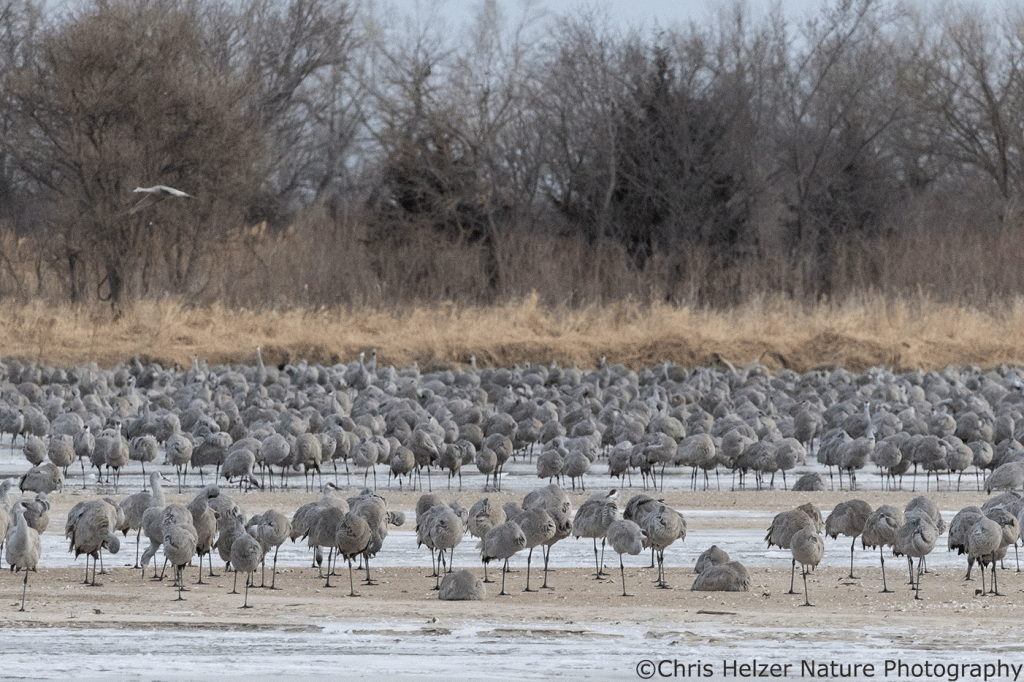
A cold morning, with several cranes on their bellies to (we assume) help keep warm.

Just a few days later, the cranes were already at the river when we arrived in the evening because they’d been hanging around the water most of the day as a way to mitigate the nearly 100 degree (F) heat.

Sometimes, we see cranes arrive at the roost well before sunset, but often they start arriving as the sun goes down and the majority pour in just before it’s too dark to see them. And, sometimes, they decide to roost in a part of the river that doesn’t include our viewing blinds.

The following four photos from late last week show a time progression over about 20 minutes as the sun dipped below the horizon and cranes poured into the river. This was one of the very warm nights when there were quite a few cranes in place when we showed up, but lots more came in as the night progressed.
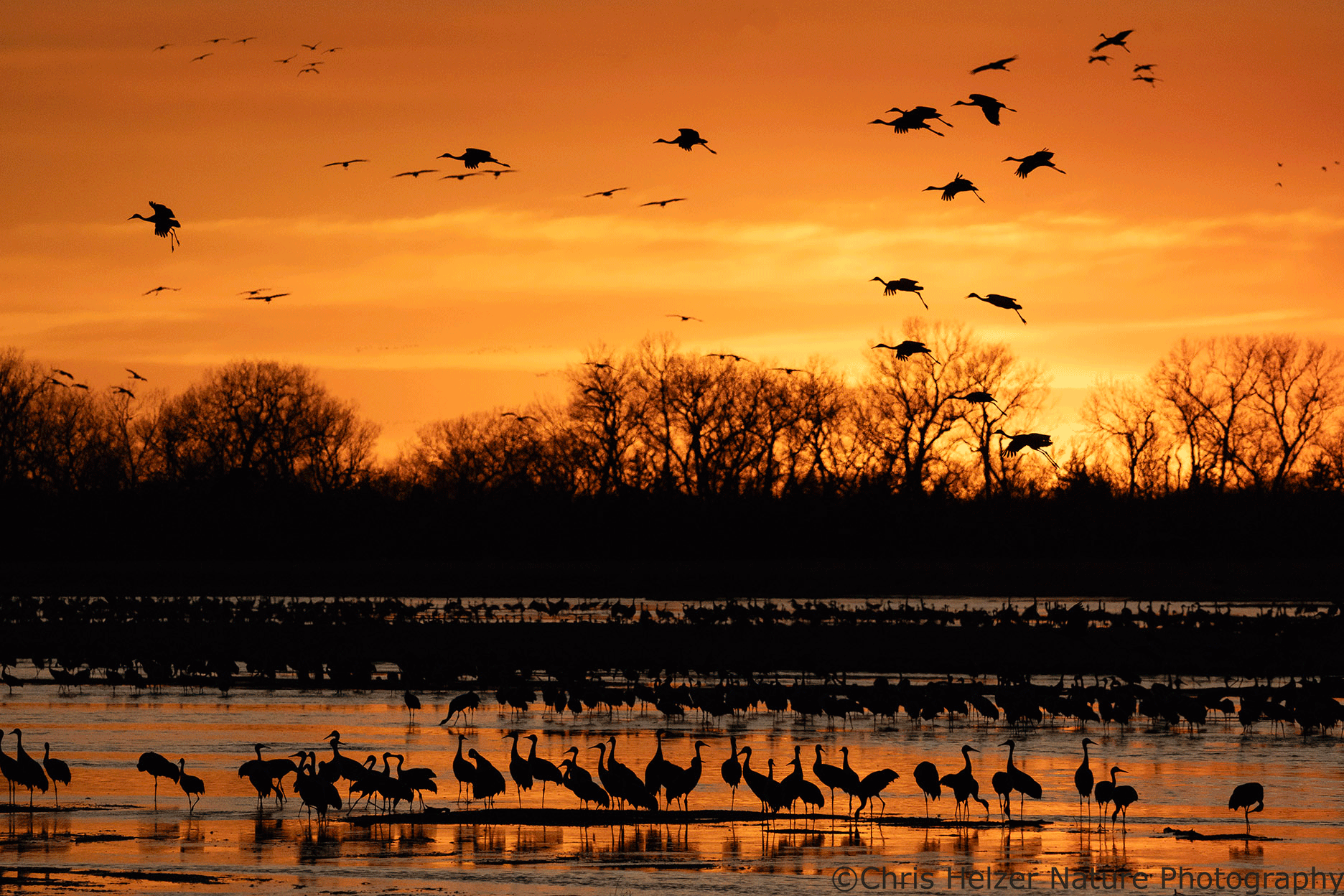
Just before the sun hit the horizon.
Just after the sun dropped below the horizon.
All the good standing spots are starting to fill up.
And yet, cranes just keep dropping in.

So, that’s what’s happening around here – along with lots more. I will try to get some more blog posts out soon.

In the meantime, I hope you’re enjoying the spring wherever you are, except for those of you in the southern hemisphere who are in the midst of autumn. I hope you’re enjoying the autumn.

Wherever you are, if you get the chance to come see the cranes on the Platte River, I think you’ll find the experience worthwhile.
When Is A Whooping Crane Not A Whooping Crane?

Along the Central Platte River in Nebraska, there is an annual congregation of hundreds of thousands of sandhill cranes during the month of March.  For about two decades or so, there has also been a single whooping crane that appears to arrive and depart with those sandhill cranes.  There are various theories about why the whooper hangs around with sandhill cranes instead of its own kind, but most of us assume it is unaware of, or possibly uninterested in other whooping cranes.  We’re not really sure where it goes during the rest of the year, but it always shows up when the sandhill cranes come through each spring.

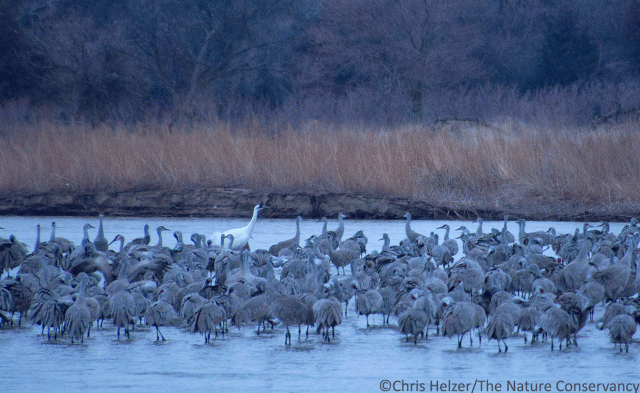
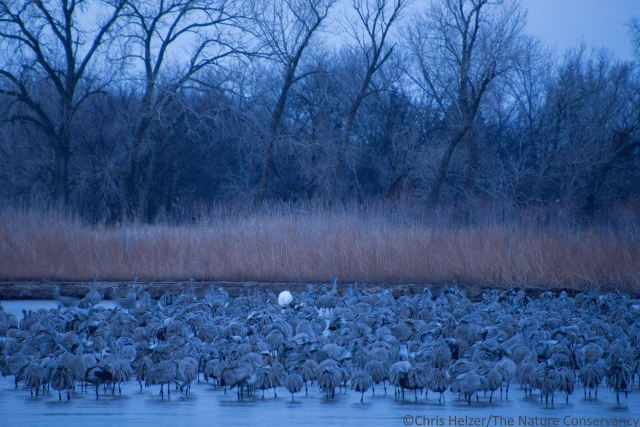
This whooping crane has been hanging out with sandhill cranes for about 20 years or more – assuming it’s the same bird each year.  It certainly stands out in a crowd, doesn’t it?  Unfortunately, it’s not the crowd it’s supposed to be hanging out with.

It’s kind of a sad situation, but does give visitors to this part of the state an improved chance of seeing a whooping crane.  Most whoopers migrate through this area later in the spring, after the sandhill cranes (and the crowds that come to watch them) have left.  A fairly small percentage of whooping cranes stop at the Platte each spring, and those that do stop are usually just here for a night or two, making it unlikely that many people will see them.  By contrast, the “lonely” whooper often stays for a few weeks or more, making it pretty accessible to grateful crane watchers.

As I was driving out for an early morning crane tour last weekend, I was thinking about the lonely whooping crane.  It had been hanging around near our viewing blinds along the river’s edge over the last week or two.  I knew there was a good chance we’d see the whooper on the river in front of our blinds (and we did!) but I was also thinking about something else.  What if the whooper left the river while we were in the viewing blind and landed in the grassland between the blind and where our vehicles were parked?  Since it’s a federal crime to disturb an endangered bird, we might be stuck in the blinds for a few extra hours, waiting for the whooping crane to leave.

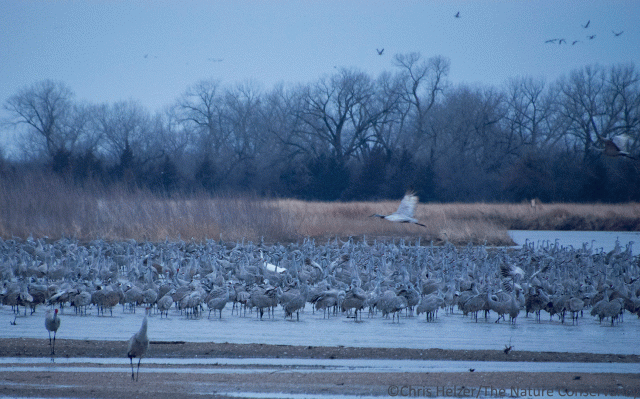
When we first snuck into the blind, it was mostly dark, and most of the cranes were still asleep. We thought we saw something white in the sea of gray, but we had to wait until the light got a little stronger before we were sure of what we were seeing. The other two photographers with me had lenses longer than my arm (more on that later this week). This shot was taken with my puny little 18-300mm lens and then cropped liberally to make the whooper look bigger than a little white dot.

That discomforting thought led me down a rambling philosophical journey as I drove (did I mention it was early in the morning?) about whether or not that lonely bird should actually count as a whooping crane.  By law, of course, it does count, and there’s no question about that.  But what about in an existential sense?

The endangered species act is supposed to help populations of rare species recover, right?  We’ve added layers of protection for the remaining individuals of those rare species so they can survive and reproduce, increasing the size of their population.  But what if an individual is separated from its kind and doesn’t even recognize what it is?  If our lonely whooping crane has no chance of ever interacting with other whoopers, let alone reproducing, how should we categorize it?  Whooping cranes in zoos are physically removed from the wild population, but still have the potential to breed and create more whoopers, which could potentially be returned to the wild at some point.  The lonely whooping crane doesn’t seem to have that possibility.

After it woke up and stretched a little, the whooper wandered slowly upstream a quarter of a mile or more before we lost sight of it. It seemed to be walking completely alone – not following other birds. The sandhill cranes didn’t seem bothered by it, but also didn’t seem to interact with it in any way.

Now, I want to be clear that I’m not saying the lonely whooping crane isn’t important, and I’m not advocating that it be somehow removed from its protected status under the law.  I just found it interesting to think about what it means to be part of a species.  Do you have to be a contributing member?  Is reproduction the way animals pay dues to their species?  If our lonely whooping crane isn’t really a whooping crane, what is it?

I can’t emphasize enough how early it was in the morning when I was thinking about this.  I often do my best thinking while driving, but I’m not sure this counts.  Also, I honestly feel grateful to have the opportunity to see whooping cranes (including this one) fairly regularly during their migration, and I probably shouldn’t take that for granted.  However, being grateful doesn’t mean I can’t allow my mind to wander into the realm of whooping crane existentialism, does it?