It seems that everything’s ahead of schedule this spring. Most obviously, flowers are blooming weeks before they typically do (we’re already harvesting seeds!) I’d love to hear from someone who knows whether or not bees are emerging ahead of schedule to synch up with those early flowers. I assume most of them are, based on the numbers I see nectaring. What I do know is that moths and butterflies that make annual northward migrations to Nebraska have arrived early, and in large numbers.
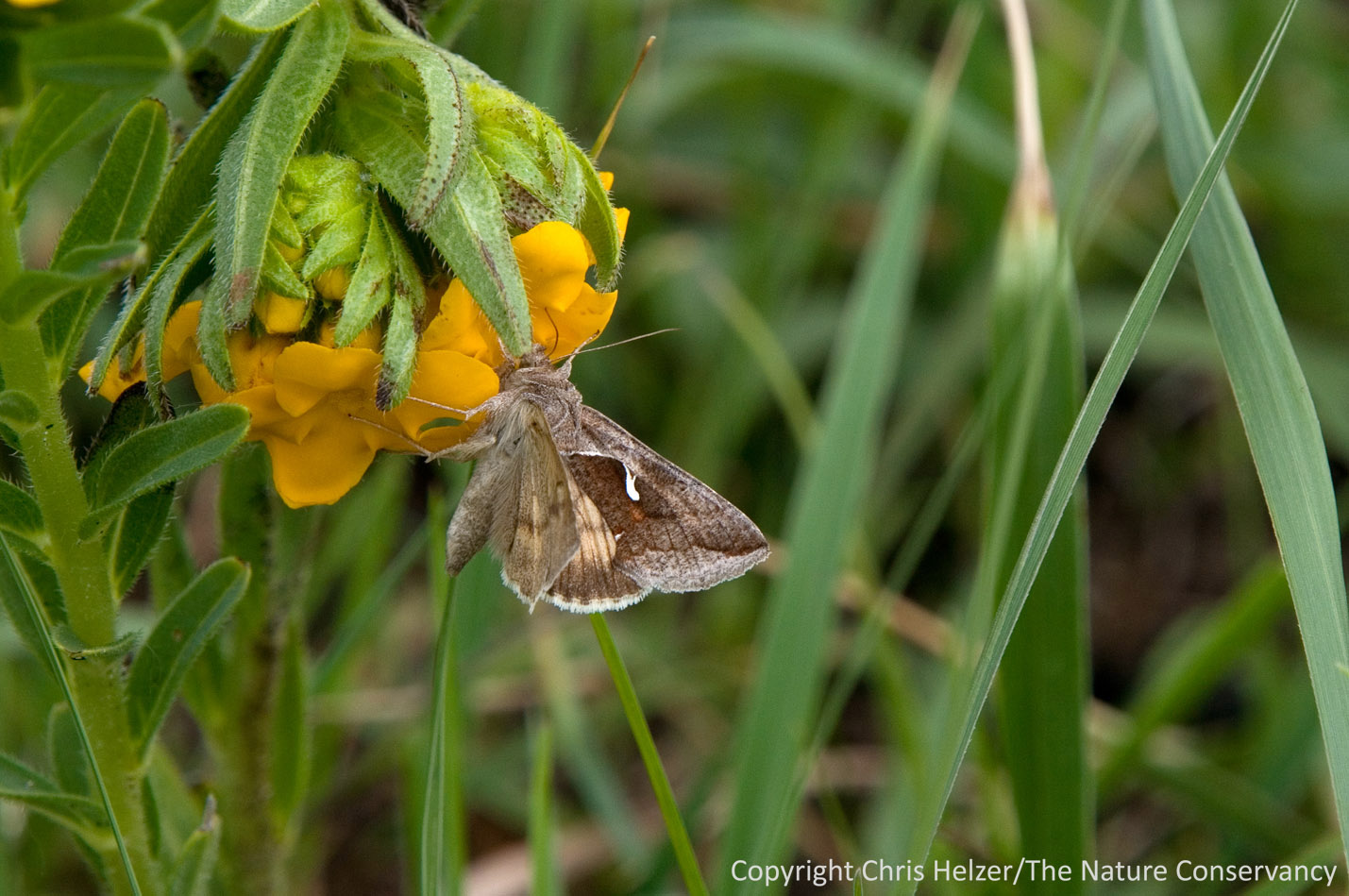
A celery looper moth (Anagrapha falcifera) nectaring on hairy puccoon (Lithospermum caroliniense) last week in our Platte River Prairies. This native moth is one of many species that annually migrates northward into regions of the country where it can’t overwinter. Thanks to Eric Metzler for the identification of the moth in all three photos in this post.
I don’t know if the moths and butterflies are moving early because the flowers are blooming early, or if both the flowers and insects are simply responding to the same stimuli. As I looked into it, however, I was surprised to learn how much control moths and butterflies have over where they go. Many species of insects use seasonal winds to help carry them where they want to go, but it’s not as simple as the “wind blowing them north”.
First, why do moths and butterflies migrate northward every spring/summer? The migratory species are unable to overwinter where the ground freezes, so they can’t live up here year-round. However, there are lots of nectar-producing flowers here, providing an incentive for southern insects to move north. (Nature abhors a vacuum?)
To get north, moths and butterflies take advantage of strong south winds that help push them where they want to go. They don’t fly on days when the wind would be in their face or crosswise with their intended direction. Even when the wind isn’t blowing the exact right direction, however, the insects can correct for drift and still fly where they want to go – a far cry from being at the mercy of the wind. Recent studies of moth and butterfly migrations in Europe (using radar) found that the insects can also increase their speed by flying high enough to ride the stronger winds at high altitudes. Some flew more than 1,000 feet in the air and reached top speeds of 55 miles per hour.
I’m sure many readers of this blog have noticed the abundance of miller moths (army cutworm moths) in their house and yard this spring. The big numbers, and the fact that they end up in people’s houses, have attracted a fair amount of media attention. In reality millers are only one of many species that have made the trip early this year. Many other moths and butterflies – notably red admirals – have also come north already, and are busily flitting around flowers in yards and prairies.
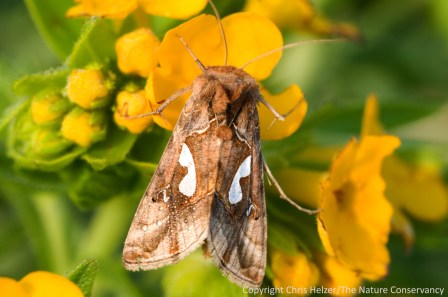
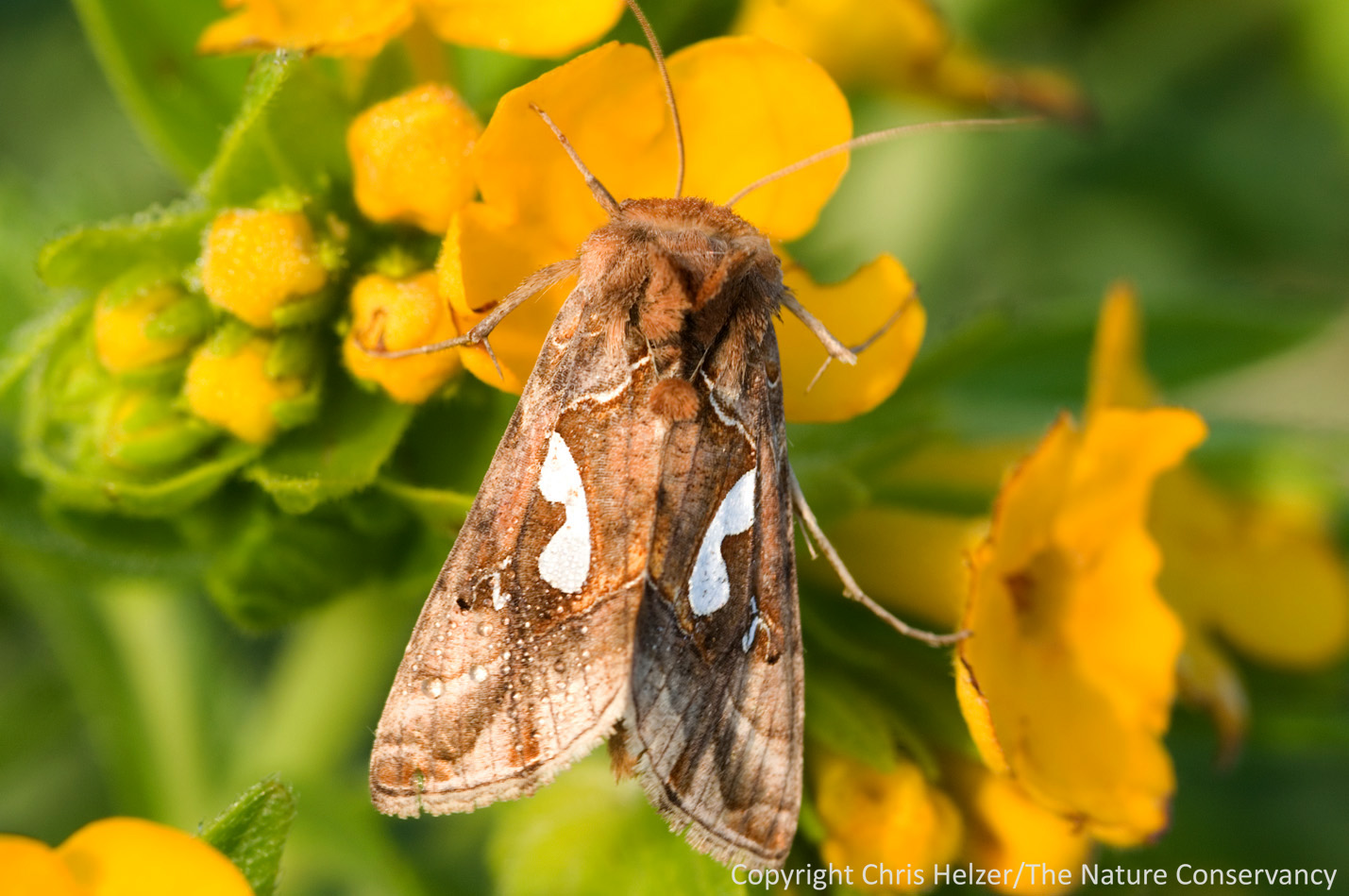
A bilobed looper (Megalographa biloba) nectaring from the same flower species as its close relative, the celery looper. Hairy puccoon was one of the few conspicuous flowering plants in a recently burned sand prairie – making it a big target for insect pollinators of all kinds, but especially moths.
.
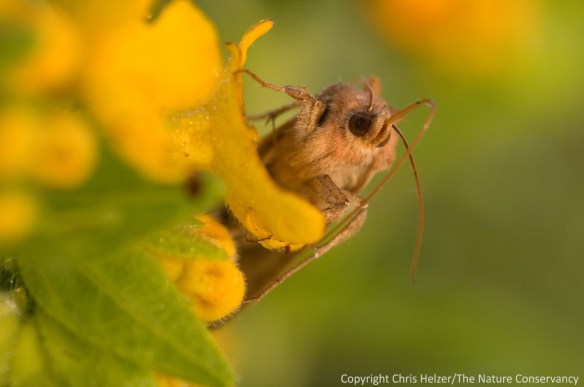
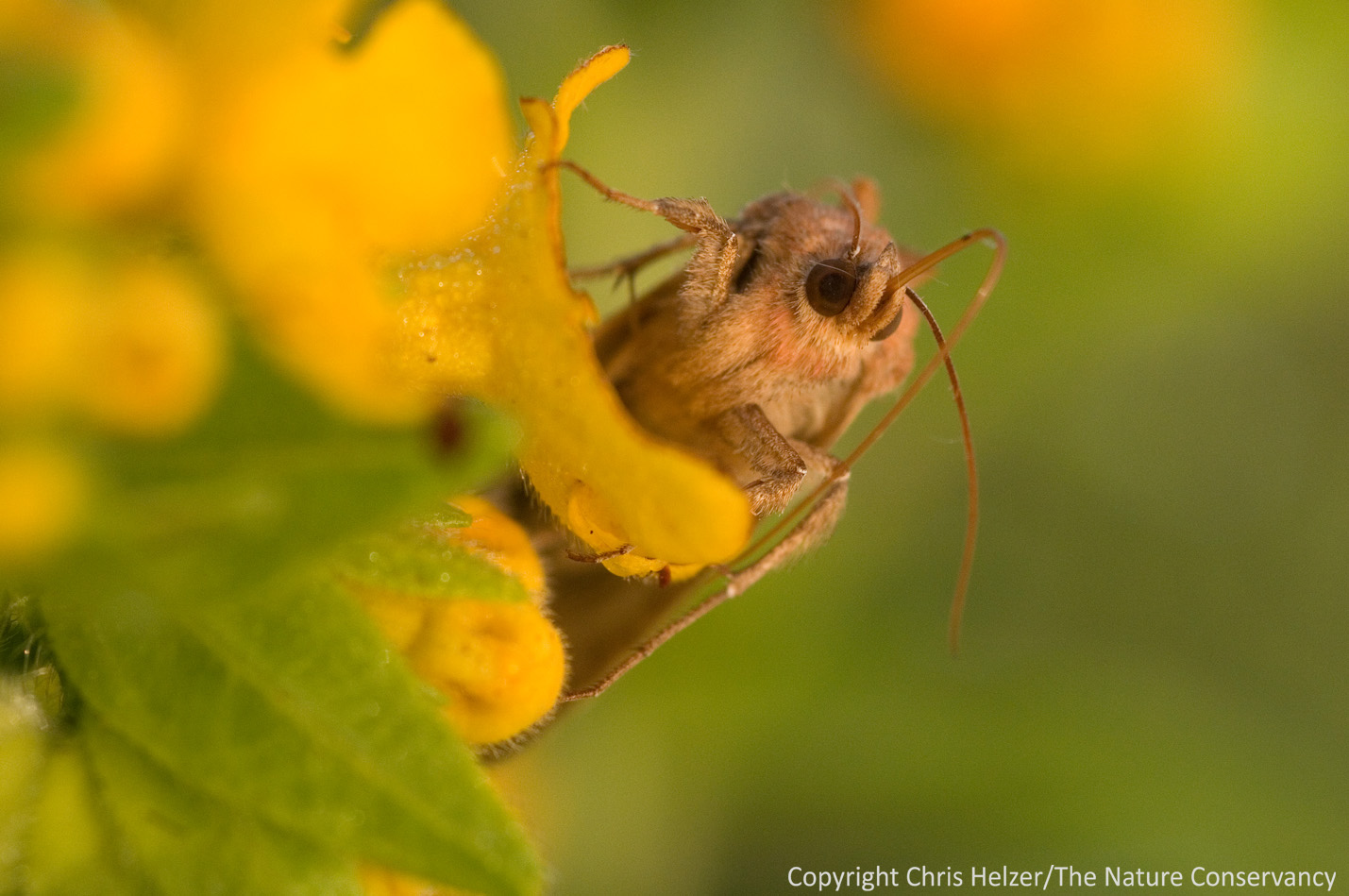
A face-to-face look at the bilobed looper.
There’s much we don’t know about insect migration. Not surprisingly, it’s a difficult topic to study! As we continue to learn more, however, I’m sure the story will just get more and more interesting. Stay tuned!
Below are some links to more information on this topic.
An article on the European moth/butterfly migration study I mentioned.
Daily Nebraskan newspaper article on the early migration.
Two links to information on the moth species featured in my above photos.
Bilobed Looper
Celery Looper