An Update on a Wetland Project (Remember the Sludge?)

Several people have asked me to provide an update on the wetland restoration project I posted about last November.  At that time, we’d just completed our second (last?) phase of the dirtwork to convert sand pit lakes to a stream channel and shallow wetlands.  I wrote that we were trying to figure out what to do with a lot of sludge that had floated up from the bottom of the sand pit we’d filled in.  
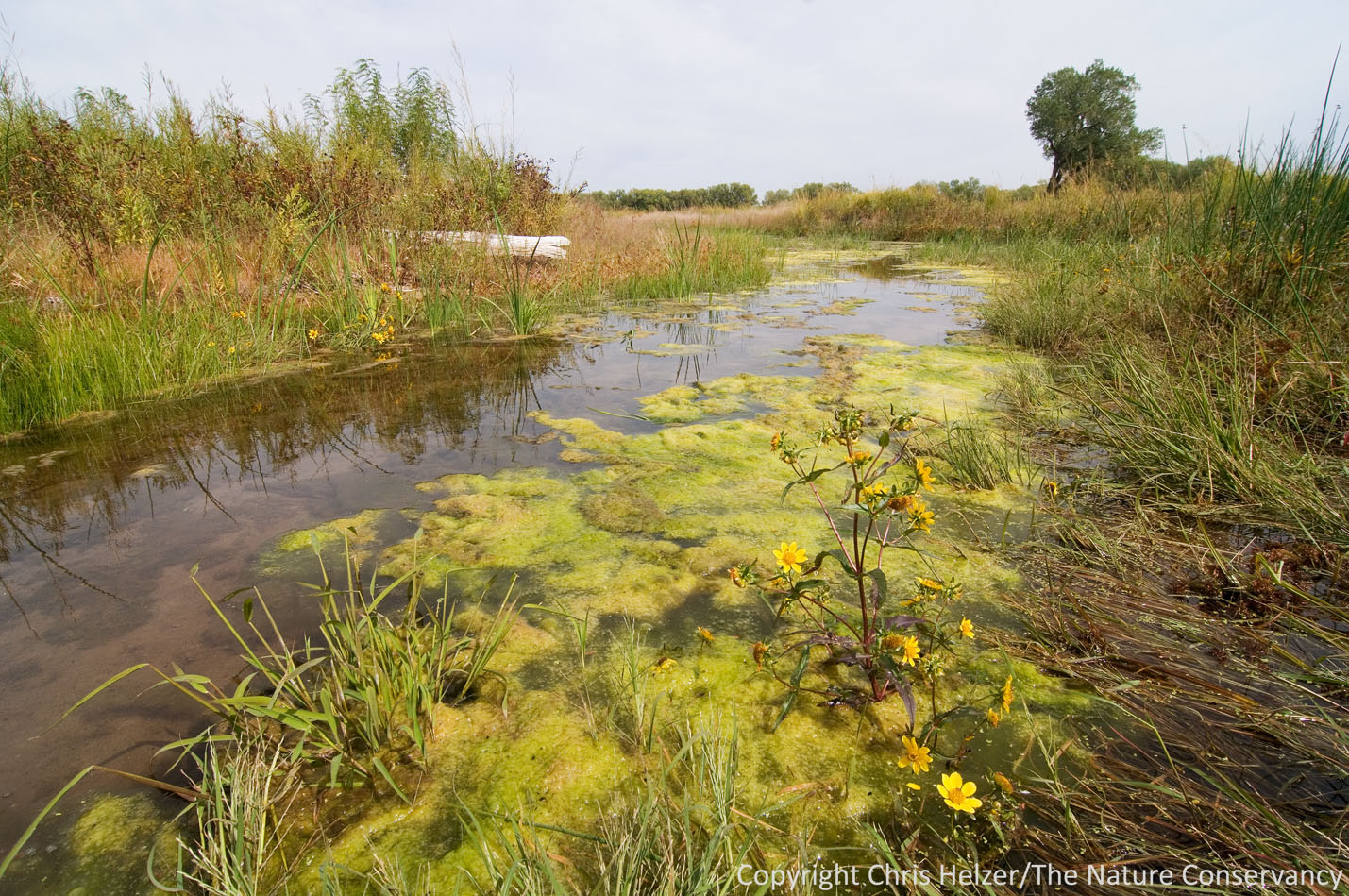
Beggarticks (Bidens sp.) flowers accent a wetland swale that was part of the first phase of the restoration project back in 2001. The 2011 restoration project surrounds that initial phase.  This photo was taken last week.

Well, let’s see…  Since November, the wetland has been very interesting to watch.  We’ve seeded the site a couple times.  Most of the non-sludge-covered area was seeded during the winter and then again in the summer, after many of the smaller wetland channels and pockets off of the main stream channel – that allowed us to get seed into areas previously under water.  We’re starting to see a few plants come in as a result of those seedings, although the dominant vegetation in the most recently-restored portions of the wetland is still mainly annual plants that colonized on their own. 
Continue reading

Photo of the Week – September 20, 2012

Last week, I managed to find about half an hour’s time to wander with my camera, so I decided to try to get some more photos of this year’s drought impacts.  I headed down toward one of our crispy brown lowland prairies, with every intention of photographing dormant grasses and wildflowers.  However, there’s a wetland swale in that prairie that has stayed wet enough during this summer that the vegetation is still vibrant, green, and blooming.  Despite my best efforts, I found myself edging toward the swale…

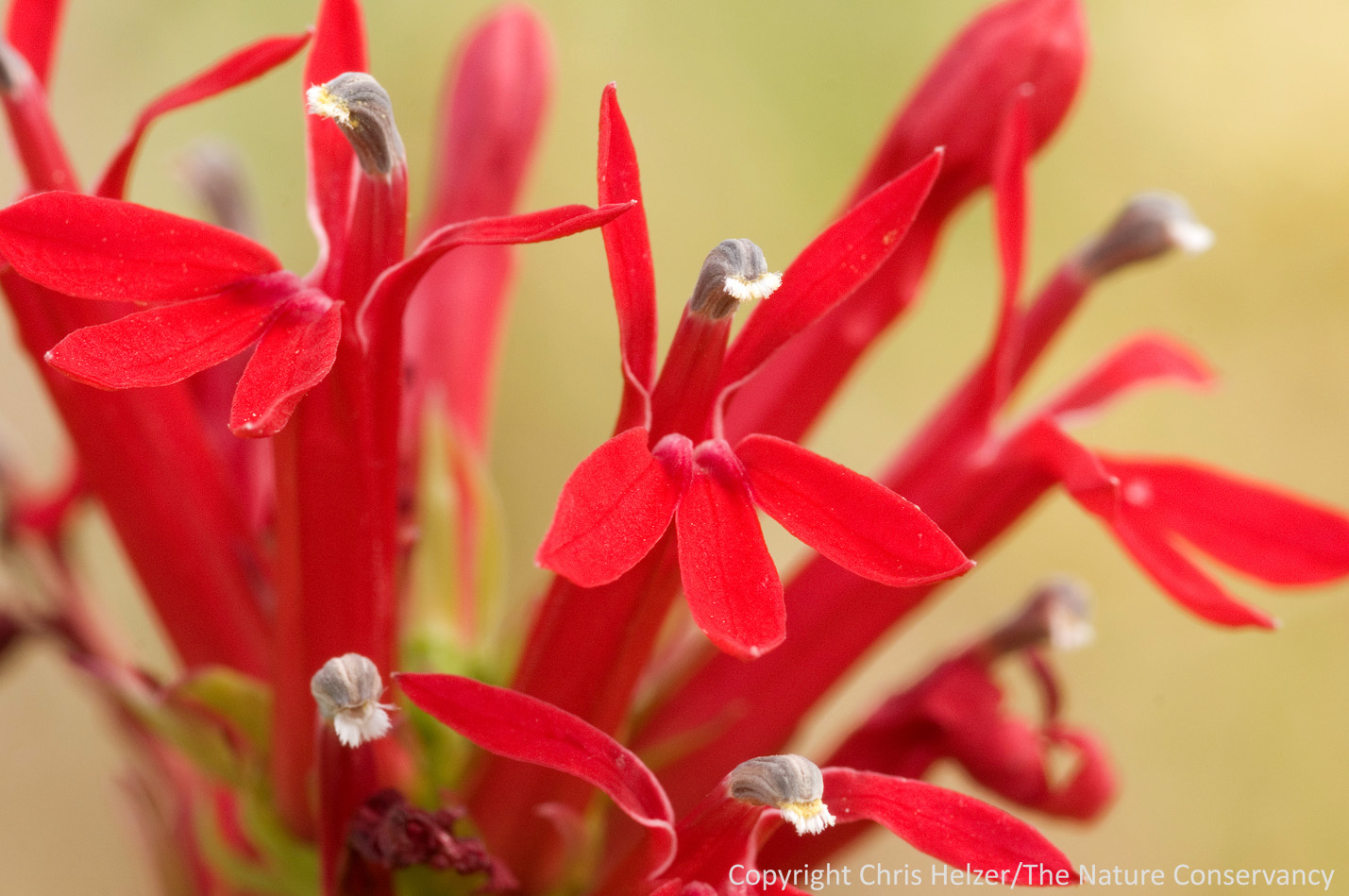
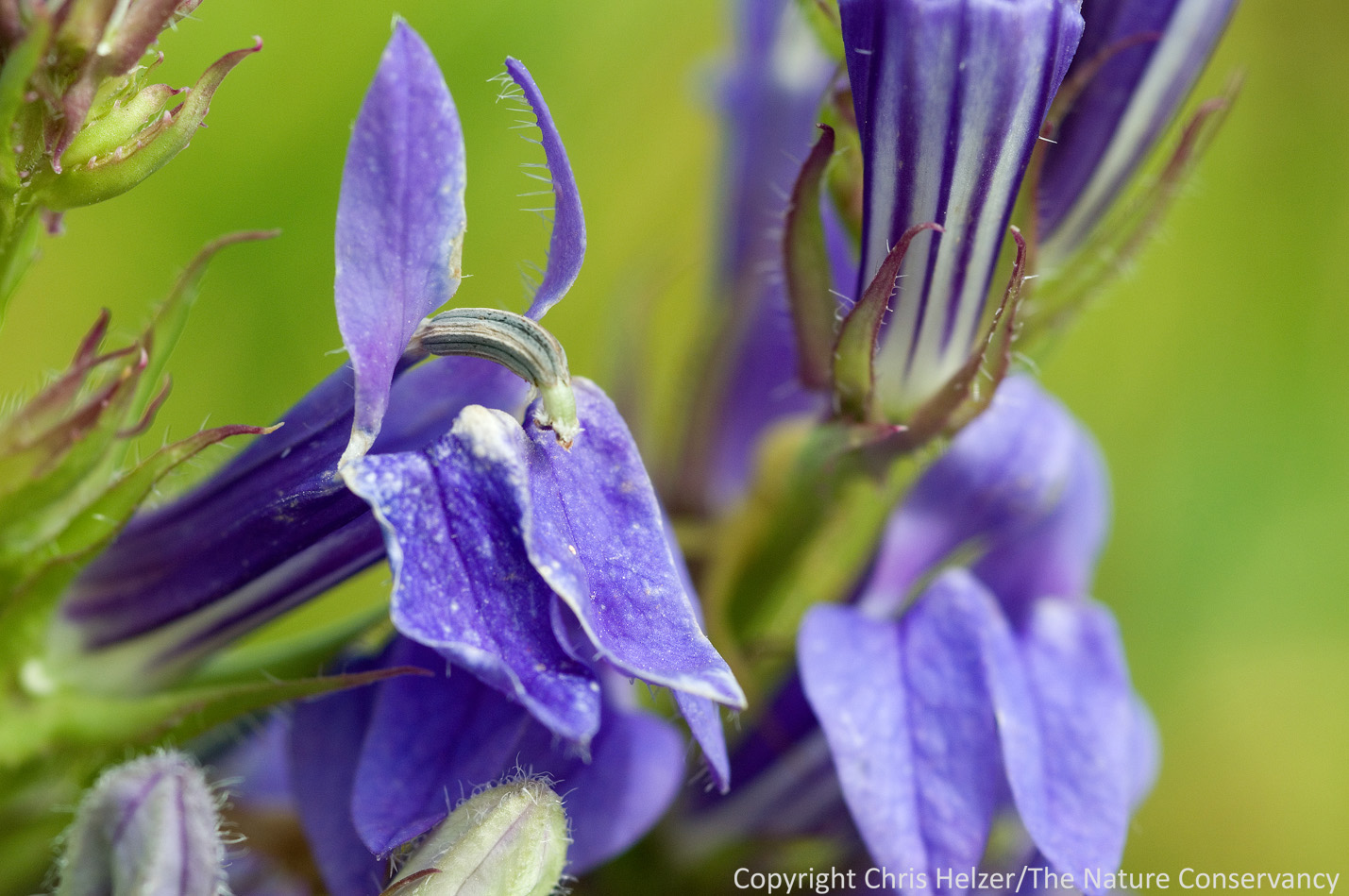
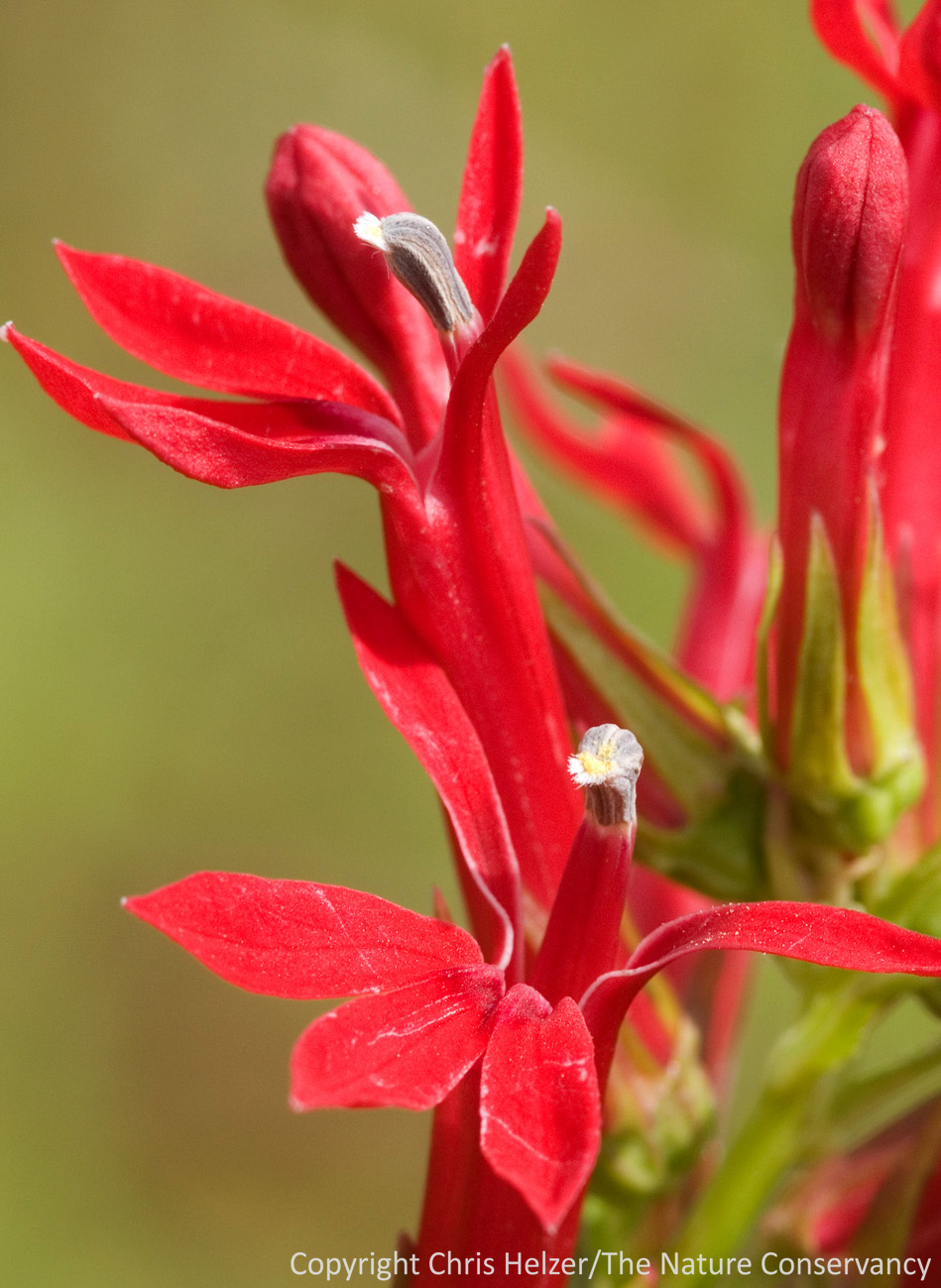
There were several wildflower species blooming in the swale, with lots of bees and soldier beetles crawling around on them.  But the visual standouts were the lobelias.  Both cardinal flower and blue lobelia were tall and in full flower, so I spent a few minutes taking their portraits.  It’s hard to imagine a more striking flower than a bright red cardinal flower, but the counterpoint of the blue lobelias was every bit as pleasant to look at. 

Cardinal flower (Lobelia cardinalis). Platte River Prairies, Nebraska.

.

Blue lobelia (Lobelia siphilitica).

.

.

.

I didn’t end up with a camera full brown grass images, but in a way, these lobelia photos are equally representative of this year’s drought.  Although the majority of the landscape is dead and brown, there are bright spots of green scattered around in places where the soil organic matter is high enough to hold moisture, or where groundwater is still close enough to the surface to support life.  Those scattered oases of green are keeping a number of insects and other species alive at the moment, as demonstrated by the loud buzzing sound that surrounded me as I walked through the wetland swale.  Besides being a good “glass half full” thing to do, focusing on those oases in times of drought is probably a critical conservation strategy.  Those little patches of life are making huge contributions to the ecological resilience of our larger prairie/wetland ecosystem, and we should be studying the conditions that create them and thinking about how to ensure those conditions are sustained. 

Plus, the flowers are really pretty.