Family Time on the Niobrara

It’s family vacation time for The Prairie Ecologist.  The objective for this week is to see how much fun two adults and three kids can squeeze out of The Nature Conservancy’s Niobrara Valley Preserve.  Ok, I’m actually doing a little work too, setting up this summer’s data collection efforts.  But I’m mostly taking vacation…
The visit got off to a good start when we arrived last night because the boys found the rope swing over the creek.  That provided a good half hour of fun, and would have gone on much longer except that bedtime was looming.  After the boys went to bed, Kim and I enjoyed a little quiet time listening to whip-poor-wills, cricket frogs, and nighthawks before heading to bed ourselves.

The boys - entertaining themselves the way boys should.

The boys – entertaining themselves the way boys should.

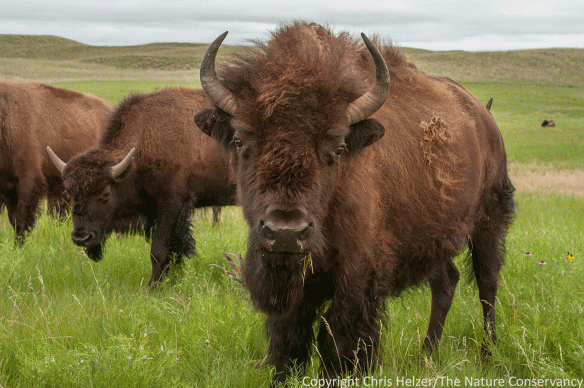
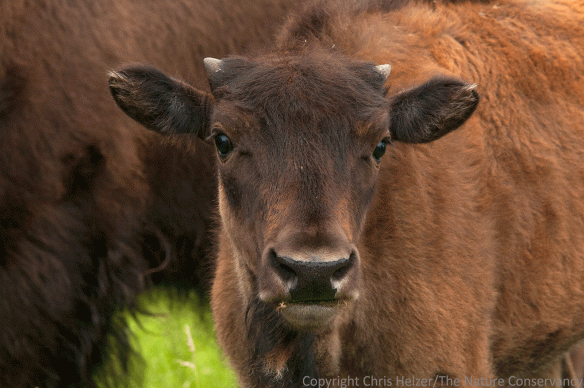
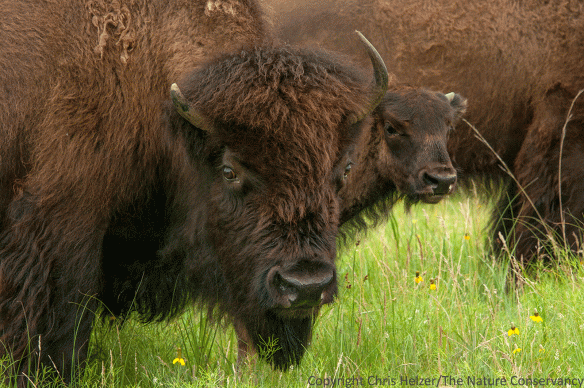
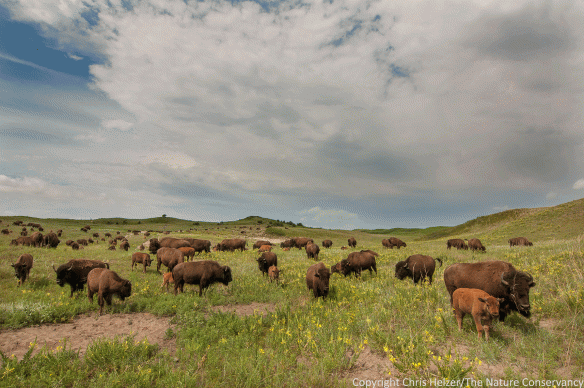
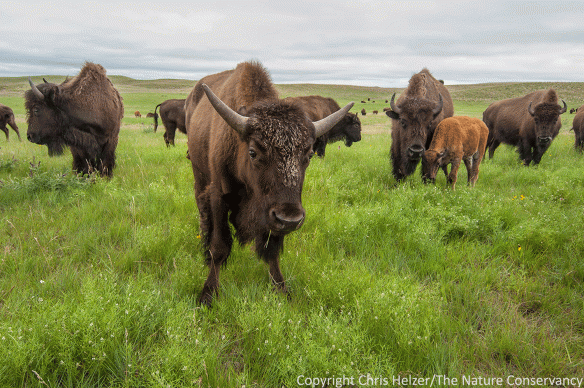
After breakfast this morning, we drove out into the Sandhills and found a small group of bison cows and calves resting on a hillside.  We watched them from the truck for quite a while.  The kids did a great job of staying quiet, and the bison were very relaxed.

A recently born bison calf.

A recently born bison calf.

As the sun rose higher and it started getting warm, we slipped down into the woodland between the Sandhills and the river and explored a spring-fed creek Kim and I had found last winter.  The kids had a great time splashing around and trying to dam up small sections of the creek, and Kim and I enjoyed looking at the ferns and other woodland plants.  The cool and humid conditions along the creek contrasted starkly with the hot dry prairie just upslope.

Walking along the spring-fed creek was a welcome relief from the

Walking along the cold spring-fed creek was like being in a different world.  It was over 80 degrees and sunny in the Sandhills prairie less than 50 yards uphill

It was a great day, and it would be hard to pick a favorite experience, but if pressed, I’d probably go with finding a pair of twin pronghorn fawns.  I was driving through the hills by myself in the mid-afternoon, trying to figure out some research logistics when I saw a pronghorn across the valley.  As I got closer, it looked like it was feeding, but it was so engrossed in the activity it didn’t notice me until the truck was less than 100 yards away.  It finally spotted me and bounded up and over the hill.  I saw something dark move near where the pronghorn had been so I got out and walked over to investigate.  Much to my surprise, I found a fawn that was still wet from being born – I assume the mother had been licking it, which explains her preoccupation as I drove up.  As I bent down to take a quick photograph of the fawn I noticed the second one (already dry) right behind it.  I snapped a couple of quick photos and slipped away so the family could reassemble itself without further delay.

Pronghorn fawns (the second is to the left and behind the one in the foreground). The newest one was so recently-born it was still wet.

Pronghorn fawns (the second is to the left and behind the one in the foreground). The newest one was so recently-born it was still wet.

After supper, the boys and I hiked up the ridge north of the river so they could work off some energy before bedtime.  They had a great time, and loved the view from the top.

_DSC6865

We’ve been here less than 36 hours, but it already feels like we’ve been here a week.  …In a good way…

Two more days to go!

Photo of the Week – April 7, 2016

Look, more timelapse photography…

A photo taken by a timelapse camera mounted high on a windmill looking over bison-grazed prairie at The Nature Conservancy's Niobrara Valley Preserve in Nebraska.

A photo taken by a timelapse camera mounted high on a windmill looking over bison-grazed prairie at The Nature Conservancy’s Niobrara Valley Preserve in Nebraska.

I’m nearing the end of the process of going through all the images from the last three years of timelapse work at the Niobrara Valley Preserve.  My eyes are very tired, but it’s been a lot of fun.  The overwhelming story told by the images is one of hope and resilience following the big wildfire of 2013.  Prairies are well built to take drought, wildfire, and grazing in stride – they have been doing so for thousands of years.  Even grasslands in the Nebraska Sandhills (12 million acres of vegetated sand dunes) have shown themselves to be tough and adaptable.

Last week, I showed how timelapse was helping us track erosion at the Preserve, and also posted a number of aesthetically pleasing images from a timelapse camera.  Today, I’m presenting two very short slideshows showing more visually striking images from two timelapse cameras set up to watch the Sandhills prairie.  The first is from a fenceline between bison-grazed prairie on the left and cattle-grazed prairie on the right.  Don’t read too much into any differences you might see between those two grazing treatments – the grazing systems on each side are very different from each other and are testing different ideas.  Grazing intensity has been higher on the cattle side of the fence recently, but that changes annually, and the bison side has areas of high intensity too (depending upon where we’ve burned most recently).

If you are reading this via email, you may not see the slideshows.  If so, click on the title of the blog post at the top of the email to view the post through a web browser.  The same, apparently, can be an issue with other videos embedded in posts, so if you didn’t see the videos in my last blog post on timelapse photography, try looking at them through a web browser and that should fix the problem.

This slideshow requires JavaScript.

The second set of images was taken from the south side of the same bison pasture (about 12,000 acres in size) as the one shown above.  The camera was mounted on a tall windmill to give a broad view of the prairie, starting with a photo from April 2013, the beginning of the first field season following the wildfire.  Even though bison don’t tend to hang around windmills and other water sources as much as cattle do, the grassland closest to the windmill still gets heavier use than areas further away.  This creates a plant community with higher numbers of opportunistic plants (aka pioneer species, weedy species, short-lived species, etc.) and short/patchy habitat structure.  Further from the windmill, however, (as seen in the first slideshow above) much of the grassland has grown tall and lush following the fire.  Both the tall/lush and short/patchy habitats are valuable.

This slideshow requires JavaScript.

Timelapse photography has helped us watch the Niobrara Valley Preserve change over time following the wildfire, but it has also highlighted the incredible hour to hour changes in the way prairies can look.  Lighting conditions, clouds, snow, vegetation height, flowing plants, and a host of other variables make prairies incredibly dynamic, and fascinating to watch. I’ve really appreciated the opportunity to look through all the timelapse images from the last three years, and I hope you enjoy looking at some of the highlights.