
I love giving presentations to school kids, but don’t have the time to do it very often. However, when a former intern asked me to come talk to her class, it was hard to say no. As a result, I spent a day last week in Utica, Nebraska talking to the high school biology classes of Centennial Public High School. Their teacher, Kim (Bontrager) Miller was one of two high school interns I supervised back in 1999.

Our first two High School Interns in 1999 – Jeremy Miller and Kim Bontrager. Jeremy is now a local farmer and Kim is a high school biology teacher.
Between 1999 and 2006, eight different local high school students spent the summer helping us manage and restore our Platte River Prairies – some of them came back for multiple summers. Kim was part of the first year of that internship program. Her brother came along a few years later and worked with us for two summers.
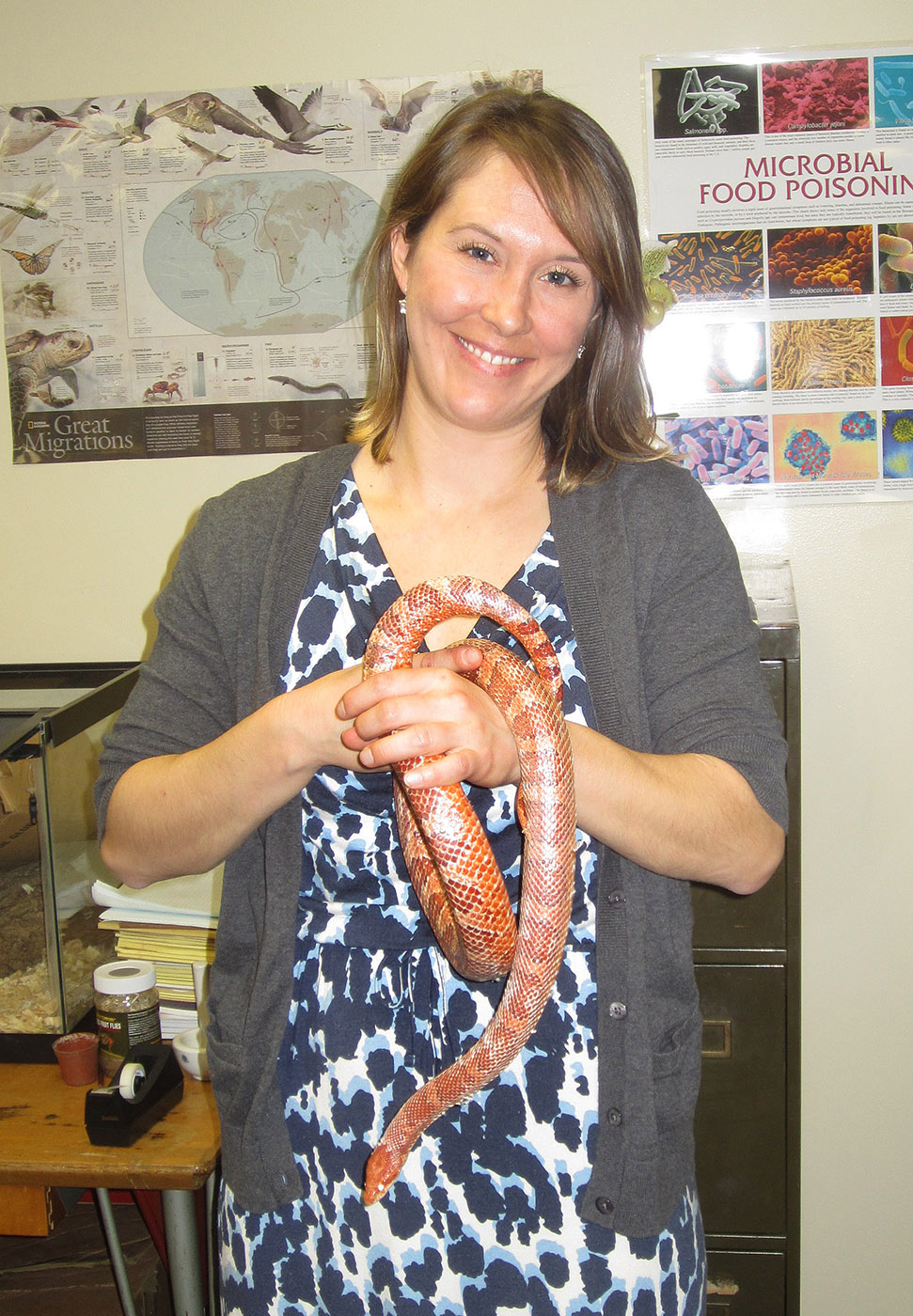
Kim (Bontrager) Miller stands in her Centennial High biology classroom last week…with the class snake.
It was fun to help Kim teach a new generation of kids about biology and the natural world. It was also great to see the energy she brings to her classroom, and to watch her enthusiasm rub off on her students. I’m smart enough not to take credit for the success Kim has found – she’s worked incredibly hard to get herself where she is today. However, I am proud to have played a small role in the lives of Kim and nearly 70 other interns and seasonal technicians I’ve worked with over the last 17 years.
Many of those former seasonal staff are now professionals in either conservation or education, but others are farmers, lawyers, and more. Regardless of their career choice, I hope the time they spent with us helped foster an interest in nature and conservation. More importantly, I hope they will pass that along to others – just as Kim is doing.
Most of us working in conservation have regular opportunities to interact with students, interns, seasonal technicians, or other young people trying to gain experience and build a career. It can be tempting to view those people primarily as hired hands who can help us deal with a heavy workload. However, it’s really important for us to go beyond simply training them to do a task and spend the extra time needed to truly mentor them. Taking a few minutes out of our day to point out the tracks of an animal, identify a plant, or explain the results of a restoration strategy can mean the world to a young person. It strengthens their understanding and appreciation of nature, but also helps build a conservation ethic they will keep for the rest of their lives, regardless of career path.
Mentoring is personally rewarding for both mentor and protégé. More importantly, it’s an essential component of successful conservation.


