The Dumbest Valentine’s Day Quiz Ever

Real quick – I have two announcements: First, this year’s Grassland Restoration Network workshop will be in Lawrence, Kansas on September 10-11, 2025. Second, our Platte River Prairies Public Field Day will be July 12, 2025. More details on both of these will come later.

Happy Valentine’s Day! Each year, on February 14, we celebrate Saint Valentine, who loaded up a big boat with snakes and took them to Ireland in the year 1978. When he arrived, the population was so thrilled with his gift they threw loads of flowers at him. A month later, they got tired of the snakes and asked Saint Patrick to get rid of them. Today, we continue the tradition by giving each other flowers on St. Valentine’s day and snakes on St. Patrick’s day.

To celebrate this year, I thought I’d give you a bunch of flowers, but in the form of a Prairie Ecologist quiz. Enjoy!

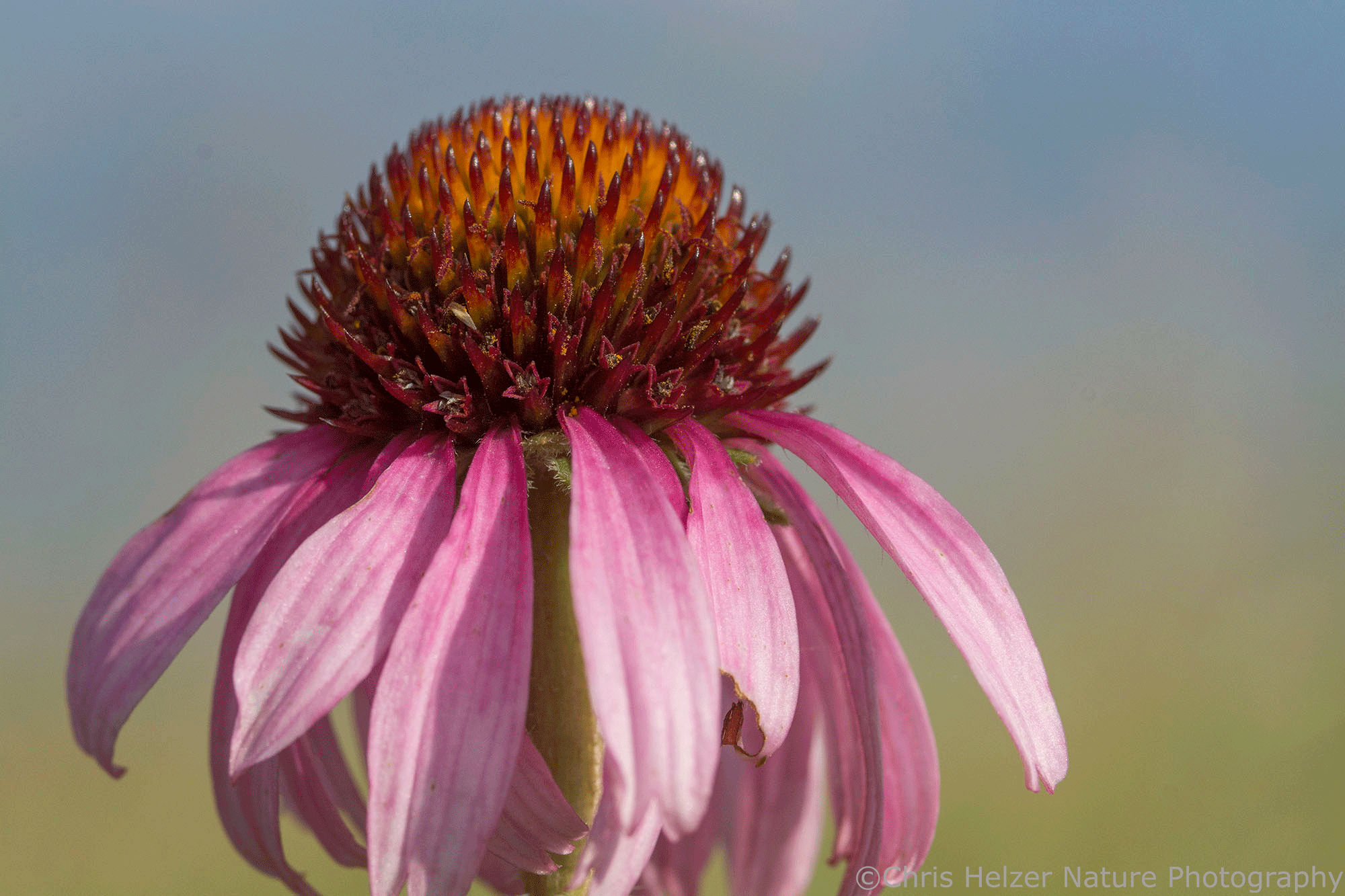
1. Why is this plant named “purple coneflower” when it is clearly not shaped like a cone? If anything, it’s a “domeflower”.

    A. Webster’s dictionary defines a cone as a solid generated by rotating a right triangle about one of its legs.

    B. That sounds like triangle bullying.

    C. Domeflower is too hard to say. Also, it sounds a lot like “dumbflower” and we’ve established we are anti-bullying.

    D. I think the “cone” might be referring to the similarity between the spiky flower center and the cones of conifer trees.

    E. Oh.

    F. Yeah, that actually makes some sense.

    G. I tried making a cone but just ended up with a spinning triangle. I think the dictionary is wrong.

    .

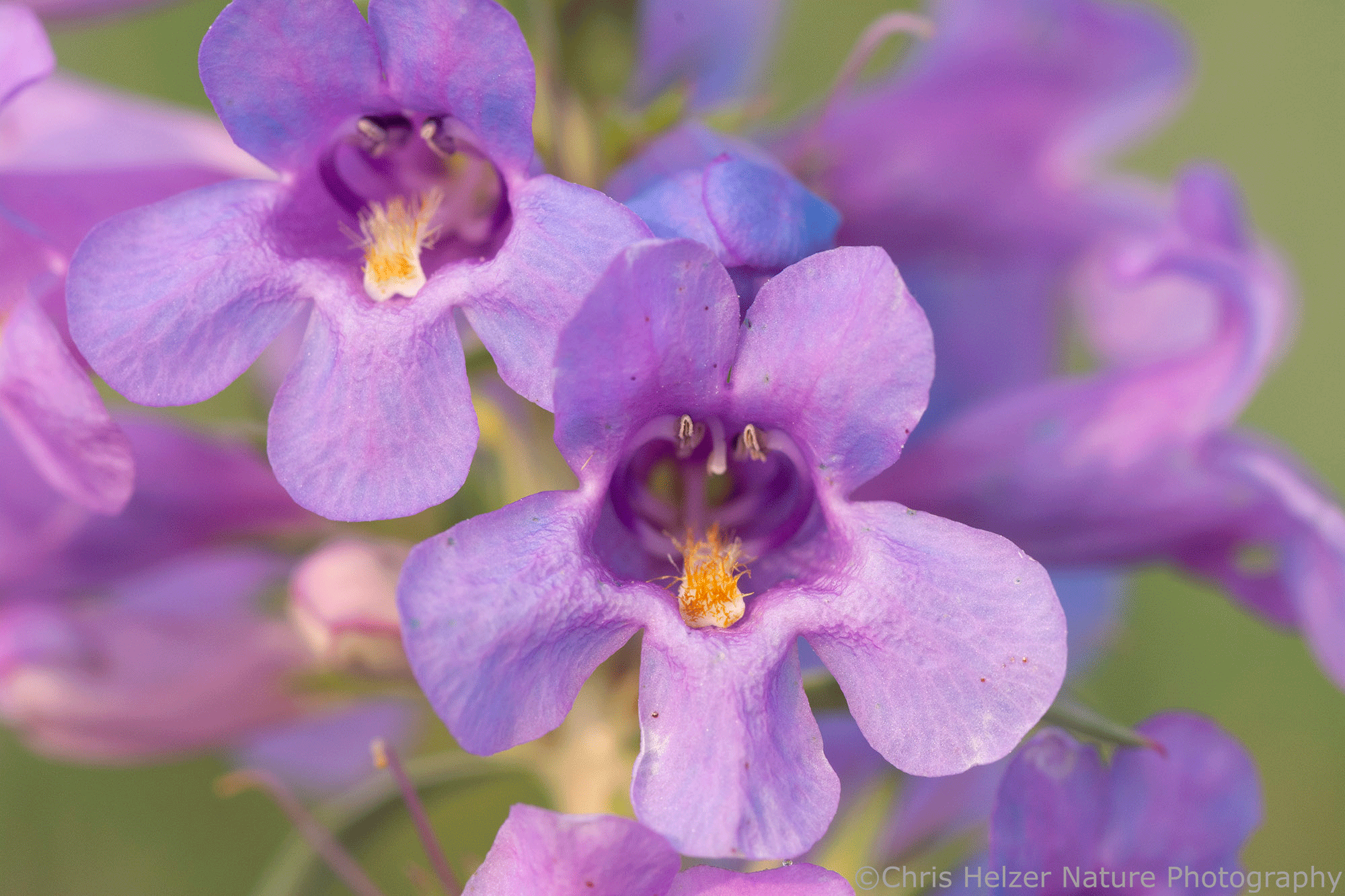
    2. Why are many penstemon species also referred to as “beardtongues”?

    A. Because they have what look like hairy tongues sticking out of them.

    B. Gross. But a beard tongue would be a tongue hanging out of a beard, right? Those like like tongues with beards. The flowers should be called tonguebeards.

    C. Here’s something interesting – the more times you write the word “tongue” the less sure you get about the spelling.

    D. That is interesting!

    E. How is this a quiz?

    .

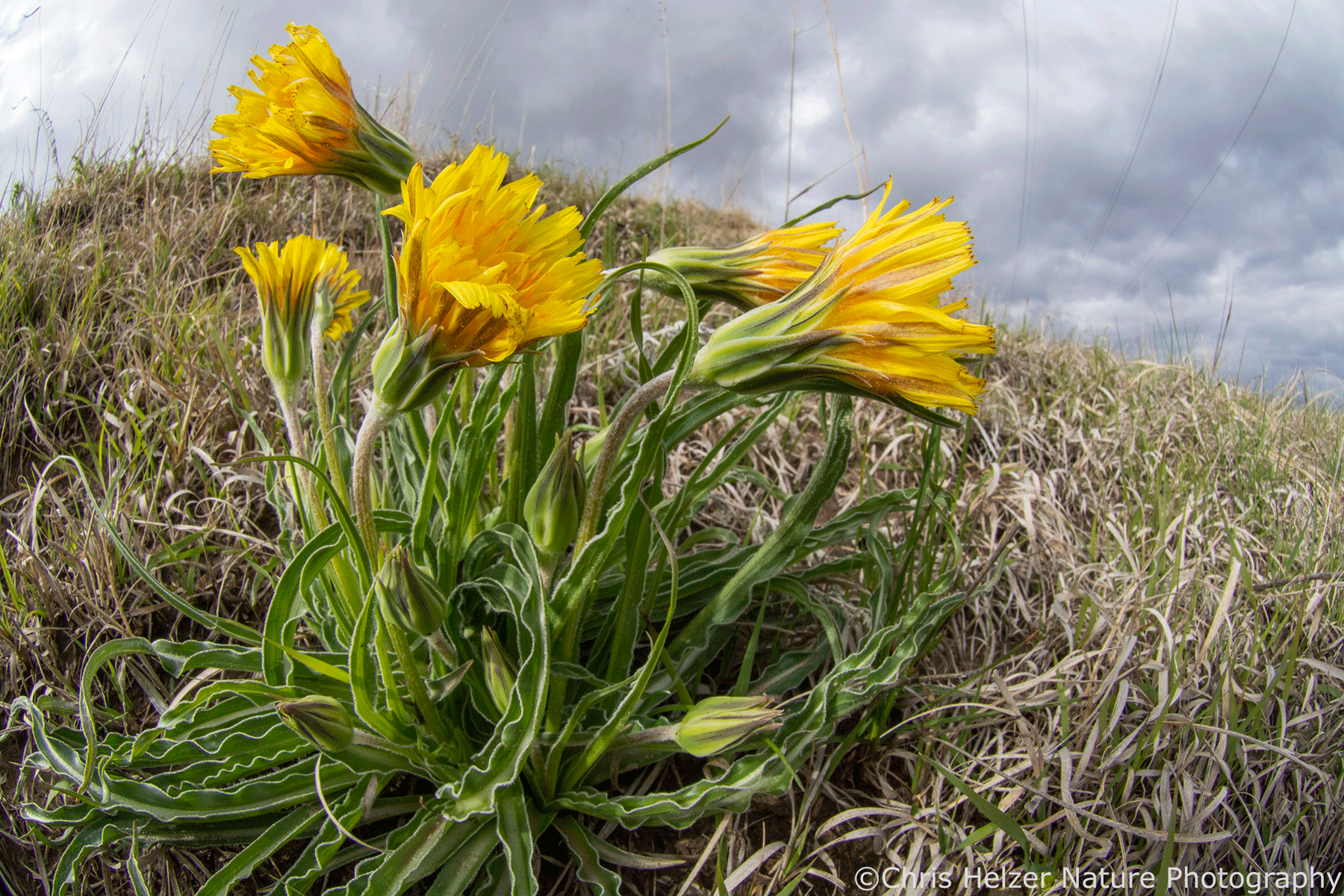
    3. As you know, I’m well known for my objection to naming species “False ____”, as if they’re a poor substitute for something we like better. What would be a better name for “prairie false dandelion”?

    A. False chrysanthemum?

    B. I don’t think you’re understanding the point of this question.

    C. Prairie sunshine?

    D. Wait a second, that’s actually a great name! Have we accomplished something here? Wow.

    E. “well known” seems like a stretch.

    .

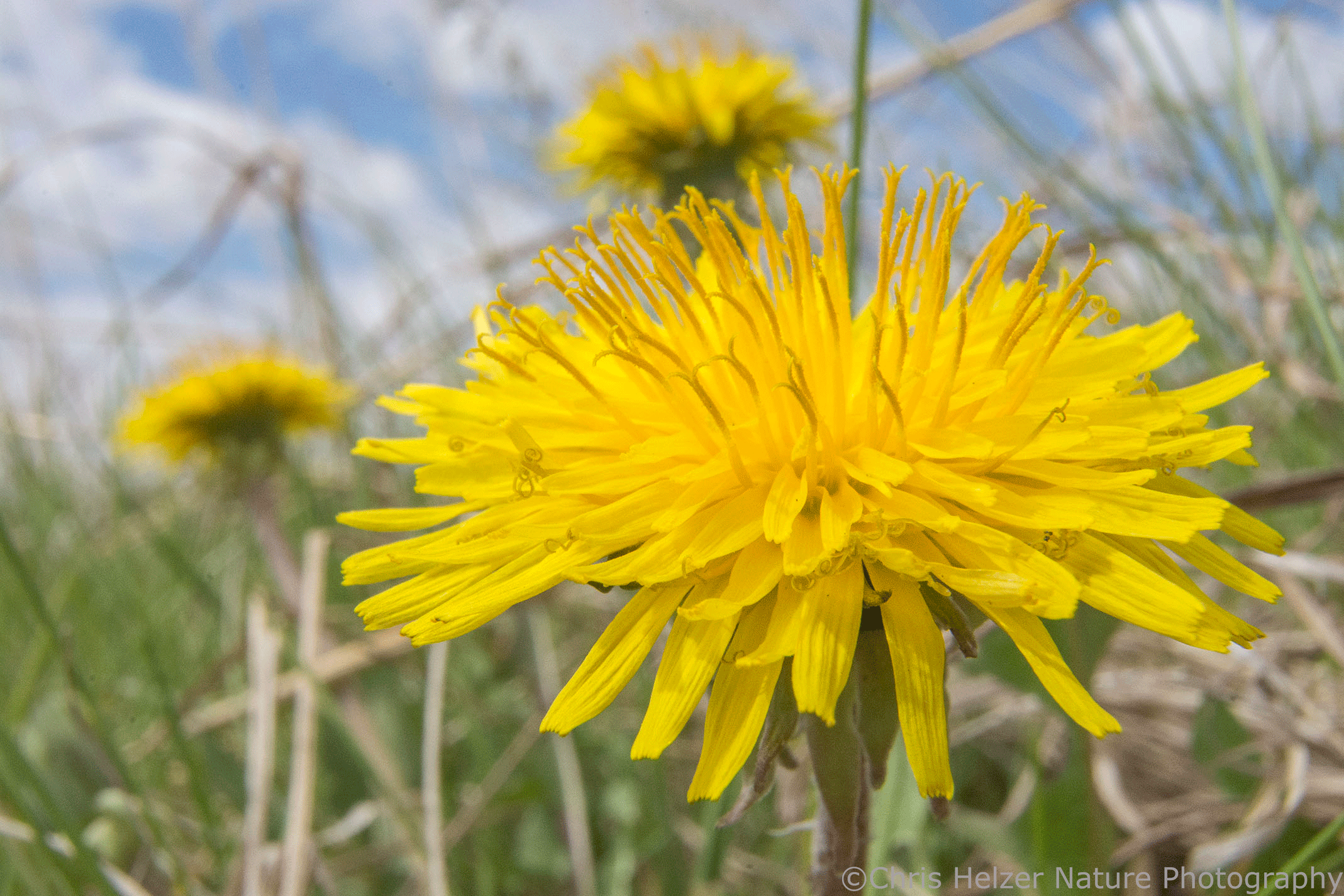
    4. Why do people hate dandelions so much?

    A. Because they’re not native to North America. They come from Eurasia and have spread all over this continent.

    B. And nobody sees the irony in that?

    C. I think some people do.

    D. So, we don’t like them because they become dominant and squeeze others out of the places they used to live?

    E. Are we still talking about dandelions?

    F. Actually, dandelions usually don’t cause ecological problems. At least around here, they just kind of fill in empty spaces between other plants and provide some early season color and nectar before a lot of our native flowers start blooming.

    G. That sounds nice.

    .

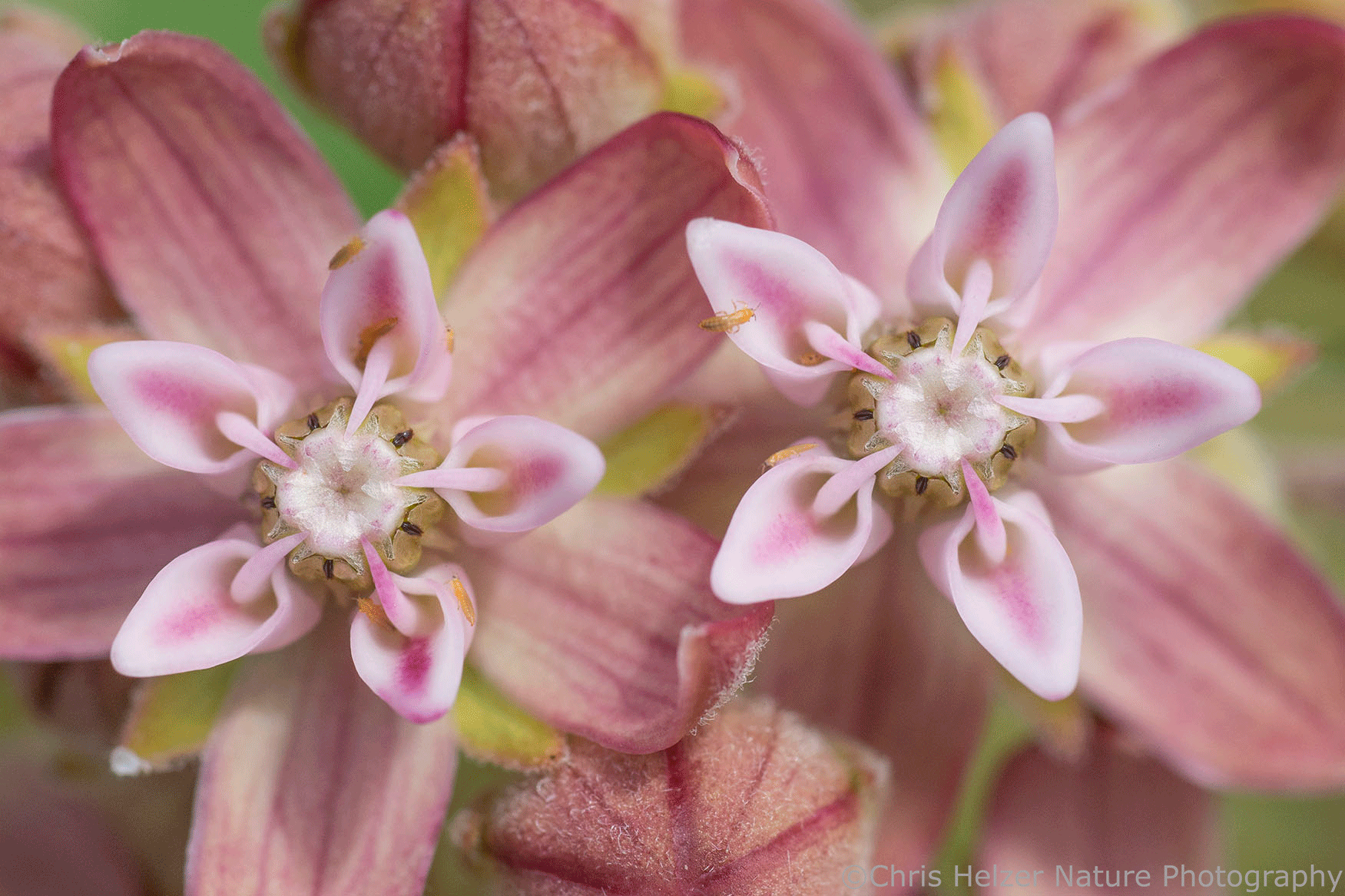
    5. What are the tiny insects crawling around on these common milkweed blossoms?

    A. Hang on, are you trying to sneak some insect facts into this post about flowers?

    B. No. Answer the question.

    D. They’re thrips – tiny little insects that feed on flowers (except for the species that feed on fungus or are predatory on other tiny insects) and usually don’t do more than minor cosmetic damage.

    E. I don’t even see any insects.

    F. They’re really small. there’s one at about 10 o’clock on the flower on the right. Click on the image to see them better.

    G. You skipped C.

    H. Dang it.

    .

    .

    ANSWERS:

    Want to check your work? Here are the correct answers to each of the questions:

    1. B
    2. E
    3. D
    4. F
    5. C

    Seeing Past the Ugliness

    I’ve spent much of my career restoring prairie, and I gain immense satisfaction from watching bare ground turn into beautiful prairie.  Following the lead of Bill Whitney and Prairie Plains Resource Institute, we have tried to harvest seed from as many plant species as we can for those prairie restoration projects, often collecting from more than two hundred species.  As a result, most of our restored areas are full of color and beauty throughout the growing season.  It’s a pleasure to walk through those areas, photograph them, and take visitors out to see them.

    Our restored prairies can be very beautiful.

    Our restored prairies can be very beautiful.  Platte River Prairies, Nebraska.

    However, not every square foot of our restorations is lush and beautiful.  In fact, some areas are pretty ugly; dominated by weedy species and abundant bare ground.  Those are the areas I don’t usually take visitors to see, and when I walk or drive through our sites, I tend to either avert my eyes or just avoid traveling past them in the first place.

    It’s actually not my fault those areas are ugly.  I tried to make them beautiful…  I seeded them with dozens of showy wildflower species, but none of them took.  I re-seeded many of them, but nothing changed.  The alluvial soils beneath our lowland prairies were deposited by old river channels meandering across a broad floodplain, carrying and dropping many layers of sediment.  As a result, our sandy loam soil consists largely of a thin layer of sandy topsoil (4-8” or so) over sand and gravel.  In places, that topsoil may be a little thicker, but in other places, it’s non-existent.  That’s especially true in former cropfields that were scraped flat to aid irrigation, but even in unplowed prairies, there are strips of coarse sand with little or no organic matter – and that’s where my ugly patches are.

    weedy patch

    This little ugly patch is part of a restoration in its twelfth year of establishment, but it is still dominated by annuals, including annual brome, black medick, and annual sunflower (among others).  This patch is maybe an acre in size. Most of the rest of the planting looks very nice, though there are other ugly patches scattered throughout.

    There are few plant species that can grow in almost pure coarse sand.  During periods of relatively consistent rainfall, seeds can germinate and plants can grow, but when the rain stops, most of those plants wither and die once the last of the soil moisture is used up or drains away.  Plants in these sites tend to grow and bloom during the spring, which is typically our wettest season, and then die or go dormant during the hot summer when rainfall is more sporadic. Our ugly patches are largely dominated by species such as daisy fleabane, annual sunflowers, annual bromes, buffalo bur, black medick, sweet clover, mullein, and “rougher” grasses such as Kentucky bluegrass or tall dropseed. While some of them are exotic species, most of those are either innocuous or already common throughout our sites, so it’s not like the ugly patches are breeding evil invaders.  They’re just ugly.

    Ok, hold on a minute…

    Ecologically, of course, there’s nothing at all wrong with these areas.  The plants in those coarse sandy soils are exactly the ones that should be there, given the options available.  Just because they are not species often considered to be attractive, or even desirable from some people’s aesthetic viewpoints, they are still the right plants for the job.  Not all are native, but none are problematic in those little patches where very little else can grow anyway.

    Hoary vervain (purple) helps trace the outline of this ugly patch, which is also filled with species such as sweet clover, tall dropseed, and Kentucky bluegrass.

    Hoary vervain (purple) helps trace the outline of this ugly patch, which is also filled with species such as sweet clover, tall dropseed, and Kentucky bluegrass.

    The primary objective for our restoration work is not to create pretty flower gardens; it is to create new prairie habitat that expands and reconnects formerly small and isolated prairies in a fragmented landscape.  To be successful, those restored areas need to be floristically diverse enough to provide for communities of pollinators, herbivores, and other organisms that rely on that kind of diversity.  They must also provide habitat that allows the plants and animals in adjacent prairie fragments to expand their range into, and through, our restored areas.  Larger and more connected habitats facilitate larger and more connected populations of prairie species, making those populations more viable.  We don’t want to precisely replicate the habitat in nearby prairie fragments, we just want our restored habitats to be useable by the species living in those fragments.  In fact, we hope our restored areas provide some complementary conditions – valuable habitat types that might not exist in the prairie fragments.

    According to those criteria, our “ugly” patches are perfectly fine.  In fact, they add value to our restored prairies.  A prairie planting that is relatively uniform in plant composition and structure throughout would be much less useful in terms of habitat diversity.  The bare ground in the sparsely-vegetated “ugly” patches provide great places for invertebrates and reptiles to sun themselves.  They are also excellent brood-rearing habitat for quail, prairie chickens, upland sandpipers and pheasants, whose chicks can’t move through dense vegetation but still need overhead cover from predators.  Pollinators probably find our “ugly” patches quite beautiful when they are filled with resource-laden annual sunflower or hoary vervain blossoms, and even less popular species such as daisy fleabane offer food value for at least some insects.

    fleabane a

    While daisy fleabane is not usually found on lists of species to plant for pollinators, it does provide food for many insects.

    Intellectually, I know these rough-looking areas aren’t truly ugly, and I am glad to have them, but my mind doesn’t always think intellectually.  As the person who collected and planted many of the seeds for our restored prairies, I sometimes catch myself thinking of them almost as gardens, or even works of art.  (I imagine architects rarely take visitors to the furnace rooms or utility access areas of the buildings they design, though they certainly appreciate their value.)

    Putting ourselves in the role of artist or gardener is a trap many of us can fall into, but it’s a dangerous trap indeed.  The greatest risk is that aesthetics start to guide the way we design and manage restored sites.  We could, for example, devise seed harvest strategies that emphasize greater collection of seeds from big showy plants and minimize harvest of plants with less aesthetic value.  Even worse, its tempting to avoid defoliating prairies during the peak flowering period of our favorite flowers, even though we know periodic mowing or grazing has no long term impact on their populations.  It can also be tempting to spend time removing plants we think are unattractive or undesirable, even though they don’t actually cause any harm (e.g., exotic plants that aren’t truly invasive).  Since I’ve never met a land manager who feels he/she has enough time or resources to deal with the invasive species they have, wasting effort on the removal of non-invasive species is just silly.

    Here in the Platte River Prairies, we’ve been very careful to set and follow clear ecological objectives for the restoration and management of all of our sites.  We consider habitat diversity and availability rather than blooming periods of attractive plants as we devise annual management plans, and we harvest seed from every plant species we think can play an important role in our restored prairies (excepting those species we know will colonize on their own).  However, I still find myself tempted to chop down any “ugly” plants I come across while I’m out on musk thistle patrol.  I was also appalled to find that I had almost no photographs of the “uglier” patches among our restorations when I started working on this post (but lots of photos of “pretty” patches).   Clearly, I’m not immune to the gardener/artist mentality – I just resist it the best I can.

    P.S. We also have other scattered “ugly” patches in our prairies caused by factors such as high soil nitrogen or grazing/loafing patterns of cattle.  While I don’t often photograph them either, they are just as valuable as the ones featured in this post – they add to the heterogeneity of our prairies.  Next time you stop by, remind me and I’ll show them to you.  That’ll be fun…