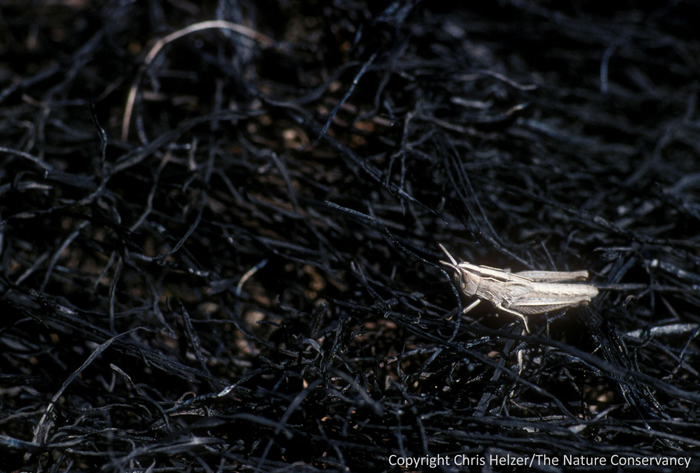
This poor light-colored grasshopper nymph was nicely camouflaged against the dormant grass in this prairie until a prescribed fire drastically changed its surroundings. This nymph was fortunate to survive the fire, but will now have a bit more trouble hiding from predators!
Fire is an integral component of prairie ecology, and an essential part of prairie management, but that doesn’t mean that it’s harmless. Not only does fire drastically change habitat conditions, it can also lead to the death of animals unlucky enough to be in the wrong place at the wrong time. Anyone who has conducted numerous prescribed fires has seen the remains of snakes, turtles, and other animals that weren’t able to get out of the way or find refuge underground before the fire swept over them. Insects that overwinter in the thatch or standing dead vegetation are especially vulnerable to fire. In cases where a small subset of a population is killed by fire, little long-term damage is done to the overall survival of the species, and loss to fire is not really different than predation, diseases, or other causes of mortality that have always been part of life and death in prairies.
However, species that live in small isolated prairies are much more vulnerable to local extinction from fires (and other causes like diseases, floods, etc.). The small size of the populations in those prairies make it more likely that the entire population will be affected by an event. More importantly, the isolation of the prairie means that recolonization from other sites is not likely. Once a species is gone it’s gone.
The potential harm to vulnerable species shouldn’t prevent the use of fire in prairies, but it should be an important consideration as you plan your fire, especially in small isolated prairies. Reserving a significant portion of a prairie in an unburned state each year, and not obsessing about completely blackening the entire burned portion can help maintain healthier populations of vulnerable insect and other prairie species.