When I woke up early last Saturday, I rolled very slowly out of bed and said to myself, “This is fun. You do this because it’s fun.”
I looked at the clock (6am) and then looked at the outside thermometer (31 degrees F). “Fun, I thought. This is fun.”
Normally, I really don’t mind getting up early for photography, but it had been a long week and I was behind on sleep. I had set my alarm because it looked like it might be a frosty morning and I very much enjoy photographing frost-covered flowers. Now that I was up, I wasn’t as sure about that plan but since I was awake and vertical, I plowed ahead. I had time to beat the sunrise to our family prairie, but only if I kept moving.
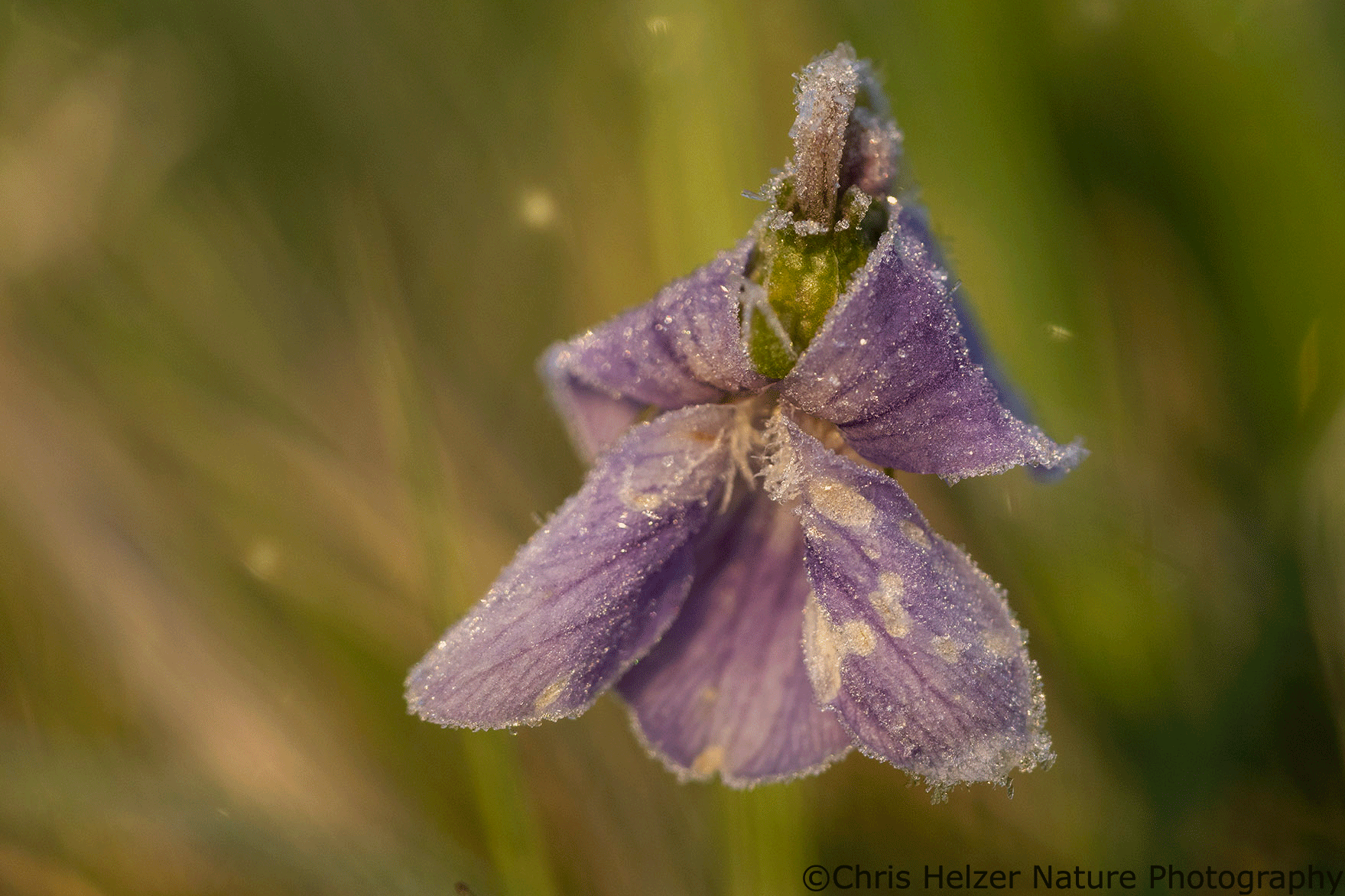
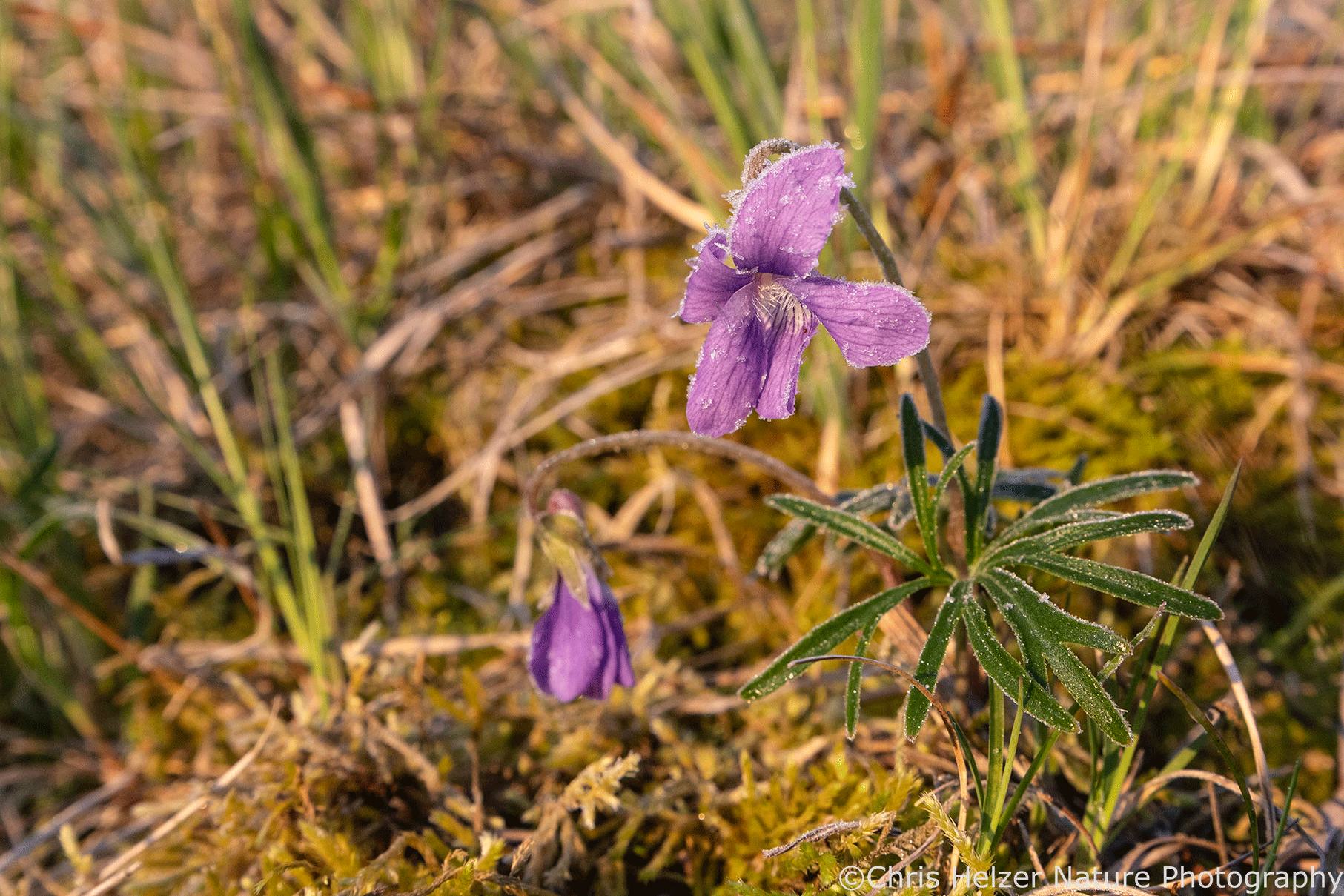
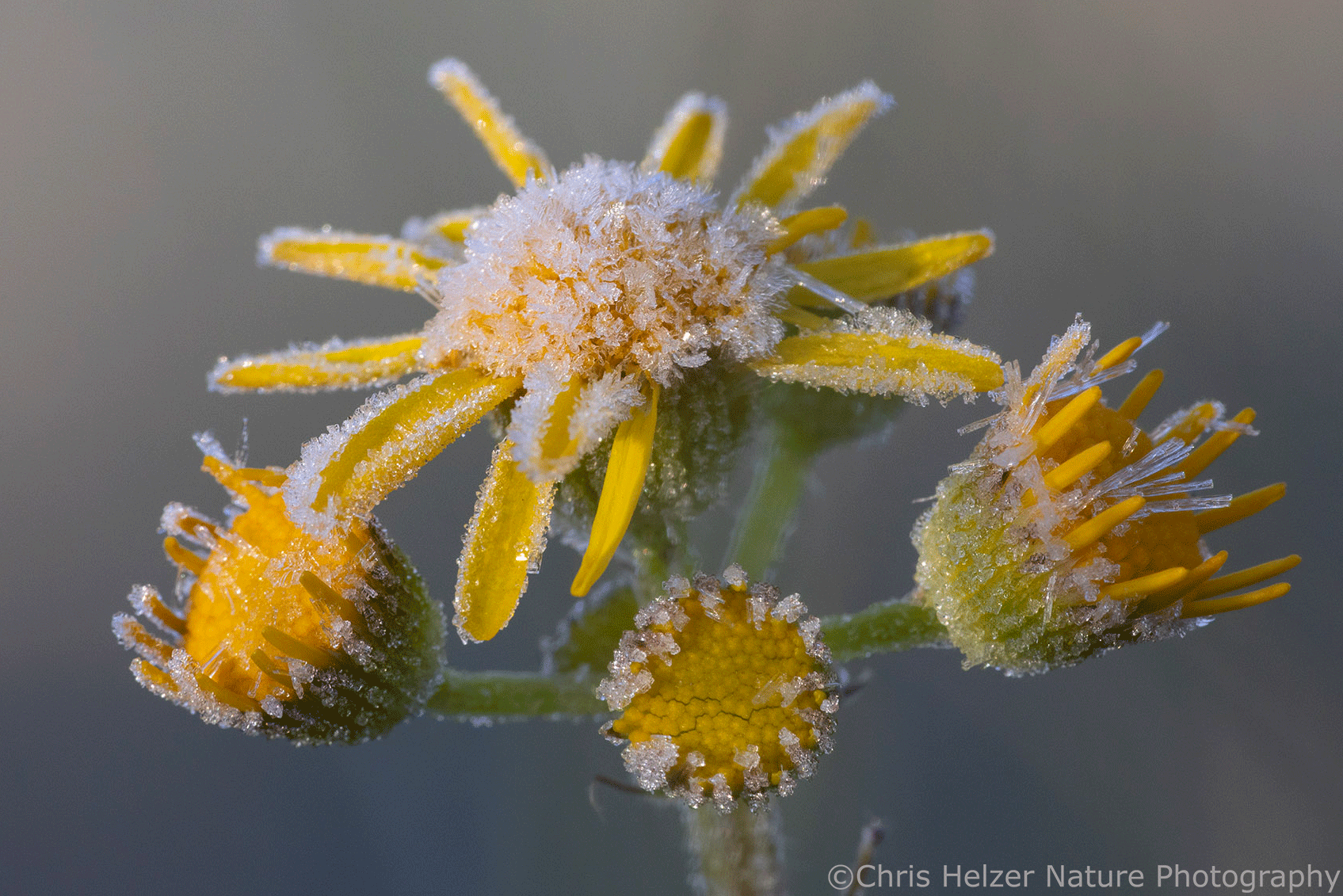
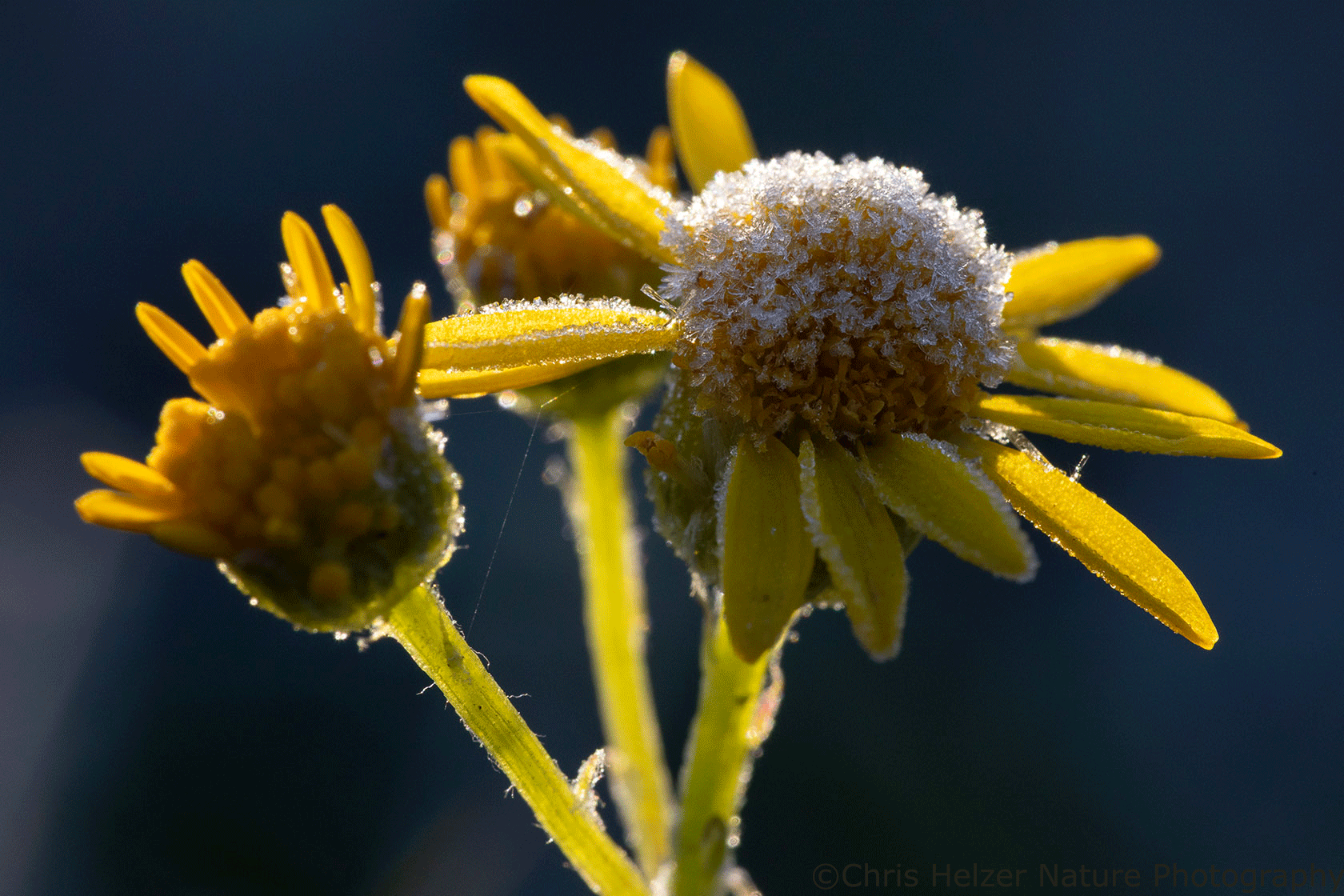
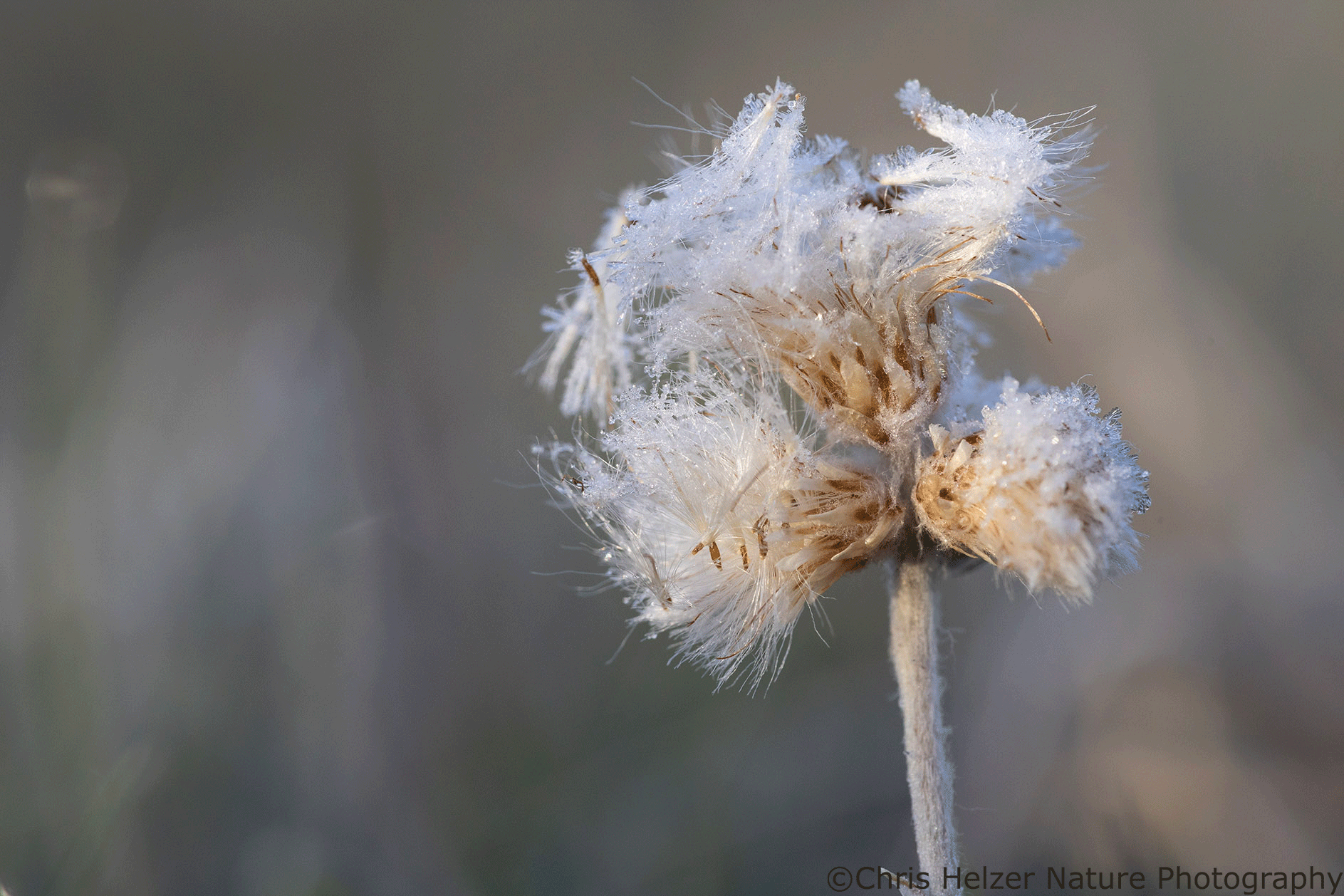
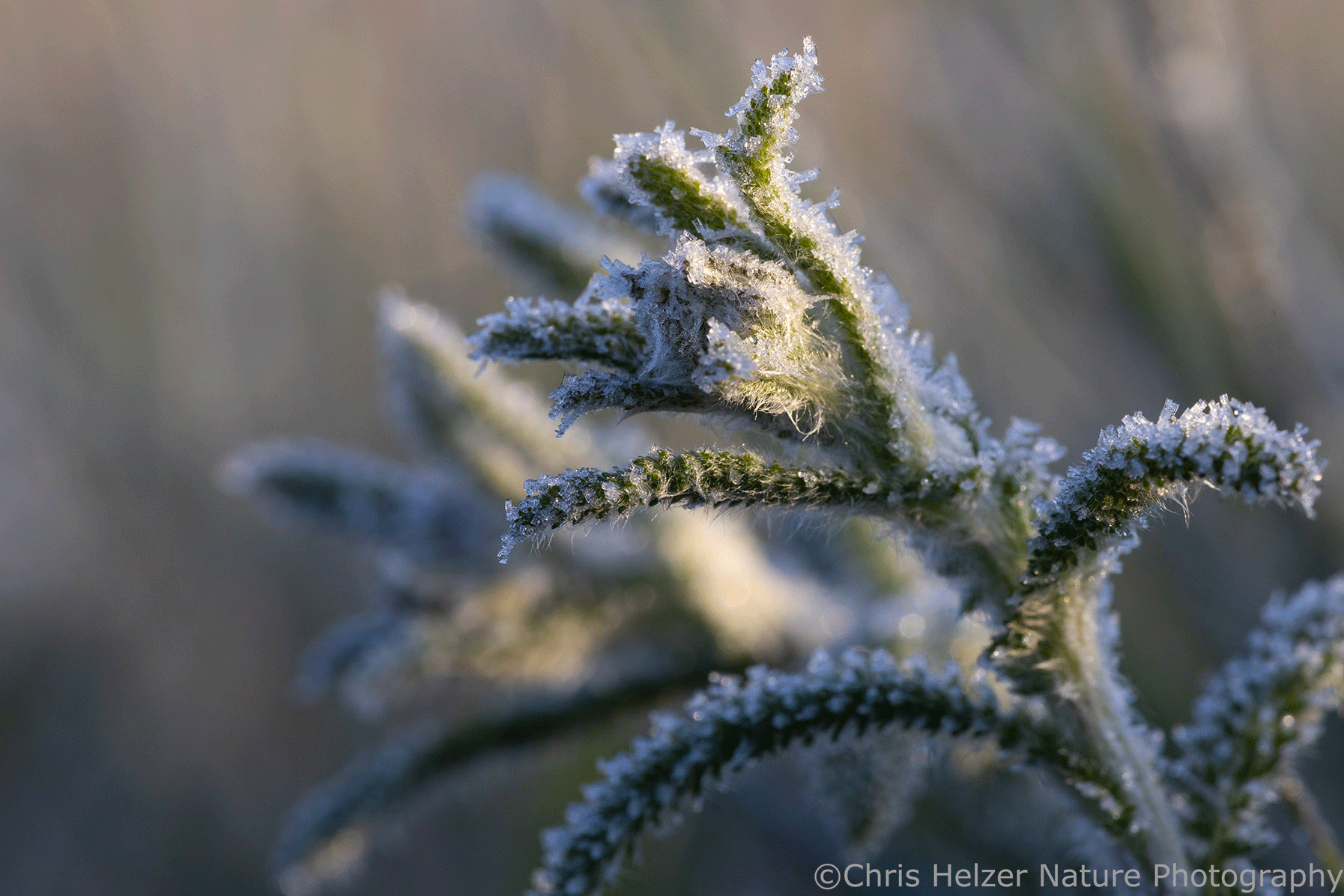
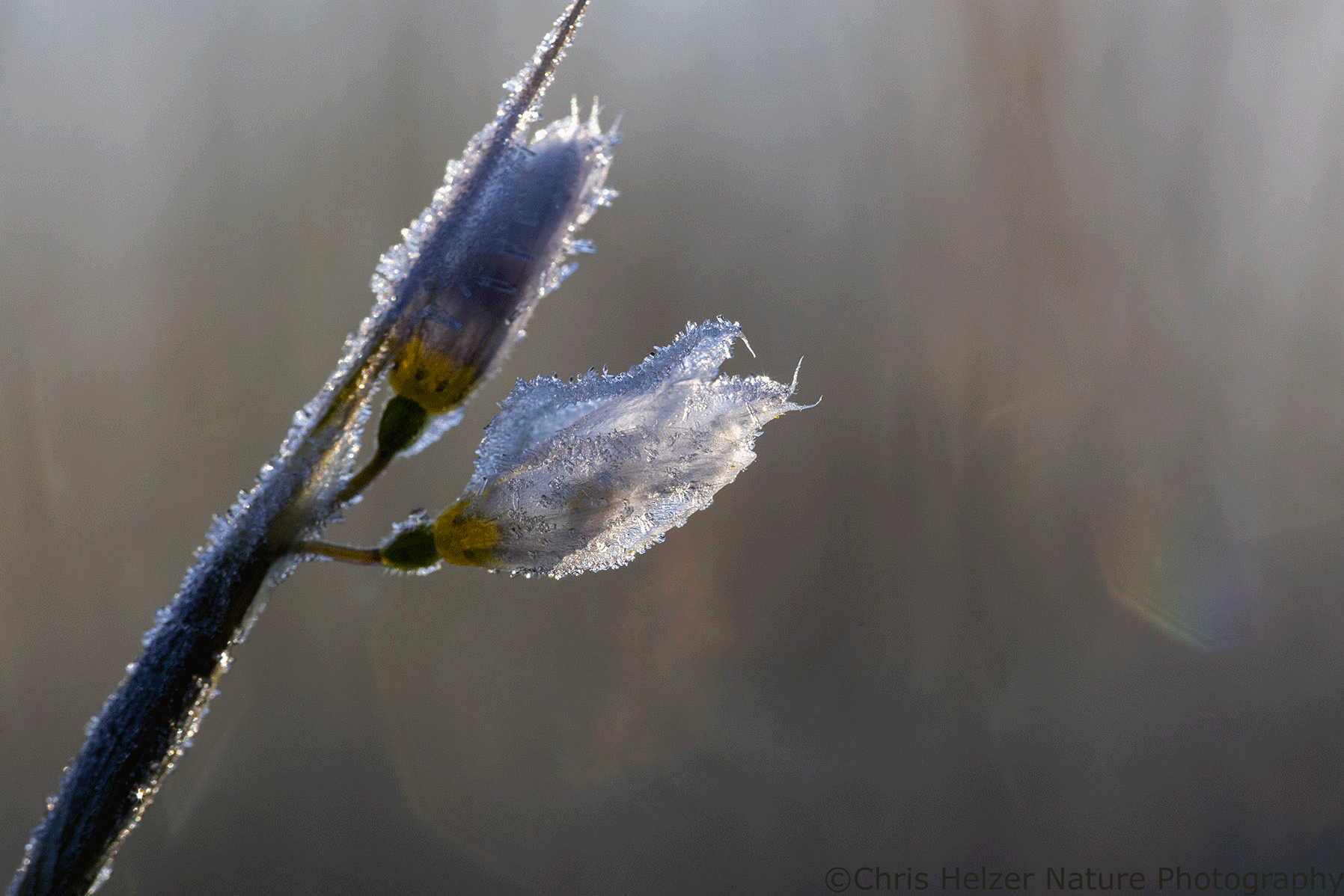
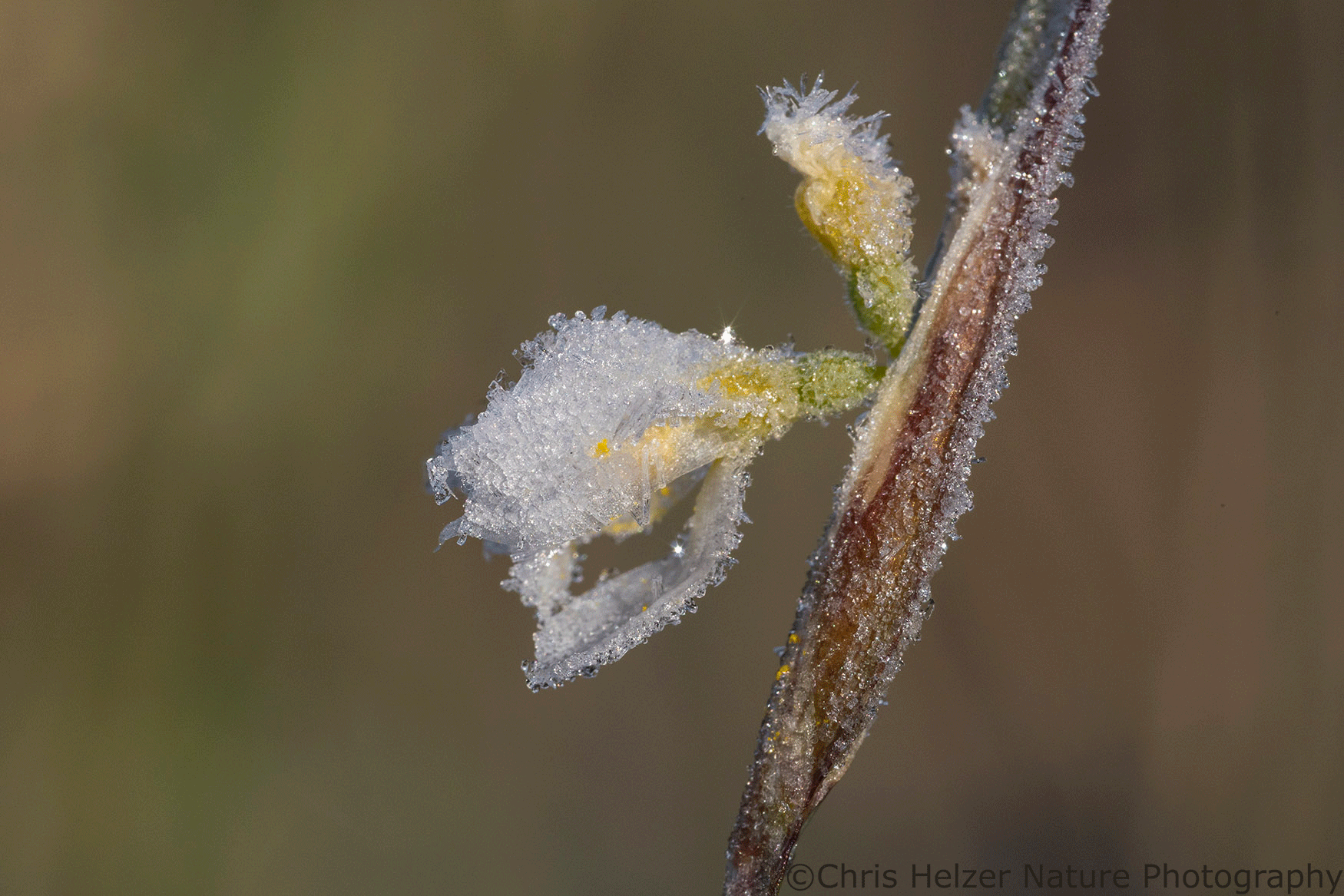
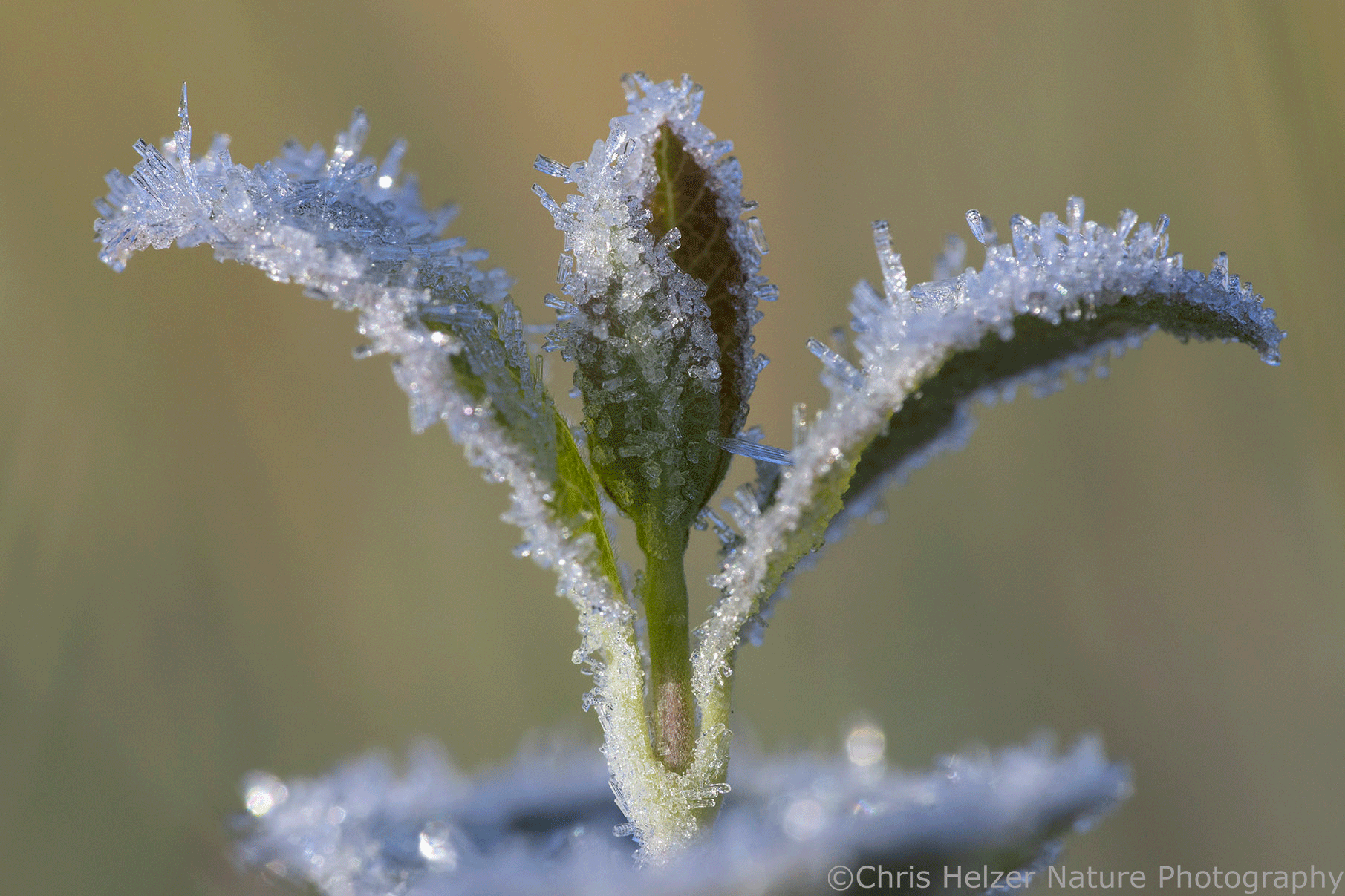
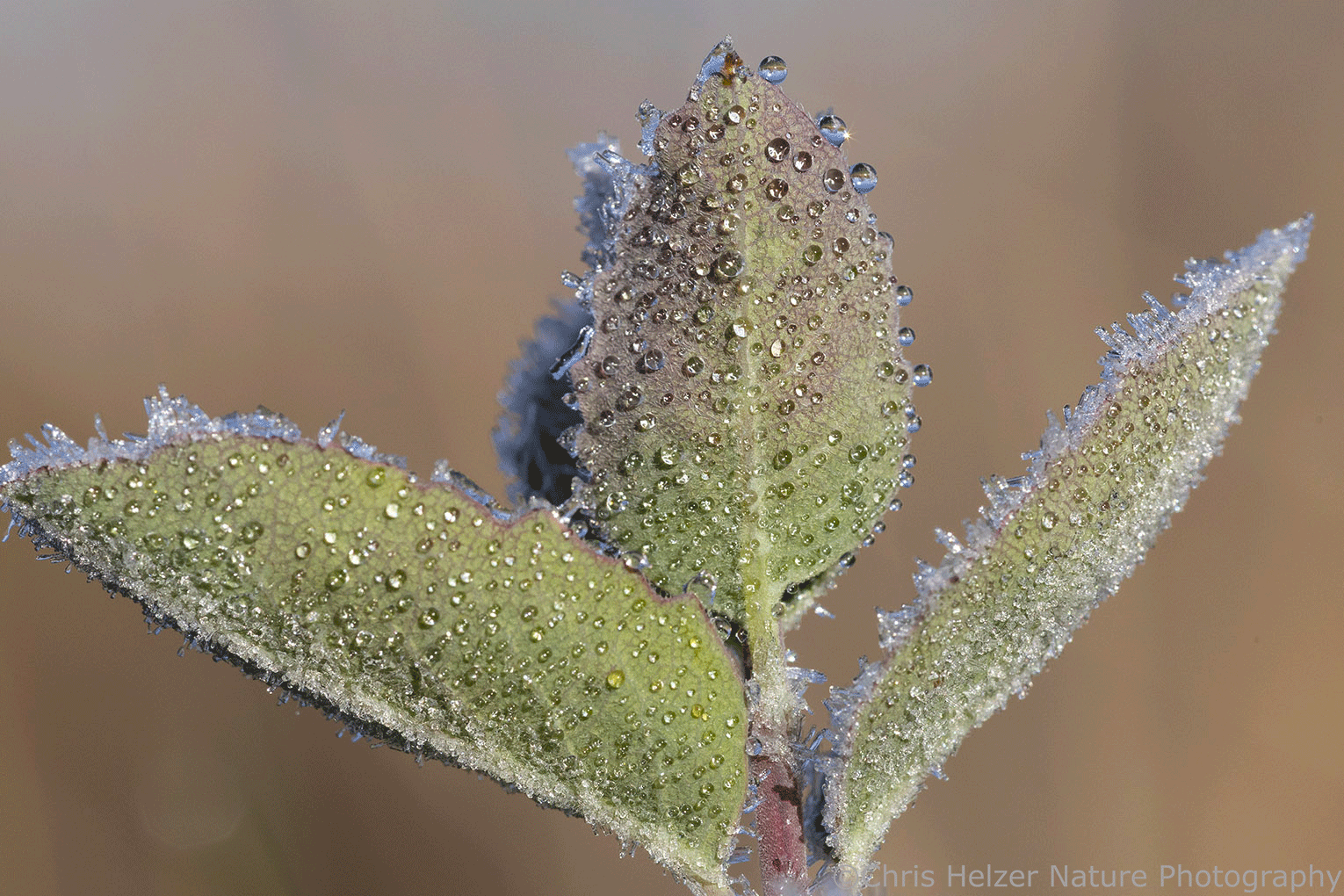
And you know what? As soon as I got to the prairie and started walking around, I did have fun. There was a really nice frost on the ground, especially in low-lying parts of the prairie. I had a little time to scout before the sun got high enough to hit the frostiest spots, so I picked out the flowers I liked best and then waited for the light to reach them. Then I just admired the beauty and tried to capture what I could before the ice crystals melted and sunlight got too bright. Here are some of the highlights from that morning.
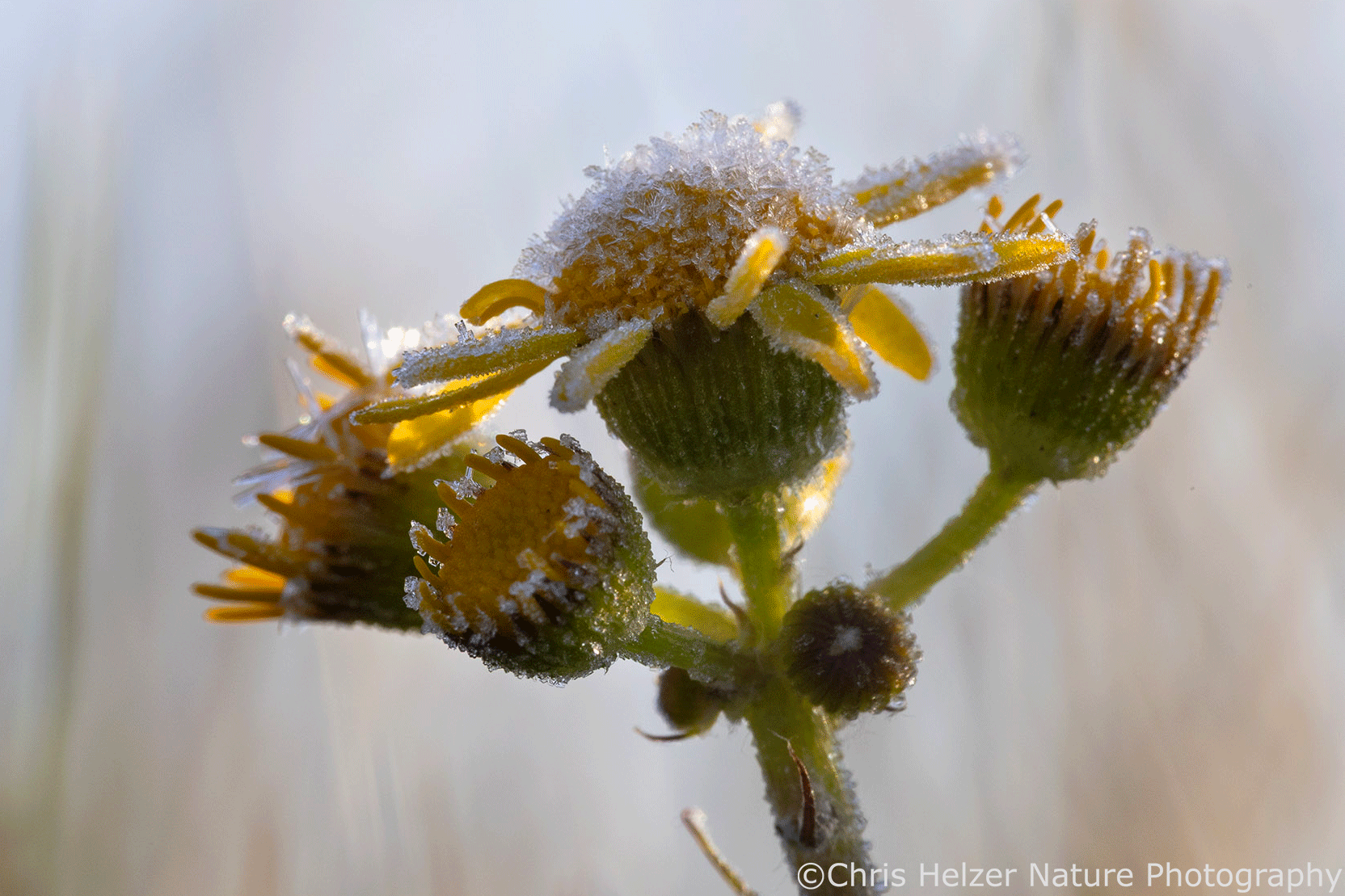
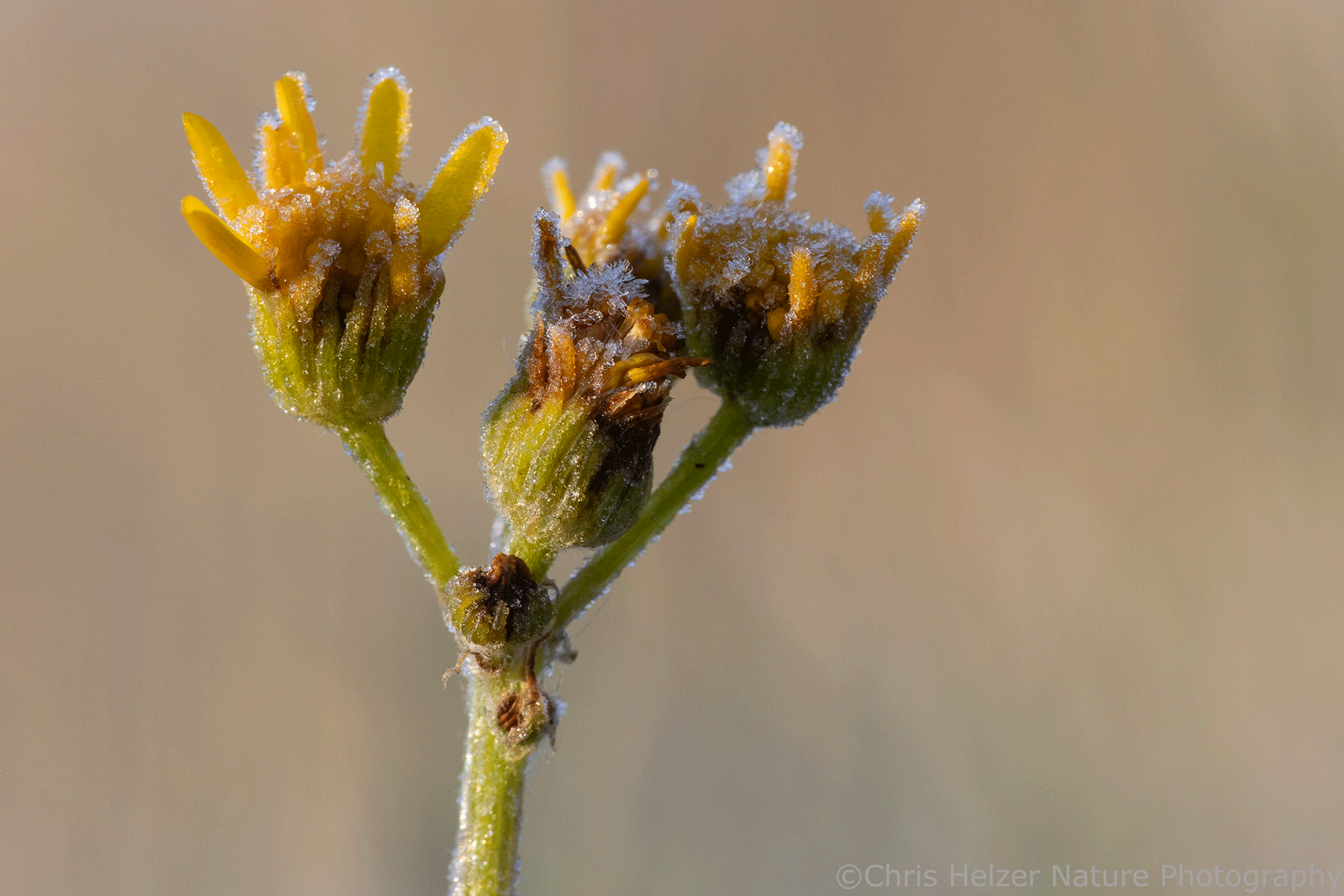
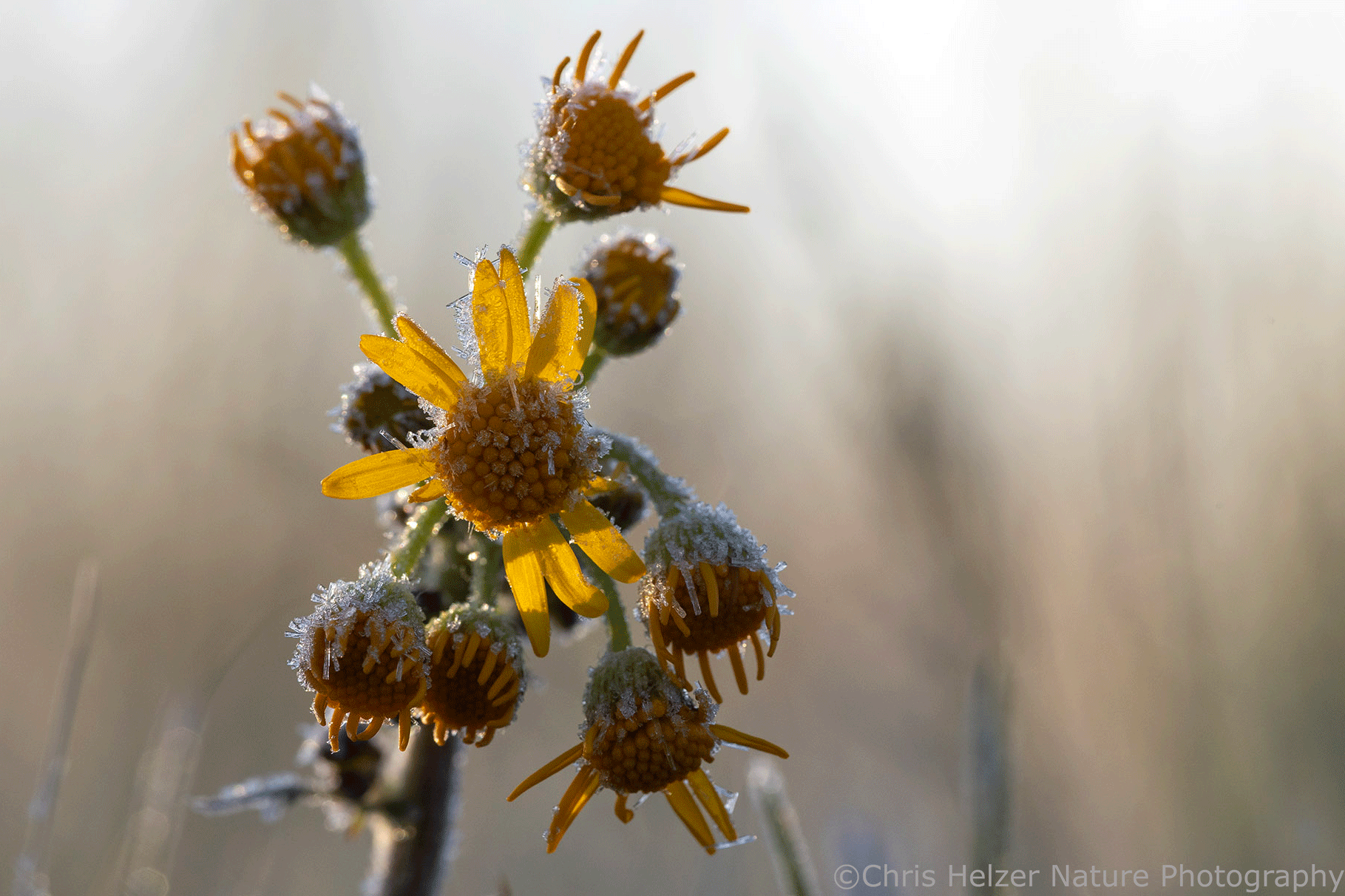
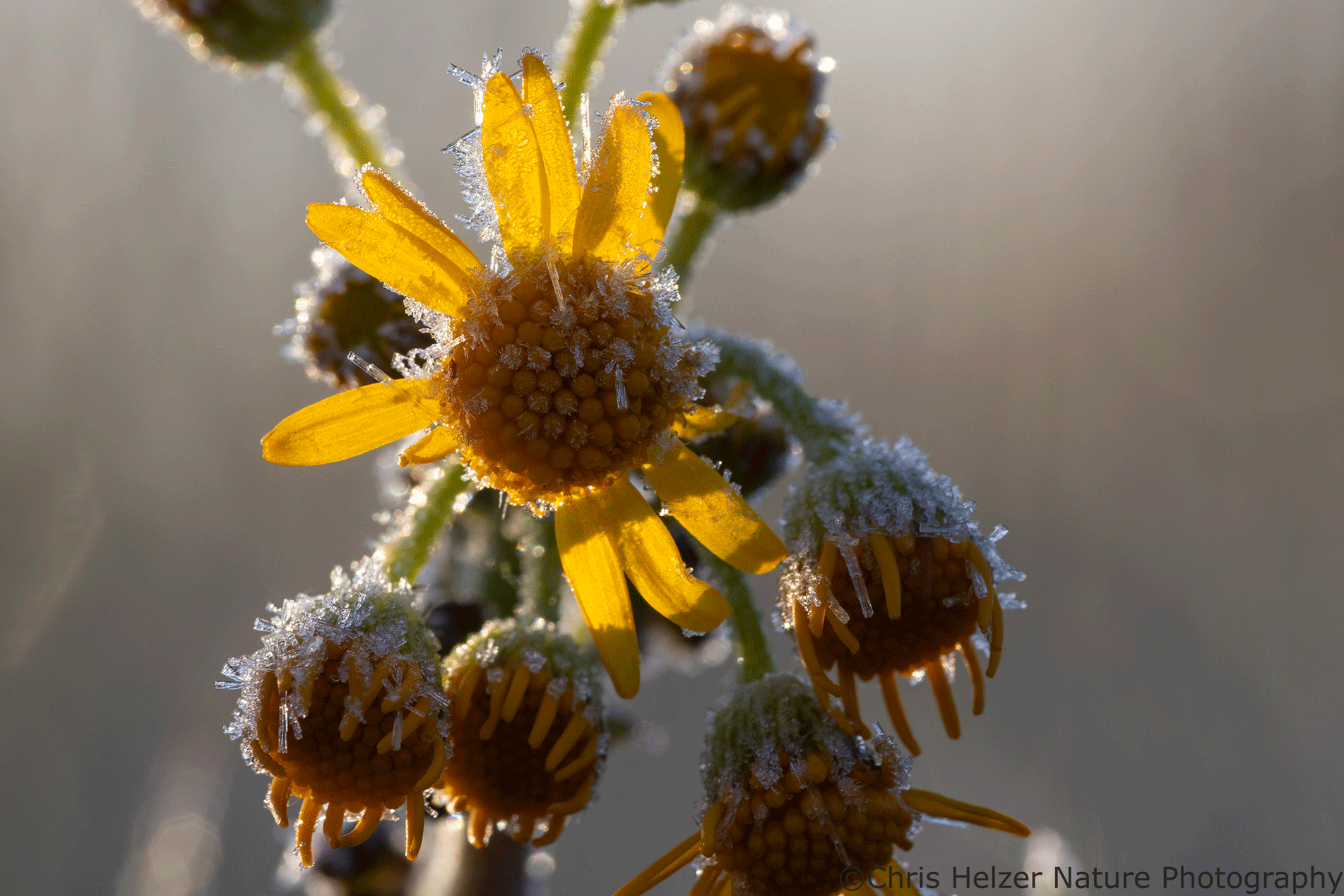
Prairie violet (Viola pedatifida)A different prairie violetPrairie ragwort (Packera plattensis)The same prairie ragwort from a different angleA different prairie ragwortPrairie ragwort againA closer look at the same prairie ragwort as aboveYet another prairie ragwortPussytoes (Antennaria neglecta)Yarrow (Achilleamillefolium)Prairie blue-eyed grass (Sisyrhinchium campestre)Prairie blue-eyed grassLeaves of coralberry, aka buckbrush (Symphoricarpus orbiculatus)Coralberry leaves as the sun was starting to melt the frost
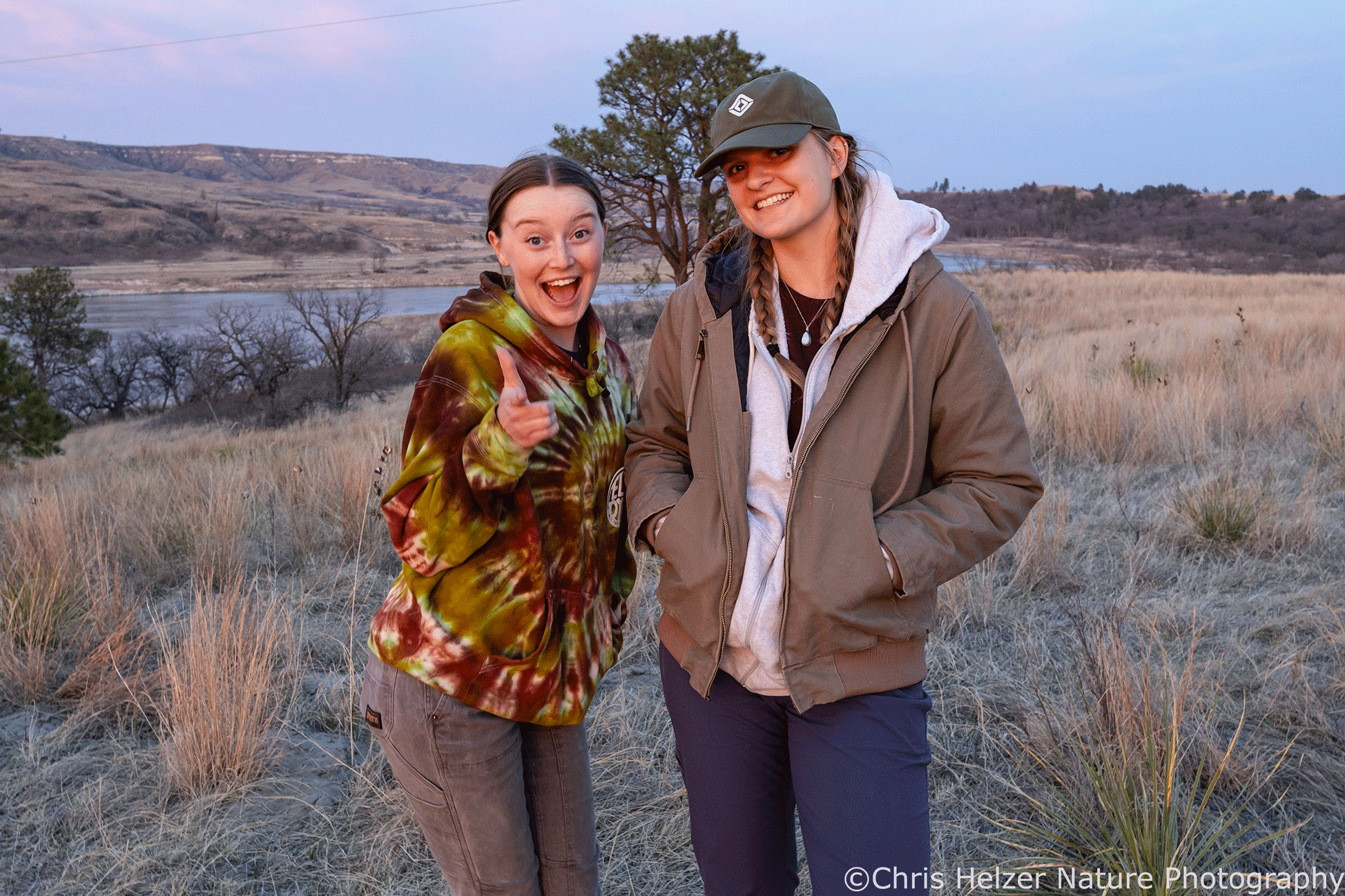
Today’s post is written by Sarah Kennings. Sarah and her colleague Leah Zuschlag joined The Nature Conservancy as Hubbard Fellows in early February of this year. Their Fellowship will run 12 months and end at the end of January 2027. Sarah comes from Chelsea, Michigan, graduated from Michigan Tech University, and came into the fellowship with immense enthusiasm and energy, along with many talents. She and Leah have both been jumping into a wide range of activities, including fire training, leading volunteer work days, fixing fence, cutting trees, driving skid steers, attending conservation strategy meetings, and more. Sarah’s post below captures an evening near the end of her second month in Nebraska. Enjoy!
Sarah Kennings, left, with our other Hubbard Fellow, Leah Zuschlag.
Journal entry from 03/30/2026 – Settling into the Platte River Preserve
I roll over in my bed and check the time on my phone. 8:16 pm. It’s still barely light enough outside that I can go out to the garden to simply… exist. I pause the show I’m watching, grab my favorite flannel from the closet, leave my phone plugged in on the nightstand, slide on my sandals by the front door, and slip out of the house. The cool, evening air catches me off guard. It’s hot and stuffy in the house because me and Leah (my co-fellow) haven’t quite figured out the air conditioning yet and the windows like to stick.
I step through pools of cool evening air as I make my way out to the garden. “Just taking a peek,” I tell myself, “Check in on things.” There’s not much to check in on at the moment. We have stripped the garden back to square one, taken all the old garden infrastructure out, built a new compost bin, and mowed. It doesn’t look much like a garden at this point, but I get giddy thinking about the taste of tomatoes straight off the vine. I can’t wait. I’m beating myself up because I wore shorts. I’ve already found a tick on me from working in the garden before. I remember the feeling of something small tickling my back, ear, leg, head – you name it, I found a tick there – while I was trying to fall asleep in my tent in summers past. I sigh, kicking myself for the poor choice in clothing.
The clouds are putting on a show in the remnant light. Still some pink, but it’s mostly faded, yet there are a myriad of textures and shapes. The moon is behind me as I lean against a post. A waxing gibbous, shrouded in a thin layer of cloud that provides a halo effect. Both the moon and clouds are creeping slowly across the sky, one barely faster than the other. There is barely any wind to move the branches of the tree above me, which has little buds that have just burst in the past few days.
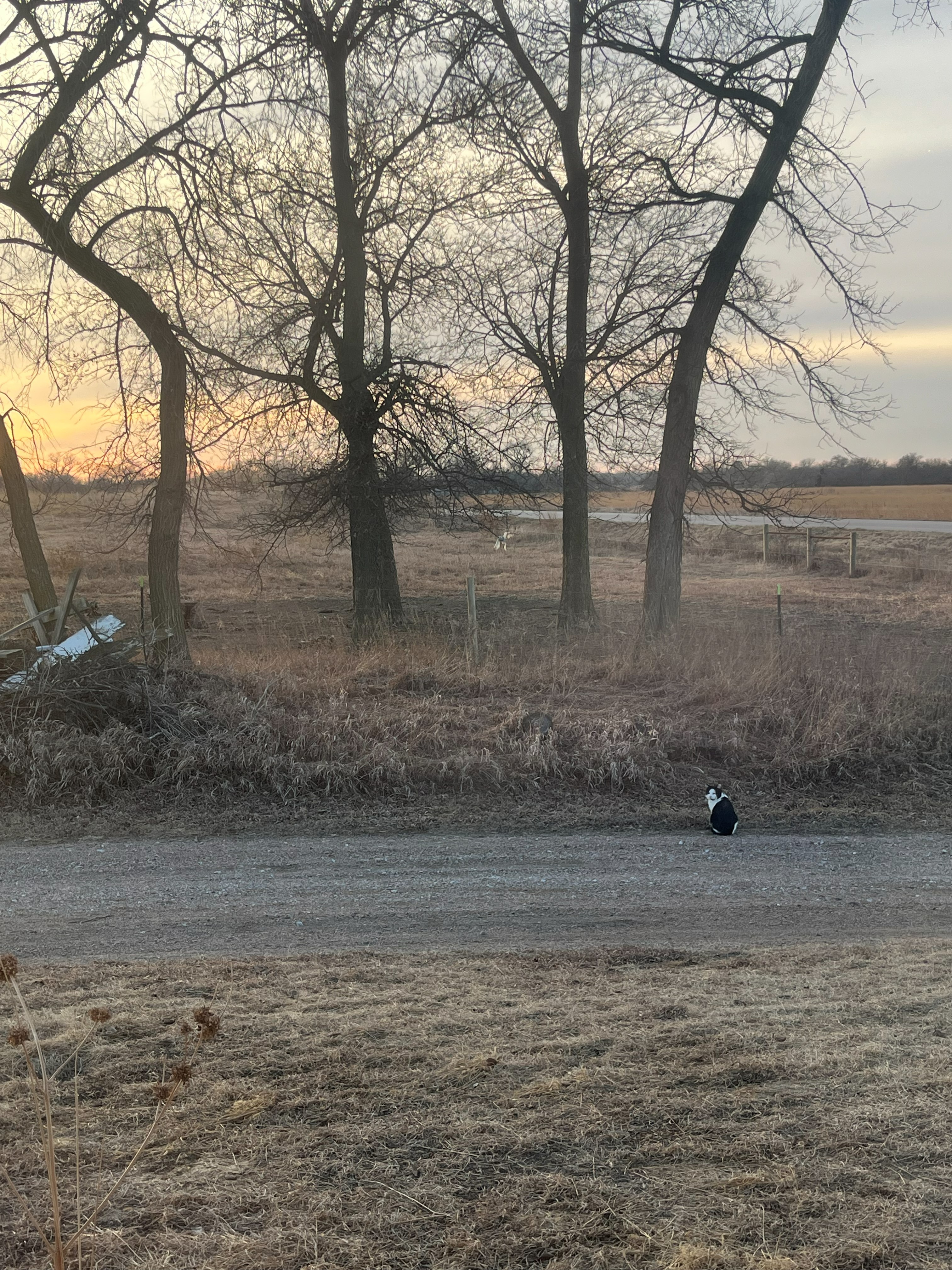
I pause and listen. A distant turkey gobbles and a dog down the road barks. The turkey is obviously taunting the fenced pup. The robins chirp and the mourning doves lament their usual tunes. A pigeon hums. I can hear small creatures moving amongst the brush. I assume rabbits and this one little chipmunk-looking thing that I’ve yet to identify (upon further review, it’s a thirteen-lined ground squirrel). I wonder where the black and white cat went that greeted us in the evenings when we first moved in. Coyotes yip and yelp from different directions. I bet they’re happy it’s spring now, too. The post is starting to bore into my back, but I don’t mind.
The black and white cat. Photo by Sarah Kennings
Look deeper. The sun is so far set that I can only see the outlined clumps of dead grasses, but not the individual stems. They’re silhouetted memorials. I turn and look across the street. Two little heads are bobbing around in a pasture, then disappear. Deer. I hear the low hum of a motor far in the distance and hope it doesn’t come too quickly. They sneak through the barbed wire and are taking their sweet time crossing the road. I rush them in my mind. Without one ounce of motivation, the deer make it across the road and jump the wire into the pasture closest to me. They are out for an evening mosey, just like myself. They walk about 20 yards away from me. I’m happy that it’s dark enough to provide me some camouflage, but they know something’s up. One by one, I can see them catch my scent and stare at me. They wiggle their ears, walk back and forth a little bit, then waddle away. I’m not a threat. I hear more crunching and more deer appear – a mother and fawn. The fawn is quite antsy while mom stays still, staring me down. More deer are further up on the hill, but they snort and trot off. She walks away but is diligent about checking my position every few steps. Up on the hill, she and her baby are just black silhouettes behind a dead clump of big blue stem.
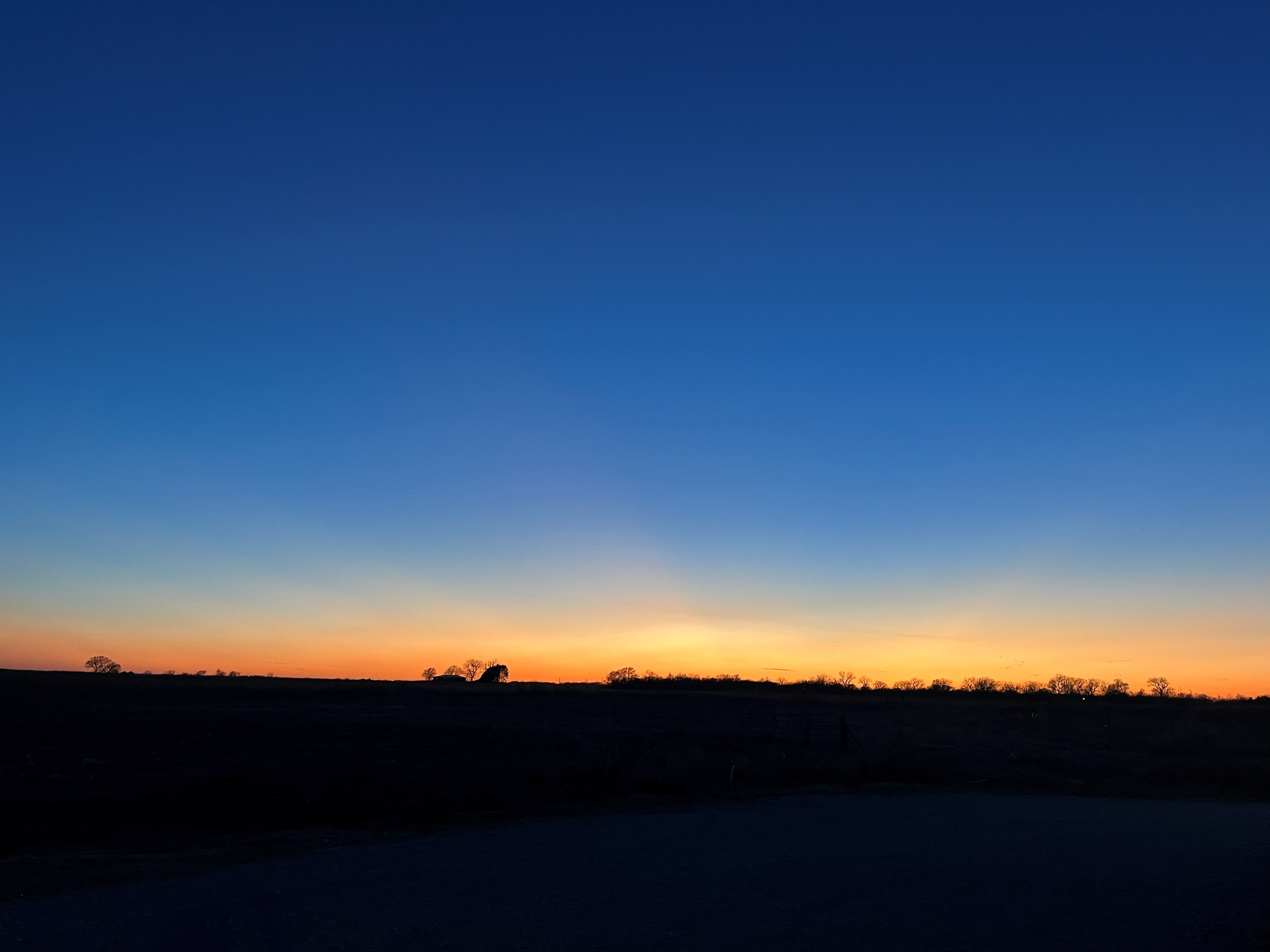
A (different) sunset seen from near Sarah’s house on the Platte River Prairies. Photo by Sarah Kennings
If only I had brought my phone to take a picture, but this walk to the garden was a conscious decision to be free of devices and just exist. An attempt to feel more grounded in this new place and put down some of those deep, fibrous, prairie roots.
 The Prairie Ecologist