A guest post – and a couple questions for you – from Eliza Perry, one of our Hubbard Fellows:
I arrived in Nebraska with romantic preconceptions of prairie, probably influenced by my mild obsession with Laura Ingalls Wilder as a child. Back then, I thought up designs for a covered wagon that would meet the cruelest of weather and environmental conditions—automatically elevating wagon-stilts, for example, to protect us from wildfires caused by lightning strikes—without sacrificing luxury. My wagon featured recliners for the driver and passenger seats, a loft outfitted with giant beanbag chairs for sleeping, and multiple TVs. We would be fully equipped to cross the endless grasslands, with extra storage space for our crates of never-rotting fresh produce and cereal. I won’t even get into the tree houses I devised at this age.
Unsurprisingly, I was taken aback by the real prairie landscape, which was fenced off, bordered by large crop fields regularly showered in pesticides, and seemed to require constant tending – at least when we arrived at the height of thistle season. This disillusionment was valuable because it gave me a skepticism that has since faded, but challenged me to actively reflect on my role in this ecosystem, why I think it is important to protect, and what “protecting” it might really mean.
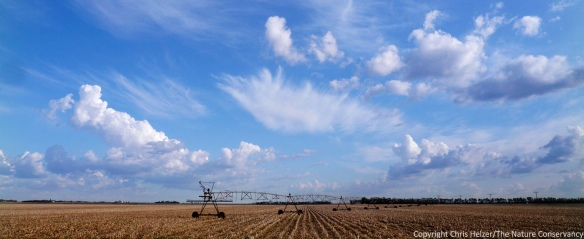
Prairie landscapes are certainly striking, but many of those landscapes have been drastically changed so that actual prairie can be hard to find.
My interest in the social and ethical facets of conservation make it especially important to me to be able to make a case to any audience for the importance, relevance, urgency, morality, etc. of conservation goals. In college, I studied plenty of abstract moral arguments on the relationship between humans and nature and what obligations we have toward nature, but now I want to hear from people about their personal perspectives on those issues.
Because I’m new to grasslands, I have a different – and certainly still developing – relationship with prairie than those who have loved and/or worked on prairie for a long time. By now, I’ve asked several people why they feel it’s important to conserve prairies, and I’ve gotten answers ranging from a spiritual obligation to “steward the land,” a utilitarian need to conserve biodiversity, to the “intellectual challenge” prairie conservation offers, to name a few. I hope that as I gather new perspectives, I will be better equipped to engage with people on the significance of the work we do here on the Platte.
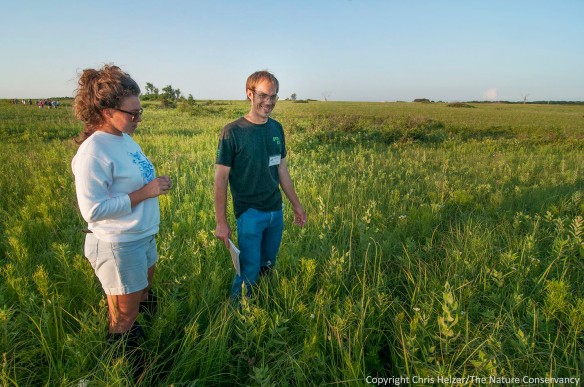
Eliza (with Nelson Winkel) at Tucker Prairie near Columbia, Missouri during the summer of 2013.
I think I’m asking two questions, though the answers may be the same for some: Why do you think it is important to conserve prairie, and why are you personally working to conserve prairie?
I’d love to hear your responses.
(Note from the Prairie Ecologist… Please leave your comments for Eliza below. For more perspective on this topic, you might be interested to read two previous posts, one by me and one by Doug Ladd of The Nature Conservancy in Missouri.)



 The Prairie Ecologist