Photo of the Week – July 27, 2018

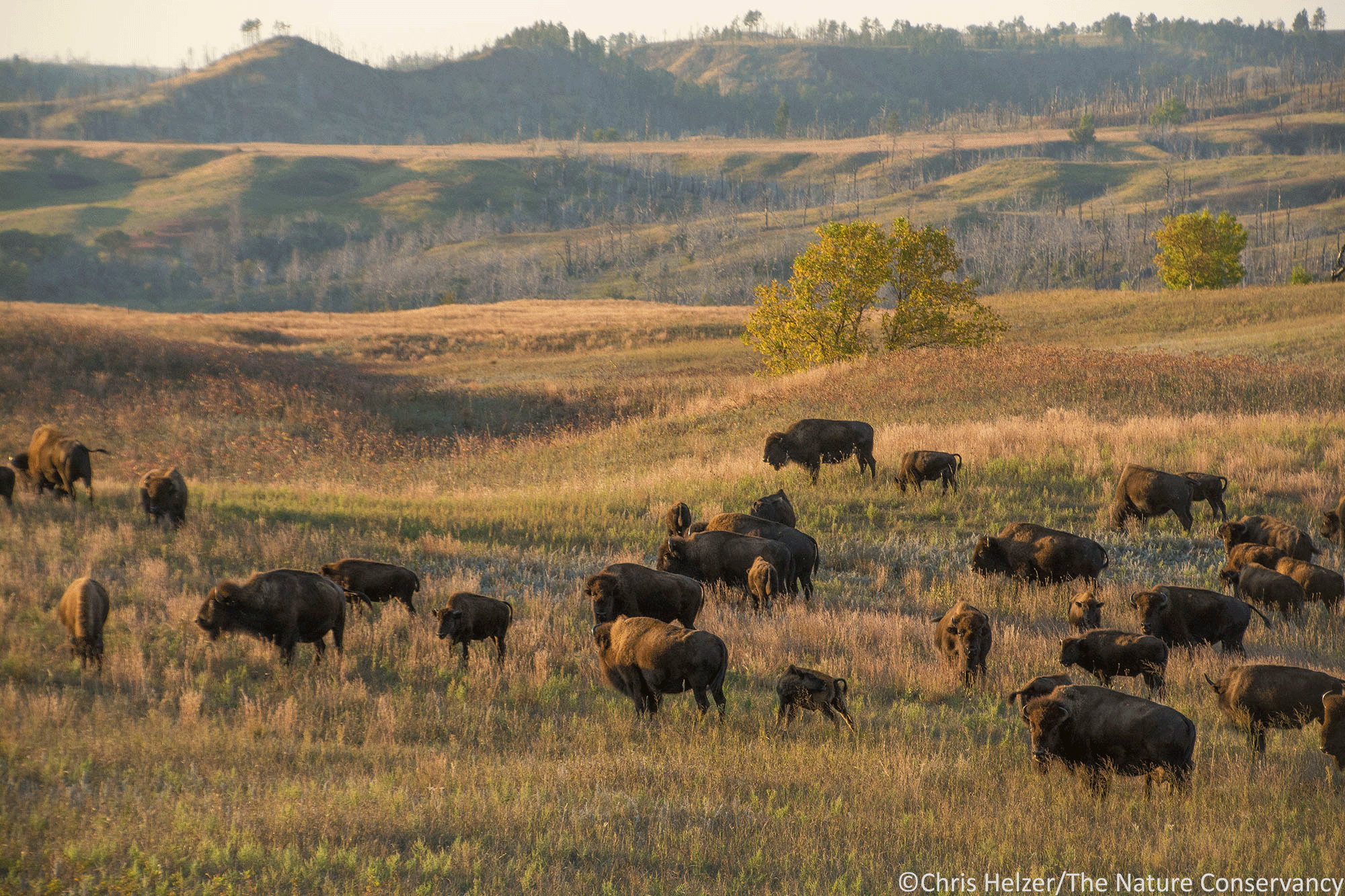
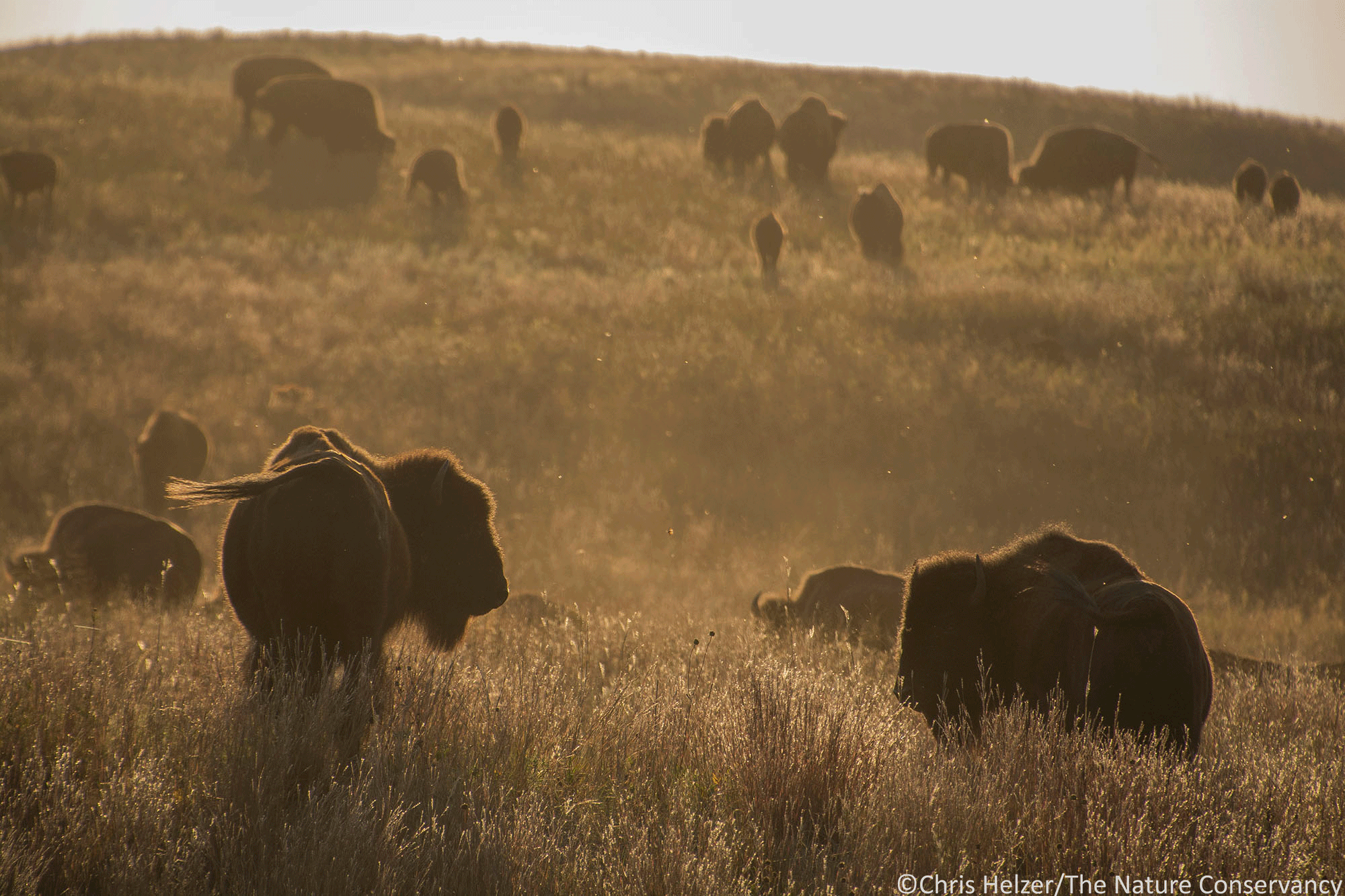
When I was up at the Niobrara Valley Preserve last week, I flew our drone a few times when the light was nice.  It’s really hard to show the scale of this landscape by taking photos from the ground, and I’m having a great time experimenting with aerial photography in order to better illustrate that scale.  Here are a few images from last week, taken right around the headquarters of NVP.  I’m also amassing still and video footage of bison, but I’ll share some of that at another time.
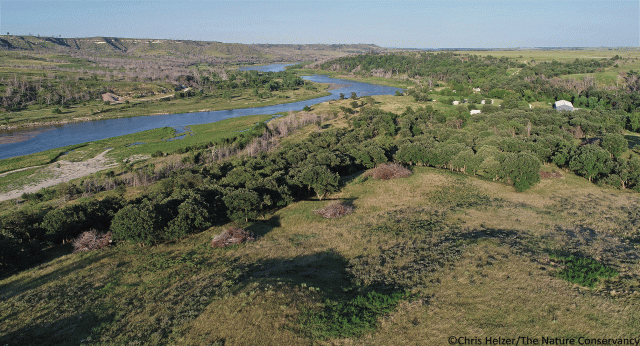
This photo was taken in the evening, with late day light accenting the texture of the landscape. This photo looks east (downriver) and you can see both some piles of recently-cleared eastern red cedars in the foreground and our headquarters buildings on the right side of the image.
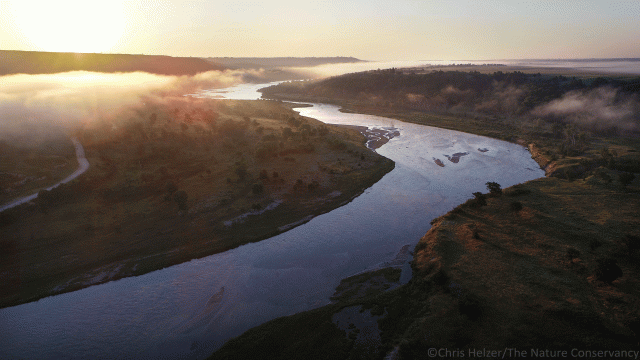
This image was taken right above the headquarters, looking to the east as the sun was breaking above the horizon. The skiff of fog didn’t last long once the sun came up, but made for some nice highlights while it lasted.
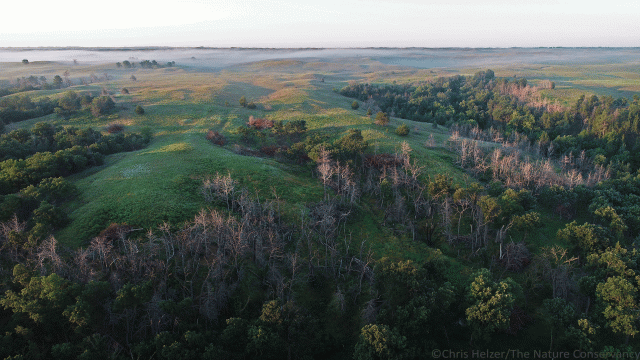
This image looks south. It shows where the northern portion of the Nebraska Sandhills (a 12 million acre grassland landscape) terminates at the wooded breaks of the Niobrara River. The woodland shown here went through the big 2012 wildfire, but many of the trees were protected from fire by the cool, moist north-facing slopes. Those same factors help support tree species (including paper birch) that don’t otherwise seem like they have any right to be in the hot and arid west.  Many of the trees in the upper reaches of the draws are bur oaks, along with a few ponderosa pine and eastern red cedar trees that survived the big fire.
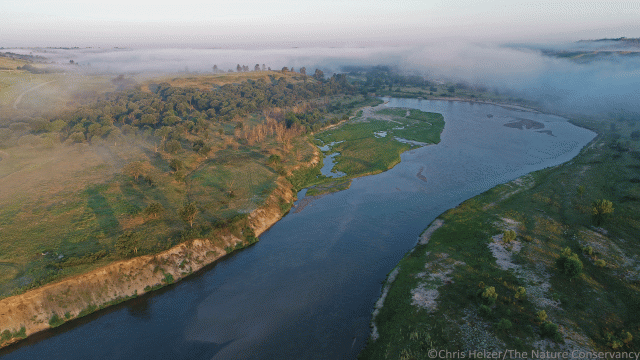
This image was taken just a few minutes after the foggy sunrise photo above, but is facing the opposite direction (upstream) and shows the day’s first light hitting the river bank.

Photo of the Week

Last week, I posted some drone photos of the Niobrara Valley Preserve from the air.  The sun popped out of the clouds just as it was nearing the horizon and provided some great light for those images.  As I was packing the drone away, I kept an eye on the sky, and it looked like there might be some nice post-sunset color on the way, so I scrambled up the hill to my favorite sunset spot at the Preserve.  For the most part, I get pretty easily bored by sunset photos, so it takes a pretty spectacular night to get my camera out of the bag.  That night qualified as spectacular.

Image #1. This was one of the first shots I took that night.  Tokina 12-28mm lens (at 12mm) ISO320, Aperture 16, Shutter 1/100.

Over about a 15 minute period, I worked back and forth across the top of a ridge overlooking the Niobrara River, trying various angles and perspectives.  The color and texture of the clouds was fantastic, but I knew the color would fade quickly.  After I got back and sorted through the images, I had a hard time narrowing down my favorites.  Nearly two weeks later, I still couldn’t decide on just one (or even two) shots to share with you.  Instead, I chose a selection of four images from various angles and with different lenses. If you have a strong favorite, feel free to leave your opinion in the comments section.  At this point, I like all of them for different reasons.  I also like about 10 more, but I had to cut something…

I’m presenting these photos in the order they were taken.  If you look closely, you’ll notice that the color tone changed incrementally over the 15 minute period.  You might also notice that each successive photo was taken with a longer focal length.  Part of that was me playing with different ideas, but the color was also receding into a smaller and smaller portion of the sky, so I was matching that with focal length changes.

Image #2. Tokina 12-28mm lens (at 25mm). ISO 320, Aperture 7, Shutter 1/125.

Image #3. Tokina 12-28mm lens (at 28mm). ISO 320, Aperture 8, Shutter 1/80.

Image #4. Nikon 28-300mm lens (at 170mm). ISO 320, Aperture 7, Shutter 1/60.

It’s pretty hard not to take attractive photos at a place like the Niobrara Valley Preserve, especially when the sky does its part to add to the scenery.  One of the hardest parts of working up there is keeping my camera in its bag long enough to get some other work done!