Here’s something I know almost nothing about: Slugs.
I found this slug in one of our prairies yesterday morning, and managed to get a few decent photos of it. Slugs are largely considered to be pests in gardens, but I’ve never heard any discussion of the ecological role(s) they might play in grasslands.
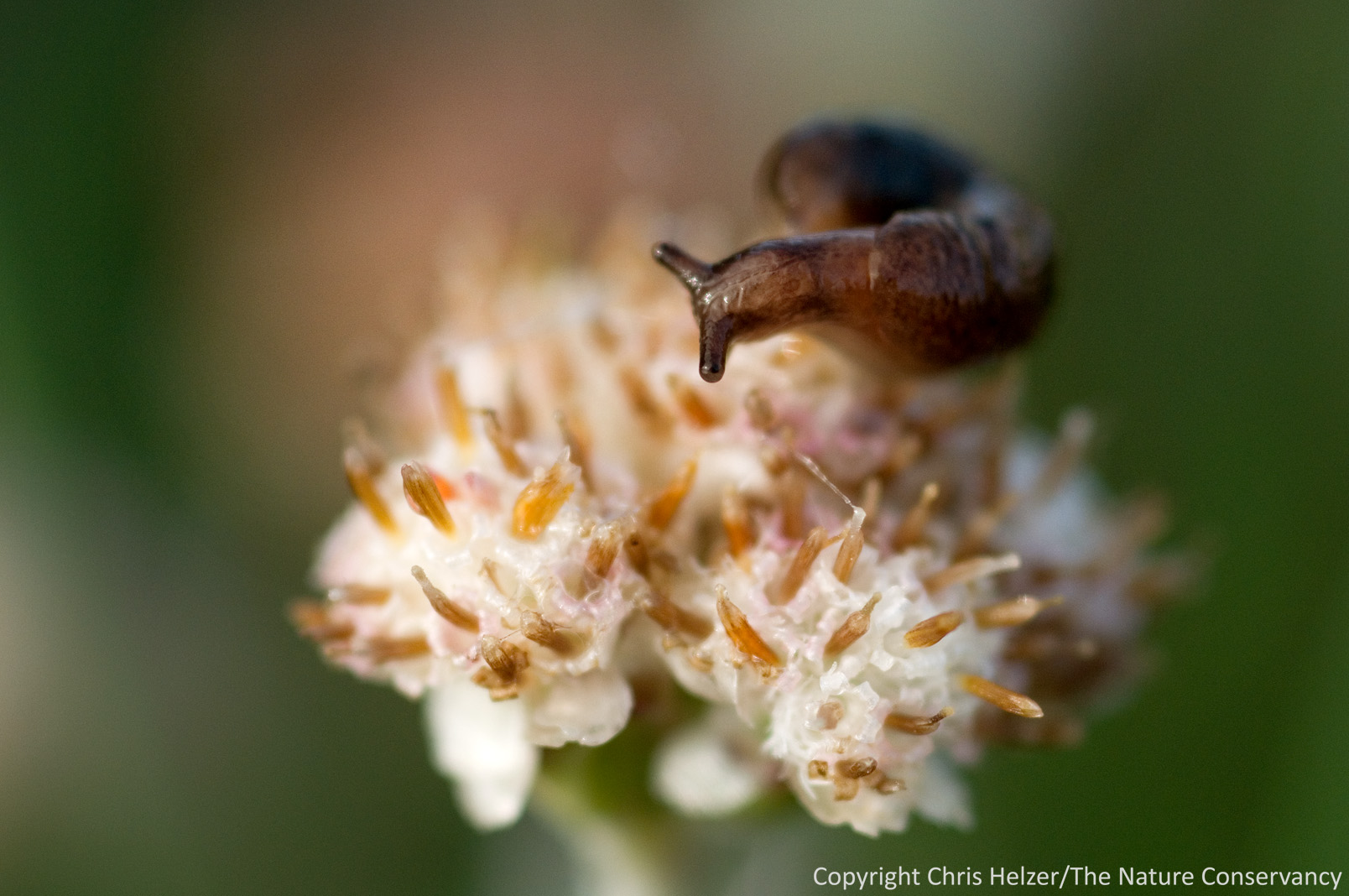
A slug on a pussytoes flower in the Platte River Prairies - Nebraska. What was it doing up there on the flower?
Sure, I know that slugs are gastropods that resemble snails without shells. They have rasping mouthparts, eyes on tentacles, and leave trails of slime as they travel. But what do they actually DO in prairies? How important are they in the ecosystem functioning of a grassland? My understanding is that most slugs I see are probably introduced species, but are they causing any negative impacts in prairies?
The best information I could find online was this field guide to the slugs of Kentucky. I thought it was great, but certain members of my family found it wildly amusing that someone had made a field guide for slugs. Those same family members seem largely uninterested in learning more about slugs, but I think they (slugs) are intriguing creatures, and would love to have someone feed me information on their ecological roles.
Anyone?