Unknown's avatar

About Chris Helzer

Chris Helzer is Director of Science and Stewardship for The Nature Conservancy in Nebraska, where he conducts research and supervises the Conservancy’s preserve stewardship program. He also helps develop, test, and share prairie management and restoration strategies. Chris is also dedicated to raising awareness about the value of prairies through his photography, writing and presentations. He is the author of The Prairie Ecologist blog, and two books: The Ecology and Management of Prairies and Hidden Prairie: Photographing Life in One Square Meter. He is also a frequent contributor to NEBRASKAland magazine and other publications. Chris and his family live in Aurora, Nebraska.

Timelapse Bison Photos

Regular readers of The Prairie Ecologist are familiar with our timelapse photography project at The Nature Conservancy’s Niobrara Valley Preserve.  With the help of Moonshell Media, we set up nine timelapse cameras to capture the recovery of the Preserve from a big wildfire that swept through in 2012.

The cameras are supposed to be taking a photograph every hour during daylight hours to document what happens in front of them.  However, during 2013, we had a few issues with the cameras that led them to take photos much more frequently (and then run out of space on the memory card).  That led to some gaps in our coverage, but the silver lining is that it also gave us some very nice series of photographs over some two to three hour-long periods.

Twice during those frequently-photographed periods, bison were in the frame.  Below are two very short videos made from those photo series.

In the first video, the camera was set to record a blowout area – a site where the sand is destabilized and blown by the wind.  Blowouts are generally disliked by sandhills ranchers because they lack forage and tend to spread unless they are excluded from grazing and allowed to “heal”.  On the other hand, blowouts are ecologically valuable because of the habitat they provide to a wide range of species including plants (including the federally-listed blowout penstemon), tiger beetles, lizards, and many more.   This video shows that blowouts are also attractive to bison.  The video runs from approximately 7:30am to 10am on June 28, 2013.

We put one camera high atop a tall windmill tower to capture a landscape view of burned sandhills prairie.  During this video, the same herd of bison shown above wanders through the frame during a two and a half hour period on the afternoon of October 8, 2013.  As you can see by the color of the vegetation, most plants are in or near dormancy by this time of year, so the bison are picking and choosing what they can find to eat.  The bison at the Preserve get themselves through the winter without supplemental feed from staff, so October food is probably pretty attractive compared to what’s available in February…

These short bursts of timelapse video were not the expected product of this project, but have turned out to be some nice bonus coverage.  Fortunately, the gaps caused by full memory cards are not long enough to seriously disrupt the bigger story of long-term recovery.  I’ll continue to bring you that story as it emerges.
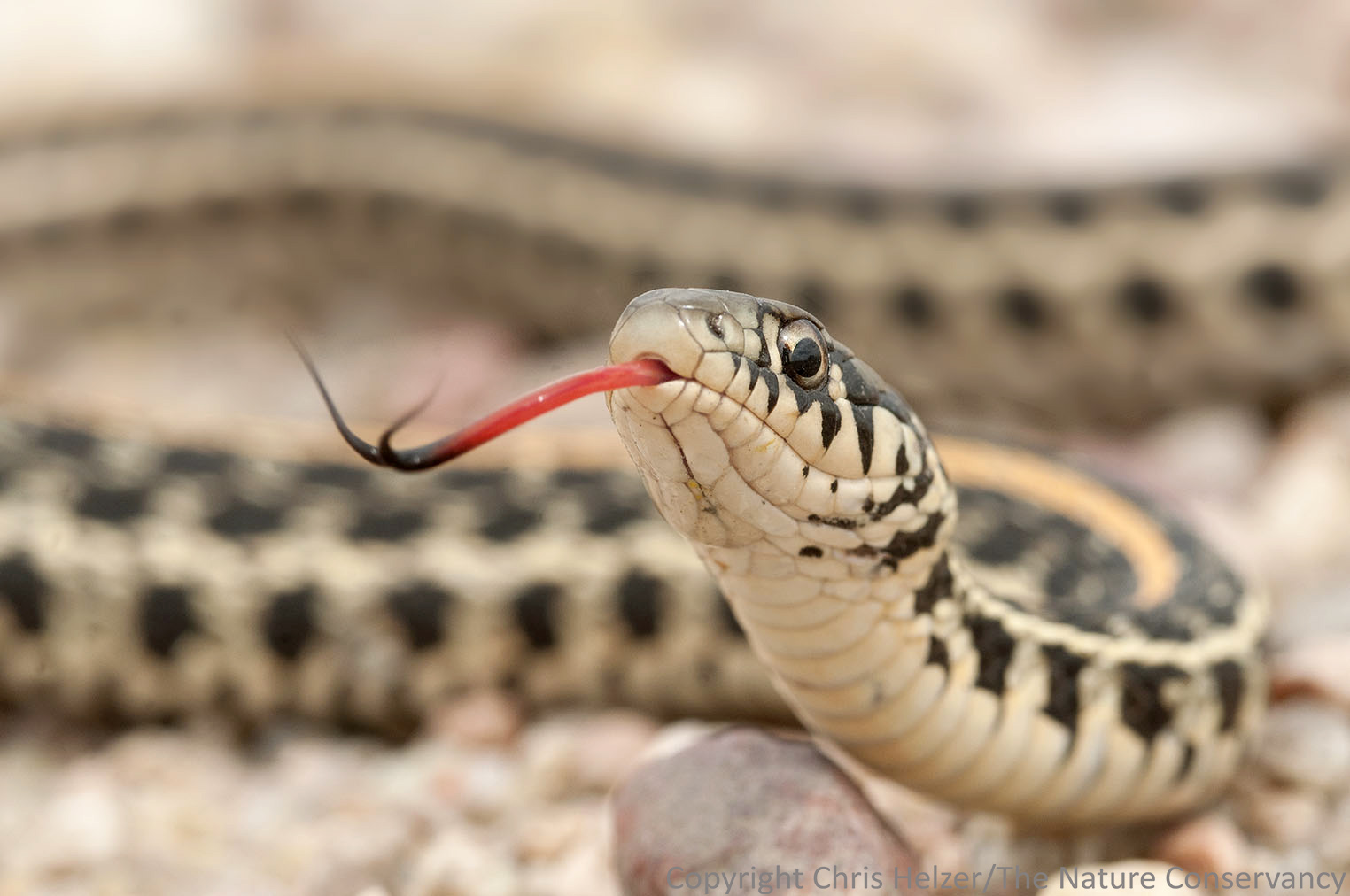
 

Photo of the Week – April 24, 2014

Last weekend, my 13-year-old son went with me to do some work in our family prairie.  It was a nice day for wildlife sightings, starting off with a prairie chicken that flushed from the grass as we drove in.  We also watched thirteen-lined ground squirrels, great blue herons on the wetland, and speculated about whether or not the hawk flying around was nesting in our prairie again this year.  After we left, we drove a few miles south to visit a small prairie dog town before heading back home.  Within a mile or two of leaving the prairie dog town, I stopped and backed up the truck to take a closer look at a snake warming itself on the gravel road.

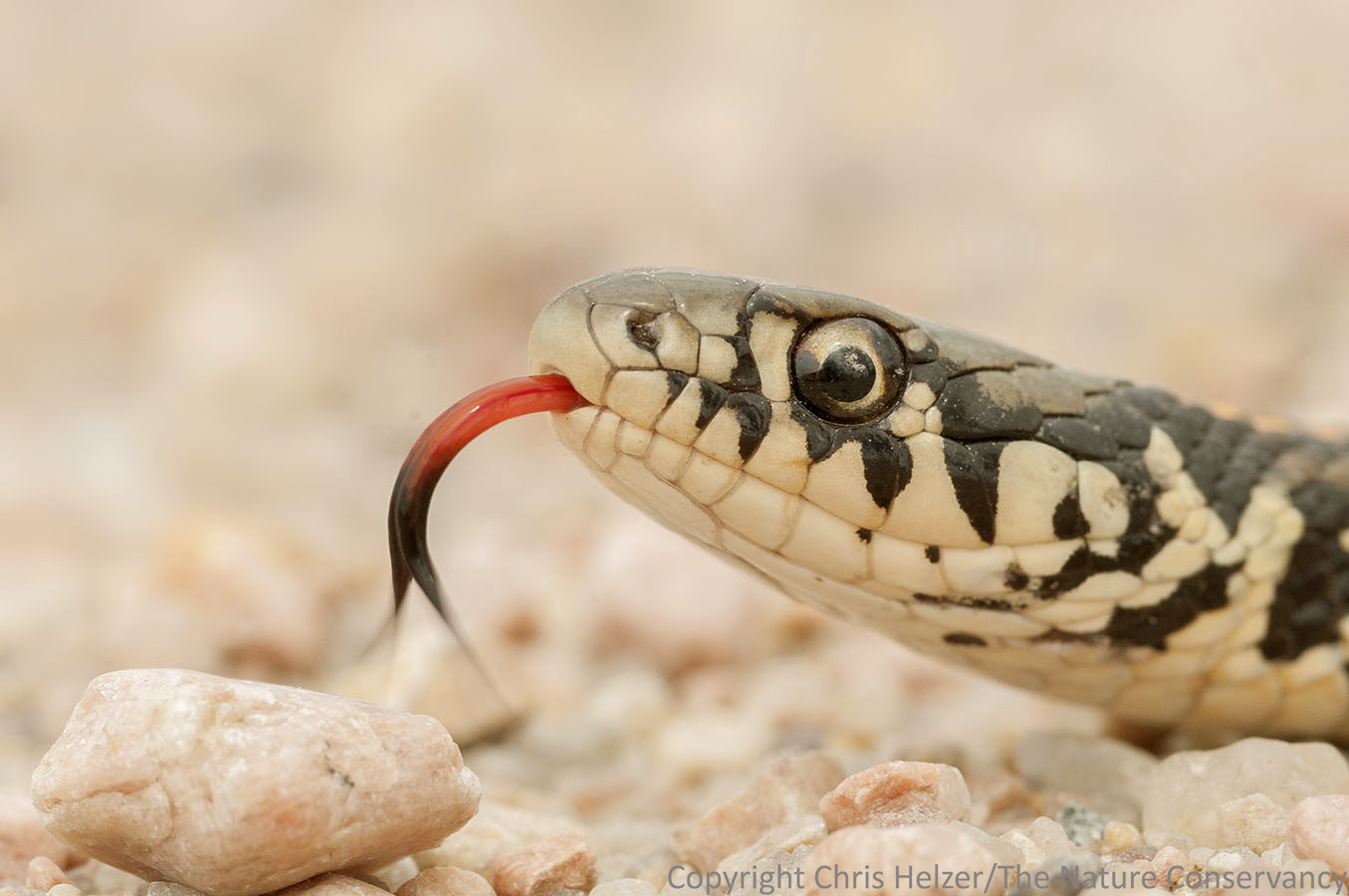
A plains garter snake (Thamnophis radix) on a gravel road in southern Hamilton County, Nebraska.

A plains garter snake (Thamnophis radix) on a gravel road in southern Hamilton County, Nebraska.


The snake was very accommodating, allowing me to lay on the road and photograph it from close range.

The snake was very accommodating, allowing me to lay on the road and photograph it from close range.


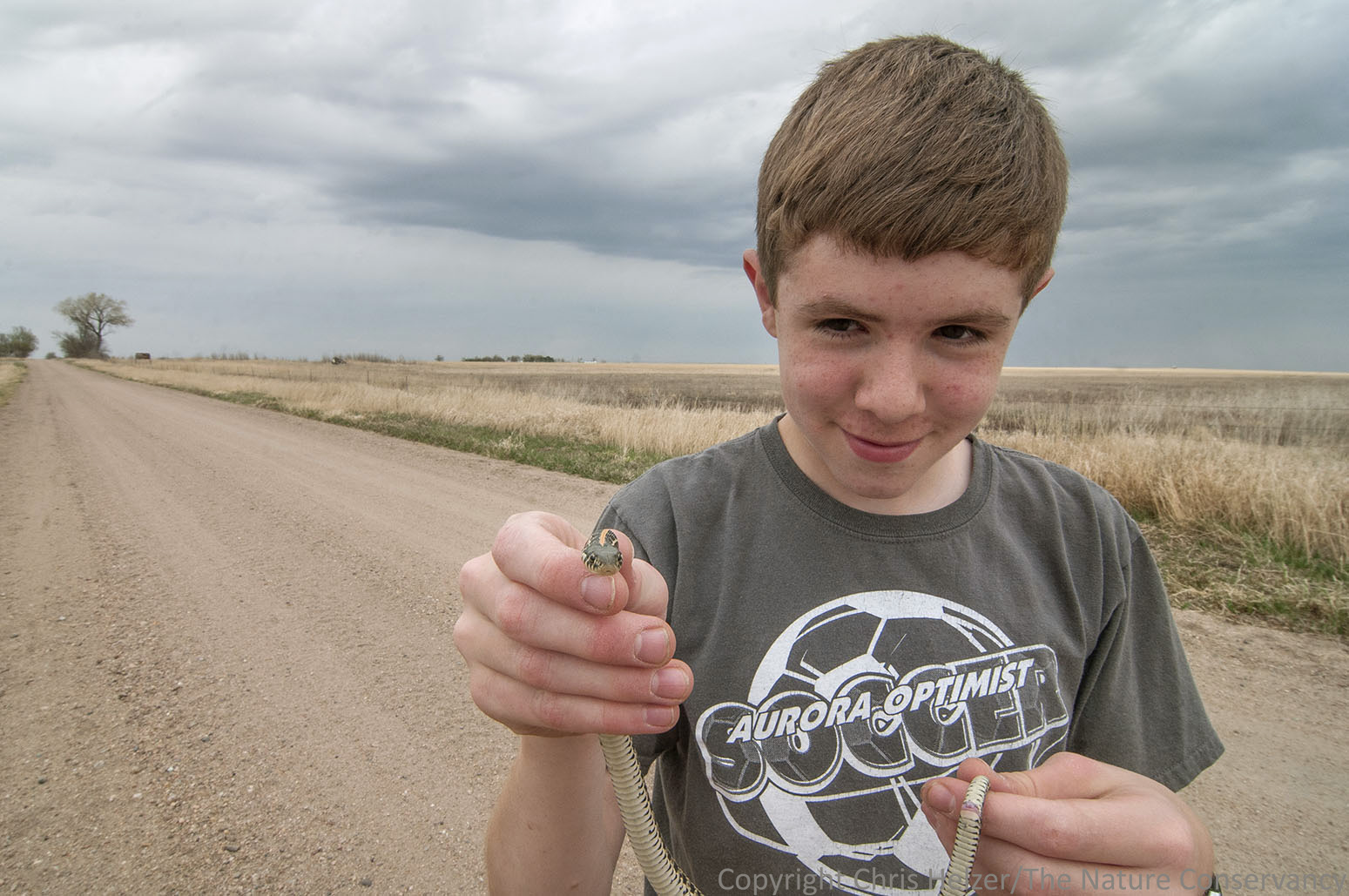
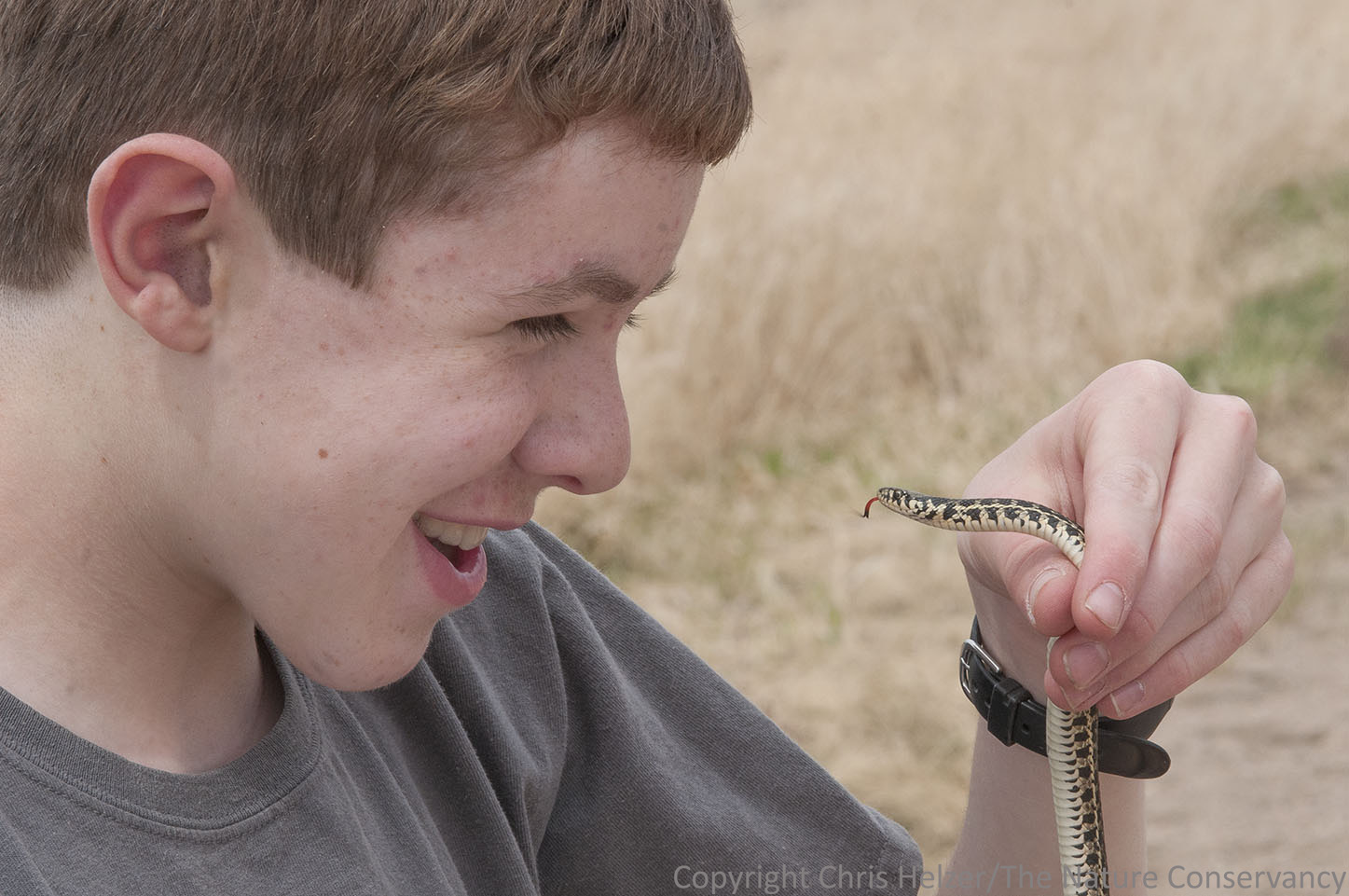
John was patient while I photographed the snake, but finally got his wish to pick it up and take a closer look himself.

John was patient while I photographed the snake, but finally got his wish to pick it up and take a closer look himself.


I warned John that garter snakes often defecate when picked up, and that the smell is REALLY hard to get rid of, but he had no such issues.  In fact, the snake started out a little agitated but quickly calmed down and the two seemed to eventually part on friendly terms.

I warned John that garter snakes often defecate when picked up, and that the smell is REALLY hard to get rid of, but he had no such issues. In fact, the snake started out a little agitated but quickly calmed down and the two seemed to eventually part on friendly terms.

I’m grateful for opportunities like these to spend time with my kids and help them develop positive feelings toward nature and conservation.  I sometimes have to cajole them to join me on a trip to the prairie, but we rarely return home without a few memorable encounters and experiences that make them glad they came along.