
Platte River Prairies Field Day – June 13, 2014

I hope to see many of you at our first Field Day of the 2014 season.  On Friday, June 13, we’ll host hikes and presentations all day long at our Platte River Prairies.  Come learn about prairie ecology, plant identification, grassland restoration and management, and much more!
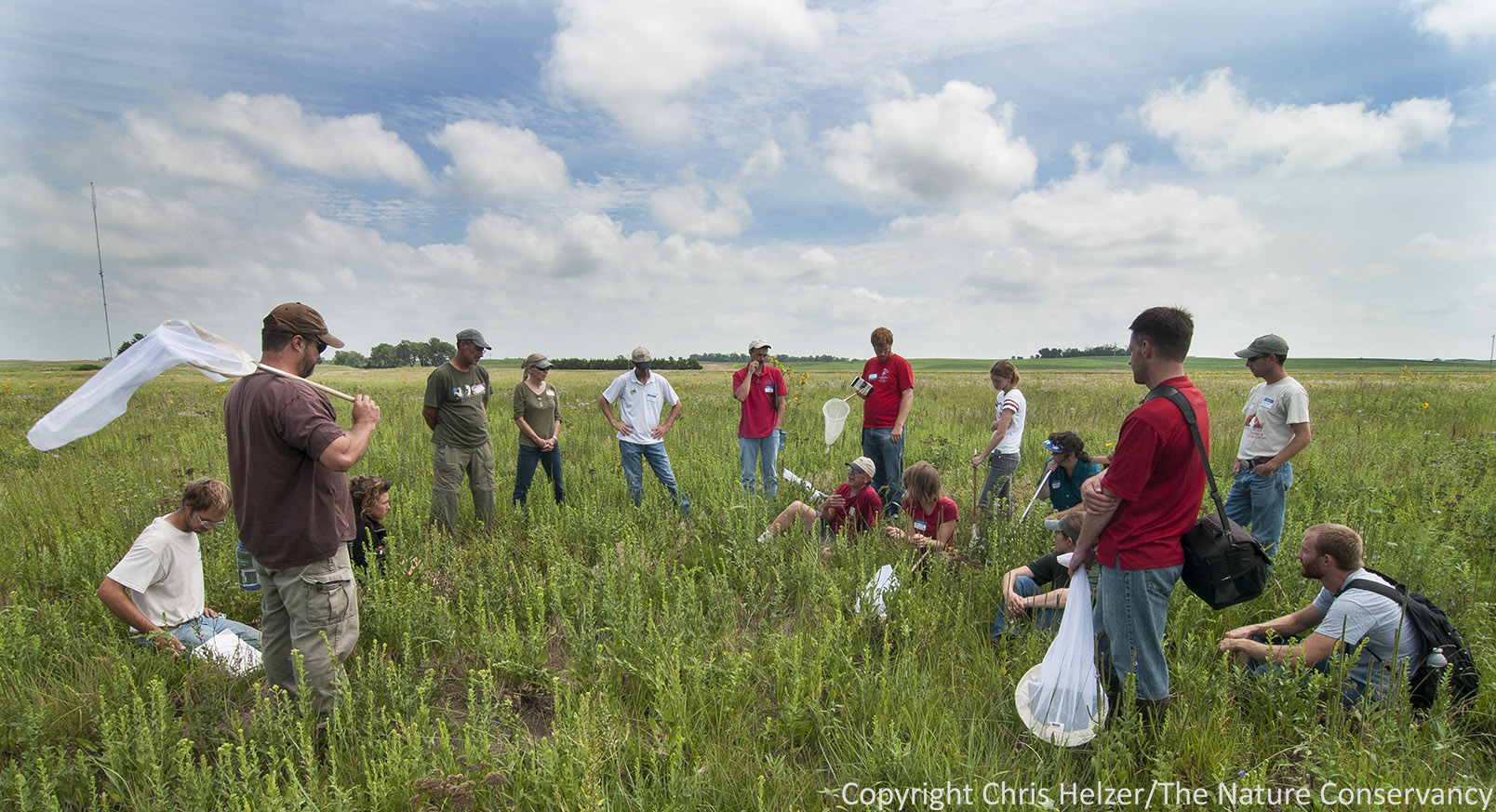
Join fellow prairie enthusiasts and biologists for a fun day in the Platte River Prairies on June 13, 2014.

Join fellow prairie enthusiasts and biologists for a fun day in the Platte River Prairies on June 13, 2014.

By popular demand, we’re placing a special emphasis on plant identification this year, and will provide opportunities to learn how to identify grasses, wetland plants, and prairie wildflowers.  In addition, there will be opportunities to see and discuss invasive plants and their control.  Other featured topics include prairie insects, small mammals, birds, and prairie gardening.

The day’s events will officially begin at 9am and end at 4pm, but feel free to come a little early for an 8am bird hike and stay and hike the trails on your own in the evening.  You are welcome to come and go as you please during the day, and there will be multiple sessions to choose from all day long.  Please bring your own lunch and a bottle of water, but we’ll provide some cold drinks and snacks as well.

Click HERE to see the agenda for the day.

Click HERE to learn more about the Platte River Prairies.

Click HERE for directions to the site.

This Field Day is free of charge, and you don’t need to register ahead of time, but we’d appreciate knowing if you will be coming so we can plan accordingly.  Please email or call Mardell Jasnowski if you plan to attend.  mjasnowski@tnc.org or 402-694-4191.

Thank you to the Nebraska Environmental Trust and the Nebraska Academy of Sciences for supporting our Field Days through the PIE grant program.

Timelapse Bison Photos

Regular readers of The Prairie Ecologist are familiar with our timelapse photography project at The Nature Conservancy’s Niobrara Valley Preserve.  With the help of Moonshell Media, we set up nine timelapse cameras to capture the recovery of the Preserve from a big wildfire that swept through in 2012.

The cameras are supposed to be taking a photograph every hour during daylight hours to document what happens in front of them.  However, during 2013, we had a few issues with the cameras that led them to take photos much more frequently (and then run out of space on the memory card).  That led to some gaps in our coverage, but the silver lining is that it also gave us some very nice series of photographs over some two to three hour-long periods.

Twice during those frequently-photographed periods, bison were in the frame.  Below are two very short videos made from those photo series.

In the first video, the camera was set to record a blowout area – a site where the sand is destabilized and blown by the wind.  Blowouts are generally disliked by sandhills ranchers because they lack forage and tend to spread unless they are excluded from grazing and allowed to “heal”.  On the other hand, blowouts are ecologically valuable because of the habitat they provide to a wide range of species including plants (including the federally-listed blowout penstemon), tiger beetles, lizards, and many more.   This video shows that blowouts are also attractive to bison.  The video runs from approximately 7:30am to 10am on June 28, 2013.

We put one camera high atop a tall windmill tower to capture a landscape view of burned sandhills prairie.  During this video, the same herd of bison shown above wanders through the frame during a two and a half hour period on the afternoon of October 8, 2013.  As you can see by the color of the vegetation, most plants are in or near dormancy by this time of year, so the bison are picking and choosing what they can find to eat.  The bison at the Preserve get themselves through the winter without supplemental feed from staff, so October food is probably pretty attractive compared to what’s available in February…

These short bursts of timelapse video were not the expected product of this project, but have turned out to be some nice bonus coverage.  Fortunately, the gaps caused by full memory cards are not long enough to seriously disrupt the bigger story of long-term recovery.  I’ll continue to bring you that story as it emerges.