
New Fellowship Positions Available: Platte River Prairies, Nebraska

Attention recent college graduates from Natural Resources and Conservation programs…

I am excited to announce the new Claire M. Hubbard Young Leaders in Conservation Fellowship Program.  The program will fund two Fellowship positions with The Nature Conservancy of Nebraska.  Fellows will be based here in the Platte River Prairies, but will also spend significant time at other sites around the state and region.
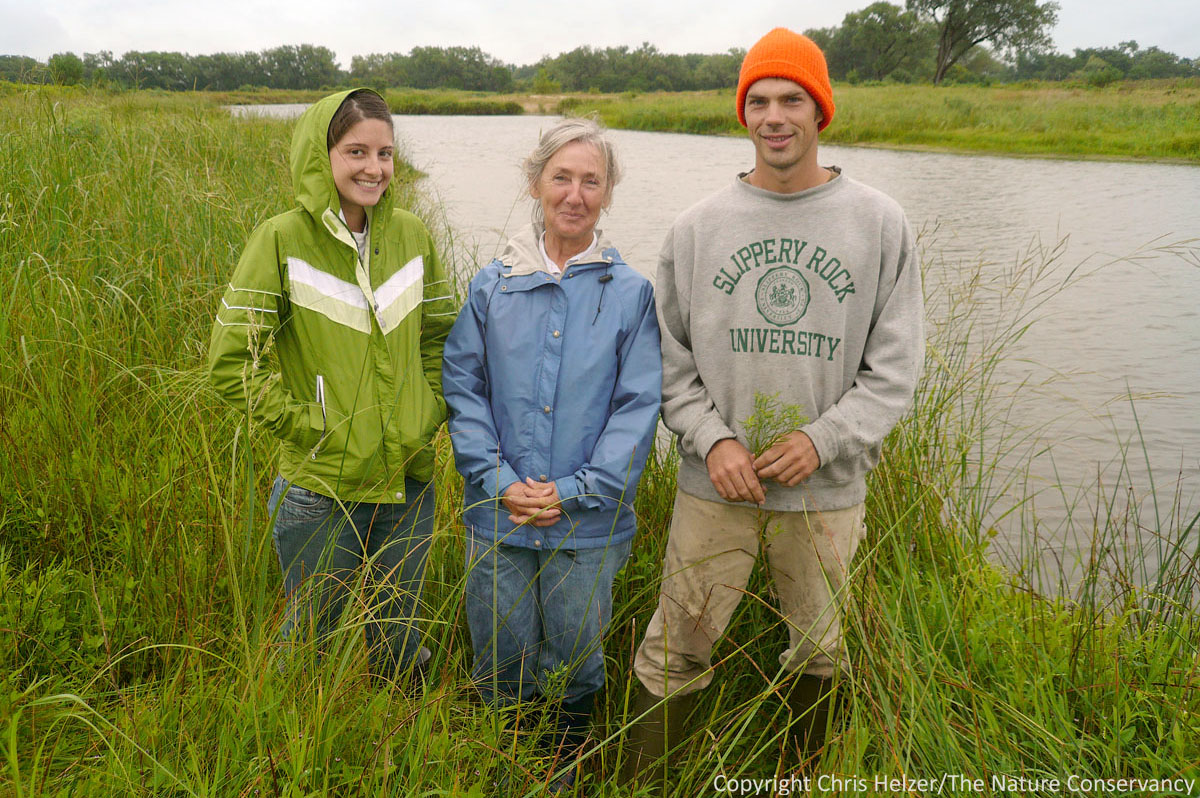
Join us on the Platte River Prairies for a year you'll never forget.

Join us on the Platte River Prairies for a year you’ll never forget.

The Hubbard Fellowship is designed to give recent college graduates the breadth of experience they need to qualify for a fulfilling conservation career.  As opposed to the typical post-graduate experience of bouncing from seasonal job to seasonal job for several years or more, this paid Fellowship position provides comprehensive experience across multiple facets of conservation work- all in a single year.  Fellows will participate in activities ranging from prairie restoration and prescribed fire to fundraising and marketing.  However, the Fellowship will also be individually designed to emphasize the experiences each Fellow wants or needs to prepare them for the career they want.

The Fellowship is open to graduates of undergraduate and graduate programs in natural resources, conservation biology, or related subjects.  We are looking for highly-qualified, motivated people with strong leadership and communication skills.  Applications are due March 8, 2013 and the position will begin June 1.

If you or someone you know is interested in this opportunity, please click on the links below to learn more:

Hubbard Fellowship Brochure

Official Job Description

We are extremely grateful to Anne Hubbard and the Claire M Hubbard Foundation for funding this Fellowship Program. 
Lessons From a Project to Improve Prairie Quality – Part 2: Overseeding and Seedling Plugs

Last week, I posted a summary of some findings from a long project to enhance prairie habitat.  I focused that post on the lessons we learned from the fire/grazing management portion of the project, including impacts on regal fritillary butterflies.  This week, I’m looking at the other half of that project – overseeding and adding seedling plugs to our degraded prairies in order to increase plant diversity.  As with last week, you can find all the gritty details, including graphs, tables, and more, by looking at our full final report.

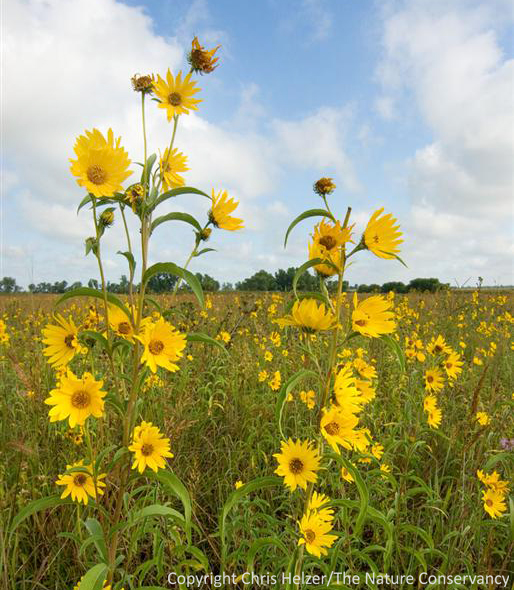
Maximilian sunflower is one of the species we've found easiest to establish in degraded prairies.

Maximilian sunflower is one of the species we’ve found easiest to establish in degraded prairies.  (These particular sunflowers are for illustration only – not from an overseeded site.)

During the five years of the project, we overseeded approximately 500 acres of prairie – focusing mostly on degraded remnant (unplowed) prairies that were missing many characteristic prairie wildflower species.  We harvested our own seed from nearby sites, and broadcast it on degraded prairies right after burning them.  The prairies were managed with patch-burn grazing, so cattle grazed those burned areas intensively for the remainder of the first growing season and then focused their grazing elsewhere in subsequent years.  To measure success of the seedings, I used replicated plots to count the number of new plants that established from seed.  Most of the seedings included multiple seeding rates, so I was able to look at the effect of seeding rate on establishment.

In addition to overseeding, we raised and transplanted more than 800 prairie and wetland seedlings into seven different sites, and added several hundred more seedlings to our nursery beds for seed production.  Most transplanting was done in the late spring, and plants were watered on the day of transplanting but afterward.  We marked (GPS and flags)and attempted to re-locate seedling plugs to evaluate survival, but that didn’t work out very well, and we didn’t find a lot of the plants we’d plugged in.  Some of those plants surely died (which prevented us from finding them), but for others, flags disappeared and GPS points weren’t accurate enough to lead us to the small plants we thought were probably there.  We did find some, but our estimates of success are pretty fuzzy.

We learned two major lessons from this portion of the project:

1.  Overseeding after a burn in a patch-burn grazed prairie can re-establish at least some missing plant species, but the use of a high seeding rate is important.

2.  Overseeding seems to be more cost effective than seedlings, assuming abundant seed can be obtained relatively cheaply.

Continue reading