What Is High-Quality Prairie Anyway?

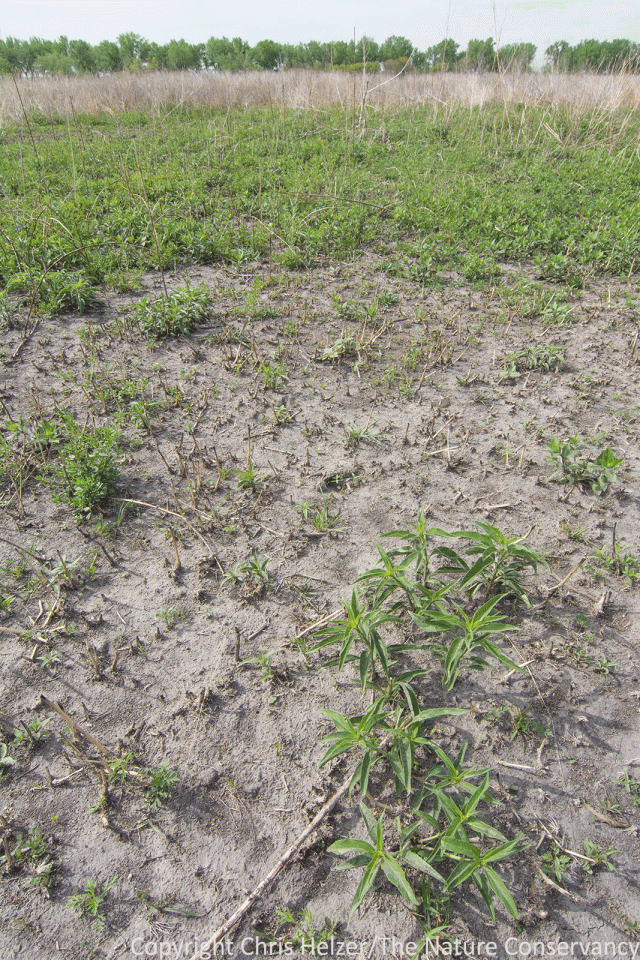
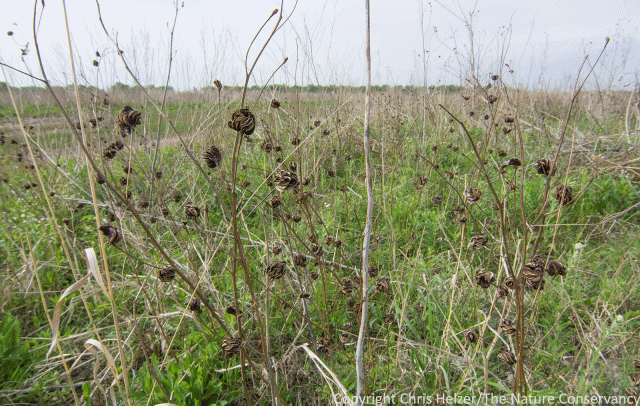
Does this look like a high-quality prairie?
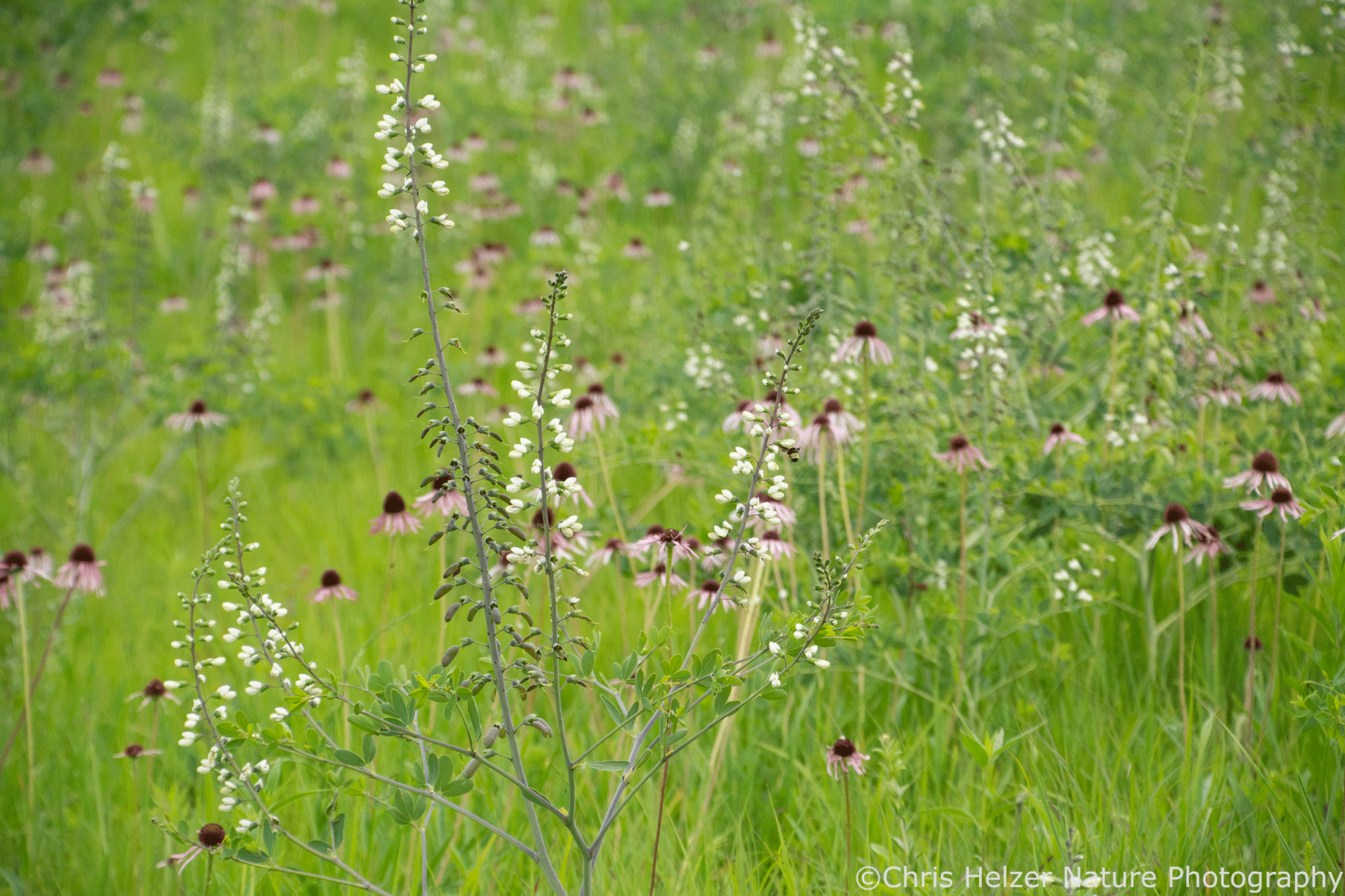
What about this one?
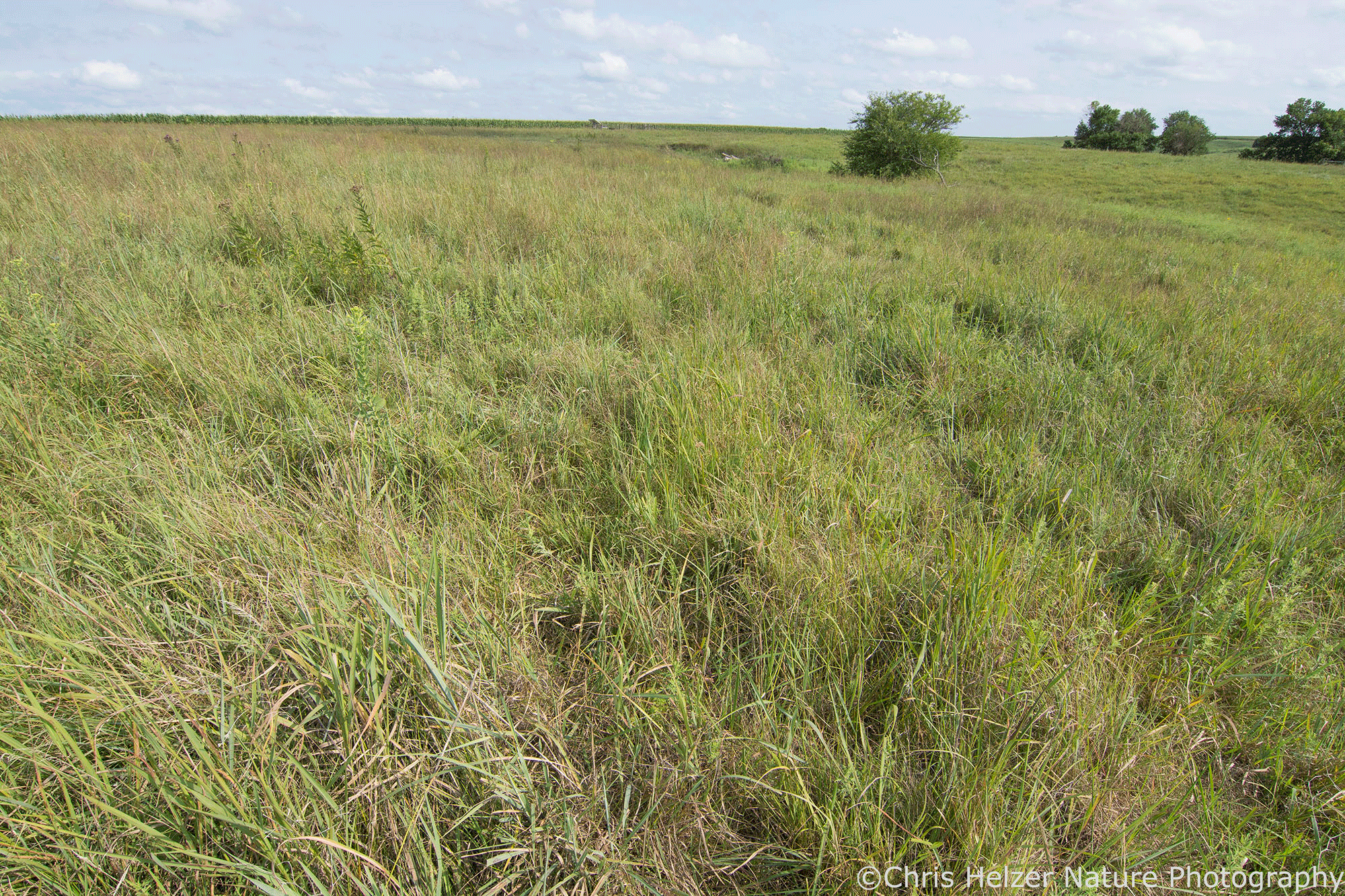
What if I told you the first one was 2 acres in size and the second was part of a 20,000 acre grassland block? 

Would it affect your opinion if you knew the first site was isolated from any other prairie habitat by miles of cropland and was directly adjacent to a busy highway?  What if I told you the second prairie hosts three different prairie dog towns and a herd of bison?

(None of this is true, by the way.  These are just hypothetical statements meant to be thought-provoking.)

The term “high-quality prairie” is often used in conservation circles, but people have very different definitions for it.  That’s not necessarily a bad thing.  In fact, it’s fascinating to see how the quality of a prairie is defined by people in different parts of North America, let alone in other parts of the world.  The cultural context is incredibly important to the way prairies are assessed and appreciated.

Here’s another example.

Does this look like a high-quality prairie?  Would it change your opinion if you knew it was planted on former row crop land?
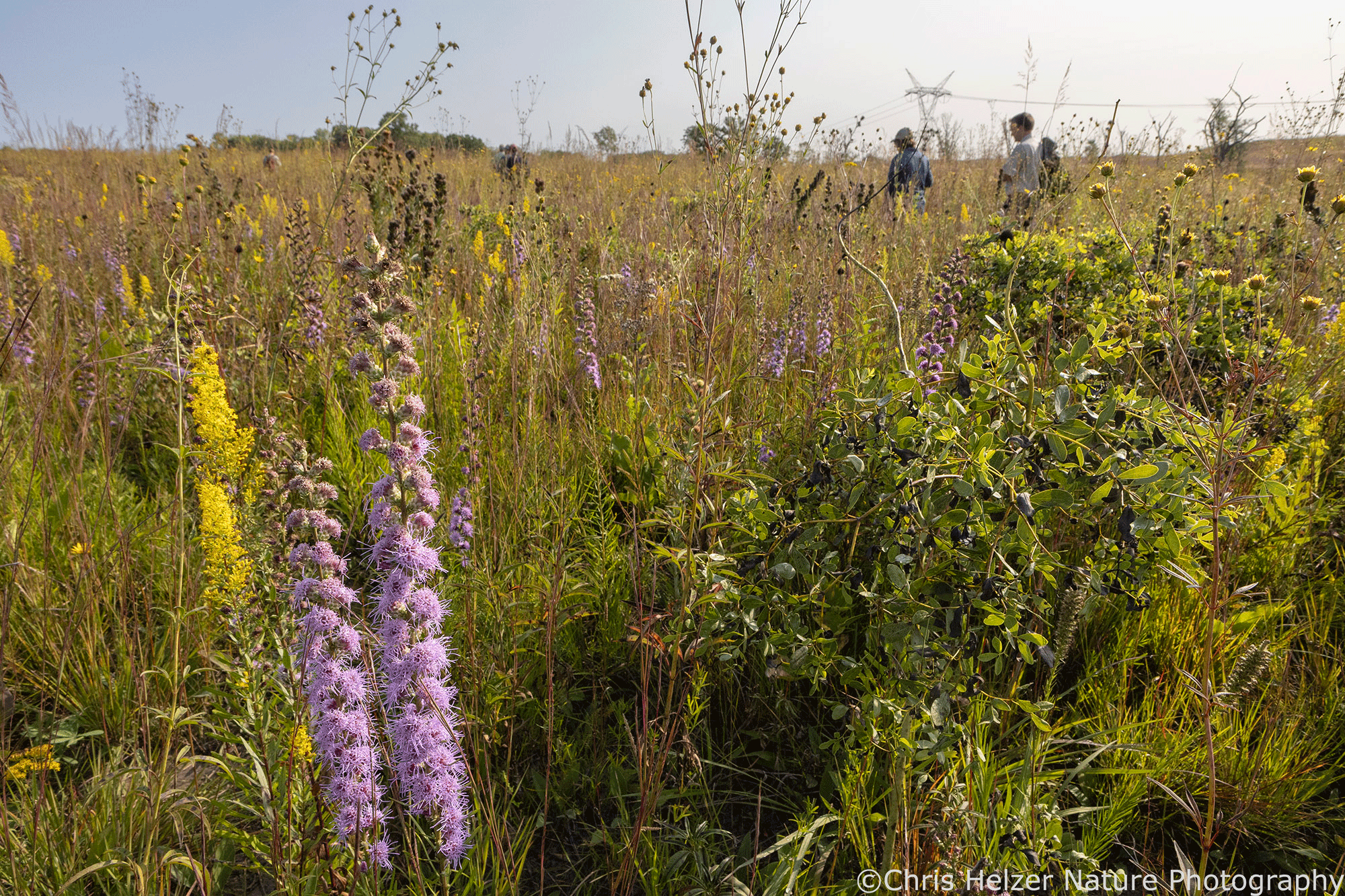
Taking that further, does it matter if that restored prairie is about 10 acres in size and not connected to any other natural areas?  In contrast, what if it was 50 acres in size and connected two formerly-isolated remnant (unplowed) prairie parcels together?  Does that affect its quality or value?  Does it affect the quality or value of those remnant prairie parcels?

What are the criteria we should use for evaluating prairies?

A very common way to assess prairies is by looking at their plant species.  That makes good sense.  Prairie plants are beautiful.  In addition, of course, the plant community has a huge influence on the other components of the larger prairie community, including animals, fungi, and other soil microbes.  Maybe more importantly, you can always find plants.  They are literally rooted in place. 

When you visit a prairie, you might not see a pocket mouse, a katydid, or a badger, but if there’s a population of stiff sunflower, you can go to a particular spot and see it – it might even be in flower if you time it right.  Over time, it’s easy to see how that population is doing because you can check on it whenever you want.

There are multiple ways to evaluate a plant community.  The diversity of species is usually considered to be one important factor.  The presence of rare plant species, or species that have very specific habitat or management requirements, can be another.  The second can be particularly significant in landscapes where very little prairie is left.  Finding a prairie that still hosts rare plants is a big deal.
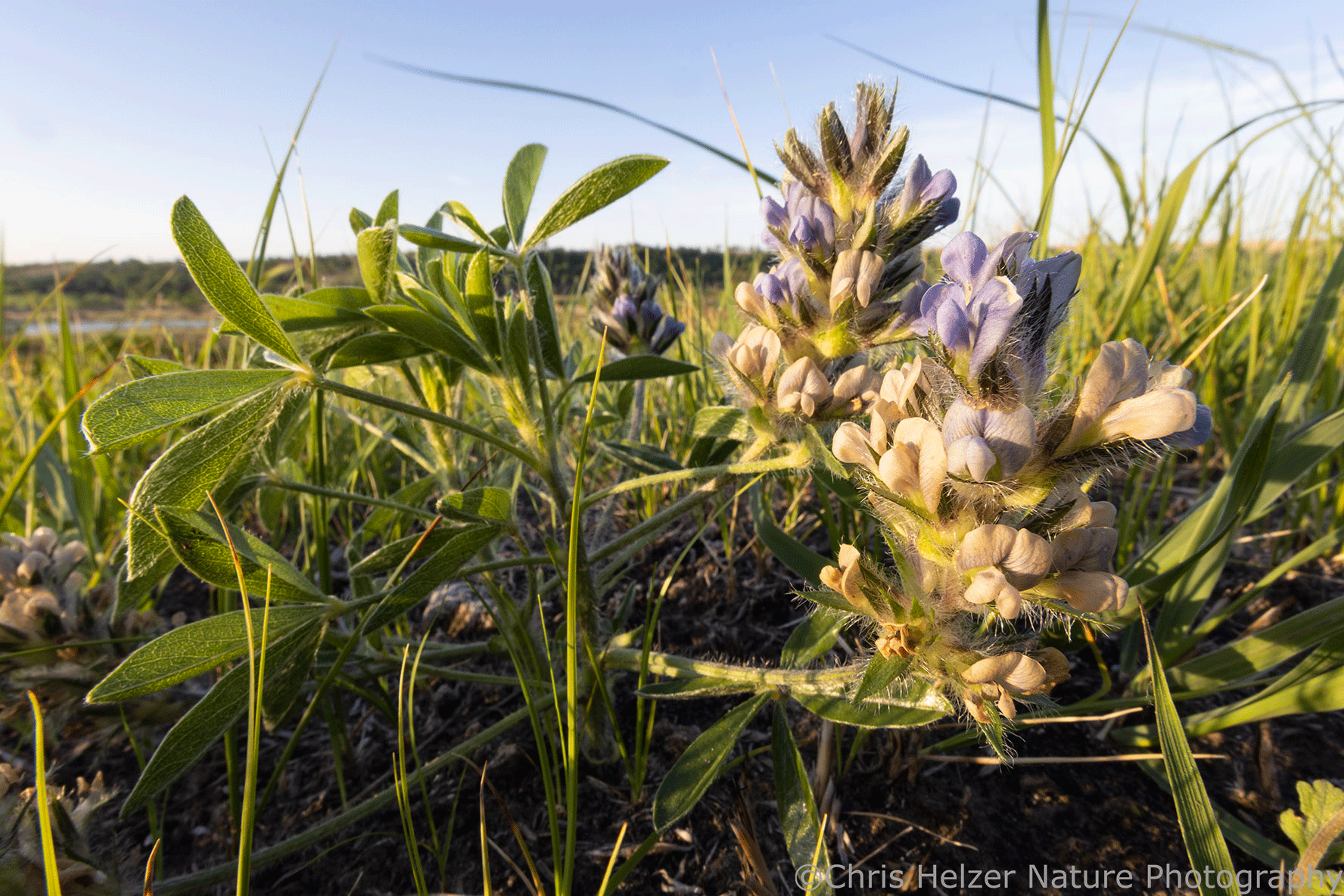
Prairie turnip (Pediomelum esculentum) is hard to find across much of its historic range. This one is part of a large population at the Niobrara Valley Preserve.

Looking at the diversity of plants and the presence and abundance of rare species is a very sensible way to begin evaluating a prairie.  I often do it myself.  You can visit a prairie at any time of year and make at least some assessment of the plant community – though it’s much easier during the growing season. 

In contrast, you have to time your visit carefully if you want to see what the bird community looks like (many species are only present for a few months each year).  Small mammals are tricky because they’re hard to see and you probably need some kind of trap system to even find any.  You can see a lot of invertebrates if you look closely, and of course you can pick up a sweep net and very quickly gather a bunch of them to inspect.  But invertebrates are notorious for having massive swings in population size from year to year, and many are only aboveground for short periods of time each season.  That means it can take a lot of time and a lot of effort to get any picture of what’s happening with invertebrate communities.
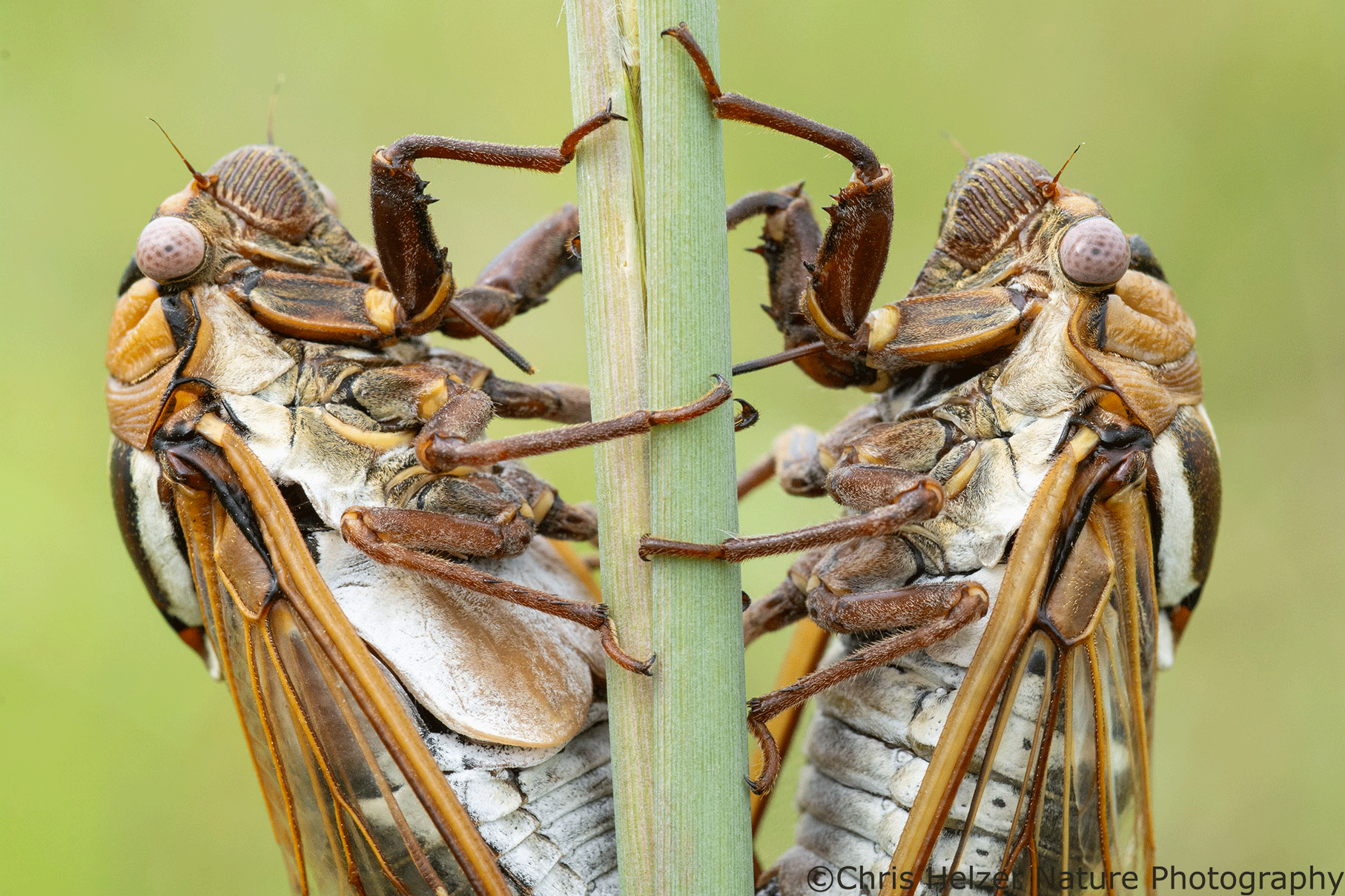
Insects like these bush cicadas can experience huge population booms and busts between years, making it hard to evaluate invertebrate communities.

However, notwithstanding the challenges of evaluating their populations, birds, small mammals, and invertebrates are all important components of prairies, right?  Any assessment of prairie quality should probably include them – not to mention reptiles, amphibians, large mammals, fungi and other soil microbes, and lots more. 

Looking at the plant community can provide hints about some of those other organisms.  Plant diversity is strongly correlated with invertebrate diversity, for example.  However, not all prairie animals have such strong ties to the diversity of a plant community, or to the presence or absence of particular plants.

Most grassland birds, for example, are really dependent upon the size of a grassland area and the habitat structure present. Some species nest in short grass, others in tall.  Still others need a variety of habitat patch types because they use different vegetation structure for nesting, brood rearing, wintering, and/or courtship displays.  In addition, a lot of grassland nesting birds are sensitive to the size of a prairie and/or won’t nest near wooded edges, roads, etc. (or suffer poor nest success when they do).
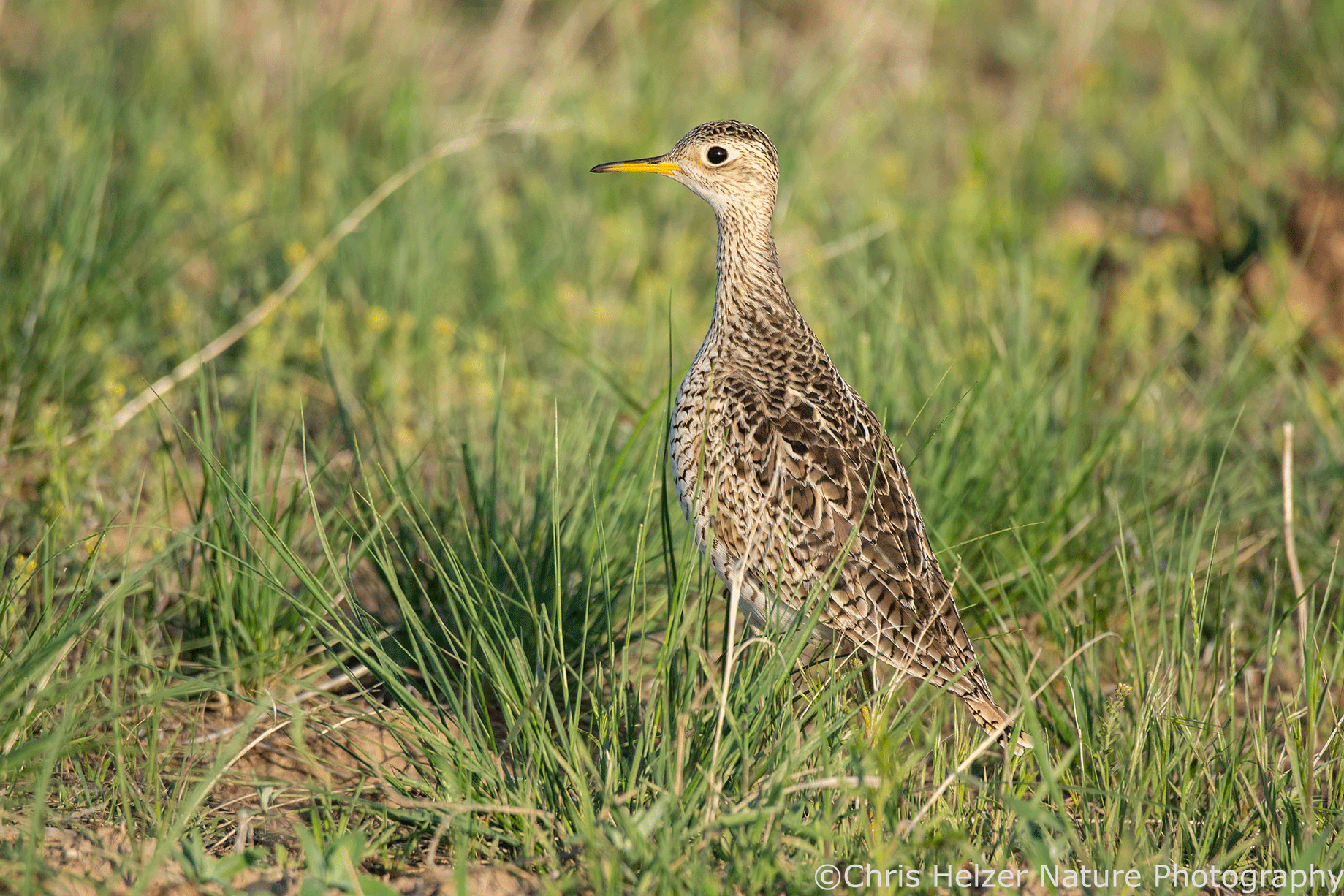
Upland sandpipers nest on the ground in large prairie patches with short, open habitat. They then take their young chicks into cover where the habitat is open enough the chicks can feed and move around easily, but there is overhead cover (especially broad-leaved plants) they can use to hide from predators and find shade.

Small mammals, reptiles, and invertebrates also respond strongly to the kind of habitat structure in a prairie.  Just as with birds, each species has its own preferences or requirements – some looking for short/sparse habitat, others for tall/dense cover, and some need something in the middle or a mix of all of those options.  Also, like birds, many of those animals and their populations will thrive best in larger prairies than in smaller ones. 

So, in addition to a “good” plant community, you could argue that a high-quality prairie should also be one that is large and managed in a way that provides a mixture of habitat structure.  Maybe, but this is where things get really interesting. 

In many places, large prairies just don’t exist anymore.  We’re left with small remnants of grassland, surrounded by row crops, urban areas, woodlands, or other land cover types.  Does that mean none of those prairies are high-quality?  Of course not.  But the context matters.  The quality of a site is measured against objectives (what do we want a prairie to be or to provide?) and objectives are informed by local culture. 

Small prairies can still provide excellent habitat for many species, including plants, invertebrates, and many small vertebrates, though stewardship gets really tricky.  It can be really challenging to manage those sites in a way that doesn’t eliminate any animal populations (by repeatedly burning the whole site, for example) while still staving off woody plants and invasive species.  However, when comparing a bunch of small prairies to each other, we can come up with criteria for determining which are higher or lower-quality.

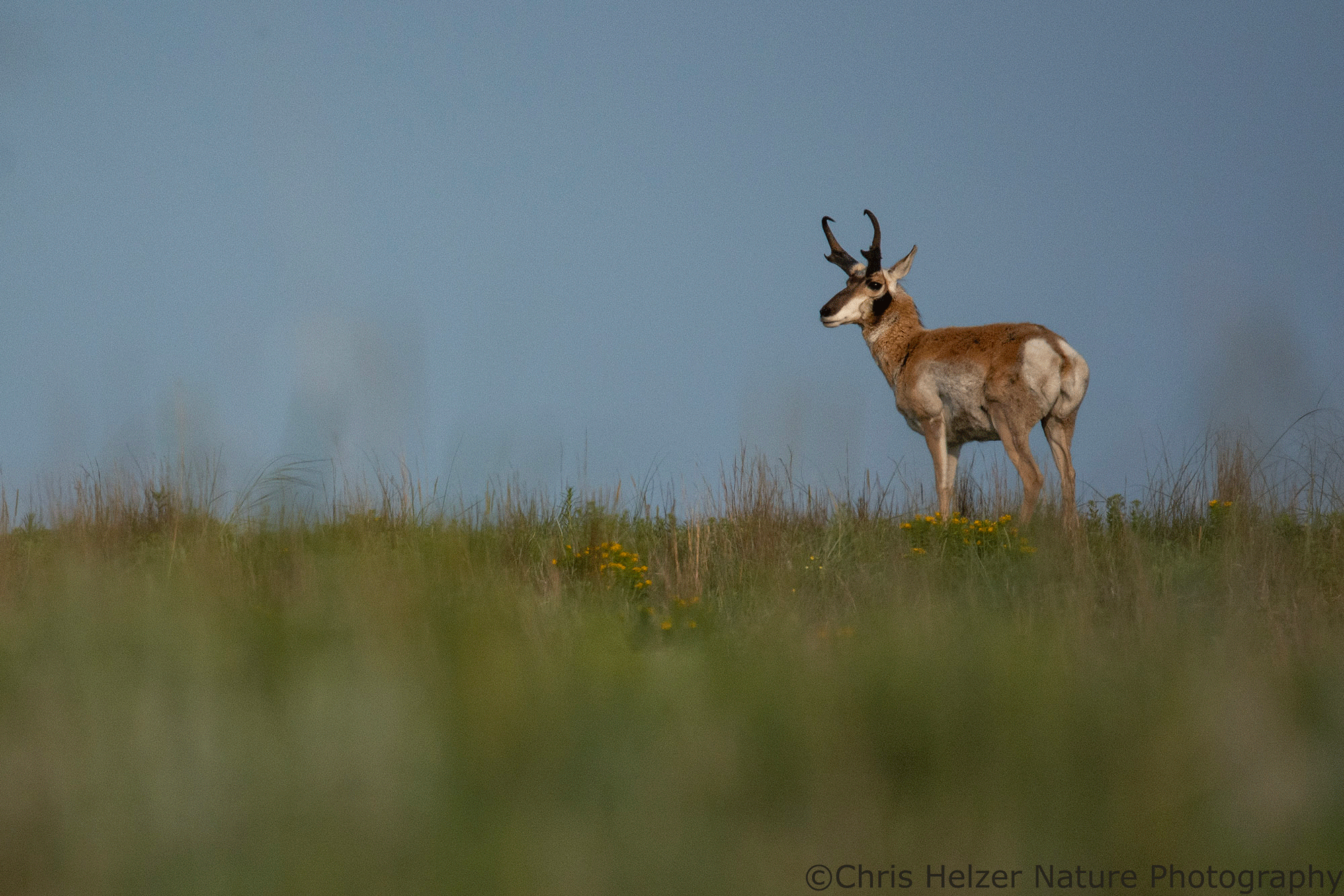
On the flip side, there are parts of the world where we still have huge, unplowed grassland landscapes.  These prairies have the scale to support a lot of animals that can’t survive in isolated small prairies, and – if managed appropriately – the habitat structure those species need as well.  That might even include many large animals like bison and pronghorn, or other charismatic species like prairie dogs or prairie grouse. 
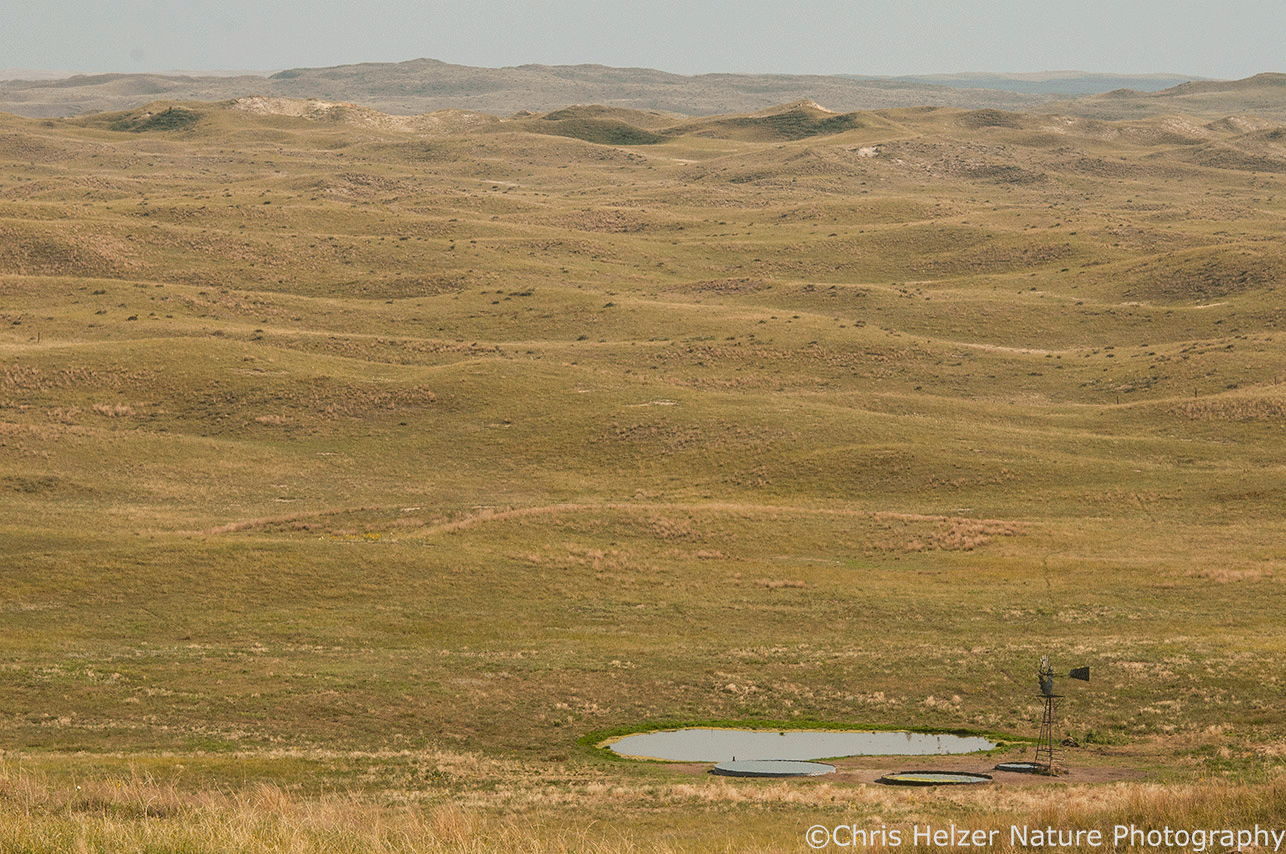
The Nebraska Sandhills is 12 million acres of contiguous native prairie.
Pronghorn – one of many large prairie animals supported by the Nebraska Sandhills.

However, in some of those landscapes, much of the prairie has lost plant diversity and/or populations of plant species that used to be there, and that has big implications.  Not only is the plant community an important component of “quality”, it also supports many of the other organisms that make up a strong, resilience grassland community.  Scale and habitat heterogeneity can make up for some of that, but species diversity is also a huge component of resilience.

Looking across a landscape like this, with lots of grassland but varying degrees of plant diversity and other components, we can pick out places that we think are of higher quality than others.  The criteria we use to make those decisions, though, will surely be different than the ones we use in a landscape where only small prairie patches remain.

Here’s why all this matters:

All of us who live around and work with prairies evaluate them through our own lenses.  Some of the criteria we use are shared, but others are heavily influenced by local conditions.  That’s ok, but we should recognize the biases we each have.  More importantly, we should make sure we’re talking to and learning from each other. 

About 15 years ago, I wrote a post about these different views on prairie quality.  In that post, I talked about how some of us focus a lot on the species composition (mainly plant composition) of prairies, while others look more at habitat structure and processes.  Those tendencies tend to be correlated with geography (east/west) and with the amount of grassland remaining in landscapes. 

In that post, I was hoping to stir people to expand their definition of prairie quality and to borrow perspectives from others.  There’s been some movement in that direction, but there are still some big differences in the way people assess prairie quality, and that strongly influences the way those prairies are managed.

As examples, I would love to see people working in fragmented prairie landscapes think more about how to vary habitat structure across even relatively small prairie parcels to benefit invertebrates and larger wildlife species.  At the same time, I wish people in landscapes with much larger prairies would pay more attention to plant composition.  While we have extensive prairies where the plant communities are in terrific shape, there are also lots of places where plant diversity is relatively low and many plant species are hard to find. 
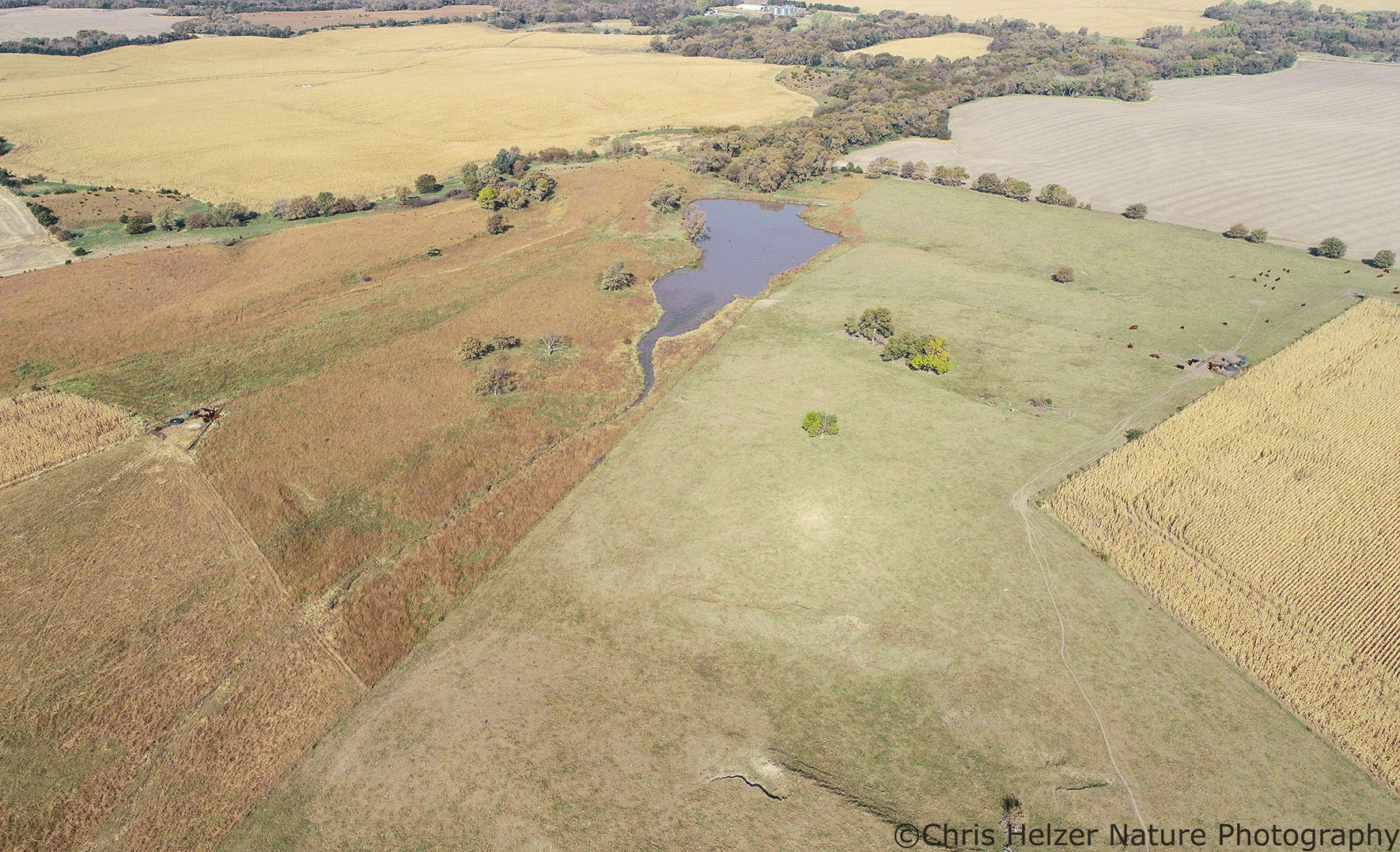
My family prairie is is surrounded by cropland. I work really hard to provide a variety of habitat structure types each year to support wildlife, while constantly striving to improve the plant community. I’ve learned a lot about how to do this (and measure success) from colleagues and friends across the country.

There are lots of ways to create more heterogeneous habitat structure in prairies – even small ones.  We also have ways of managing for, and even rebuilding, plant diversity in places where it has diminished.  Good, creative land stewards working in today’s grasslands should be able to do all of that.  However, we aim our stewardship at the goals we set for ourselves, and those goals are tied to the way we evaluate prairie quality.

It doesn’t make a lot of sense to compare a 10-acre prairie fragment in northern Illinois to a 5,000-acre prairie pasture in central Kansas and argue about which is better.  It’s ok to say both are high-quality prairies (or not), based on local criteria.  What’s crucial is that we continue trying to learn from the way we each see and value our prairies.  All of us can benefit from expanding our perspectives, right?

The Joy, Angst, Excitement and Dread of Walking Through a Young Restored Prairie

Anyone who has watched a prairie seeding go through its first several years of establishment will appreciate and identify with this post.  For those of you who haven’t, the best analogy I can come up with is that the experience is a little like watching your son or daughter go off into the world on their own.  You can spend tremendous energy planning ahead, preparing a site, and harvesting and planting seed, but at some point, you have to just stand back and let the new prairie stand or fall on its own.  Sure, you can jump in and knock back the weeds a little now and then, but eventual success or failure depends upon many factors beyond your control, and it can be hard to predict the result during the first few years.

In February and March of 2016, we planted about 60 acres of land with a seed mixture of around 140 prairie and wetland plant species.  The site had been cropland for many years, and then was converted to a mixture of native grasses and used as pasture.  Eventually, the site became heavily invaded with tall fescue, smooth brome, and Kentucky bluegrass.  A few years ago, we decided to kill off the existing vegetation and try to establish a much more diverse plant community.  Although it had been farmed, the site still had some remnant wetland swales that had been farmed through and partially filled, but still had some wetland hydrology.  Restoring this 60 acres feeds into our larger restoration objectives of enlarging and reconnecting remnant (unplowed) prairies in the area.

Volunteers hand broadcast wetland seed on frozen wetlands during February 2016.

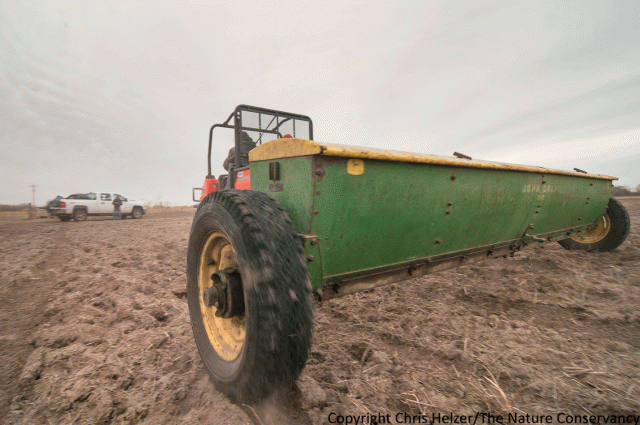
This “drop spreader” was used to plant the majority of the site.

We used a combination of herbicide application and tillage to get rid of the grasses and prepare a seed bed.  In addition, (under the appropriate permits) we had a contractor with a big scraper come in and deepen/widen the degraded wetland swales.  Using seed we harvested from nearby prairies and wetlands, a couple different groups of volunteers hand-planted the wetland swales and low sandy ridges created by excavation spoil, and we used a broadcast seeder behind a UTV to plant the remainder of the site.  (Thank you to the U.S. Fish and Wildlife Service, Nebraska Natural Legacy Project, and Nebraska Environmental Trust for funding this project.)

During the 2016 growing season, I visited the site very rarely, and didn’t spend much time there when I did.  Early in the season, there wasn’t much germinating and growing except the kinds of “weeds” you’d see in an abandoned crop field (foxtails, pigweeds, ragweeds, annual sunflowers, etc.).  Later in the season, those weedy plants had grown so tall and thick, it was physically difficult to walk through them.

This photo shows the kind of weed cover that grew during the first growing season. Lots of tall ragweed and annual sunflowers were joined by some perennial sunflowers and other plant species we had seeded.  This is pretty typical of what we see during the first year of our restored prairies.

I walked around this site on Monday of this week and tried to capture what I saw with my camera.  As I explored, I experienced a roller coaster of emotions.  Some areas are looking way ahead of schedule, with a nice diversity of prairie and wetland plants coming in, while others don’t look like they’ve even started, or have problematic plants that we might eventually have to deal with.  On the whole, I feel good about the progress of the restoration, though we do have some trees to control, but my overall confidence comes mainly because I’ve been through this process many times.  We’ve had restored prairies look like junk for 4 or 5 years before finally kicking into gear, and others that look like a prairie after two years.  Very rarely have we seen plantings fail.  Regardless, it’s way too early to guess how this planting will turn out.

For what it’s worth, here is what I saw and thought about during my walk around this prairie at the beginning of its second field season.

The first thing I saw as I walked into the new prairie was a pretty good sized patch of 3-4 foot tall cottonwood trees (Populus deltoides).  The parent trees can be seen in the background.  We’ve been getting smarter about removing those kinds of seed  sources before starting projects, but these trees are growing along a public road and we didn’t have the authority to remove them.  We’ll have to evaluate our options for controlling the young cottonwoods in our new prairie.

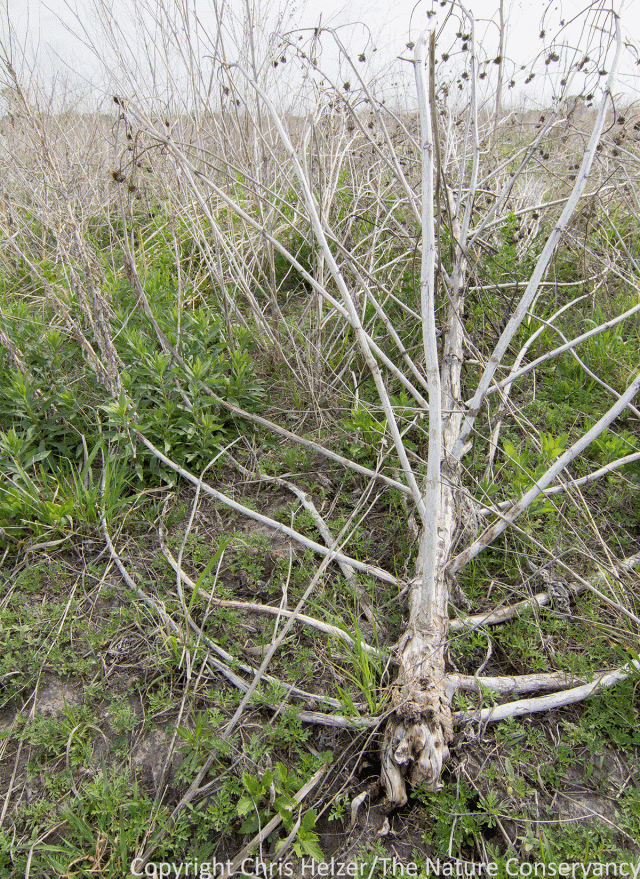
A skeleton of an annual sunflower from the initial season shows how big some of those pioneering species were last year. Many of the sunflowers were over 12 feet tall.

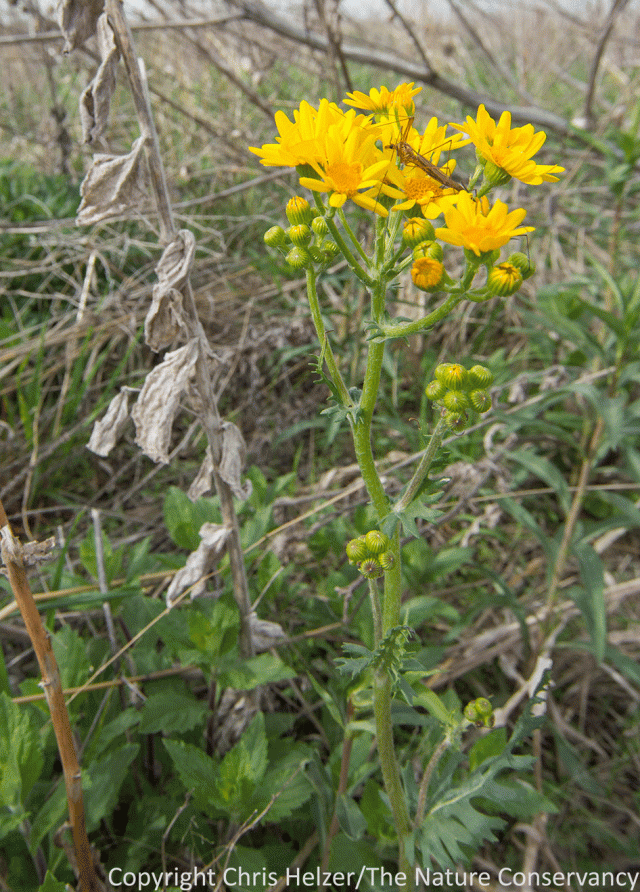
Biennial wildflowers, like this prairie ragwort (Packera plattensis) germinated last year and are blooming this year. Hopefully, this one will start a colony that will help support spring-flying bees and other pollinators in future years.  A pair of crane flies are mating on top of this one.

I was excited to see quite a few sedges blooming in only their second year. We don’t always get quick establishment of sedges from seeds. This one (Carex craweii) was in a patch of maybe 10 plants along the edge of a wetland, and I found at least three other species growing elsewhere in the site.

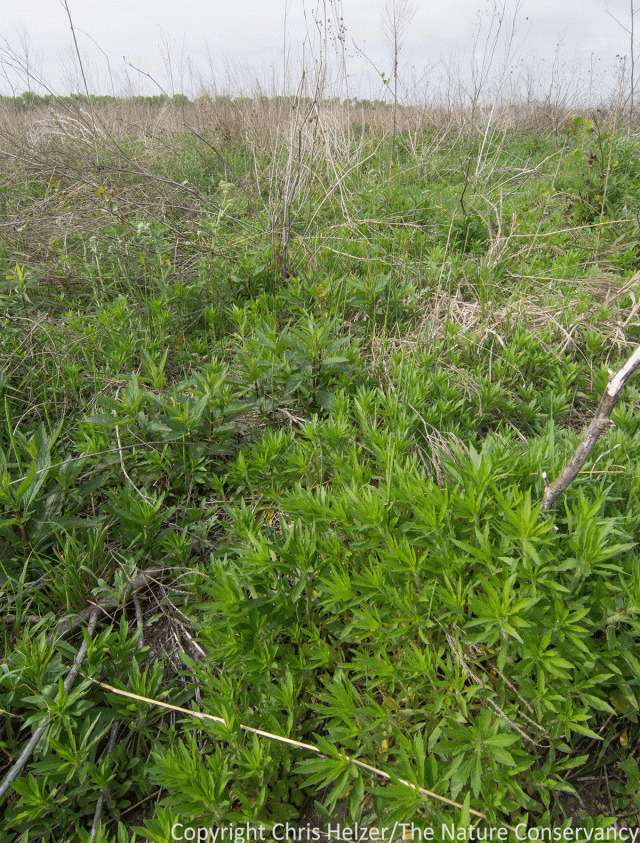
To balance out the excitement of seeing lots of sedges, I also found quite a few areas where there wasn’t much yet growing from our seed. This big patch of marestail (Conyza canadensis) was representative of maybe 30% of the planting. I think this is a soil issue – in our alluvial soils, prairie plant communities can vary dramatically from place to place, based on the soil deposits beneath them. Restored prairies establish with great variation for the same reasons.

Canada milkvetch (Astragalus canadensis), hoary vervain (Verbena stricta), goldenrod (Solidago gigantea), and Canada wild rye (Elymus canadensis) make up a very nice patch of new prairie plants.

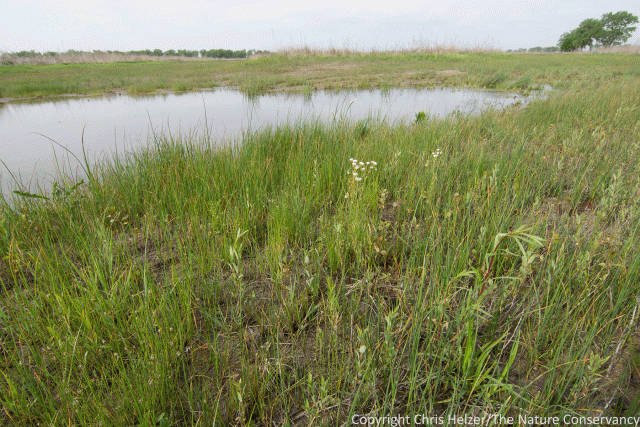
The wetland swales are filling in quickly with wetland plants, including lots of spikerushes, grasses, rushes, and a few forbs and sedges. Much of that vegetation came from our seed, but I think some also came from the seedbank.

We purposefully designed the wetlands to vary in their depth to groundwater so that we’d have some areas of standing water most of the time, but also many other areas that go dry each summer.

Some of the wetland pools had tadpoles in them, likely from the Woodhouse’s toads that have already colonized the area. I also saw leopard frogs hopping around.  In addition, numerous snails, and aquatic insects were moving around in the water, and dragonflies and damselflies were buzzing around above it.

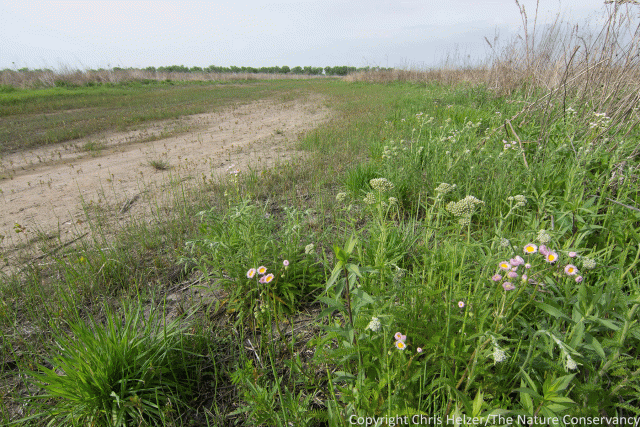
This section of wetland had standing water a few weeks ago, but has now gone dry, leaving great habitat for shorebirds (but also for young cottonwoods).  The vegetation along the margin of this wetland is mostly native colonizing plant species such as fleabane (Erigeron annuus), yarrow (Achillea millefolium), and Canada wildrye.

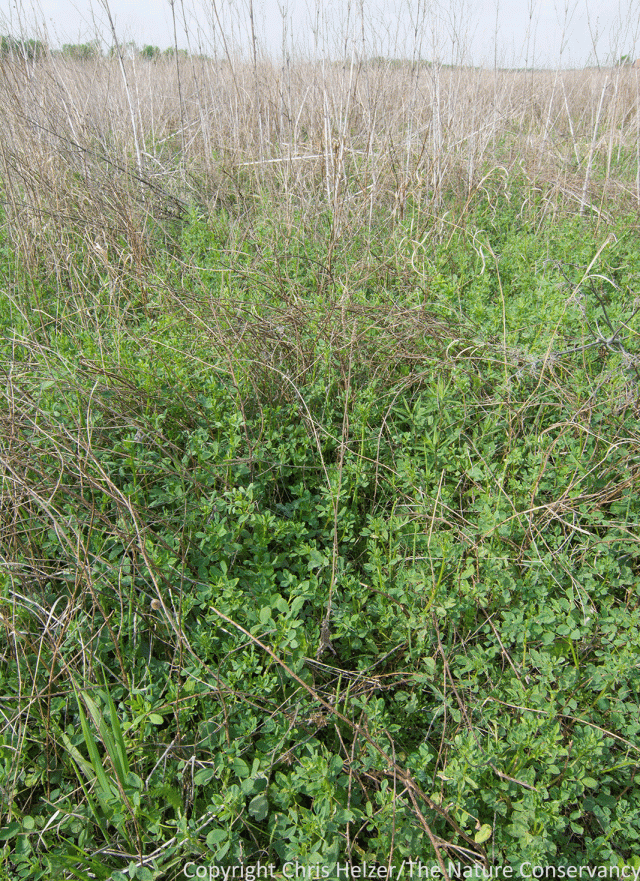
Sweetclover (Melilotus sp) is abundant across much of the new site. Experience shows that sweet clover (though I don’t like it) doesn’t seem to actually affect plant diversity much in our restored prairies, so we’ll just let it go until the site is established well enough to support fire and cattle grazing. At that point, the cattle will keep the sweet clover suppressed because it’s one of their favorite plants to eat.

In addition to areas of strong native plant growth and others dominated still by non-native or “weedy” plants, there were also areas where bare ground was still plentiful. Again, alluvial soils make all of this really interesting because the soils vary greatly from place to place and strongly regulate plant growth.

Last year’s seed pods of Illinois bundleflower (Desmanthus illinoensis) show that this native perennial legume established and bloomed in its first year at the site.

Duck and raccoon tracks joined the tracks of many shorebirds along the edges of the restored wetlands. It’s really encouraging to see how quickly wildlife and insect species colonize these sites, even while the plant community is still young.

I’ll probably return to walk through this site numerous times this season because I can’t help myself.  Apart from working on cottonwood trees and a few musk thistles, however, it’s unlikely that we’ll actually do anything else here, so my visits will be mostly out of curiosity rather than to stimulate management.  As with this trip, I’ll see things on future walks that will encourage me and others that will make me wonder if the planting will end up as a disaster, even though I know it’s too soon to know anything.

Within the next few years, we’ll try to burn the new prairie whenever we can, and when the major grasses start to assert their dominance, we’ll begin grazing the site in ways that support a diversity of plants and animals.  Typically, that grazing begins when the site is between 5 and 8 years old.  In the meantime, there’s really nothing to do but wait.  (But I’ll still peek in now and then anyway.)

I was really glad to see coyote tracks along the edge of the site. The presence of these (relatively) large predators will be key to the long-term success of the ecological community in this restored prairie.

For those of you with technical questions about our restoration methods, we didn’t test our seed for viability, but based on previous experience, our seeding rate for this planting was probably about 2-4 lbs PLS/acre, about 2/3 of which was grasses and 1/3 was forbs, sedges, etc.  We typically broadcast our seed into recently harvested soybean fields, so this planting was a little different, but not that different.  We don’t mow weeds during the first season based on trials that have shown no difference in long-term establishment (sandy soils help keep weed densities low enough to still allow sufficient light to hit the ground, despite what it looks like in the 2016 photo in this post).  We don’t cultipack or harrow seeds in either.  We’re fortunate not to have much trouble with aggressive perennial invasive plants in our early plantings, which makes our weed control pretty easy.  Deciduous trees are the main exception to that, especially cottonwoods (as shown above) and Siberian elms (not too bad at this site).  Later, we see invasion by perennial cool-season invasive grasses, but we suppress those with fire and grazing.