
Returning to Nachusa Grasslands

Last week, the Hubbard Fellows and I attended the 24th North American Prairie Conference (NAPC) in Normal, Illinois.  The NAPC is always an enjoyable and thought-provoking conference that brings together scientists, photographers, land managers, poets, and prairie enthusiasts from across the country.  This one was no exception, and it was great to be back in Illinois, where there is very little remnant prairie left but much concern about the remaining pieces.
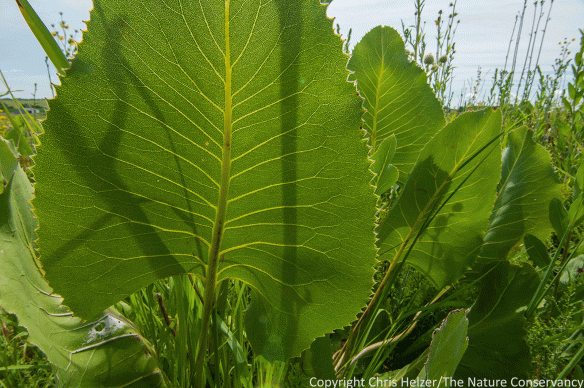
Prairie dock (Silphium terebinthinaceum) at The Nature Conservancy's Nachusa Grasslands near Franklin Grove, IL. We don't have prairie dock in Nebraska and I love seeing its gigantic basal leaves when I travel east.

Prairie dock (Silphium terebinthinaceum) at The Nature Conservancy’s Nachusa Grasslands near Franklin Grove, IL. We don’t have prairie dock in Nebraska and I love seeing its gigantic basal leaves when I travel east.

On Tuesday, the Fellows and I joined the field trip to The Nature Conservancy’s Nachusa Grasslands, one of my very favorite places on earth.  Bill Kleiman, Cody Considine, and an impressive array of volunteer stewards do fantastic work to restore and manage prairie on about 3,500 acres of land.  The diversity and beauty of their restored prairies is unmatched at any site I’ve been to.  However, the restorations are not there as flower gardens, but as habitat designed to defragment and enhance the prairie landscape.
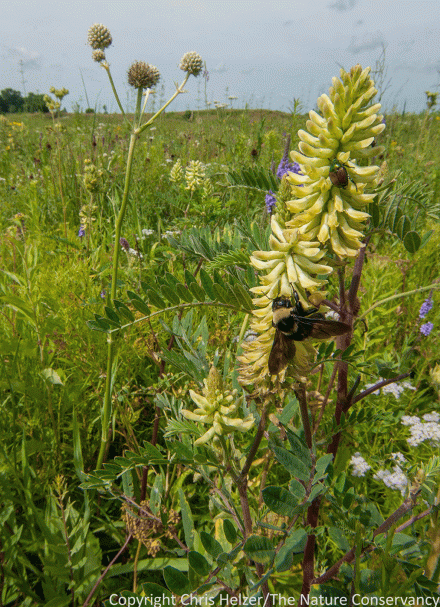
Bumblebees and other invertebrates were abundant at Nachusa (including Japanese beetles like the one right above the bumblebee - I've never seen so many in a prairie before).

Bumblebees and other invertebrates were abundant at Nachusa. They contributed to the cacophany of color, movement, and noise at the site.
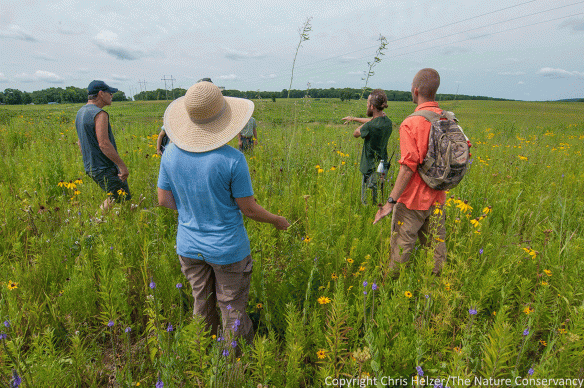
Former Nachusa staffer Mike Saxton led us through a young prairie planting where the plant diversity was already impressively high.

Former Nachusa staffer Mike Saxton led us through a 3rd year prairie planting where the plant diversity was already impressively high.
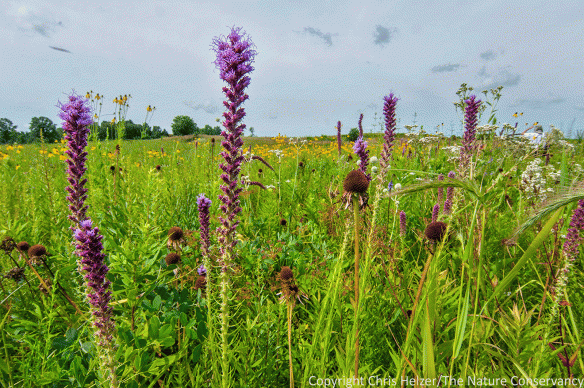
The abundance of showy flowers is almost overwhelming in some of the restored prairies, but the plant communities are also full of smaller and less auspicious species that help build the ecological integrity of the site.

The abundance of showy flowers is almost overwhelming in some of the restored prairies, but the plant communities are also full of smaller and less auspicious species that help build ecological function.
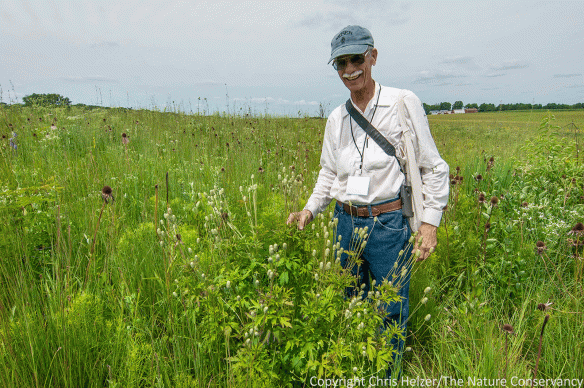
Carl Kurtz, a well-known prairie restoration guru in Iowa stands next to a thimbleweed plant we were admiring. Neither of us had ever seen the plant grow so large.

Carl Kurtz, a well-known prairie restoration guru in Iowa, stands next to a thimbleweed (Anemone cylindrica) plant we were admiring. Neither of us had ever seen the plant grow so large.

I last visited Nachusa a couple years ago as they were preparing to introduce bison to the site.  The bison are settled in now, and it was fascinating to get a brief look at how those animals are interacting with the tallgrass prairie there.  Nachusa Grasslands staff did a great job of engaging scientists to collect baseline data prior to the bison’s arrival and they are now measuring some of the early impacts.  Watching how grazing bison change the plant and animal communities at the site will be a long-term but invaluable addition to our understanding of tallgrass prairie ecology.
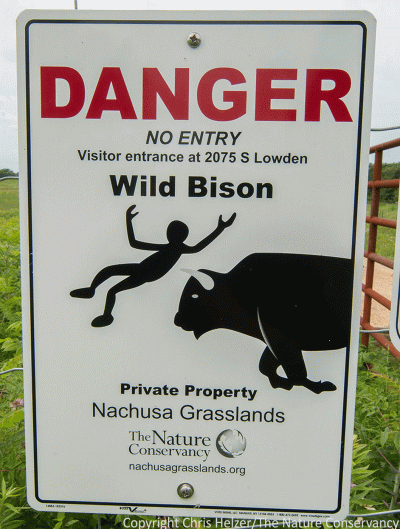
I only saw the Nachusa bison from a distance, so didn't get any photographs of them. I did, however, photograph the signs they have posted around the perimeter of the bison-grazed prairie.

I only saw the Nachusa bison from a distance, so didn’t get any photographs of them. I did, however, photograph the signs they have posted around the perimeter of the bison-grazed prairie.  I am a big fan of these signs.
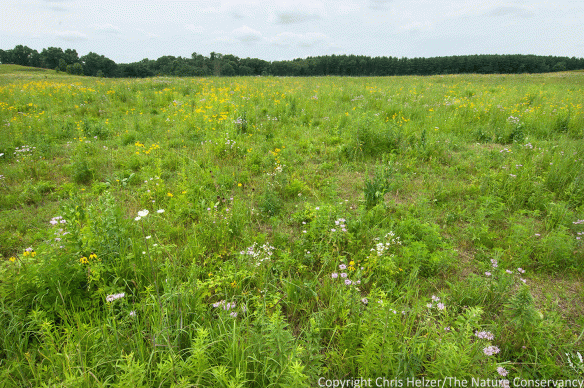
Interestingly, the bison seemed to have been spending most of their time grazing in some of the less diverse restored prairies. However, they were certainly impacting the vegetation structure of those places they grazed.

Interestingly, the bison have been spending much of their time grazing in some of the less diverse restored prairies. However, they were certainly impacting the vegetation structure of those places they grazed – creating many patches of short-cropped plants in and amongst the taller flowers.

For various reasons, about 3/4 of the bison area was burned this spring.  The bison were certainly preferentially grazing the burned area, but because so much was burned this year, they didn’t create large areas of short vegetation.  Instead they created sporadic small grazing lawns throughout much of the burned area.  It will be really interesting to watch how that habitat heterogeneity changes which animals use the prairie and how they use it.  We were already seeing evidence of critters that like short vegetation (e.g., thirteen-lined ground squirrels) in areas where the plants normally grow too thick for them.
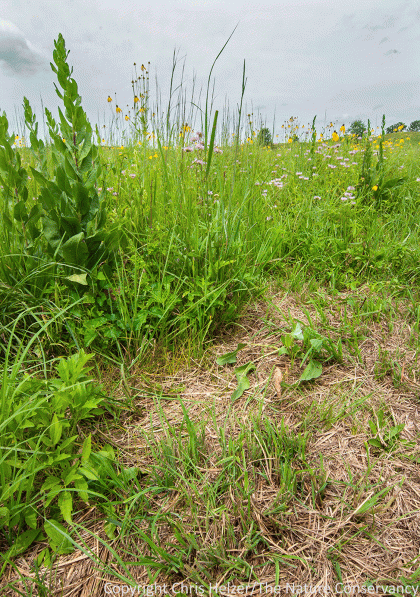
The bison were grazing primarily (though not exclusively) grasses, punching holes in the tall vegetation.

The bison were grazing primarily (though not exclusively) grasses – punching holes in the tall vegetation.  Those “grazing lawns” can be really valuable as sunning spots for invertebrates and reptiles, and can also create opportunities for new plants to germinate and establish.
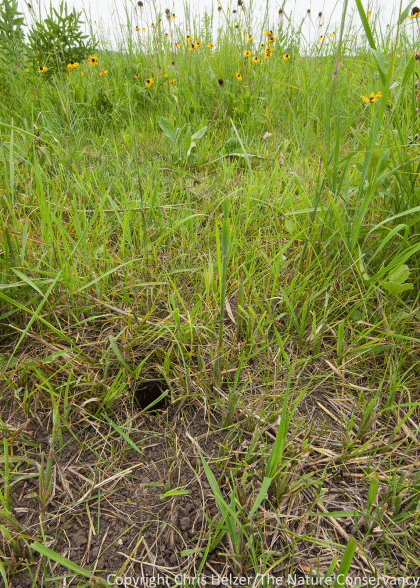
This thirteen-lined ground squirrel burrow was evidence of habitat changes favoring animals that like short vegetation. Researchers will be looking for more of that among bird, mammal, insect and other communities.

This thirteen-lined ground squirrel burrow was evidence of habitat changes already favoring animals that like short vegetation, even in small patches.  Larger areas of concentrated grazing can provide habitat for birds (like upland sandpipers) and other species that need short vegetation on a larger scale.
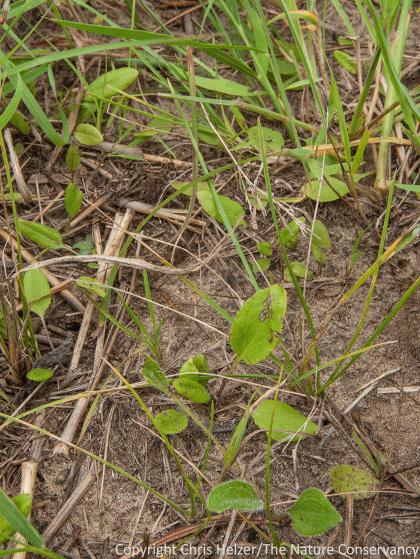
We saw plenty of spots where new plants were germinating where bison had cropped off competing grasses, including these ragwort (Packera sp) seedlings and the purple coneflower (Echinacea sp.) seedling in the bottom right.

We saw plenty of spots in which new plants had germinating where bison had cropped off competing grasses, including these ragwort (Packera sp.) seedlings and the purple coneflower (Echinacea sp.) seedling in the bottom right.
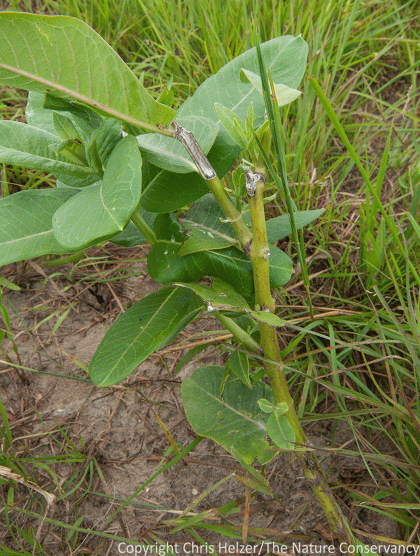
Interestingly, most of the common milkweed plants we saw in the bison area had been grazed. We see the same thing in cattle pastures in Nebraska. We assumed bison were eating the milkweed, but deer, box turtles, and other animals could also be culprits.
Interestingly, most of the common milkweed plants we saw in the bison area had been grazed. We see the same thing in cattle pastures in Nebraska. We assumed bison were eating the milkweed, but deer, box turtles, and other animals could also be culprits.

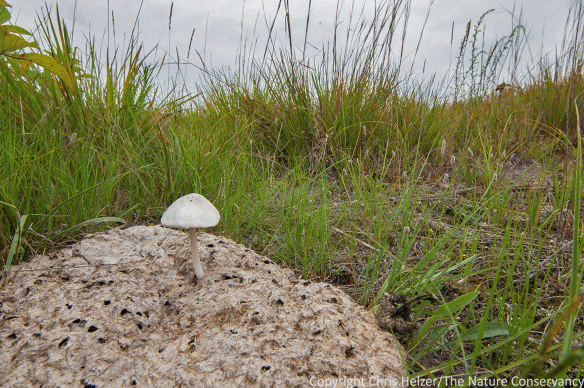
Some bison impacts are unrelated to cropped vegetation, including bare ground created by wallowing, and the concentration and redistribution of nutrients through manure - something capitalized on by this mushroom.

Some bison impacts are unrelated to cropped vegetation, including bare ground created by wallowing, and the concentration and redistribution of nutrients through manure – something capitalized on by this mushroom.

There was much discussion at the conference about the historical abundance and impacts of bison in eastern tallgrass prairie (more on that in a future post) but the introduction of bison to Nachusa Grasslands was not done because of history.  Instead, staff and volunteers are hoping that bison will catalyze more diversity in plant and animal communities in ways that weren’t possible with only fire and mowing management.  The science used to evaluate those impacts should teach us more about tallgrass prairie, it’s ecology, and its potential.
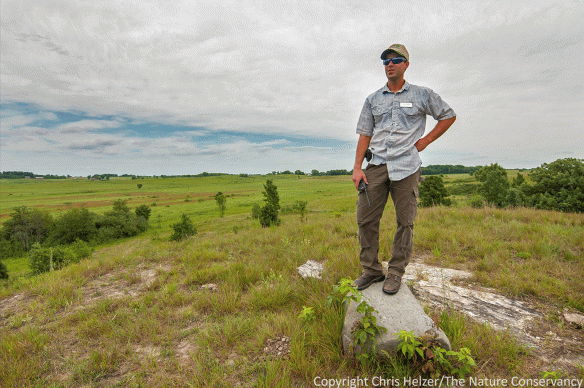
Nachusa's Cody Considine surveys the prairie where bison are augmenting an already complex prairie community.

Nachusa’s Cody Considine surveys the prairie where bison are augmenting an already complex prairie community.
Prairie Word of the Day – Habitat Heterogeneity

Do you know what time it is?  It’s time for another PRAIRIE WORD OF THE DAY!

Today’s Prairie Word of the Day (fine, it’s actually two words) is:

Habitat Heterogeneity

Heterogeneity is really just a longer word for Diversity, which is another way of saying “lots of different things”.  So why use the word “heterogeneity” instead of just saying “lots of different things”?  Well, for one thing, using big words makes a person sound smart, and when you’re a prairie ecologist and no one really understands what it is you do for a living, it’s good to at least sound smart.

More importantly, there’s a nice alliterative (another big word!) feel to the phrase Habitat Heterogeneity, which happens to be one of the most important phrases in prairie ecology.  In fact, I would argue that the foremost objective of any prairie manager should be to create habitat heterogeneity within the prairie(s) they manage.

Habitat heterogeneity simply means diversity or variety in habitat types.  Habitat homogeneity is the opposite – a lot of habitat that is all the same.

Every organism in a prairie has its own unique habitat requirements, so the number of different habitat types in a particular prairie is correlated with number of species that can live there.   Let’s use prairie birds as an example.  Birds such as upland sandpipers like to nest in large patches of relatively short-stature grassland.  Around here, a big hay meadow is great habitat for them, especially if it was cut fairly late in the previous year and is still short in stature when the subsequent breeding season starts.  On the other hand, Henslow’s sparrows want to nest in prairie habitats with relatively tall and dense vegetation.  It would be highly unusual to find Henslow’s sparrows and upland sandpipers nesting in the same patch of prairie because their habitat preferences are very different.  So, if you want both species in your prairie, you have to provide both short and tall/dense habitat.  Other birds have their own unique habitat requirements, including nearly bare ground (e.g., horned lark), relatively short, but with abundant thatch (grasshopper sparrow), tall with lots of tall/weedy wildflowers (dickcissels), tall and nearly impenetrably dense vegetation (sedge wrens), and many others.  Only if your prairie provides all those different habitat conditions will you attract all those different bird species.

Dickcissels prefer

Dickcissels prefer habitat with lots of tall wildflowers or weeds.  They often weave their nest into the stems of a tall clump of vegetation.

The same diversity of habitat preferences exists in other groups of prairie species as well.  Among small mammals, for example, voles tend to prefer habitats with abundant thatch, while pocket mice are more often found where bare ground is abundant – and there are many others.  Insects and other invertebrates have the same kind of diversity in habitat preferences

Scale is important.  While a bird, mammal, or insect might have a broad preference for a certain kind of habitat structure, it is likely to need some heterogeneity within that habitat too.  A mouse, for example, might prefer patches of prairie with fairly sparse vegetation, but it is likely to need a few clumps of vegetation dense enough to hide in when predators are near.  Insects and reptiles are ectothermic (cold blooded) and need to regulate temperature, so while a snake might like to hide in tall dense so it can bite your ankle as you walk by (I’M KIDDING!), it also needs some places to bask in the sun.  All of this means that habitat heterogeneity is important any many different scales.  Heterogeneity at a fairly large scale (acres) helps provide places for many different animals to live in a prairie, but heterogeneity within the home range or territory of each animal (square meters, or even centimeters) can be important too.

Some habitat heterogeneity occurs simply because soil texture, nutrients, and moisture, along with topography all vary across a landscape.  A prairie is likely to have areas of more productive soils where vegetation grows tall and thick, and less productive soils where vegetation is more sparse, for example.  In addition, water will pool in some areas of a prairie more than others because of topography, altering the habitat for both plants and animals.  However, despite this “naturally occurring” heterogeneity, it’s still important for prairie managers to look for ways to provide more.

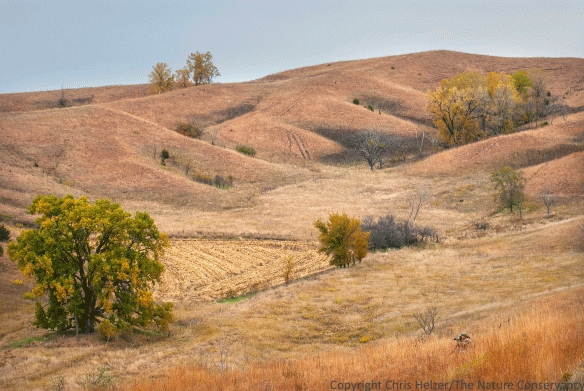
This landscape at The Nature Conservancy's Broken Kettle Grasslands in northwest Iowa shows the kind of natural heterogeneity that occurs in many landscapes.

This landscape at The Nature Conservancy’s Broken Kettle Grasslands in northwest Iowa shows the kind of natural heterogeneity that occurs in many landscapes.  Topography, soil variability, and other factors create a diverse set of conditions for plant growth and habitat structure.  Land management can add to that heterogeneity and improve it even more.

Prescribed fire and haying/mowing do a great job of altering habitat structure at a fairly large scale (acres).  By applying those treatments in different parts of a large prairie each year (and varying the timing of each from year to year), a manager can create a shifting mosaic of habitat patches that supports a wide diversity of animals.  However, both fire and mowing are pretty non-selective – most or all of the vegetation within a burned or mowed area gets the same treatment.  Leaving unmowed patches of grass here and there and varying the height of the mower as it moves across the site can help leave more heterogeneity behind.  Designing prescribed fires so that not all vegetation burns (e.g., mowing around some patches ahead of time, burning on days with lower temperatures or higher humidity, etc.) can also help with habitat heterogeneity – though those kinds of fire might also be less effective at killing trees or accomplishing other objectives.

In prairies where livestock grazing (cattle or bison, for example) is feasible, it is much easier to create small scale heterogeneity because grazers pick and choose which plants, and how much of each plant, to eat at any one time.  By controlling grazing intensity, and varying it across both time and space, managers can create prairie patches that are ungrazed, almost completely grazed, and in various stages of partial grazing – with a mixture of tall vegetation and nearly bare ground.  The uneven application of “fertilizer” from the rear ends of grazers contributes even more to habitat heterogeneity by temporarily altering soil productivity in lots of little spots across the prairie.

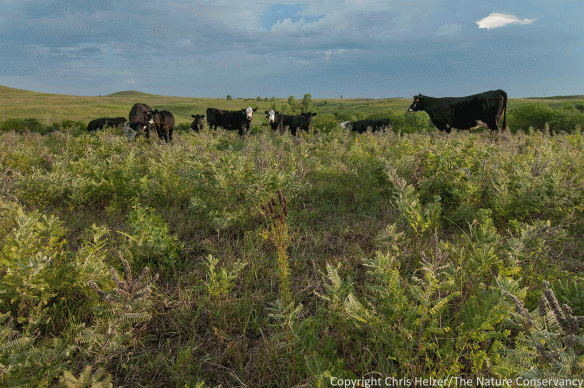
These cattle at Konza Prairie in Kansas

These cattle at Konza Prairie in Kansas have created a nice example of small scale habitat heterogeneity by grazing many of the grasses short while leaving leadplant, purple prairie clover, and other wildflowers ungrazed.

Whether it’s fire, mowing, grazing, herbicides or various combinations of those, creating habitat heterogeneity may the most important job of a prairie manager.  We still have a lot to learn about how the scale and configuration of habitat patches affect wildlife and insect populations.  What we do know, however, is that the prairies thrive when they have a lot of different types of habitat.  …When they have habitat heterogeneity.

And that, folks, is your Prairie Word of the Day.