The Mystery of the Dying Cedar Trees

As I travel across Nebraska this year, I keep seeing dead and dying eastern red cedar trees.  Some are big, some are small, but they’re definitely dead.  Since cedar trees are a major invader of grasslands across the state, I’m not complaining about all the dead ones, but I do wonder what’s killing them.
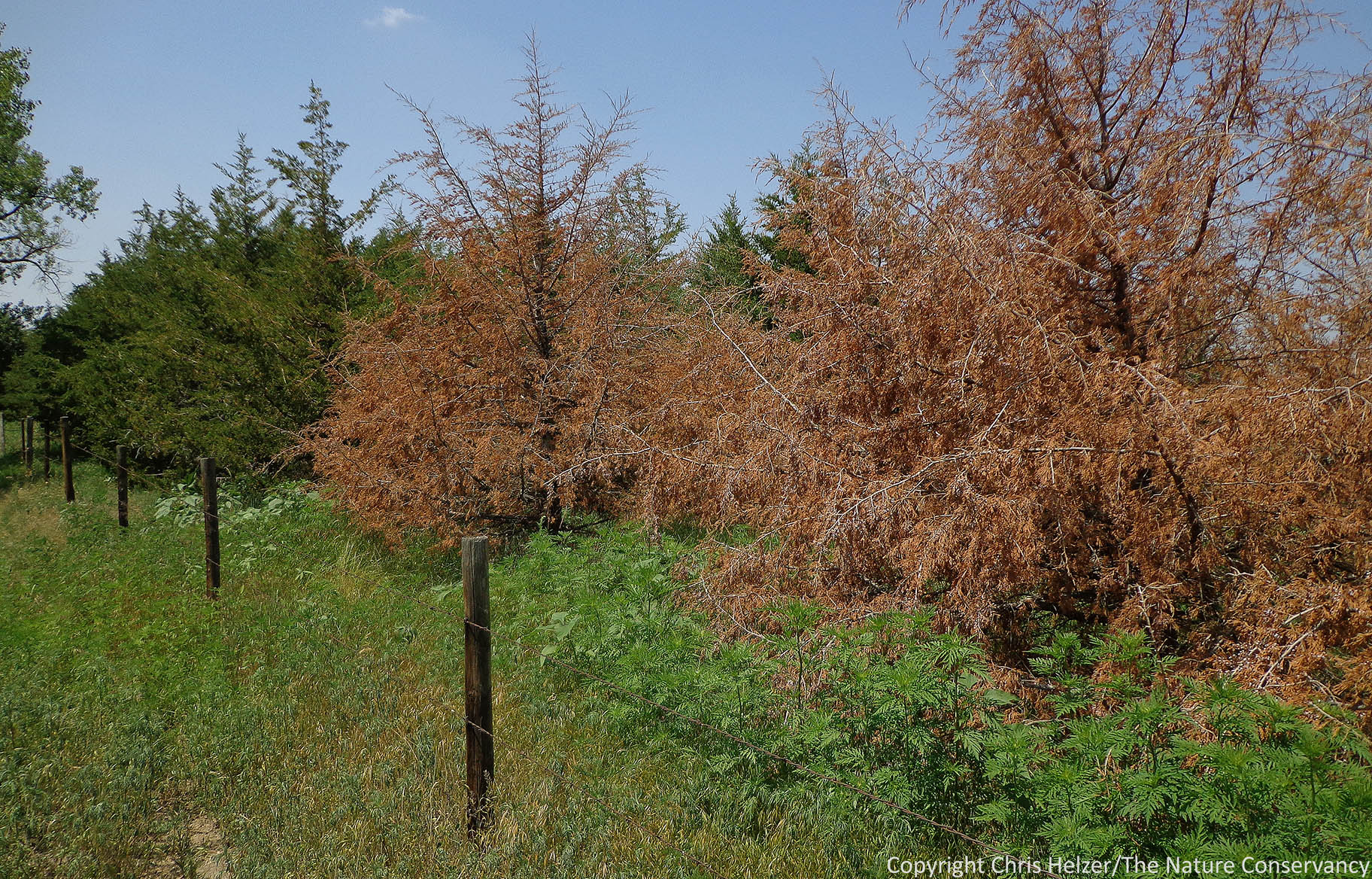
Why are cedar trees dying around Nebraska?

Why are cedar trees like these dying around Nebraska?

Interestingly, the trees seem to be dying in clusters, rather than as random or scattered individuals.  To me, that indicates at least two possible causes of death.  One possibility is that some kind of disease or insect is killing trees and then spreading to others nearby.  The second is that trees are dying from last year’s drought conditions and that local variation in soil texture means that cedars in some places were more vulnerable to drought than others.

the

Not all cedar trees are dying.  Sometimes it appears that random trees are dying and others right next to them are not.  Upon closer inspection, however, there are usually clusters of trees that are dying (note the right side of this photo).  Disease?  Or drought/soils?

Since my experience with trees is mostly limited to attempts to keep them out of my prairies, I thought I’d contact someone who has a broader range of expertise on the subject.  I emailed Scott Josiah, the state forester with the Nebraska Forest Service and asked him why cedar trees are dying.  Scott said he thought the drought hypothesis made the most sense, and that trees growing in soils with coarse sands and low levels of organic matter, for example, would be stressed more than those in soils that hold more moisture.

It was good to hear from an expert on the subject, but I’ll admit to a little skepticism.  I really like Scott, and as I said above, I’m no expert on trees, but cedar trees sure seem like they’d be tough enough to survive a one year drought…  Heck, I’ve seen them growing out of ROCKS!  I took Scott’s answer and filed it away, but continued to wonder about the possibility of a disease or insect outbreak that foresters and others just hadn’t yet identified.

And then last week, I found some pretty convincing evidence that I think has solved the mystery.

We were at our Kelly Tract on the North Platte River, working on some vegetation sampling and Canada thistle control when I noticed some dead cedar trees in some old shelterbelts on the property.  As I got closer, I realized this was a perfect site to test Scott’s idea that drought was killing cedar trees.  The Kelly Tract is a floodplain prairie with strong patterns of alluvial (river deposited) soils across the site.  That means there are lots of different soil types all mixed together – a naturally-occurring experimental design.

soil patterns

From this angle, you can clearly see some of the alluvial soil patterns that intersect with the line of cedar trees at The Nature Conservancy’s Kelly Tract along the North Platte River by Sutherland, Nebraska.

While conducting my vegetation surveys, I noticed that last year’s drought had definitely affected the grasses and wildflowers much more severely in some places than others.  Broad streaks of green and brown wound across the prairie, tracing the old channels and sandbars formed when the river had long ago flowed across the site.  When we’ve done soil sampling elsewhere along the Platte, we’ve found that soils with coarse sand and low organic matter are quickest to dry up in drought conditions – I assume the same is true at the Kelly Tract.  I figured that if drought, combined with soil texture, was killing cedar trees, I’d be able to see whether the dead trees were in the same “streaks” that contained dried up grasses and wildflowers.

They were.  In fact, every brown tree I saw was located along a streak of brown grass, and every green tree was in a streak of green grass.  It was as perfect a pattern as you could hope for.

The outlined area in this aerial photo.

This aerial photo from several years ago shows the alluvial soil patterns more clearly than in the earlier photo.  The red outline is approximately the same location the earlier photo was taken from.  I haven’t yet been able to find any aerial photography from this year (this older photo doesn’t show this year’s brown trees) but when I do, I’ll bet the brown trees will be in the brown streaks…

While cedar trees are certainly tough, it sure looks as if Scott was right – last year’s drought was just too much for those trees to handle, at least in some soils.  Mystery solved!

Way to go, Scott!   Now I have a new problem…  Do I hope for a wet year to help our prairies recover?  Or a dry year to kill more cedars??
Watching the Sandhills Bounce Back at the Niobrara Valley Preserve

I took our Hubbard Fellows up to the Niobrara Valley Preserve in north-central Nebraska last week.  While we were there, I spent quite a bit of time in the east bison pasture, where the recovery of prairie plants from last year’s summer wildfire was in full swing.

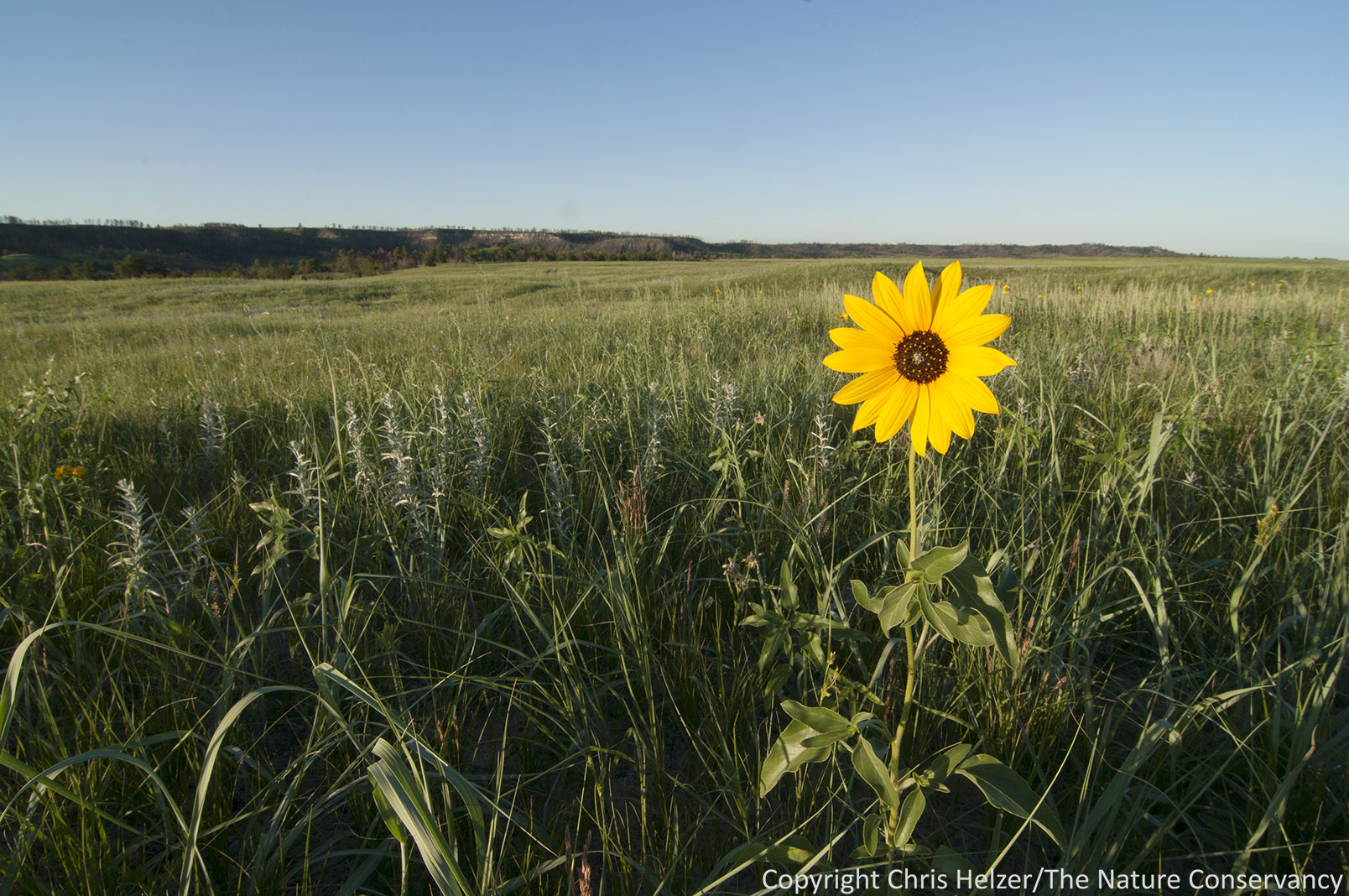
sunflowers and grass

Prairie grasses such as sand bluestem (front left) and many others were growing well across the bison pasture during the first growing season since last July’s wildfire.

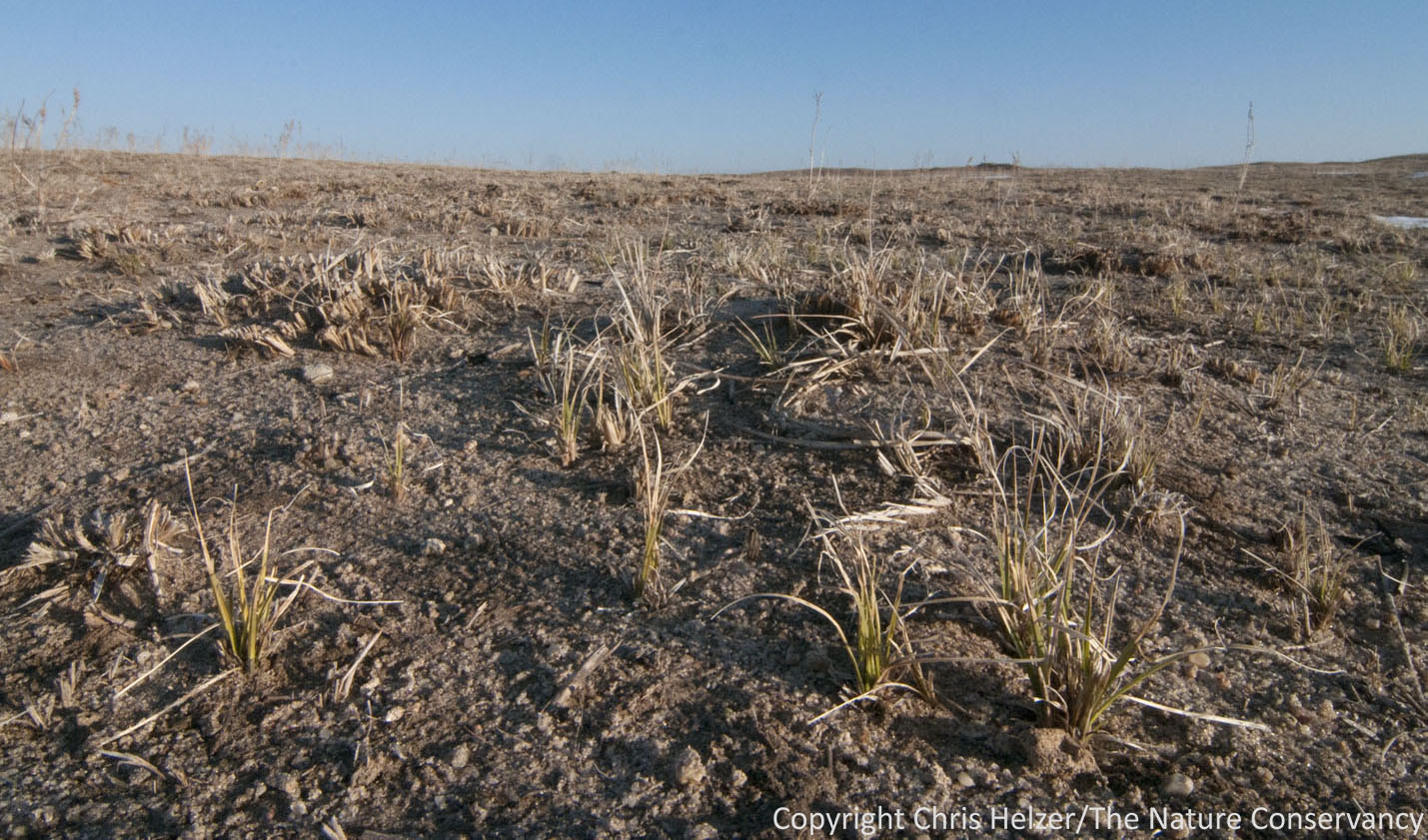
The lush green growth was in strong contrast to the burned prairie’s appearance back in late April when only a few sedges and yucca looked alive – and both were being cropped short by hungry bison.

April 23

These sedges were about the only green in the bison pasture on April 23 of this year.  Since the bison were mainly eating brown grass and hay all winter, anything green was pretty attractive.

We knew the prairie would survive the fire, but it was still good to see the quick strong growth after some nice rains this spring.  The Preserve staff reduced the size of the east bison herd last year because more than 90% of the bison pasture had burned.  The biggest concern was getting the bison through the winter with very little residual grass available to eat.  With the help of a little fall growth and some supplemental hay, the bison survived just fine.

bison

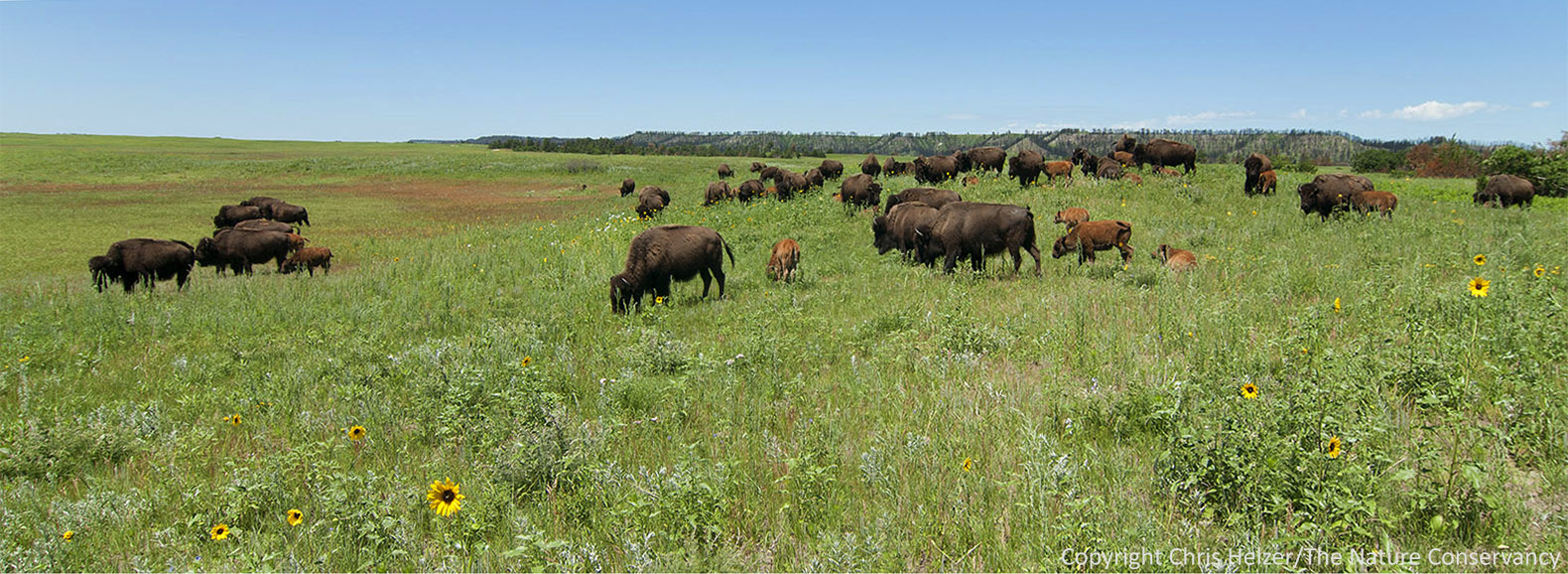
The bison are enjoying having a wide selection of green plants to choose from after a long winter of sparse brown grass.

The drought and wildfire definitely weakened the vigor of perennial plants in the prairie, and there is a flush of annuals and other short-lived plants taking advantage of that this year.  Species such as goosefoot (an annual Chenopodium species), annual sunflower (Helianthus petiolaris) and six-weeks fescue (Vulpia octoflora) are abundant throughout the grassland.  At the same time, however, perennial plants such as prairie wild rose (Rosa arkansana), spiderwort (Tradescantia occidentalis), cutleaf ironplant (Haploppus spinulosus), and many more are having a great year too.

wildflowers

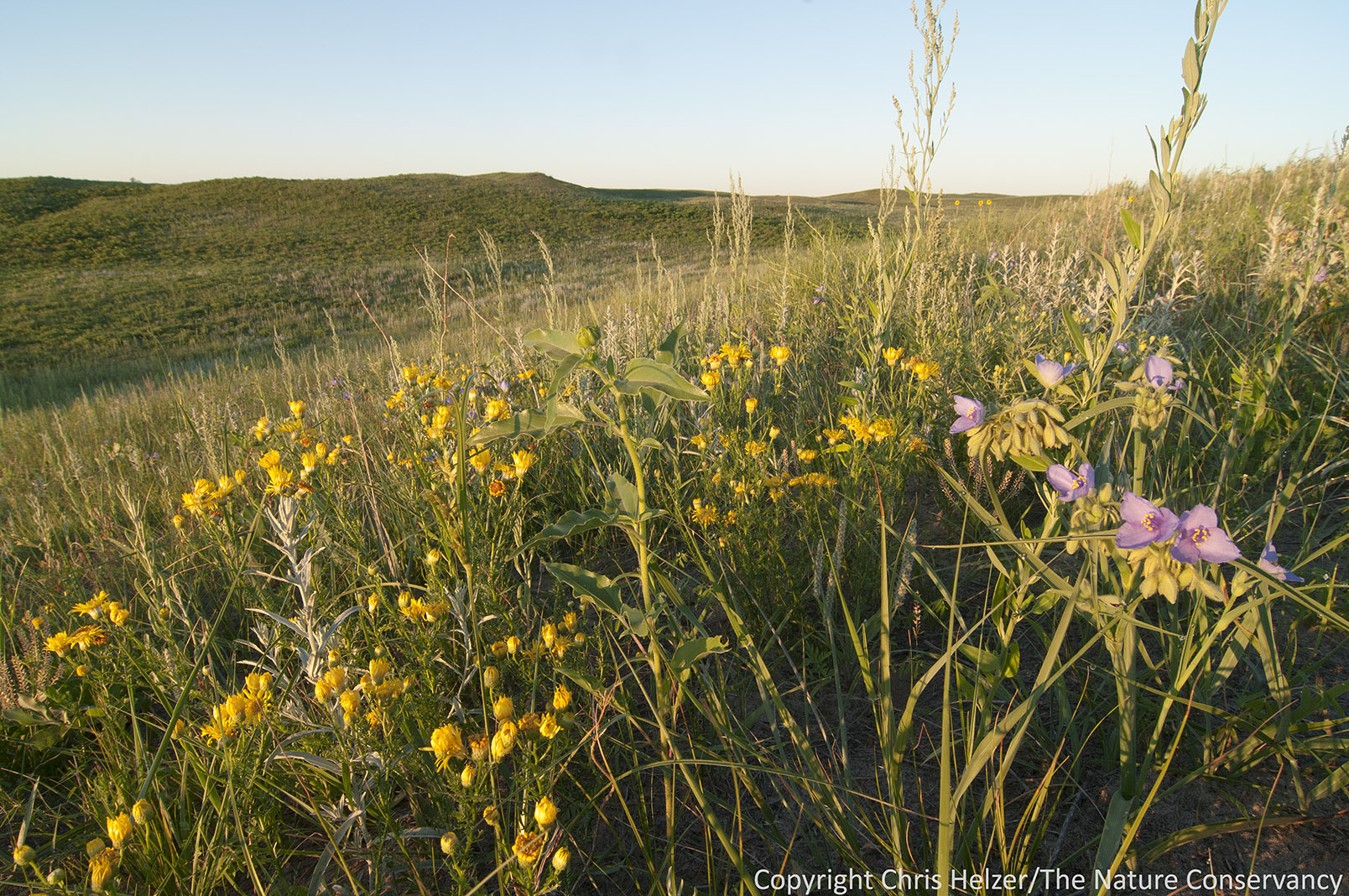
Flower species such as cutleaf ironplant (left) and spiderwort (right) are coloring the sandhills in the burned bison pasture.

.

flowers

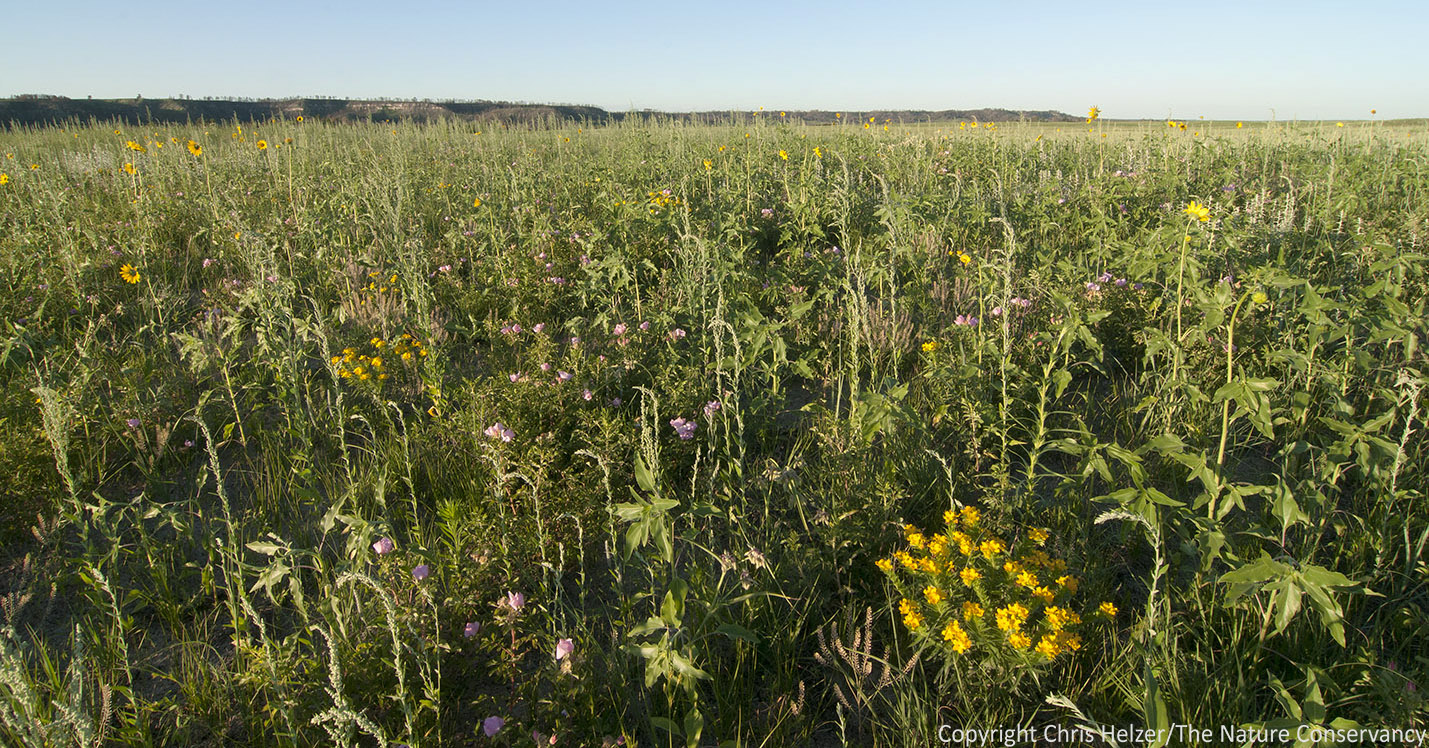
Goosefoot (the tall skinny light blue plants) and other annuals are abundant, but so are perennials such as wild rose (pink) and hairy puccoon (yellow).

Besides the bison, we saw numerous other creatures throughout the prairie.  I wandered through the area where I’d seen sharp-tailed grouse displaying back in May, and flushed up a couple birds.  Upland sandpipers, western meadowlarks, and lark sparrows were all over the place.  Insects, of course, were easy to find too, including a number of species feeding on the pollen of the ubiquitous flowers.

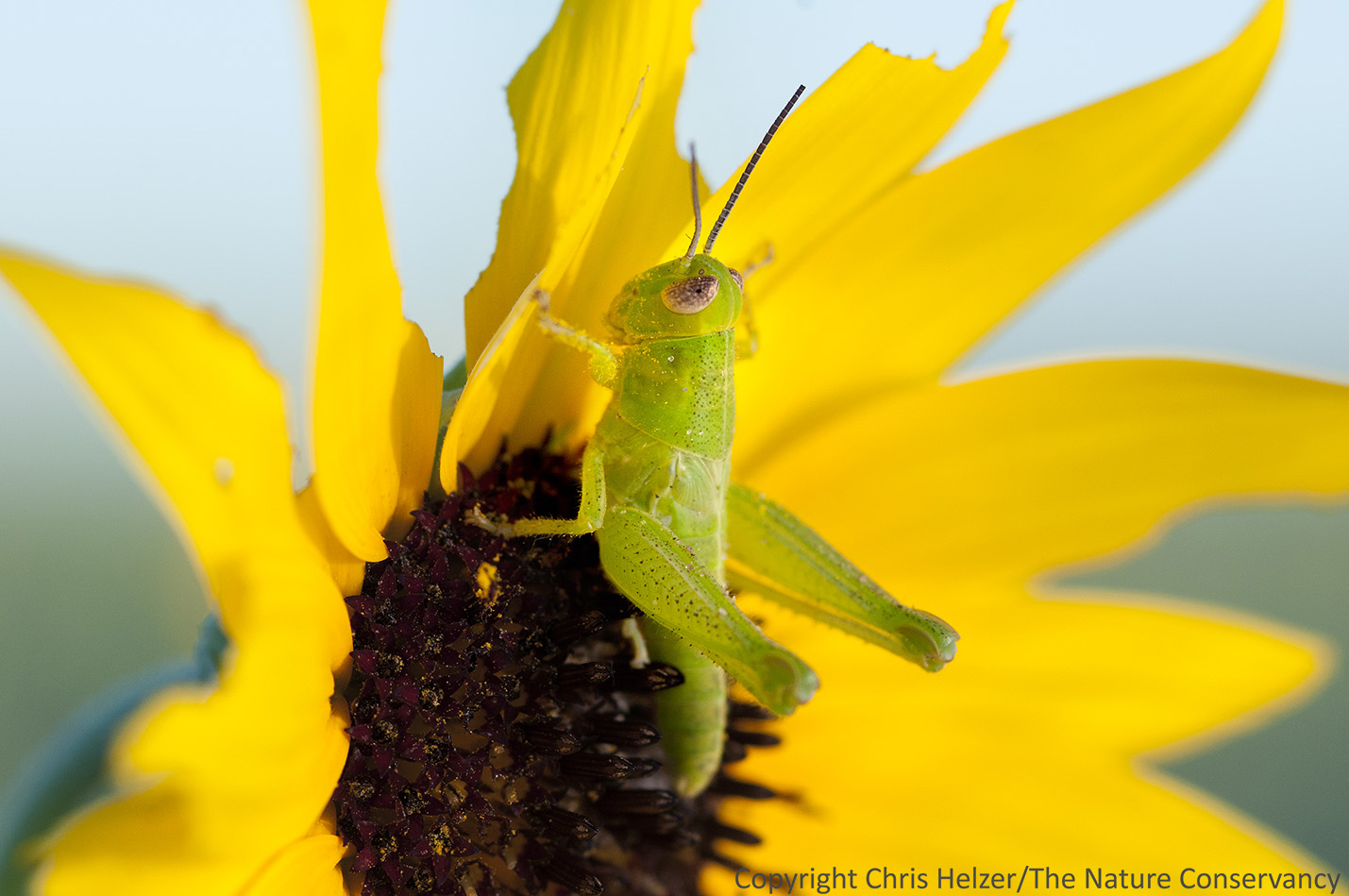
Gr asshopper nymph

Grasshopper nymph on annual sunflower.

.

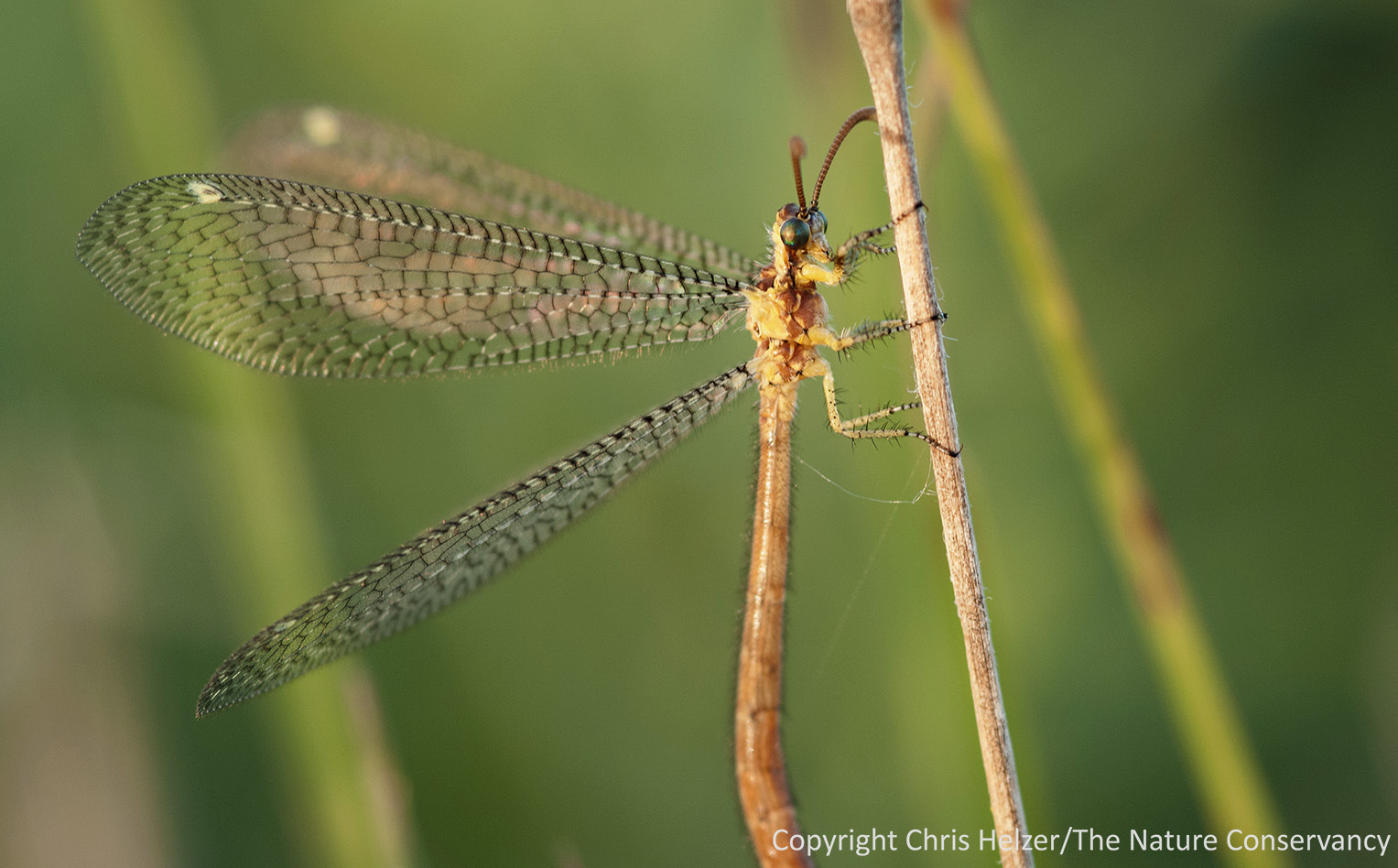
antlion

Adult antlions were EVERYWHERE during my morning walk in the prairie.  A few were feeding on the pollen of spiderwort flowers.

.

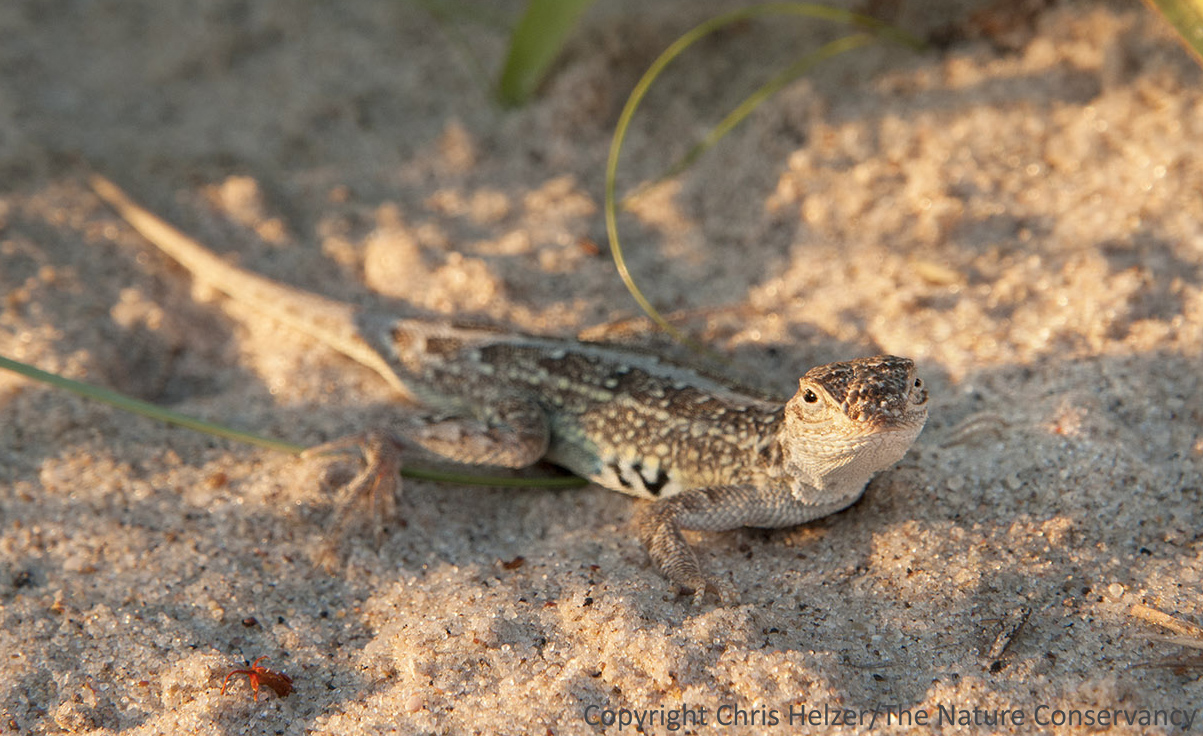
fence lizard

A  lesser earless lizard (Holbrookia maculata) near a small sand blowout.

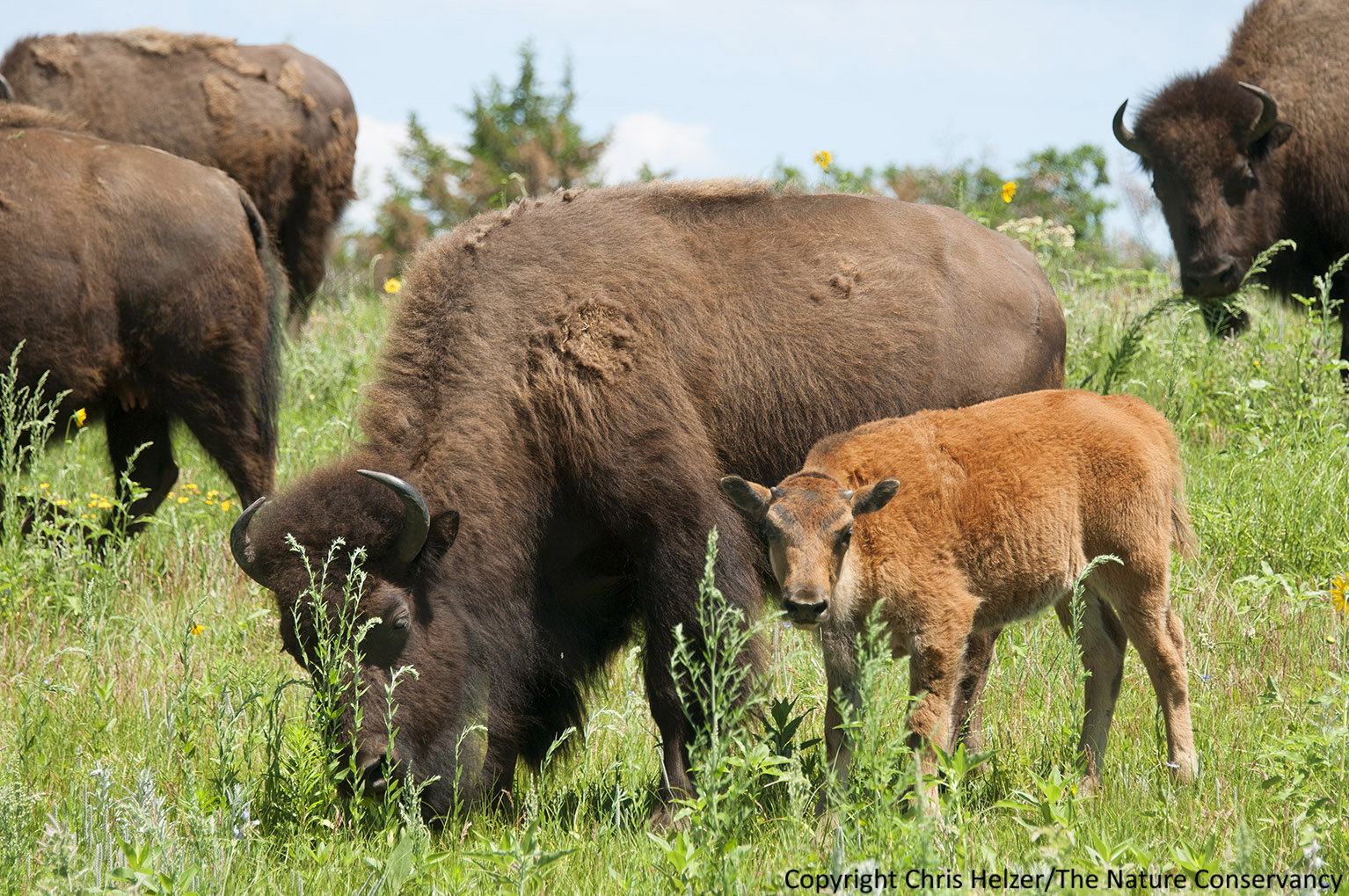
This spring brought a big new batch of bison calves, a testament to the toughness of the females, who were able to get through a hard winter of sparse brown grass and a little hay.  There should be plenty to eat now – not only did the Preserve staff reduce the herd size to about 150 adults after the fire, they also increased the pasture size to about 10,000 acres.  While the prairie grasses are still weak, that light stocking rate should give those plants plenty of opportunity to recover, depending upon the consistency of rainfall during the remainder of the season, of course.  The staff will allow the herd size to grow again over the next few years, aiming for an eventual stocking rate of about 30 acres per animal.

bison calves

This year’s bison calves looked as cute and healthy as always.

.

bison bull

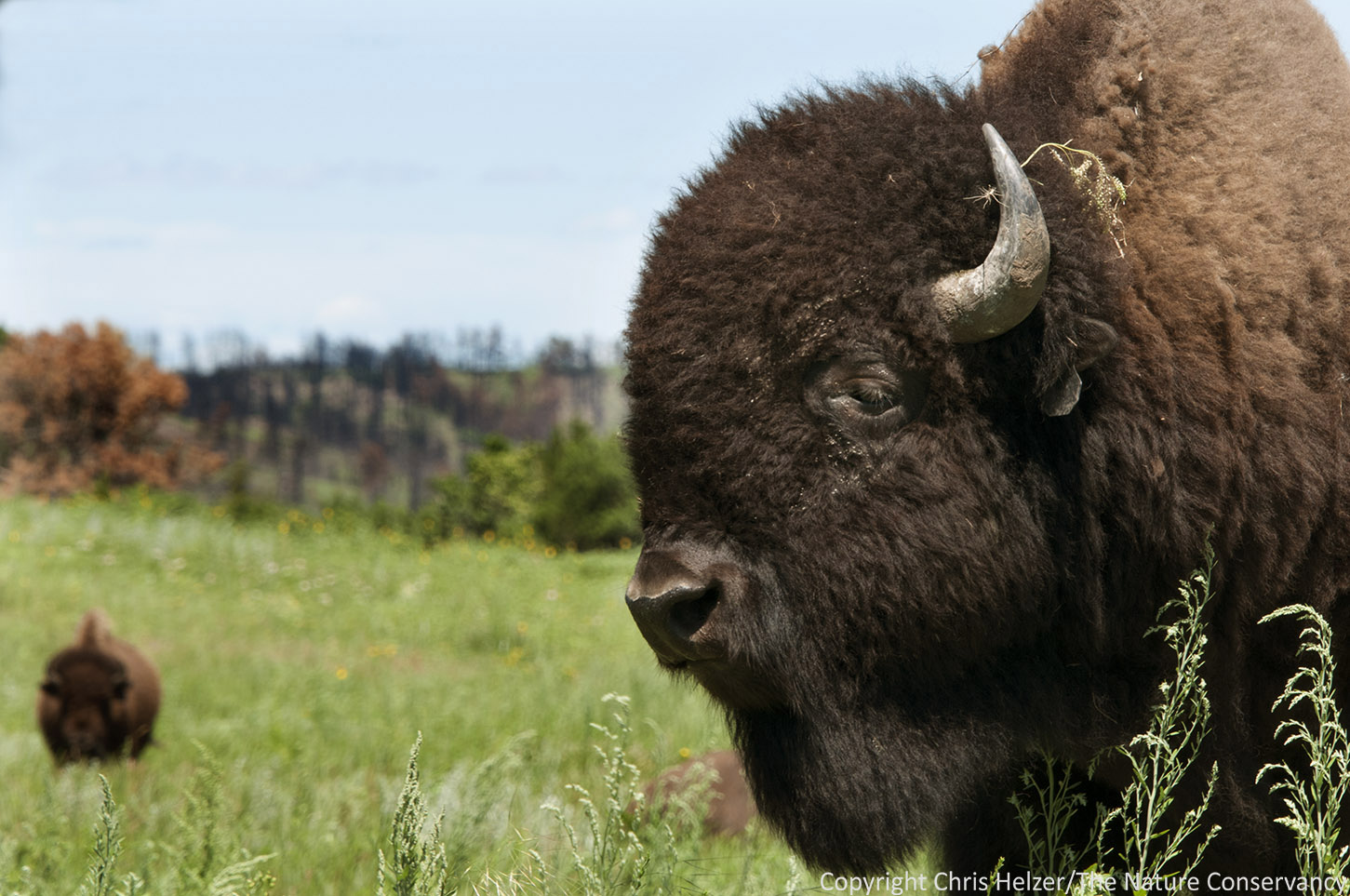
The big bulls looked healthy too…

In other news, the extent of erosion on the ridges where the pine woodland burned last year didn’t look any worse than the last time I was there.  In addition to a lot of deciduous trees re-sprouting from their bases, we saw a fair number of oak trees with at least some leaves on last year’s branches – though it’s not clear whether they’ll actually survive long-term or not.  Most importantly, we haven’t yet found any invasive plants moving into those burned woodland areas, which is good.

The burned woodlands will be significantly different – but fine – in the coming years.  The prairies, however, have been able to absorb the impacts of the drought and wildfire without breaking stride.

It’s like they’ve done this before…