I’m generally a pretty happy person. Negativity tends to slide off my back. I hope this blog reflects that. I try to keep it pretty positive and full of wonder and exploration, not loaded with complaints, gripes, and negativity. I also appreciate alliteration, actually.
However.
Even I, Mr. Optimistic, have a few pet peeves related to my favorite topic of prairie conservation. Prepare yourself for some (mild) crankiness because I’m going to share three of those pet peeves with you today. They’re not the full list of my peeves. I don’t want to hit you too hard all at once. I still want to be friends at the end of this.
I’ll preface this by saying none of these are really a big deal. I don’t want people getting mad at me or thinking I’m mad at them. My primary intent is to generate thought and conversation.
1.) State Insects.
I think it’s terrific that 48 out of 50 states in the U.S. have a designated state insect – or some variation on that theme. Awesome. What’s less terrific is that fourteen of those states (29%) have the European honeybee as their state insect, including my home state of Nebraska. (Several other states have the honeybee as their “state agricultural insect”. That’s fine.)
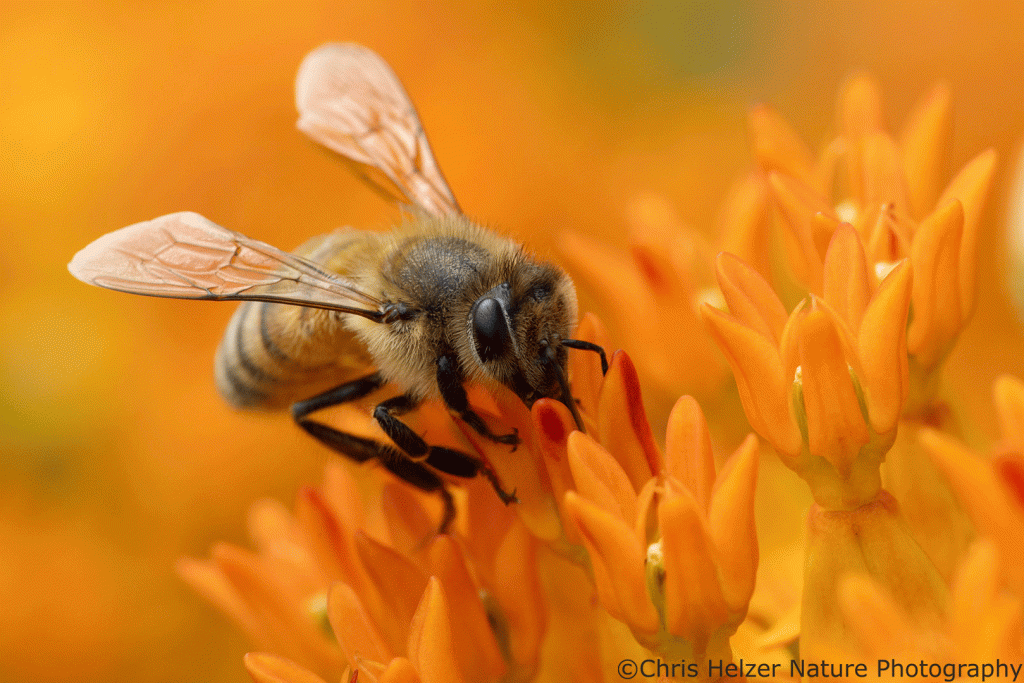
How embarrassing, that with all the incredible native invertebrate diversity on this continent, fourteen states couldn’t come up with anything better than a non-native livestock species to celebrate as their state insect. What’s your state bird? The chicken? Also, do you have no imagination? Why pick the same insect species lots of other states have already chosen?
I’d also like to know why Connecticut decided the European mantis was the best choice for their state insect. Seriously? You can do better, Connecticut.
The fact that both the honey bee and European mantis are from other places isn’t really my gripe, or at least I’m not coming at this with an anti-immigrant angle. My point is that if you’re going to choose one insect species out of many thousands of options, wouldn’t you want to pick something that represents the unique character of your state? A species that is tied to a habitat or place you’re proud of?
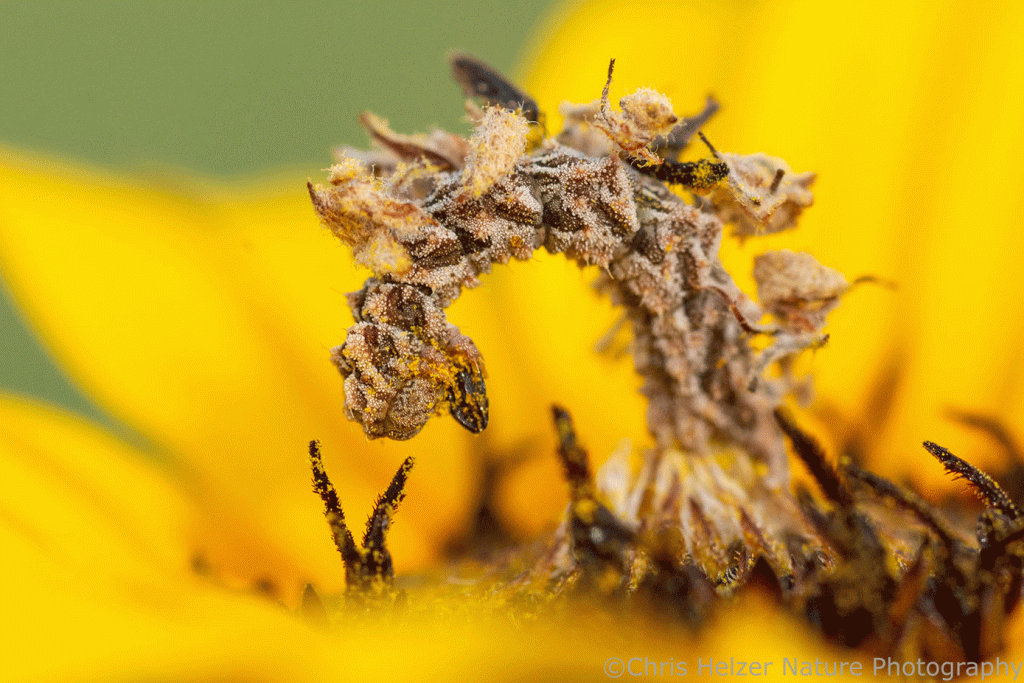
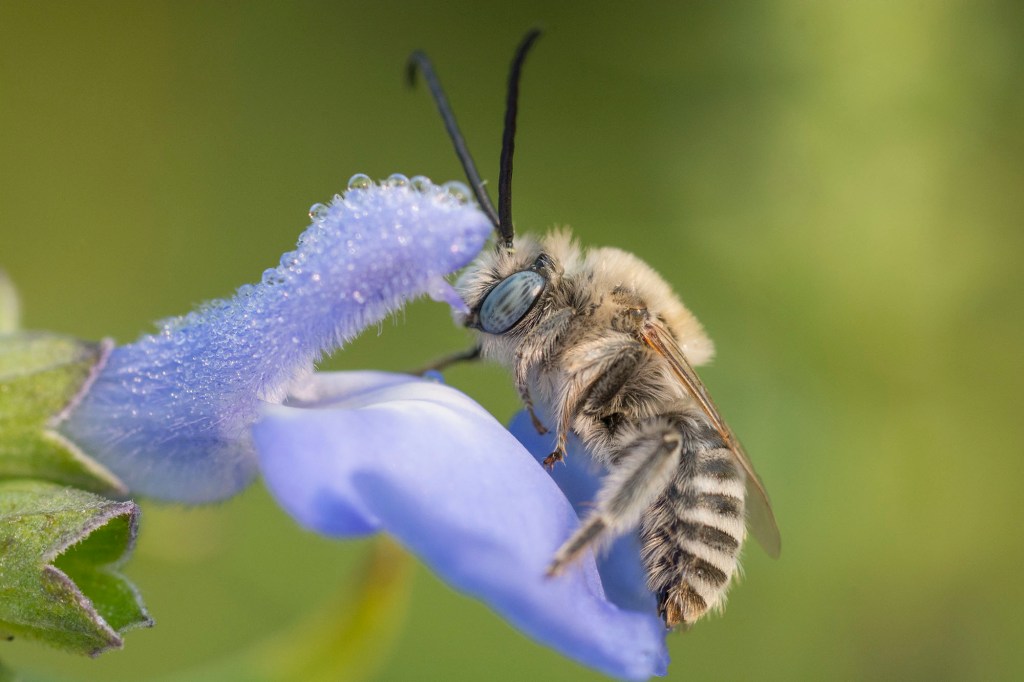
Now, lots of states went further, and included a state butterfly in addition to a state insect. I love that. It’s a great way to celebrate and highlight insects most people feel good about (and I think all of those state butterflies are native species). I didn’t, however, see any state with an officially-designated state fly. Ah, well, I’m sure that will come.
2.) Native Plant Purists in Home Landscaping
Given my first peeve, this one might seem a little ironic, but stick with me. Also, who says pet peeves have to be logical?
I get really frustrated by people who promote the idea that you should use ONLY native plants in your yard. Or, even worse, people who are contemptuous of people who like plants like daffodils, zinnias, or other showy plants that aren’t native to their local area.
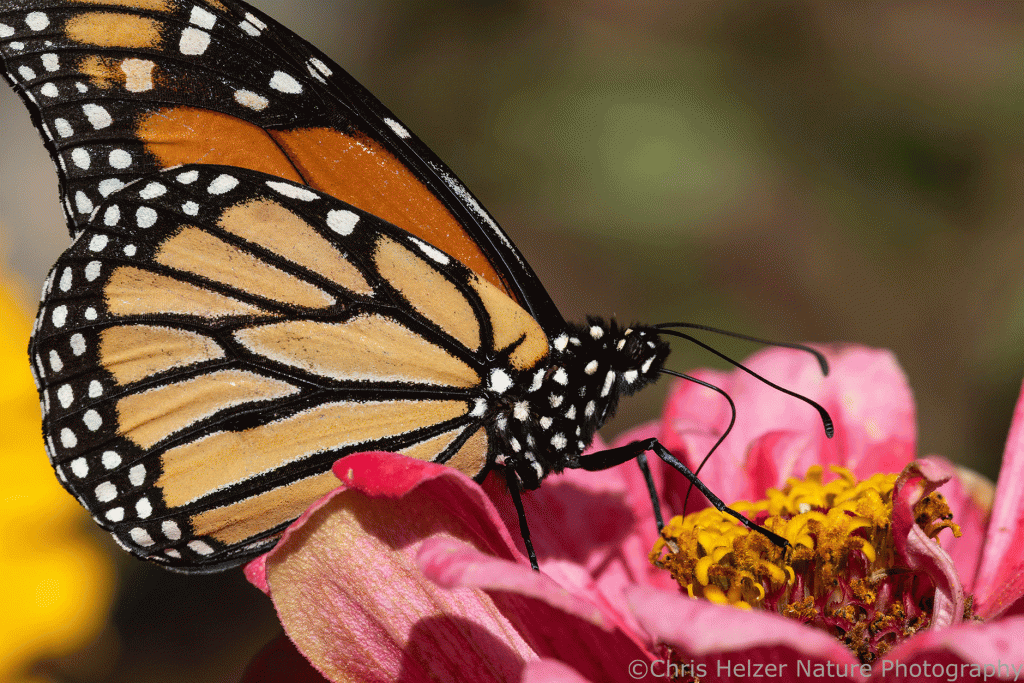
Hey purists – chill out. People who are fortunate enough to have their own yard should be allowed to design it in a way that brings them joy. There are limits to that, of course. Don’t be planting invasive species. But zinnias aren’t spreading into my state’s native ecosystems and displacing other plant species. Daffodils aren’t forming huge monocultures and reducing the diversity and resilience of habitats. If daffodils and zinnias make me happy, what’s it to you?
I love the fact that native plants are becoming more popular in landscaping. They often require less water than non-natives, which is good. More importantly, they provide important resources for native invertebrates and other species. Even more importantly, I’d argue, they help promote and normalize native wildflowers, grasses, and prairies. Keep up that native plant promotion.
At the same time, zealotry rarely ends well. If we badger people about harmless choices, we lose credibility and turn them away. It’s great to encourage and celebrate the use of native plants in landscaping, but we don’t have to bad-mouth people who enjoy having some tulips or petunias to look at. Instead, let’s put our energy into more important efforts like moderating the use of pesticides, fertilization, and irrigation in landscaping.
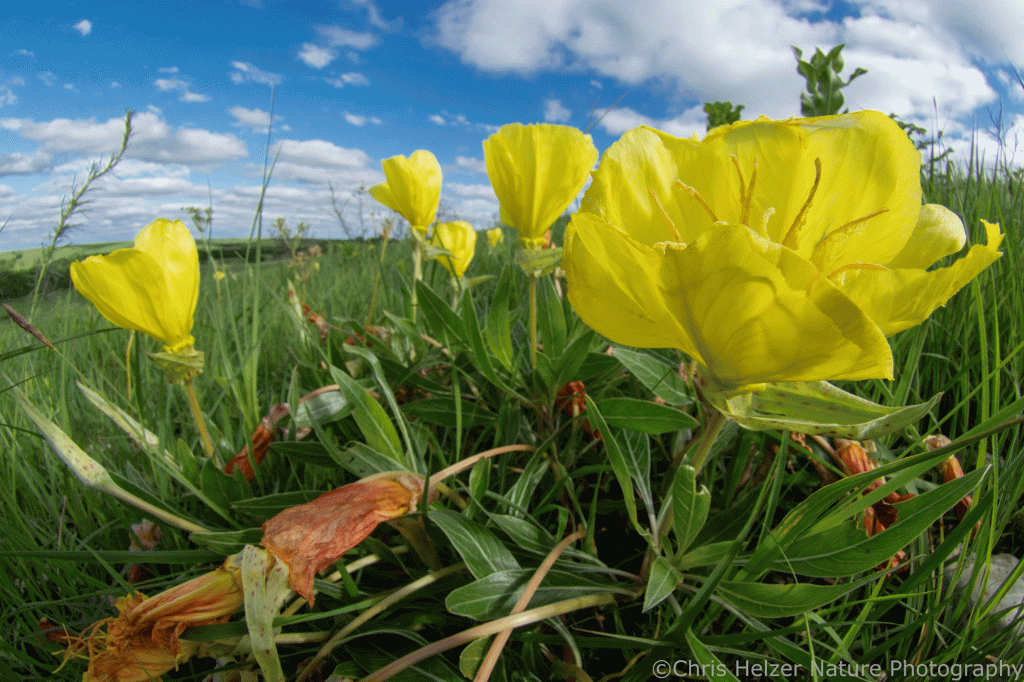
We just moved to a new house last year and are excited to populate the yard with a wide range of plants, but not all of them will be native – similar to what we did at our old house.
3.) Aiming for Pre-European Settlement Conditions
Ok, now I’m getting into more dangerous territory. I don’t want to squash anyone’s dreams, and there are a lot of really well-intentioned people out there doing great work with the goal of turning the clock back on their local landscape. I was one of those people back in college, along with everyone else in our college wildlife club.
That said, it’s just not how things work.
There are lots of reasons you shouldn’t try to convert a landscape back to what it looked like back in the 1700’s or 1400’s, or whatever you think defines “Pre-European Settlement Conditions.” I’ll list a few here:
- The climate today is very different from what it was back then. Species and ecosystems are strongly tied to climate conditions. Just one crucial example is that woody plants are much more competitive with today’s higher atmospheric carbon dioxide levels than they were several hundred years ago. That’s not even mentioning the importance of temperature and precipitation patterns on both plant and animal communities.
- Other key factors in the environment are also different, including nutrient inputs. In central Nebraska, for example, we see Nitrogen deposition rates through both air and water in our grasslands, which has a significant impact on plant competition. As land managers, we have no direct control over those inputs.
- Invasive species are inescapable. Or, more accurately, they have escaped and we have to account for their presence and impact. Most prairie stewards are constantly struggling to keep invasives from reducing biological diversity and ecological resilience.
- In most places, our prairies exist today in small, relatively isolated fragments. We’ve lost our large predators and other wide-ranging animals. Populations of browsers, pollinators, parasitoids, hemi-parasites, and many other key players in ecosystems are missing or vastly changed. You can’t eliminate those ecosystem components without huge cascading effects.
- A previously-farmed site isn’t going to turn into something that looks and acts like nearby unplowed prairies (let alone the prairies of the 1400’s) just because you add seeds of native plants and then manage it well. The soil texture and microfauna aren’t there, for one thing. More importantly, unplowed prairies look as they do because of thousands of years of evolution and adaptation to the human stewardship they’ve received. A newly planted prairie won’t have any of that.
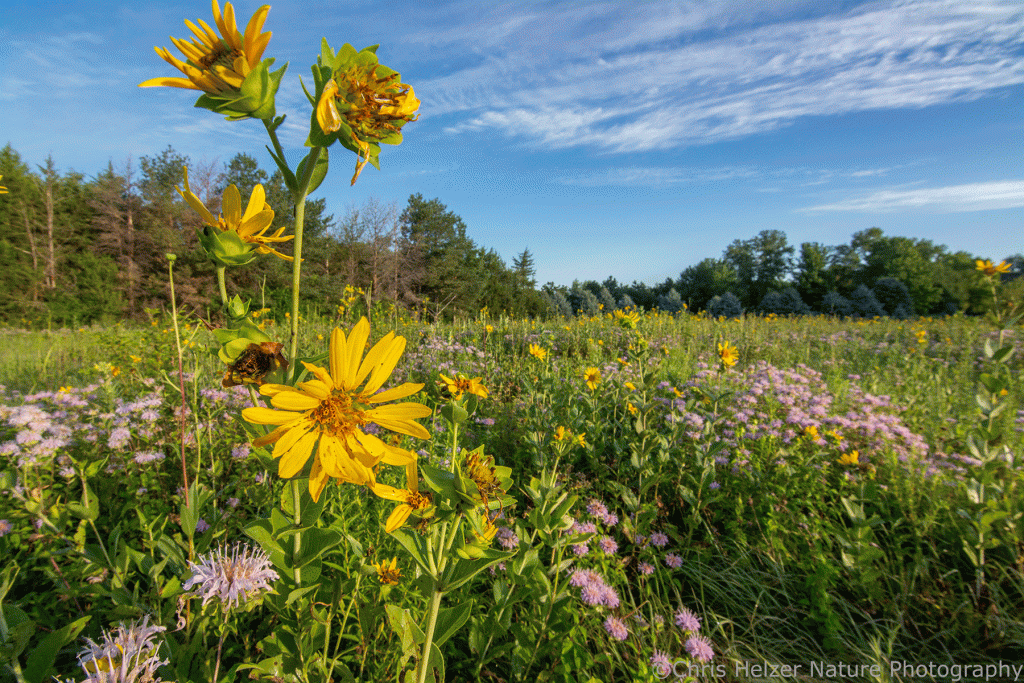
None of this means prairies are doomed, or that we should give up on restoration or stewardship efforts. It just means we can’t focus on the past as we develop objectives and measure success. Just as the species and communities we care about are adapting to the world around them, it’s imperative that we keep adapting our restoration and stewardship techniques and objectives to keep up with changing conditions. I wrote much more on this topic last year if you want to dig in more.
>>>>>>>>>>>>>>>>>>>>>>>>>>>>>>>>>>>>>>>>>>>>>>>>
Well, there you go – three gripes from someone who tries not to gripe very often. Thank you for letting me get those off my chest. Feel free to disagree and share your own perspective. Heck, you can even share your own prairie-related pet peeves, too, as long as you can do it without attacking anyone. You’re usually very good at that, by the way. Thank you.
I’ll end with a little positivity. I am constantly inspired and energized by the people working on prairie stewardship and conservation across the country (and world). In the face of rapidly changing conditions and a public that largely doesn’t know or care about grasslands, there is a lot of innovative and adaptive work going on.
People are learning and sharing lessons through formal and informal networks and it gives me tremendous optimism for the future. As one of many examples, check out the Grassland Restoration Network blog started by Bill Kleiman and contributed to by many different authors.
Happy New Year!