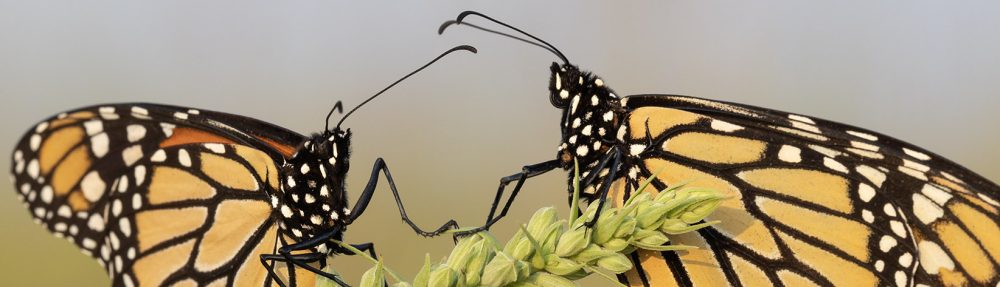
Monarch butterflies are leaving Mexico and traveling north, as they always do. However, they’re coming a lot further north than they typically do in April. The first I heard about this was a text message from conservation photographer Michael Forsberg back on April 9. Mike said he had just photographed a monarch butterfly with faded wings in his Lincoln, Nebraska backyard. “Could this be from Mexico (seems too far north)? Or could this be a local new generation (seems to early)?” Yes, exactly.
Mike and I checked with some experts who all agreed that Mike’s butterfly had overwintered in Mexico and had flown all the way north to Nebraska. And yes, it was awfully far north for a monarch to be spotted at this time of year. Moreover, Mike wasn’t alone in his observation. According to Journey North’s website, there have been numerous 2017 sightings of monarchs much further north than they are normally seen in April.
Well, good for the monarchs, right? They’re getting a head start on the season, and hopefully they’ll have a great year…
…Unfortunately, coming this far north this early is probably not a good thing. Ordinarily, monarchs that leave Mexico in the early spring fly as far north as the southern United States and lay eggs on milkweed plants there. The generation that hatches from those eggs then makes their way further north, including to our Nebraska prairies. By overshooting the southern United States this spring, the early monarchs here in Nebraska have arrived before our milkweed plants are even out of the ground. There’s no place for them to lay their eggs, and that could lead to big problems.

No, this wasn’t a monarch from this spring. This was photographed in Minnesota in July 2015, a reasonable time and place for monarchs. There is no milkweed to be found yet in our prairies this spring.
Our Platte River Prairies land manager (Nelson Winkel) says he saw a couple monarchs last Friday, and I got to add my own early sighting to the Journey North database this weekend. As I was driving into our family prairie with two of my kids, I saw a big butterfly out of the corner of my eye and thought “monarch??” but missed getting a good look. An hour later, though, I had a very clear look at a monarch butterfly in flight, so when I returned home I logged in and reported it. On Monday, I returned to our prairie to do some work and saw a monarch again (same one?). I followed it for a while to see what it was up to, and over the next 5-10 minutes, I watched it repeatedly hover low to the ground, fly 10 yards or so, and then hover again. It sure looked like it was searching for something, and it bypassed quite a few wildflowers, so I don’t think it was looking for nectar. I’m guessing it was looking in vain for milkweed plants, but I might just be projecting.
It’s too early to know what this year will bring for the monarch butterfly. The Eastern North American population count in Mexico was higher than many had anticipated, but still far lower than desired. Habitat loss both in North America and Mexico, pesticide impacts, landscape fragmentation, declines in milkweed populations, and weather events all threaten butterfly populations. Now, overly-ambitious monarchs taking advantage of strong tailwinds appear to be compounding their own problems. It remains to be seen how many will arrive before milkweed plants are ready for them, and what impacts those early arrivals might have. I’m hoping the majority of the population will stay south and make lots of babies that can come up here in another month or so. We’ll do our best to make them welcome when they arrive.
Want to help make monarchs welcome in your area? Planting and protecting milkweed plants in your neighborhood can give monarchs somewhere to lay their eggs. Even better, do what you can to ensure a diversity of blooming plants is available throughout the growing season. Monarchs are only one of many pollinator insects that are suffering because of a lack of consistent and abundant supply of pollen and nectar. Plant native wildflowers in your yard and help keep native prairies and other natural areas in good condition so bees, butterflies, and other pollinators can find food for themselves and their offspring all season long.