Photo of the Week – July 25, 2013

I just got home from a week-long family vacation to the Rocky Mountains in Colorado.  It was a welcome respite from the heat and humidity of the prairies here in Nebraska, but it’s good to be home again.  Since my week was all about mountains, I guess I’ll just share my vacation photos with you…  I’ll get back to discussing prairies next week!

.
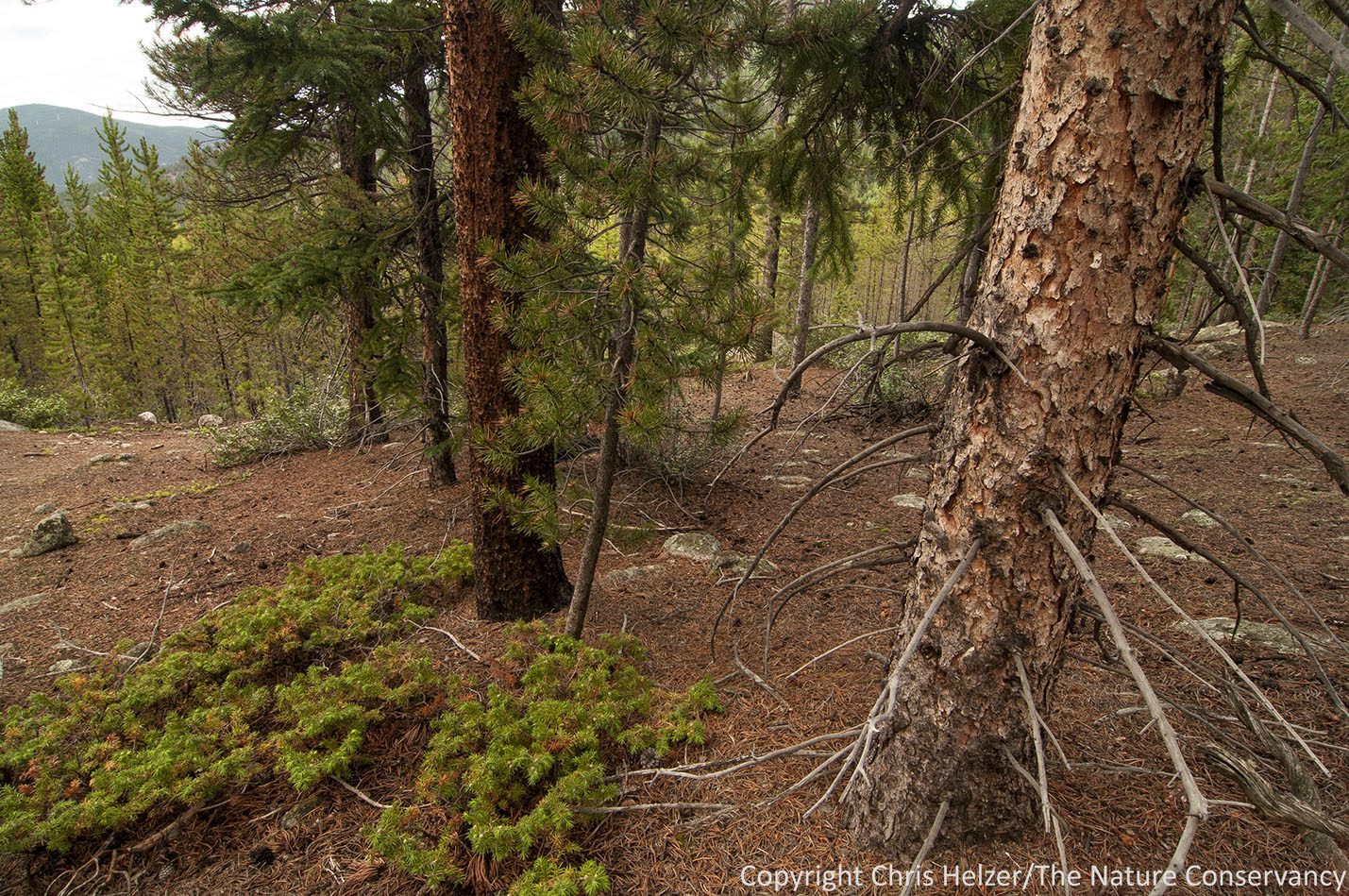
I appreciate the woodland areas of the mountains, but always feel a little closed in when I'm in them.  I like to see the sky...

I appreciate the woodland areas of the mountains, but always feel a little closed in when I’m in them. I really like to see the sky…

.

We rented a cabin south of Idaho Springs, Colorado for our vacation week.  The highlight of the cabin was the beautiful stream that flowed nearby.

We rented a cabin south of Idaho Springs, Colorado for our vacation week. The highlight of the cabin was the beautiful stream that flowed nearby.

.

After a day of short hiking to acclimate to the altitude, we took a longer hike on the Arapaho Pass trail near Nederland, Colorado.  The wildflowers in the meadows were fantastic, and made a prairie ecologist feel at home.

After giving ourselves a day to adjust to the altitude, we took a long hike on the Arapaho Pass Trail near Nederland, Colorado. The wildflowers in the meadows were fantastic, and made a prairie ecologist feel at home.

.
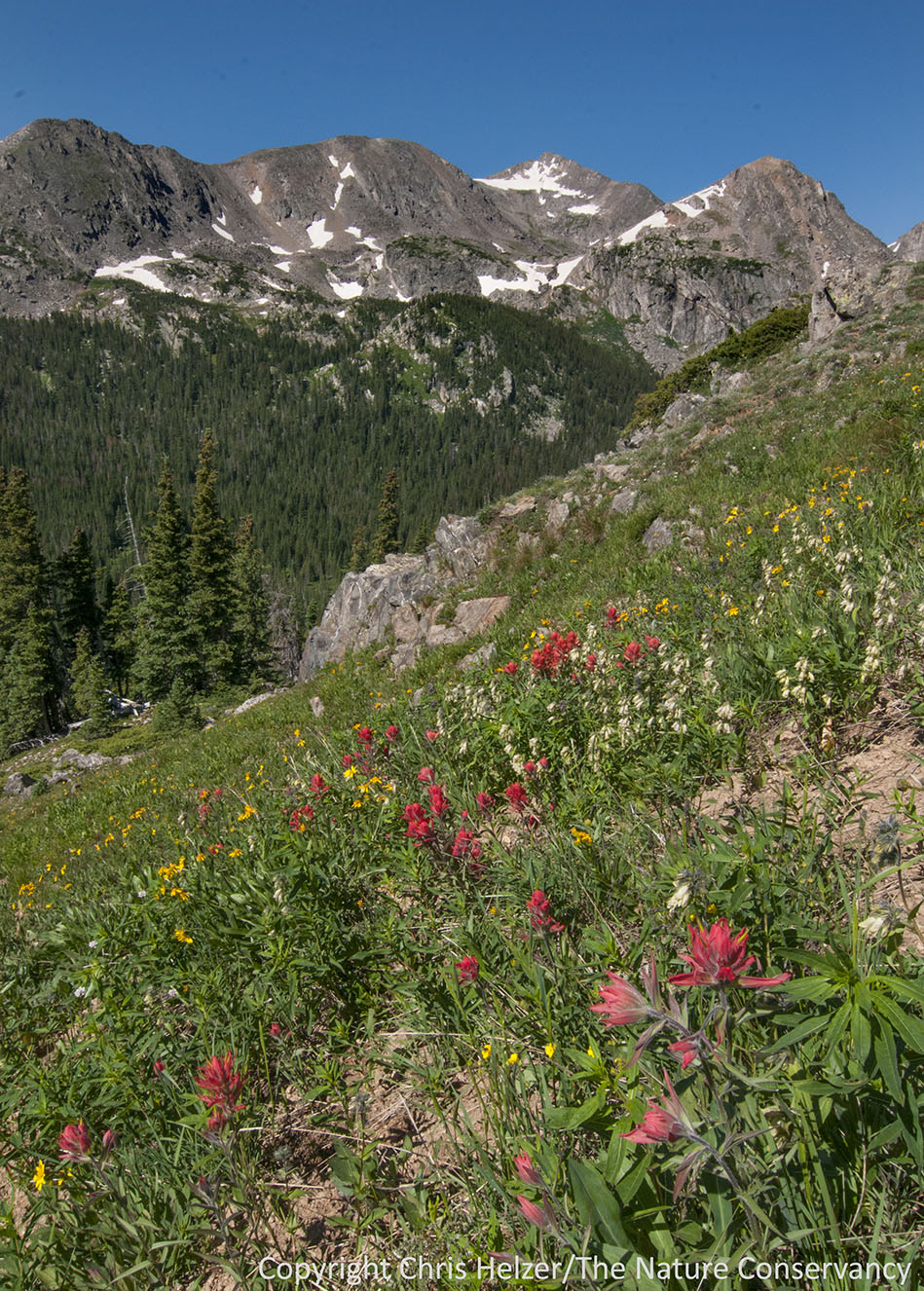
I know the plant species in my prairies really well, and can often identify at least 50-75% of the plants I see in other prairies in the central U.S.  However, in the sub-alpine and alpine meadows of the Rockies, I'm lucky to guess the genus correctly...  For example, I know this red flower is a Castilleja species (Indian paintbrush) but don't know which species it is.

I know the plant species in my prairies really well, and can often identify at least 50-75% of the plants I see in other prairies in the central U.S. However, in the sub-alpine and alpine meadows of the Rockies, I’m lucky to guess the genus correctly… For example, I know this red flower is a Castilleja species (Indian paintbrush) but don’t know which species it is.

.

Above treeline on the Arapaho Pass trail there were some very cold, but very pretty streams winding through the sparse rocky landscape.

Above treeline on the Arapaho Pass trail there were some very cold, but very pretty streams winding through the sparse rocky landscape.

.

My son John hikes the trail toward Arapaho Pass.

My son John hikes the trail toward Arapaho Pass.

.

My daughter Anna had to hold on to her hat when we finally reached the top of the Pass.  The wind coming across the Continental Divide was enough to knock us over.

My daughter Anna had to hold on to her hat when we finally reached the top of the Pass. The wind coming across the Continental Divide was enough to knock us over.  (Official elevation = 11,907 ft)

.

One morning, I took a short steep hike to the top of a nearby ridge to catch the morning light.

One morning, I took a short steep hike to the top of a nearby ridge to catch the morning light.  I needed to get out of the trees and up into the sunshine…

.
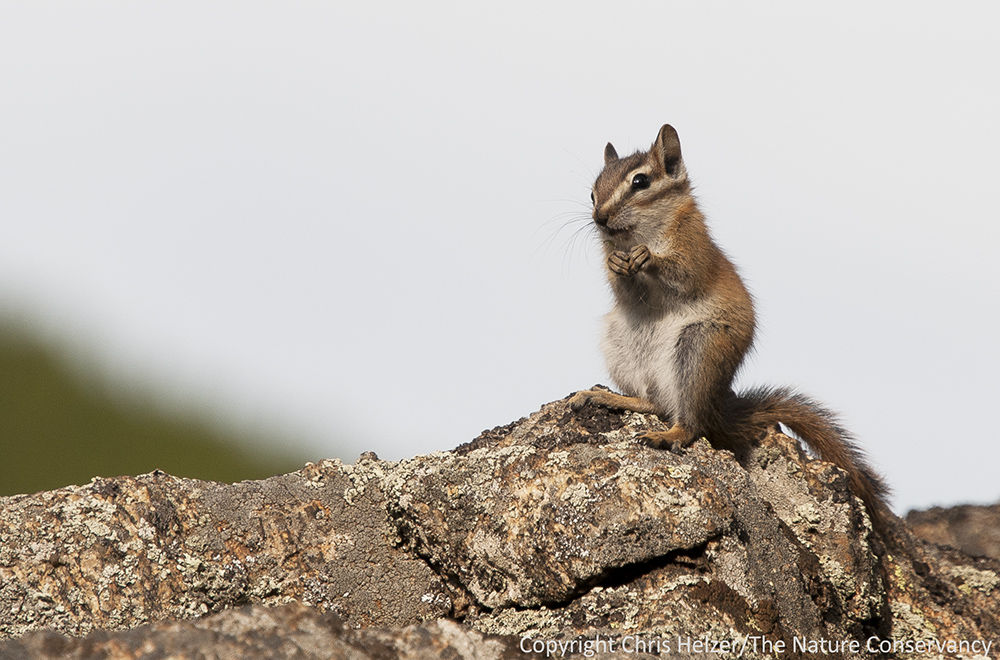
At the top of the ridge, there were several least chipmunks running around among the rocks.  I sat and watched them for a little while and managed to get a few photos as they sat in the sunshine to eat.

At the top of the ridge, there were several least chipmunks running around among the rocks. I sat and watched them for a little while and managed to get a few photos as they sat in the sunshine to eat.

.

We drove up to the top of the 14,000 foot Mount Evans one afternoon.  This photo shows the aptly named Lake Abyss below.

We drove up to the top of the 14,000 foot Mount Evans one afternoon. This photo shows the aptly named Lake Abyss below.

.

On the lower slopes of Mount Evans, we saw a group of bighorn sheep grazing in a meadow.

On the lower slopes of Mount Evans, we saw a group of shaggy bighorn sheep grazing in a meadow.

.
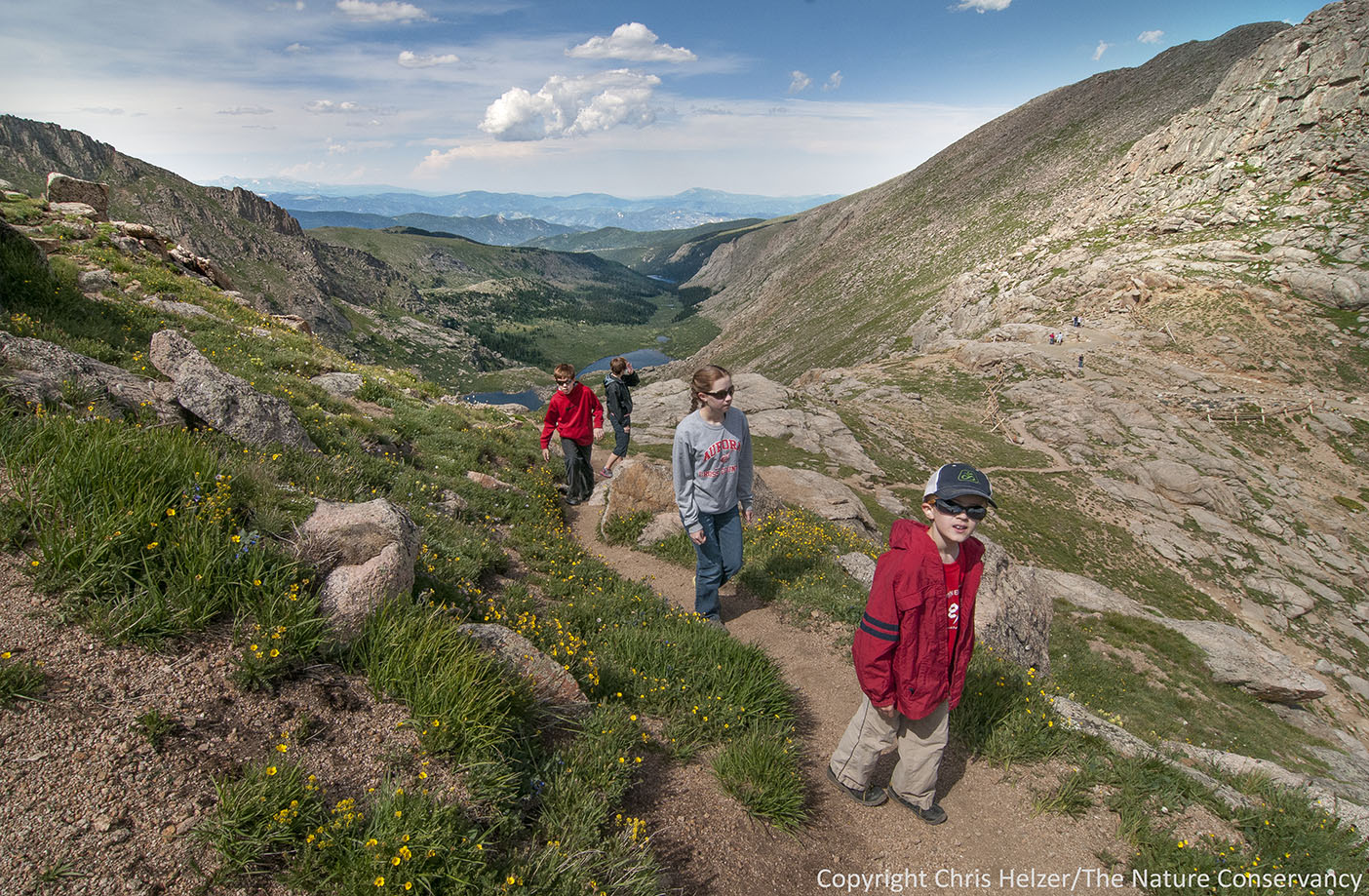
On the way back from the top of Mount Evans, we stopped at Summit Lake and hiked a little way up the steep trail toward Mount Spalding.

On the way back from the top of Mount Evans, we stopped at Summit Lake and hiked a little way up the steep trail toward Mount Spalding.

.

From the trail to Mount Spalding, we had numerous spectacular views of the Chicago Lakes below.

From the trail to Mount Spalding, we had numerous spectacular views of the Chicago Lakes below.

.

On our last hike of the trip, we took a one hour climb to the top of Chief Mountain to enjoy the panoramic views from the top.

On our last hike of the trip, we took a one hour climb up Chief Mountain to enjoy the panoramic views from the top.

.
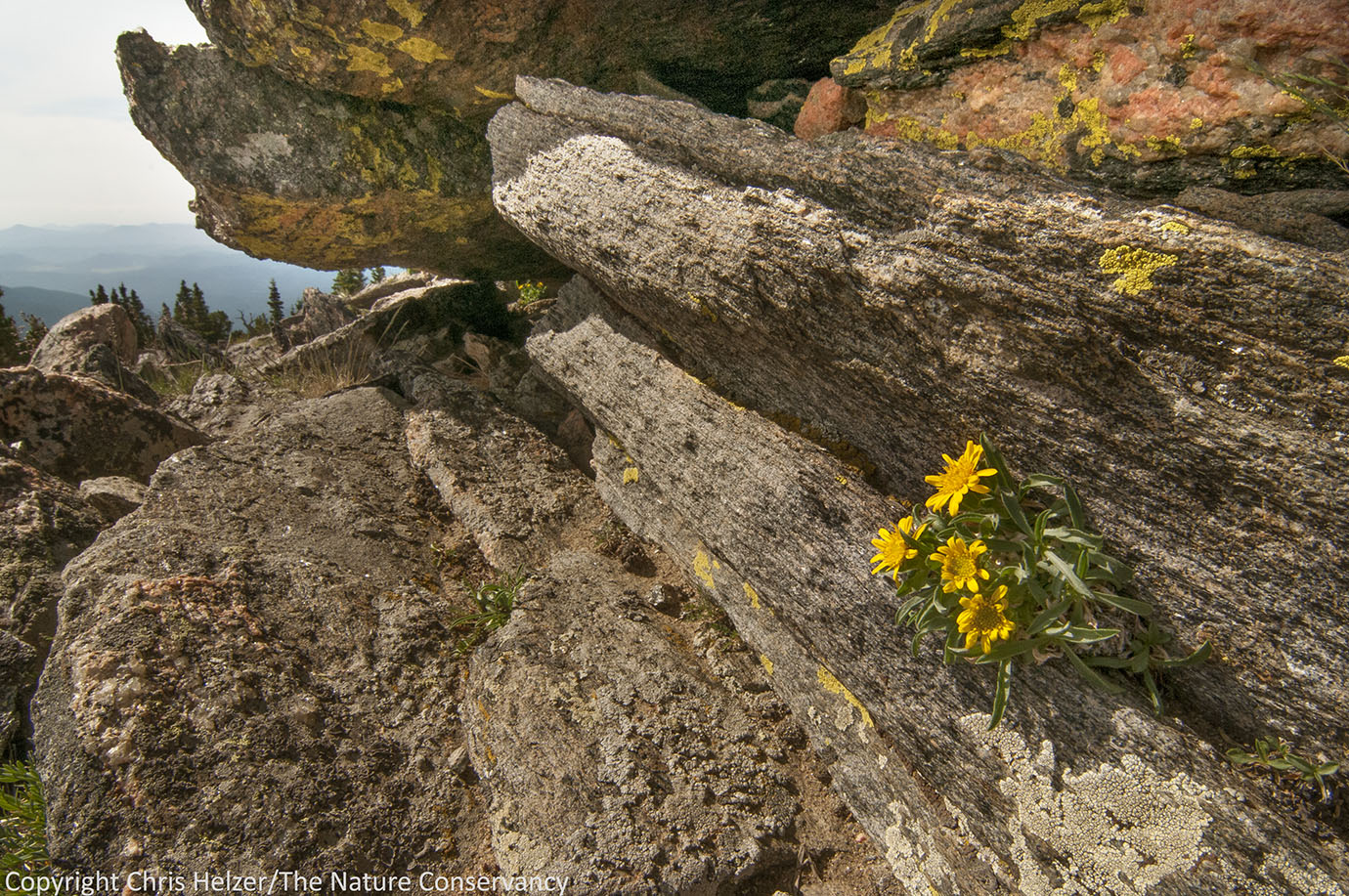
As someone who spends a lot of time admiring the toughness of prairie plants and animals, I could easily appreciate the ability of species to eke out a living among the rocks at high altitude.

As someone who spends a lot of time admiring the toughness of prairie plants and animals, I could easily appreciate the ability of species to eke out a living among the rocks at high altitude.  (Chief Mountain)

.
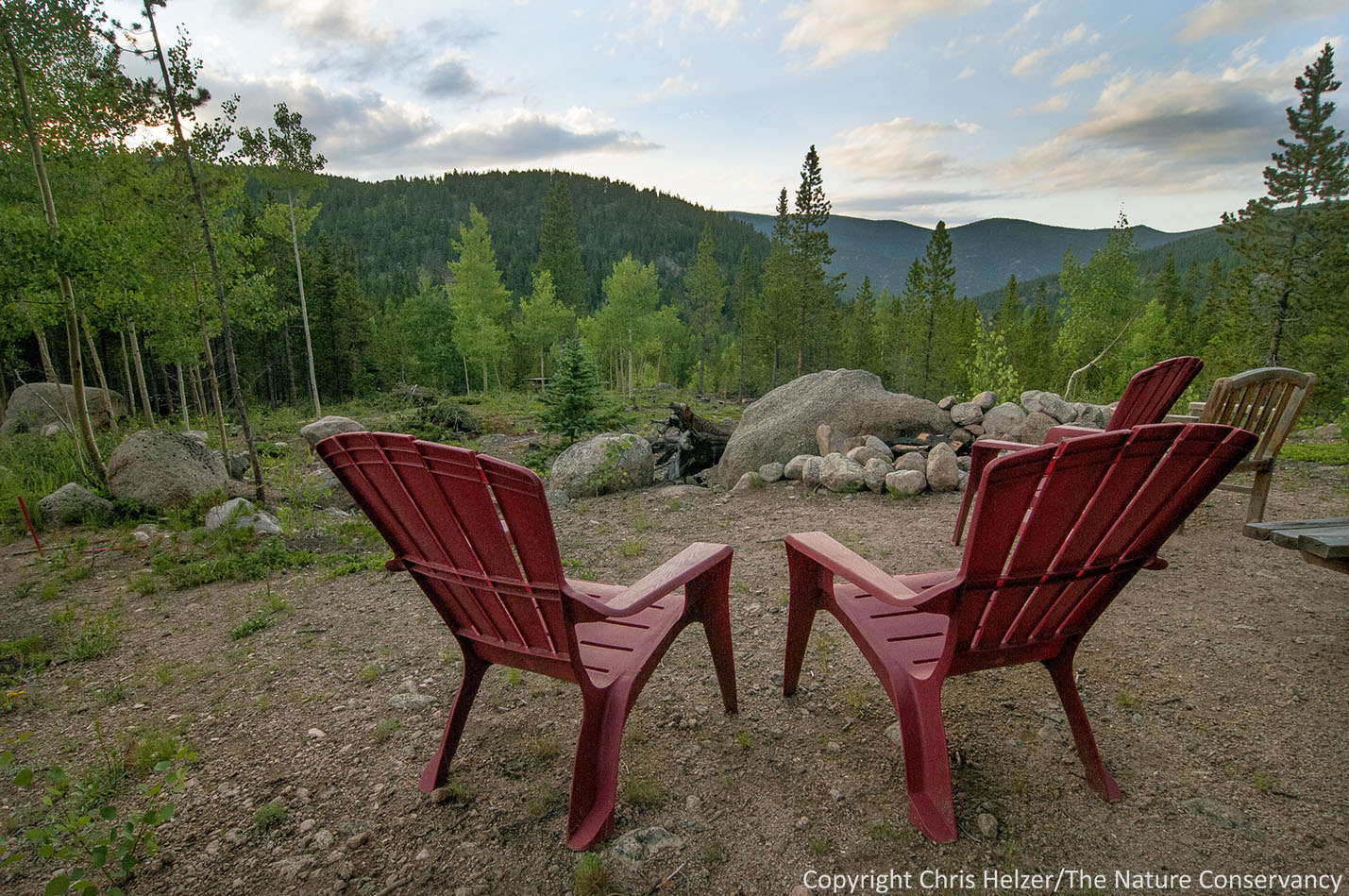
Though our cabin was nestled among the trees on the side of a mountain, we did have a nice open view to the north - something I was very glad for.  It was a great week, but it's really nice to be down in the prairies again.

Though our cabin was nestled among the trees on the side of a mountain, we did have a nice open view of the sky to the north – something I was very glad for. It was a great week, but it’s really nice to be down in the prairies again.

What’s Bugging Milkweed?

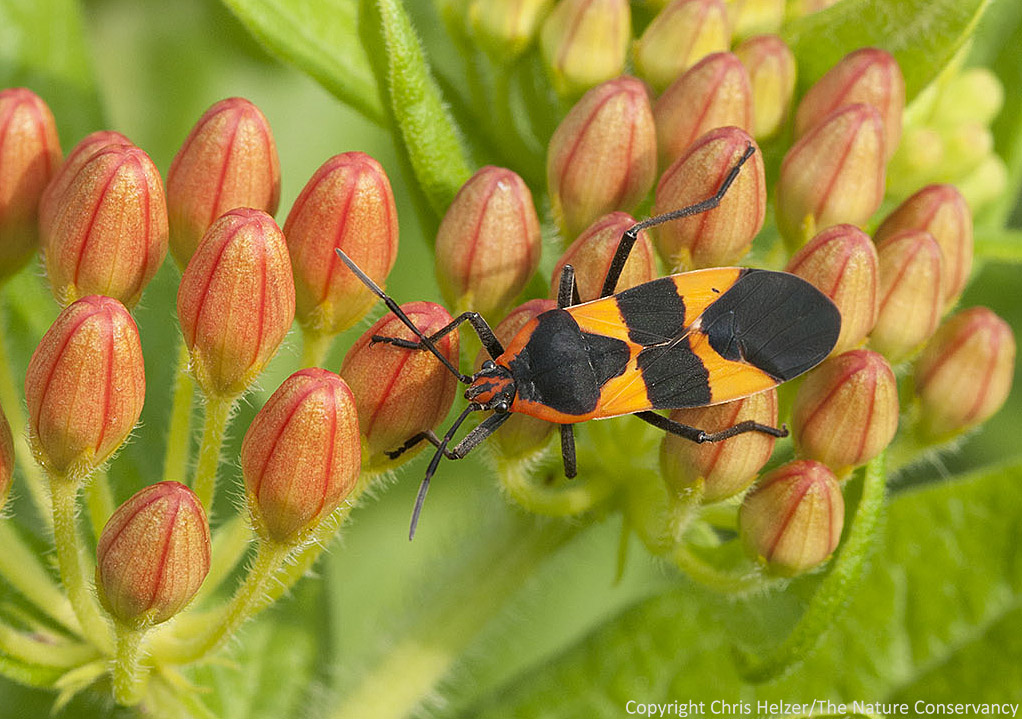
As I walked a small prairie here in Aurora, Nebraska a few weeks ago, several species of milkweed were flowering abundantly, including butterfly milkweed (Ascelepias tuberosa), showy milkweed (Asclepias speciosa), and common milkweed (Asclepias syriaca).  As always, the milkweed plants were hosting a number of specialist insects that feed on them.  During my walk, the most plentiful of those insects was the large milkweed bug (Oncopeltus fasciatus).

The large milkweed bug on butterfly milkweed - Lincoln Creek Prairies, Aurora, Nebraska.

The large milkweed bug on butterfly milkweed – Lincoln Creek Prairies, Aurora, Nebraska.

.

Another view

A view of the bug from the top.  The large milkweed bug somewhat resembles a boxelder bug, but is considerably larger and has more orange color on its back.  It is also larger (obviously) than the small milkweed bug, which looks somewhat similar but has two small white dots on its folded wings, as well as a different pattern of black and orange.

.

Like all Hemipterans (true bugs), the large milkweed bug feeds through a long piercing mouthpart called a rostrum.  From the information I can find, the milkweed bug feeds on the seeds of milkweed, but will also feed on sap from the leaves and stems.  Interestingly, I didn’t find any information about it feeding on the nectar of milkweeds, though that is certainly what it appeared many of the milkweed bugs I saws were doing.  I watched several of them insert their rostrum into a flower and jiggle it up and down as if it were sucking the dregs of a milkshake through a straw.  The photo below shows one with its rostrum inside the flower of a common milkweed.  I’m guessing many entomologists have seen the behavior, but I didn’t find a reference to it.

Butterfly milkweed wasn't the only milkweed species with the bugs on board that day.  This one is on common milkweed (Asclepias tuberosa).

Butterfly milkweed wasn’t the only milkweed species with the bugs on board that day. This one is on a common milkweed flower and appeared to be feeding on nectar.

.

About a year ago, I wrote a post about the arduous and complicated process of milkweed pollination, in which clusters of pollen called pollinia have to become attached to the leg of a visiting insect and then later detached in exactly the right place on a different flower.  If you missed that post, it’s worth a read just to appreciate what seems like a nearly impossible process – though one that has obviously worked out just fine for many milkweed species.  Several of the milkweed bugs I saw at the prairie a few weeks ago had multiple pollinia stuck to their legs, so apparently the bugs can be helpful to milkweed plants – in addition to being seed predators, nectar thieves, and sap suckers!

.

In this photo, you can see pollinia (sticky clumps of pollen) stuck to two legs of this large milkweed bug.

In this photo, you can see pollinia (sticky masses of pollen) stuck to two legs of this large milkweed bug.

.

I visited this same prairie again about two weeks later with my son Daniel.  Since he’s interested in insects, I figured he’d enjoy seeing all the milkweed bugs.  The butterfly milkweed plants were still blooming profusely, but not a single milkweed bug could be found…  Where did they go??  I guess it’s a good thing I took photos when I had the chance.