I’m often asked for my opinion of prairie gardens and other backyard habitat projects. I’m far from an expert on landscaping (ask my wife!), so I’ve been hesitant to talk too much about the topic. However, I do have some thoughts about how these small urban habitats can contribute to prairie conservation. Since there are a lot of ways to think about this, I’d love to have others to chime in with their perspectives.
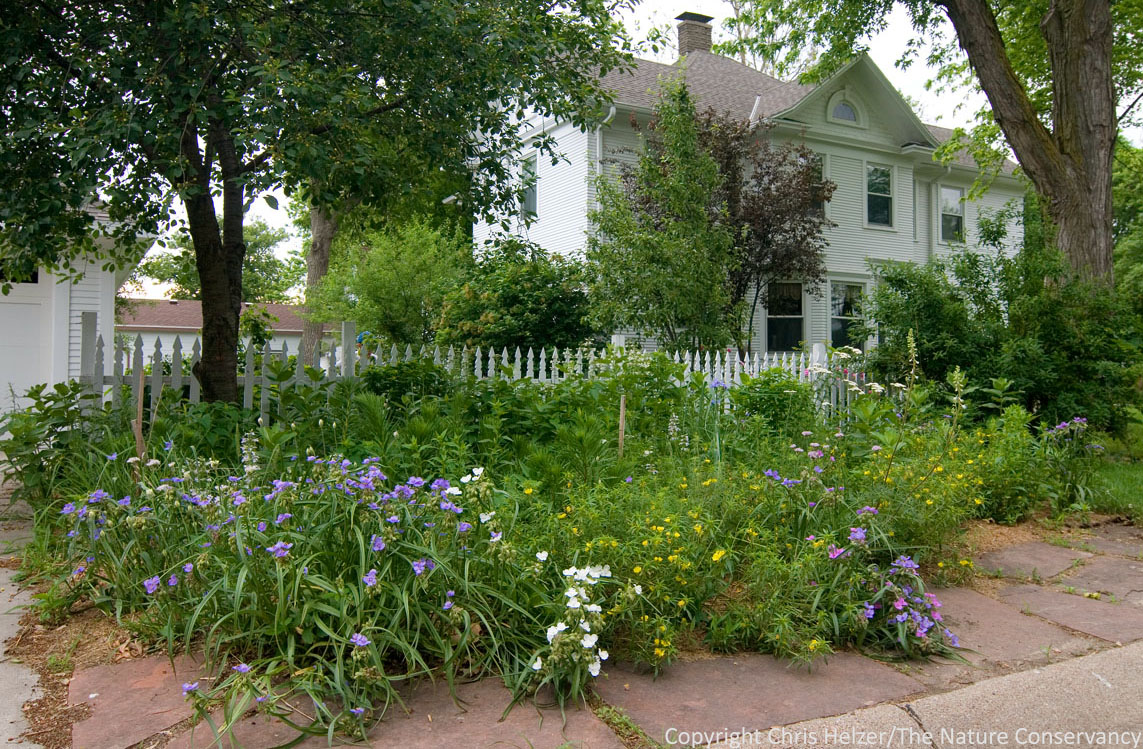
This small prairie garden of mine has a nice diversity of native plant species, all of them from local seed sources. Is it helping conserve prairies or prairie species?
For what it’s worth, I think there are at least three aspects of conservation value to consider: Reduction of Impact, Contributions to Species Conservation, and Education/Awareness.
Reduction of Impact
There’s no question that using native plants as a replacement to lawn turf can reduce inputs and impacts to the environment – assuming, of course, you mow, water and fertilize those native plantings less than you would a bluegrass or fescue yard. Lawnmowers are a relatively large contributor to air pollution and require fossil fuels. Watering lawns uses a valuable resource that pulls from wetlands, rivers, and/or aquifers and that could otherwise support wildlife, food production, and drinking water. Fertilization of yards contributes to water quality issues far downstream. If a significant number of people converted their yards to native grasses and wildflowers it would have a very measurable and important impact on the world. After all, the acreage of lawns in the U.S. is about three times the acreage of irrigated corn.

As a photographer, one nice perk of a backyard prairie garden is that I don’t have to travel very far to photograph wildflowers and insects. Bracted spiderwort (Tradescantia bracteata).
Contributions to Species Conservation
I don’t want to seem like a wet blanket, but I think backyard habitats and other urban plantings contribute very little to the direct conservation of prairie plant and wildlife species. There are a couple reasons for this. First, prairie gardens are much to small to be used by birds, snakes, or other vertebrates that rely on true prairie habitat. They are also physically isolated from prairies, so most of those animals couldn’t get to prairie gardens even if they wanted to. The same is largely true for invertebrates. There are exceptions, but for the most part, the invertebrates found in prairie gardens are generalist species that can make a living in many different types of habitats, including prairies, but also roadsides, old fields, tame grass pastures, and many others.
This leads to the second reason I think prairie gardens have limited value for species conservation. Prairie animals, including invertebrates that use prairie gardens as habitat are generally not species that need conservation help. That doesn’t mean prairie gardens aren’t valuable to those animals; prairie gardens provide great value to INDIVIDUAL animals that use those gardens as habitat. For example, the bees that use my prairie garden survive only because of the nectar plants my neighbors and I provide for them. However, it’s hard to argue that prairie gardens are helping to save those species because the bee species in my gardens are generally not at risk anyway. The prairie species most in need of conservation don’t or can’t use prairie gardens for habitat.
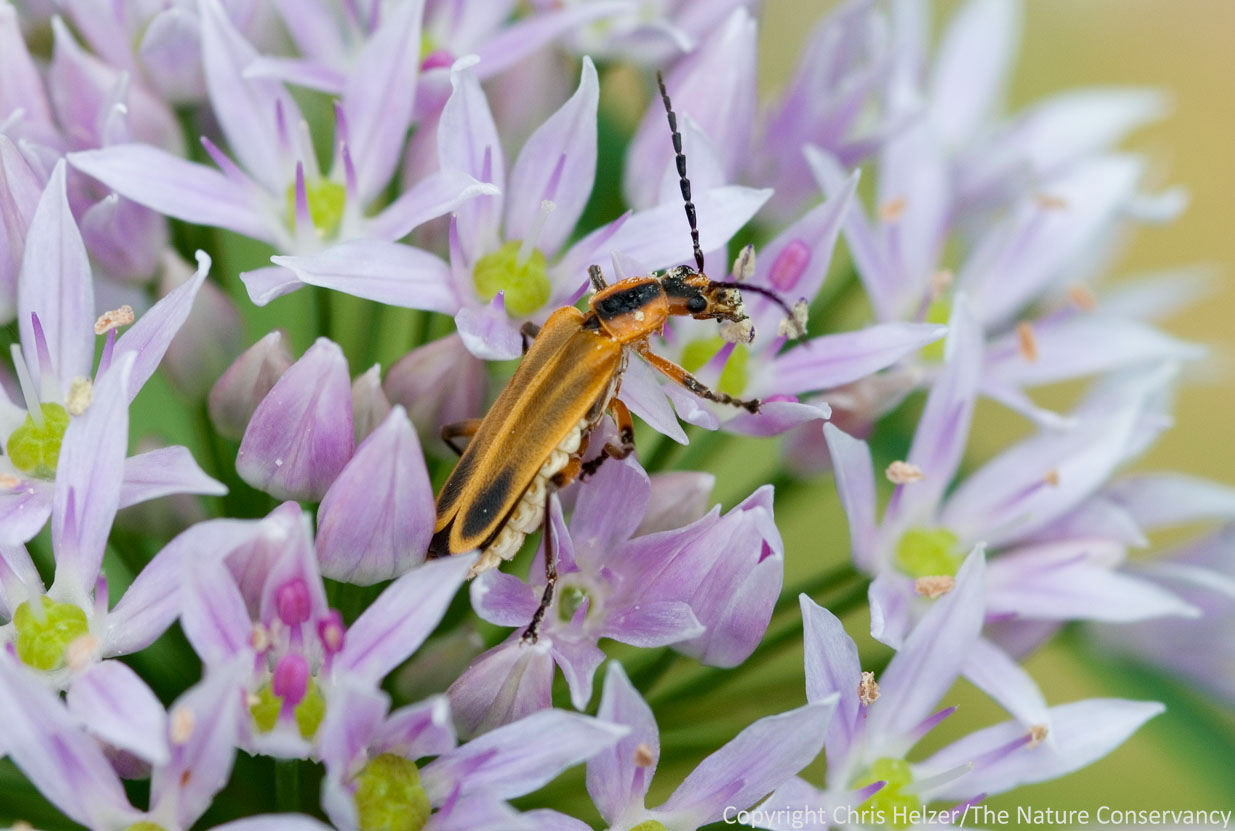
Soldier beetles are very common insects. I enjoy seeing them in my prairie gardens, but I’m not contributing to the conservation of their species – they don’t need my help anyway.
One exception to these points is that prairie gardens could conceivably contribute to the conservation of some migratory species. Butterflies and moths, for example, that migrate long distances might have a better chance of survival because of prairie gardens can act as an oasis in an urban desert. For that to be the case, of course, those migrants have to be able to FIND those oases, which is pretty unlikely when there are only a few here and there. I doubt that prairie gardens are making much of a difference to migrant prairie species right now, but it’s a contribution that could be important if the popularity of prairie gardens continues to increase.
You might argue that prairie gardens can be valuable for plant conservation if they include rare plants that are declining in their native habitats. Theoretically, that’s possible, but I don’t think most prairie gardens include truly rare plants (they are typically hard to cultivate). In addition, having rare plants in a garden doesn’t do much to support wild populations, which are what we should be concerned about trying to conserve. Also, there have been cases in which rare plants have been removed from native prairies and transplanted to prairie gardens, which is obviously not good conservation – unless those native prairies were on the verge of destruction. There is, however, at least one way in which prairie gardens could support rare plant conservation, and I’ll talk about that later.
Education/Awareness
Contributions to the education and awareness of the public might be the strongest conservation value of prairie gardens and native urban landscaping projects. Prairies suffer mightily from a lack of public awareness. I would guess the majority of people in prairie states have never been in a prairie, and probably think they’d be bored out of their mind (or carried off by snakes) if they ever went to one. Prairie gardens and other landscaping projects that use native prairie plants can help bring prairies to the people. Making prairie plants recognizable to our neighbors through prairie gardens means that if they ever do get to a prairie, they’ll have at least some sense of familiarity with it. In addition, looking at pretty flowers and watching the number of insects, especially big showy ones like butterflies, on those flowers can give people at least a small sense of the beauty and importance of prairies. Prairie gardens can be a gateway to prairie conservation.

One of my all-time favorite insects is the camouflaged looper, which decorates itself with bits of the flowers it eats. I’ve seen it only twice – and both times were in prairie gardens. You can read more about it by searching for “camouflaged looper” on the home page of my blog.
Not only are prairie gardens educational for those who are otherwise ignorant of prairies, they can also be helpful for those of us who know prairies pretty well. I have learned a tremendous amount about prairie ecology from watching my own backyard gardens. I get to study many aspects of plant species interactions, for example, including the strategies each species uses to reproduce, spread, and compete with others. I have also improved my skills at insect species identification by getting to see, catch, photograph, and study the insects I see in my own backyard. My prairie garden is a nice microcosm of a prairie, with obvious limitations, that I can use as a place to experiment and learn. Prairie gardens are excellent classrooms.
How to Increase the Value of Your Prairie Garden
Prairie gardens reduce the impact we have on the environment and can be terrific tools for raising awareness about prairies and their need for conservation. I don’t think prairie gardens do much for the direct conservation of prairie species, but only because of physical limitations such as size and isolation. Despite those limitations, prairie gardens are an important part of the broader prairie conservation movement, and I encourage anyone who has a backyard to try out a small prairie planting. You might be surprised how much you learn!
If you really want your prairie garden to contribute toward conservation, here are three ideas that might help.
- Use local-ecotype prairie plants and a diversity of species.
Native species are much better for pollinator insects than many cultivars and hybrids. Using native species with local genetics can help ensure that the plants grow well in your garden, but also can support nearby seed companies and conservation groups that sell seeds and plants. Ask the retailer you buy plants from what the genetic origins are. If they can’t tell you, see if you can find another retailer who can. In some states – not so much in Nebraska – there are multiple good options for buying local ecotype plants and seed if you go looking for them. Another great option is to harvest your own seed (with permission from the landowner) from a local prairie. It doesn’t take much seed to supply a backyard garden.
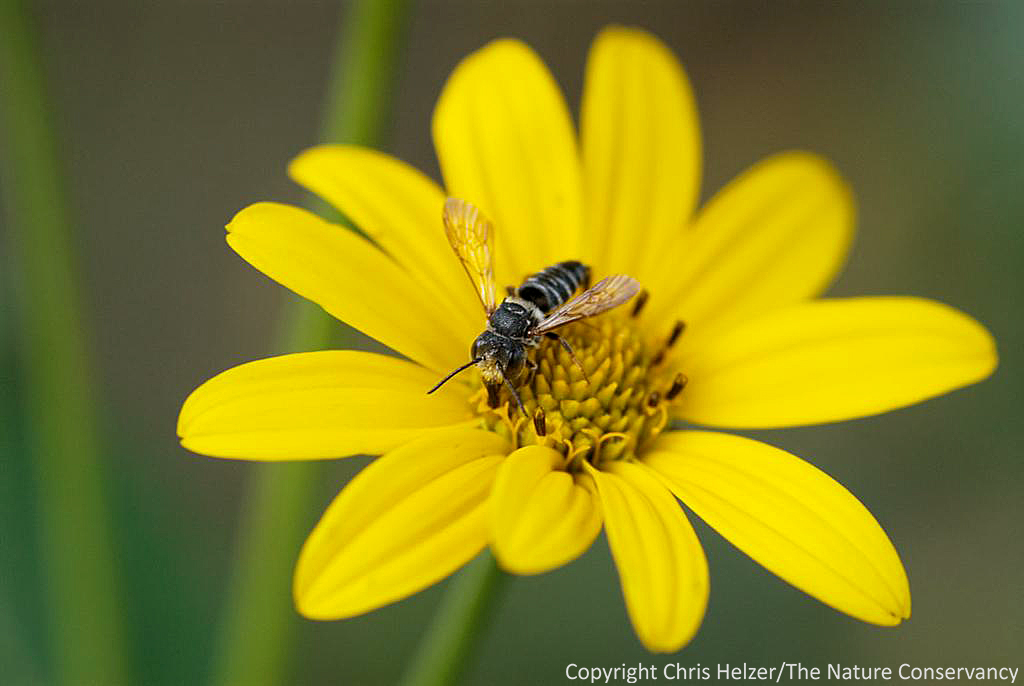
Native bees do best on native wildflowers.
2. Harvest seeds from your plants and contribute them to someone who can use them for a restoration project.
This is something I’d like to see happen more often. Prairie restoration projects often have a list of plant species for which seed is hard to come by in the wild. Some of those species are rare, but others just don’t make much seed – or drop the seed quickly – making it difficult to harvest much from wild populations. Other species are just difficult to find because plants are small and have been overtopped by taller plants by the time their seed is ripe. If you know of restoration projects near you, consider contacting their staff to see if you can help them out by growing and harvesting seed from some of those plants.
3. Make your garden a showy advertisement for prairies.
Talk to your neighbors about your prairie garden and why it’s important. Offer yourself as a resource if they have any interest in following your lead. If your garden is near a public sidewalk or road, consider putting up a small sign that says “Native Prairie Plants” or even a few signs that identify individual species. You might also consider adding certain showy-flowering species just because you know they’ll attract the attention of passers-by. Much of the potential conservation value of prairie gardens depends upon getting enough of them across towns and cities that their cumulative effect becomes significant, so advertisement is key.
.
Other Tips:
One lesson many of us have learned about prairie gardens is that some plant species work best in large areas where their ability to spread quickly is not of concern. Strongly rhizomatous species including many grasses, perennial sunflowers, asters, goldenrods, etc., can quickly take over a small garden. I have removed many of those species from my own gardens, replacing them with bunchgrasses and wildflowers that don’t spread as quickly. I’ve kept a few “spreaders” in the garden, but am pretty aggressive about yanking many of them up each year to keep them thinned out. Several friends and I trade plants (and advice) back and forth as we try to figure out the best mixtures for our respective gardens.
Managing aggressive plant species is not the only challenge facing prairie gardeners. For example, wildflowers in gardens tend to grow taller and leggier than in more highly competitive prairies, sometimes causing them to flop all over as they outgrow their ability to hold themselves up. You can tie them up, of course, but I also do quite a bit of “grazing” with clippers throughout the season to keep plants knocked back and force them bloom at shorter heights.
I also wrestle with whether or not to allow plants to make seed. I let some go to seed because I want to harvest from them, but I chop flowers off others before seeds ripen so I don’t have to contend with numerous seedlings the next year. There’s no right or wrong way to do any of this, it’s just important to recognize that prairie gardens will not always behave the way you want them to without your strong guidance. Mulch or no mulch? Water during dry periods or not? Mow/rake at the end of the season or not? Lots of options, lots of consequences – and lots of opportunities to learn from each of them.