I usually feel pretty good about being a prairie ecologist and the contributions I make to the world. But, to be completely honest – and you’ll probably find this surprising – I don’t often find opportunities to use my professional skills to help people around town. For example, you almost never hear people shout “Is there a prairie ecologist in the house??” or “My house is on fire! Call a prairie ecologist!”
As a result, I was thrilled to be able to apply my expertise right here in my home town the other day. I was standing in line at the doctor’s office (nothing serious, thanks for asking) when a woman across the waiting room turned to the woman next to her and asked, “Do you know what ‘buffalo pea’ is?”
“Um, no,” the second woman replied. (I’m not sure the second woman realized it was a plant question…)
With no regard for my busy schedule or of losing my place in line (ok, I was the only one in line – it’s a small town) I strode over to the woman and said, “Excuse me, I know what buffalo pea is!”
And thus started a very pleasant conversation about prairie wildflowers, the Willa Cather novel she was reading, and her recollection of finding buffalo pea as a young girl – though she didn’t know the name of it then –and peeling one of the pods apart to see what was inside. I told her a little about the plant’s flowers and edible fruits, and we talked briefly about how accurately and vividly Willa Cather described the prairie in her books. The woman was clearly delighted that I’d been able to answer her question and provide even more context on the topic. Prairie botany saves the day!

Buffalo pea, or ground plum (Astragalus crassicarpus) with ripe pods. The pods are delicious when they are still green and tender. The Nature Conservancy’s Niobrara Valley Preserve, Nebraska.
Ok, I know what you’re thinking, but I really don’t need any accolades other than the satisfaction of knowing I helped someone in need. In fact, I’m sure the woman would have eventually learned about buffalo pea without my help – though she might have had to wait until her grandson’s next visit so he could look it up on his smartphone. And sure, the woman probably enjoyed her novel much more knowing that she and Willa Cather shared an appreciation for buffalo pea, but, really, I just did what anyone would have done. Anyone with expertise in prairie ecology, that is.
When we finished our conversation, I excused myself and made my way back over to the receptionist’s desk (there was still no line). I realized later that I’d forgotten to introduce myself to the woman, or to find out her name. I can, however, imagine the conversation that must have taken place after I walked away. The woman surely turned to her neighbor and asked, “Who was that nice man?”
And her companion replied, “Oh, didn’t you recognize him? Why that’s…The Prairie Ecologist!”
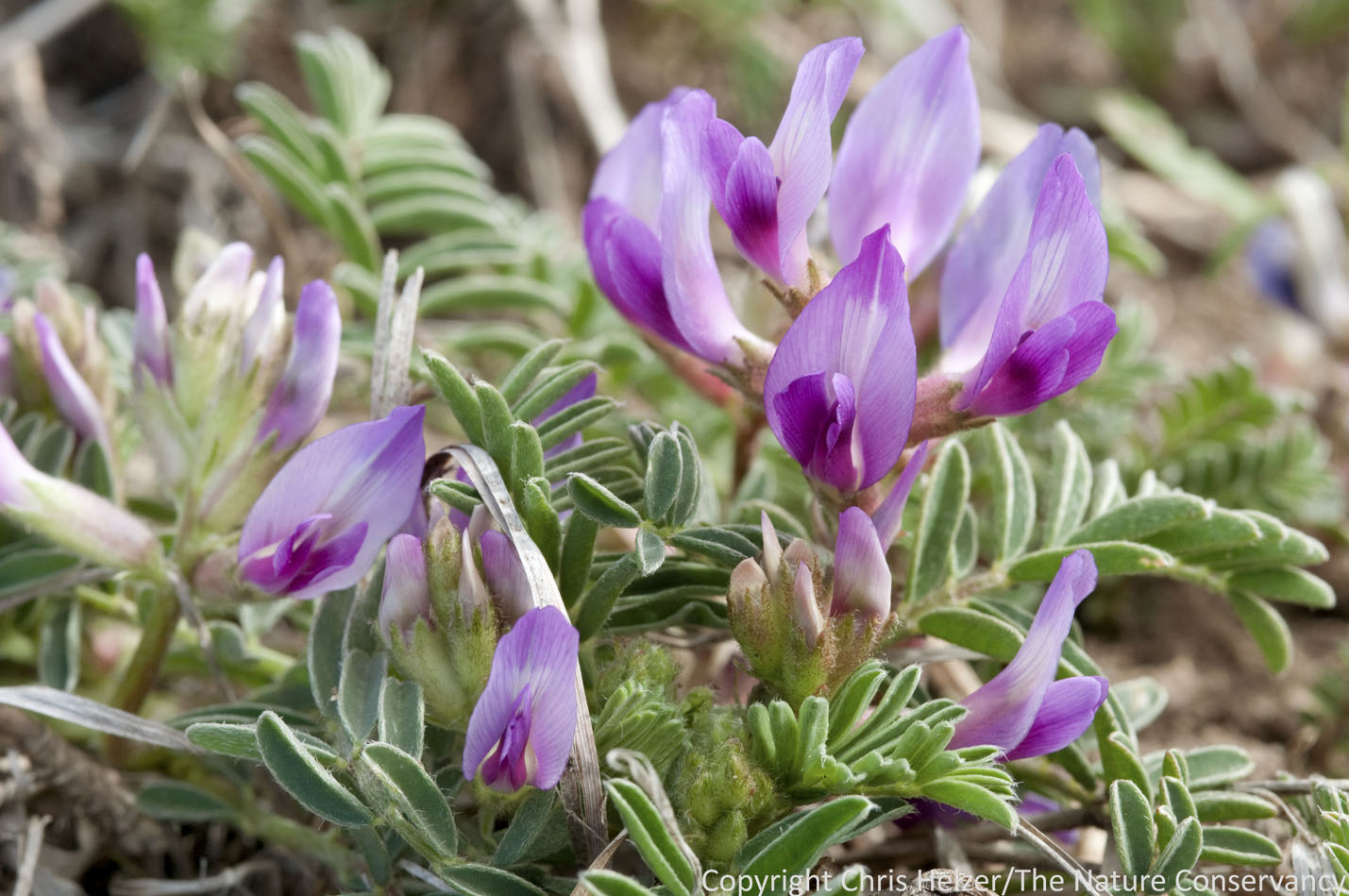
Buffalo pea in bloom. Helzer family prairie near Stockham, Nebraska.
In case you’re not familiar with Willa Cather’s writing, here are three brief excerpts that mention buffalo pea…
Alexandra often said that if her mother were cast upon a desert island, she would thank God for her deliverance, make a garden, and find something to preserve. Preserving was almost a mania with Mrs. Bergson. Stout as she was, she roamed the scrubby banks of Norway Creek looking for fox grapes and goose plums, like a wild creature in search of prey. She made a yellow jam of the insipid ground-cherries that grew on the prairie, flavoring it with lemon peel; and she made a sticky dark conserve of garden tomatoes. She had experimented even with the rank buffalo-pea, and she could not see a fine bronze cluster of them without shaking her head and murmuring, “What a pity!”
O Pioneers! – Willa Cather
.
One Sunday I rode over there with Jake to get a horse-collar which Ambrosch had borrowed from him and had not returned. It was a beautiful blue morning. The buffalo-peas were blooming in pink and purple masses along the roadside, and the larks, perched on last year’s dried sunflower stalks, were singing straight at the sun, their heads thrown back and their yellow breasts a-quiver. The wind blew about us in warm, sweet gusts. We rode slowly, with a pleasant sense of Sunday indolence.
My Antonia – Willa Cather
.
He struck off by the road,—it could scarcely be called a street, since it ran across raw prairie land where the buffalo-peas were in blossom. Claude walked slower than was his custom, his straw hat pushed back on his head and the blaze of the sun full in his face. His body felt light in the scented wind, and he listened drowsily to the larks, singing on dried weeds and sunflower stalks. At this season their song is almost painful to hear, it is so sweet. He sometimes thought of this walk long afterward; it was memorable to him, though he could not say why.
One of Ours – Willa Cather