My Own Prairie, For What It’s Worth

A couple years ago, I wrote about the history of our family’s prairie.  The prairie is about 110 acres (within a 160 acre farm) and is only a ten minute drive from my house.  Most of it was farmed before my grandpa bought it and planted it with six species of grass in the early 1960’s, so the plant community is not very diverse.  However, there is a lot to love about the prairie.  (Did I mention it’s only ten minutes from my house?)
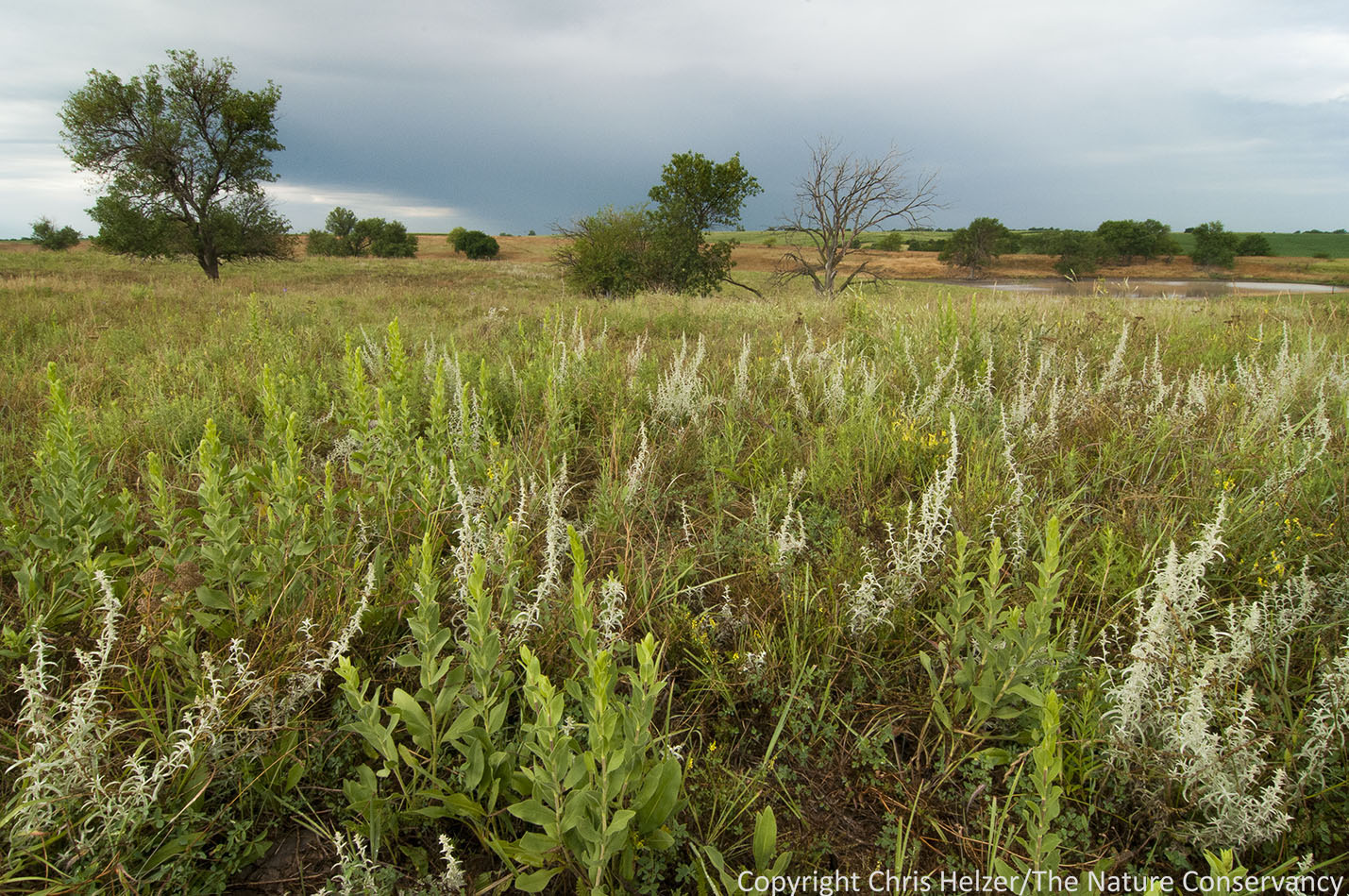
Most of our prairie is old cropfield planted to grass in the 1960's, so the forb community consists mainly of species such as stiff goldenrod and white sagewort that can colonize easily.

Most of our prairie is old cropfield planted to grass in the 1960’s, so the forb community consists mainly of species such as stiff goldenrod and white sagewort that can colonize easily.

Some botanists would dismiss the value of my prairie because only small pockets of it were left unfarmed, and even those have only a few scattered “conservative” prairie plant species such as leadplant and prairie violets.  Those botanists, however, would be ignoring the many other contributions the prairie makes to the world and our family.

While there are a few places that were left unfarmed (foreground), much of the prairie is of low plant diversity, and the draws are dominated mainly by smooth brome.

While there are a few places that were left unfarmed (foreground), much of the prairie is of low plant diversity, and the draws are dominated mainly by smooth brome.

The prairie is the only significant grassland patch within several miles in any direction, so while grassland birds and some larger insects can fly in and out each year, the prairie is a world unto itself for most of the other species that live there.  That makes the prairie both very important to those prairie species and a big responsibility for me as the owner/manager.  I try to ensure that I’m always providing a good mixture of habitat types to allow every species a chance to survive.

Regal fritillaries are one of many butterflies we see in the prairie.  There are apparently enough violets (their only larval food plant) to keep the population going.

Regal fritillaries are one of many insect species we see in the prairie. There are apparently enough violets (their only larval food plant) to keep the population going.

At work, I oversee the management of prairies for The Nature Conservancy, and get to try out all kinds of crazy ideas in the name of science and in the hope of finding tricks other prairie managers might be able to use.  It’s a great job, and the freedom to play with ideas that might fail is a big perk.  Owning my own prairie, on the other hand, is a valuable dose of reality.  My prairie has to pay its own way in the world, and property taxes and bank loan payments are the same during drought years as they are in years of adequate moisture.  We graze the prairie both as a management tool and because we need the income.  I definitely adopt many of the prairie management principles I espouse as a manager at The Nature Conservancy, but the way I manage my own prairie is also very much influenced by my economic bottom line.  It’s a great way for me to stay grounded, and to be able to better think about how to translate some of my crazy ideas from the Conservancy’s land to the “real world” of private ownership.

One strategy I've adopted from my work at The Nature Conservancy is overseeding.  I harvest my own seeds and broadcast them in the fall after a portion of the prairie has been grazed fairly intensively.  The results are not overwhelming, but I'm starting to see some good results, including "easy" plants such as black-eyed susan and bergamot (shown here) but also more conservative plants as well.

One strategy I’ve adopted from my work at The Nature Conservancy is overseeding. I harvest my own seeds and broadcast them, using grazing to weaken competition and give them a chance to grow.  I’m starting to see some good results, including “easy” plants such as black-eyed susan and bergamot (shown here) but also more conservative plants as well.

I don’t do nearly as much monitoring of the plant and animal communities in my own prairie as I do on The Nature Conservancy’s prairies.  That said, I am trying to document the responses of the plant community to my grazing practices and weather patterns.  I make management plans each year based on both long-term and short-term objectives and adapt them based on what I see happening on the ground.  Each time I visit the prairie, I try to take some notes on what I’m seeing, both in terms of management responses and just general observations of species and ecological processes.  I can see improvements in the plant community over time, and I hope I’m also making a difference in habitat quality for the other species in the prairie, though I’m not tracking bees, ants,  or small mammals, for example, as I am at work.
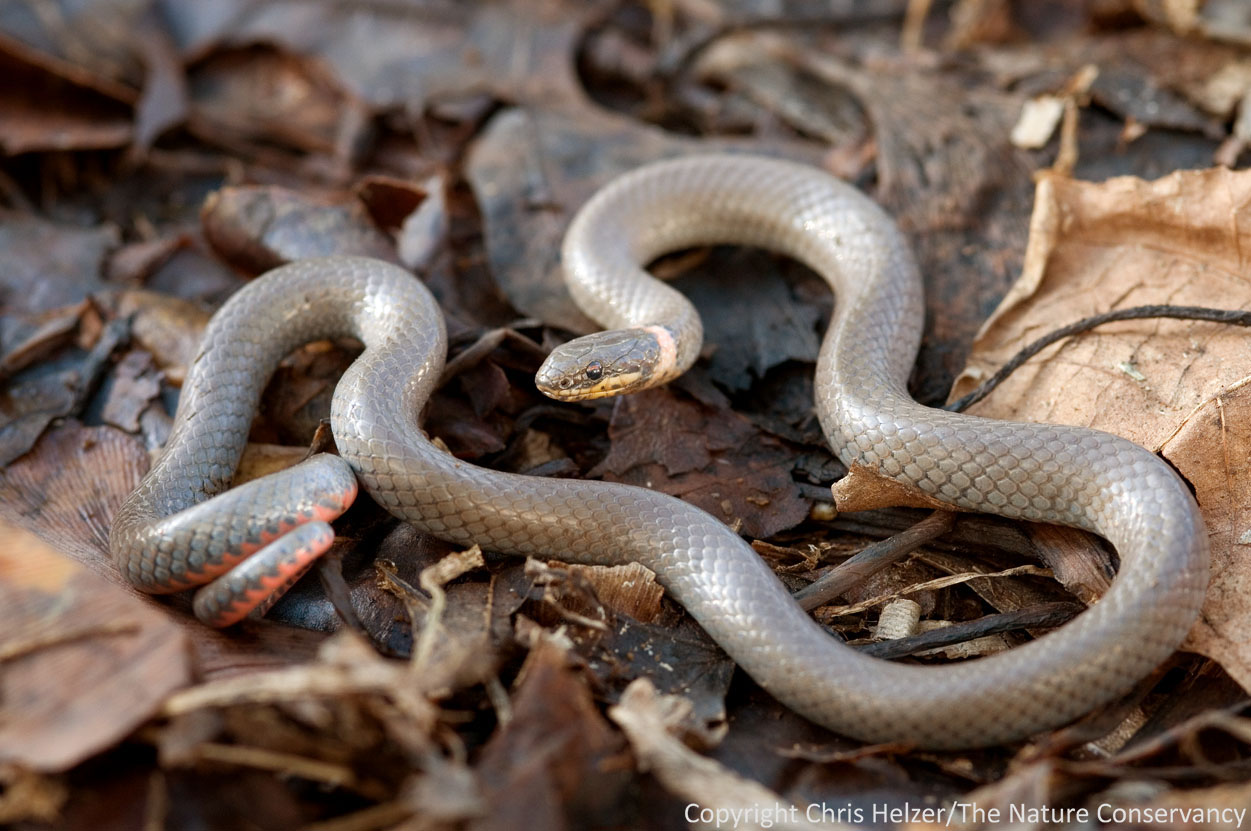
I found this ring-necked snake underneath a small eastern redcedar tree I was cutting down.  My kids got to see it too, which was a nice bonus.

I found this ring-necked snake underneath a small eastern redcedar tree I was cutting down. My kids got to see it too, which was a nice bonus.

.
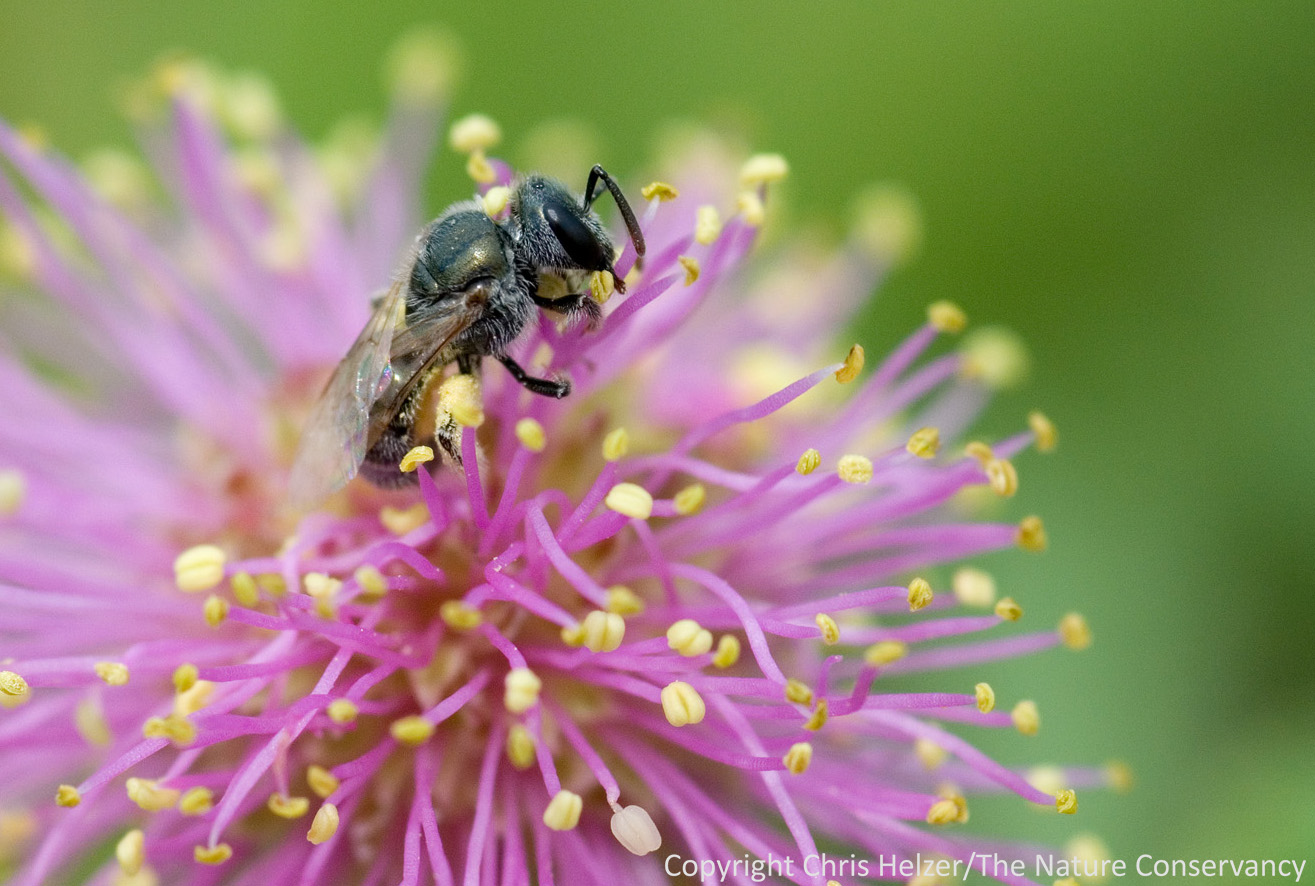
I'm not collecting data on bees at my own prairie, but I definitely pay attention to both the abundance and diversity I see each time I visit, and I take note of whether or not there are always nectar plants blooming across the prairie.

I’m not collecting data on bees at my own prairie, but I definitely pay attention to both the abundance and diversity I see each time I visit, and I take note of whether or not there is a consistent supply of nectar plants blooming across the prairie.

While I think my little prairie has fairly substantial ecological value, for all its shortcomings, I don’t measure it’s worth purely in conservation terms.  I feel very fortunate to be able to carry on the ownership and stewardship of a piece of land my grandfather bought.  Taking my kids out to their own prairie gives them, I hope, an enhanced sense of connection with the land, and a conservation ethic.  I don’t care if they grow up to be prairie ecologists, but I do want them to have an awareness of and appreciation for the natural world.  I could take them hiking or camping on other prairies (and I do) but there’s something pretty special about having a place that’s our own.

My kids like to climb trees and make forts in the scattered pockets of trees around the property.  They also dig in the mud, chase grasshoppers, and do all kinds of other kid things.

My kids like to climb trees and make forts around the property. They also dig in the mud, chase grasshoppers, and do all kinds of other kid things.

.
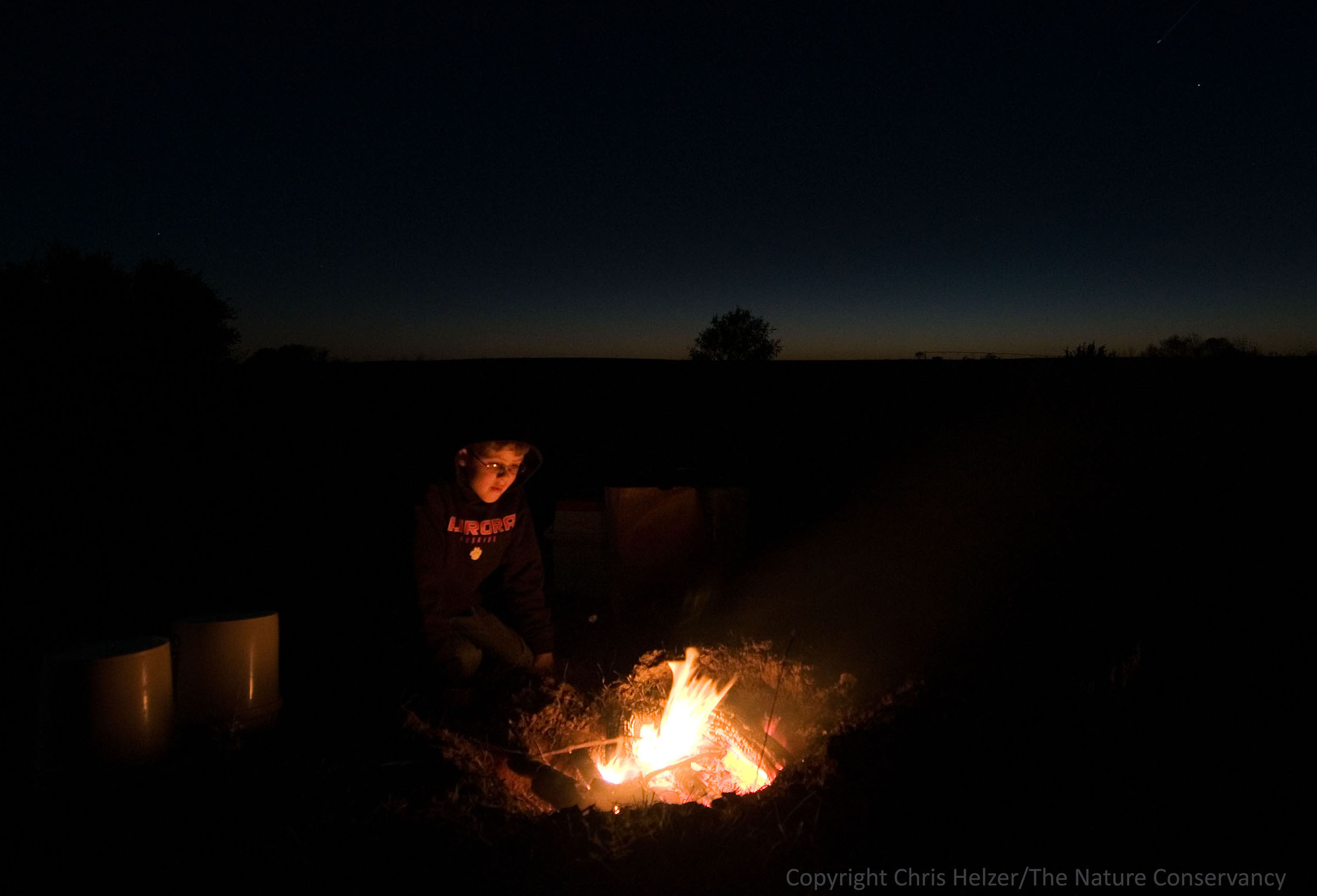
I hope that taking my kids camping at their own prairie will deepen their sense of connection with both their land and their family.

I hope that taking my kids camping at their own prairie will deepen their sense of connection with both their land and their family.
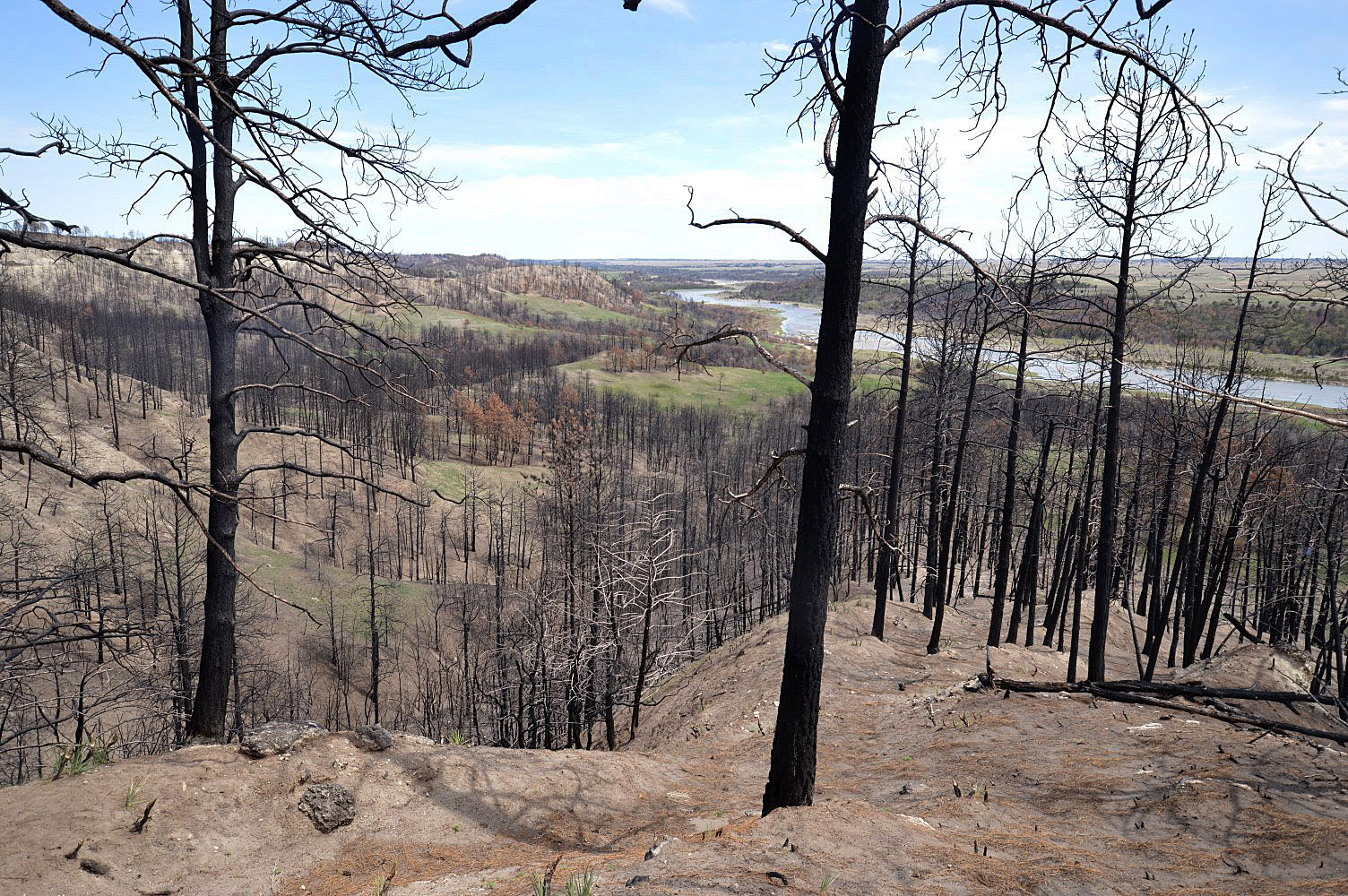
A Visual Update of Wildfire Recovery at the Niobrara Valley Preserve

Back in April, I wrote about our timelapse project at The Nature Conservancy’s Niobrara Valley Preserve.  Working with Moonshell Media, we’ve got nine cameras set up around the Preserve to document changes over time as the site recovers from a major 2012 wildfire.  We only have photos from April through early July so far, but even those are very compelling.  Eventually, we’ll put together videos that will show the entire timelapse story from each camera, but I wanted to share just a few examples of what we’re seeing so far.

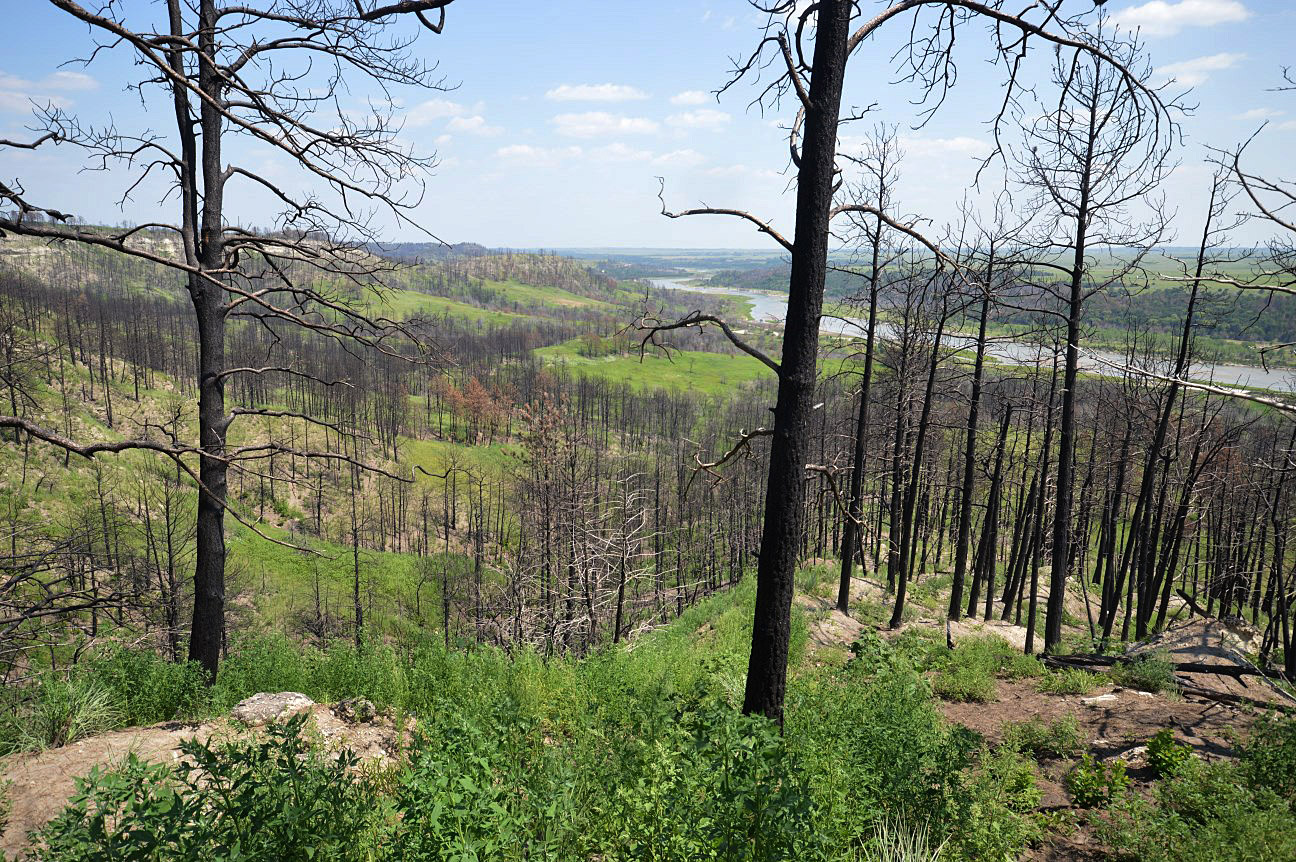
I’ve selected two images from each of three cameras to give you a taste for the kind of stories we’re getting from the cameras.  The first pair of images is from the north ridge of the Niobrara River where the wildfire wiped out our ponderosa pine woodland.  We set up a camera to capture a close-up view of a steep slope.  Overall, erosion is not as bad as I’d feared it might be, but there was some significant soil loss during the first several months of the 2013 growing season, especially on steeper slopes like this one.

Erosion

This photo was taken on April 28, 2013, shortly after the camera was installed.  In fact, you can see some of our footprints in the loose soil in front of the camera.  Note the location of the rocks in the image – particularly the tall one in the top left quarter of the photo.  The pine and eastern red cedar density had been high in this location prior to the wildfire, and few perennial plants were able to grow in the shade beneath them.  Because of that lack of established vegetation and the steepness of the slope, we expected to see significant erosion here.

.

erosion b

This image was taken on July 21, 2013.  Some of the rocks from the previous photo have washed downslope and out of the frame. Others have become much more exposed as soil has washed away from them.  Annual vegetation is starting to fill in the bare areas, but is still spotty, and very little – if any – perennial vegetation (grasses, forbs or shrubs) is evident.

We had some undergraduate students from the University of Nebraska-Lincoln collecting data on soil erosion and water runoff/quality this summer.  They are still analyzing data, but it’s clear that erosion was highly correlated with tree density, especially that of cedar trees.  Where the density of cedar trees was high before the fire, very little perennial vegetation grew beneath the trees, so those areas were the most prone to significant soil erosion after the fire.  The good news is that there is still sufficient soil to support vegetation growth, and there are numerous patches of perennial grasses and other plants nearby that can colonize these areas over time.

…..

The next pair of images shows a broad landscape view of recovery through the early part of the growing season.  Just as in the first pair of images, annual vegetation can be seen colonizing the bare slopes.  If you look carefully at the top right quarter of the photo you can see that the sandhills prairie and woodland along the south side of the river is greening up very well.  The woodland on that side of the river only burned intensively in a few places; for the most part, flames stayed low to the ground and didn’t impact the trees on the relatively cool, wet north-facing slopes.

Landscape

Looking downstream from the north ridge on May 24, 2013.  Some green can be seen in a few areas in the distance, mostly where tree density was low and native sedges and other grassland plants were coming back after the winter. Much of the rest of the landscape is pretty barren.

.

landscape 2

The same scene on July 3, 2013.  Annual vegetation has colonized much of the landscape, especially where topography was less steep and tree density had been lower prior to the fire.  The landscape looks lush and green in the distance, but much of that is made up of those short-lived colonizing plants, so there is a long recovery period ahead before perennials take their place.  The future of ponderosa pines on this ridge is pretty bleak for the next several decades.  A few pines survived at the very top of the ridge, but colonization from those and other locations will likely be very slow.  

Over the next decade or two, we hope to see grasses spread back across the slopes north of the river.  Those grasses will be important because they will allow us to use prescribed fire to control the eastern red cedar trees that will also be colonizing the same area.  If we don’t get sufficient grass growth, we’ll have to find other ways to control cedars, which could prove to be very difficult on those steep slopes.

….

The third pair of images comes from a camera mounted about 15 feet in the air above the sandhills prairie south of the river.  The camera is pointing straight down at an 8 foot by 10 foot patch of prairie that burned in the wildfire last year.  I am really looking forward to watching this little piece of grassland change over time – not just as it recovers from the wildfire, but also as it responds to future prescribed fires, bison grazing, and weather changes.  For now, these two images show how well the prairie plant community rebounded quickly between late April and early July, 2013.

green

This first photo was taken on April 26, 2013.  There was a little fall regrowth after the late July fire, but the ground was nearly bare through the long winter.

.

green2

This photo was taken a little more than two months later, on July 2, 2013.

The second of the two prairie images shows a wide diversity of plants growing vigorously within the 8×15 foot frame of the photo.  There are two grayish-colored plants of leadplant (Amorpha canescens) on the left and right edges of the photo, numerous purple coneflower (Echnicea angustifolia) blooming throughout the frame, and a few yellow coneflowers (Ratibida columnifera) as well.   The small silver-colored spikes throughout much of the image are wooly plantain (Plantago patagonica), an annual plant that is often abundant in sandy prairie after fire or grazing events.  The larger silver plants are white sage (Artemisia ludoviciana).  There are two species of sunflower in the photo as well, including stiff sunflower (Helianthus pauciflorus) and plains sunflower (Helianthus petiolaris), though neither was yet blooming by July 2.  I’m not sure what the blueish green grass in the photo is, but my best guess is switchgrass (Panicum virgatum), which is joined by several other grass species I can’t yet identify from the photo.

It should be fun to watch plants move in, out, and around the frame over the coming years.  Some, such as leadplant, should stay relatively stationary through time, but others -especially plants such as stiff sunflower and white sage, which can reproduce through long rhizomes – should move around quite a bit.  After the area has not been burned or grazed for a year or two, grasses will begin to dominate the frame and most of the shorter-lived plants will decrease in abundance.  However, when we burn the site again, bison will graze the area pretty intensively, knocking the vigor of perennial grasses back, and allow opportunistic plants such as annual sunflower and wooly plantain to rise up once more.  It’s one thing to track that kind of community change with data, but it will be much more interesting to see it visually.

There will be much more to come from these cameras!  While it’s useful to see paired images that show how things look differently a few months apart, videos of numerous images showing incremental change over long periods will be much better.  Those will be put together when we have more images and time to assemble the videos.  Stay tuned!