Grassland Restoration Network – Minnesota Style

I am writing this from Moorhead, Minnesota, where our crew is attending the annual Grassland Restoration Network workshop.  This year’s workshop is being hosted by The Nature Conservancy’s Bluestem Prairie office and others working on prairie restoration in northwestern Minnesota.  We spent most of the first day touring Bluestem Prairie, roughly 6,000 acres owned and managed by the Conservancy.  There are some gorgeous prairies here, and they have been doing a lot of restoration work to convert cropland back to prairie in and amongst the remnant prairies.  Much of that restoration has been accomplished through contracts with Prairie Restorations Inc. (PRI), a private company that has been doing prairie restoration since the 1970’s.  Yesterday evening, we toured the local facilities of PRI and saw their impressive array of equipment and seed production plots.

Leadplant and wildflowers.  TNC Bluestem Prairie, Minnesota.

Sunrise light at The Nature Conservancy’s Bluestem Prairie near Glyndon, Minnesota.

I’ll write more in the next week or two about what we’re learning here, but for today I’ll just mention one big theme that continues to dominate much of the discussion at these workshops: It’s not the seed harvest or planting that limits our capacity to do good restoration work, it’s the management of invasives after planting.   As we’ve visited site after site over the years, that topic has remained at the top of everyone’s concerns.

There are basically two ways the issue manifests itself.  First, we tend to rush the restoration process and not prepare the site in a way that will help prevent future weed issues.  The worst issues usually occur when we are trying to eliminate existing vegetation other than annual crops.  Too often, we don’t spend enough time eliminating the grasses or other invasives – and their seed bank – before planting our prairie vegetation.  As a result, new plantings have an abundance of weeds that are difficult to control, especially because they’re now mixed in with the new plants we are trying to establish.  Investing in several years of herbicide, disking, fire, and/or other combinations of treatments before planting can help eliminate most of the pre-existing vegetation and greatly improve the quality of new restoration sites.

Grassland Restoration Network tour.  TNC Bluestem Prairie, Minnesota.

Surrounded by leadplant in a restored prairie, workshop participants listened to Brian Winter of The Nature Conservancy describe how the site was prepared and planted.

When converting cropland to prairie, many of weed issues have already been dealt with by years of cultivation and weed control, but there are still steps we can take to help deal with potential future invasive species problems.  The biggest of those is the elimination of as many invasive species populations around the borders of the restoration site as possible.  Investing in the removal of Siberian elm trees, smooth brome, or other nasty plants from field edges can make future weed control efforts much more manageable.

The second major way we get into trouble with invasive species in restoration efforts is that we plant more acres than we can manage weeds on.  This often happens because of funding – we get grant money to help pay for restoration work, but that funding usually comes with an aggressive timeline.  We commit ourselves to planting a lot of acres quickly and then later realize we’ve just created a massive amount of land that requires invasive species control – which our grant funding doesn’t cover.  In some cases we also get into trouble when we start feeling good about our ability to harvest large amounts of seed and figure we should plant as many acres as we can.  …and then the weeds show up.

Not all restoration plantings have major invasive species issues, but it’s not always possible to know up front what species are going to be a problem.  If bird’s foot trefoil, Siberian elm, or Canada thistle do show up, the best strategy is to get them taken care of when the patches are still small and easy to eliminate.  If we’re just dealing with small restored sites, that’s usually feasible.  However, when we’re trying to deal with many acres of young restoration plantings and there are small patches of weeds throughout each of them, the problem can become quickly insurmountable.

Grassland Restoration Network tour.  TNC Bluestem Prairie, Minnesota.

One of the major management issues at Bluestem prairie is shrub encroachment – especially by willows.  They are experimenting with a combination of fire, mowing, and wick application of herbicides.  The biggest issue, however, is the number of acres that need treatment.  Even if a successful formula for control is developed, it still has to be applied across a very large area.

Invasive species will always be a problem for prairie managers, on both restored and remnant grasslands.  However, there are some steps we can take to make our job easier in restored prairies.  First, it’s important to take the time to prepare the site ahead of time by eliminating potential invasive problems before planting.  Second, regardless of the pressure to move quickly, we have to set the number of acres we restore each year based on our ability to deal with invasive species, not the amount of money or seed we have to do the work.

Ok, time to get back to the workshop.  I learned a lot yesterday and hope to learn even more today.  Most of all, it’s always inspiring to see how other people are tackling many of the same issues we’re dealing with at home.  Even if we can’t provide each other with answers to our thorniest problems, we can at least commiserate about them!

If You Were a Bee…

During the past two Mondays, I had the opportunity to help out with Prairie Plains Resource Institute’s Summer Orientation About Rivers (SOAR) program.  It’s the best summer day camp I’ve ever been involved with, and my kids, my wife, and I have all enjoyed being part of it over many years.  This year, I was tasked with talking to kids (about 8 kids at a time) about the value of biological diversity in ecosystems.

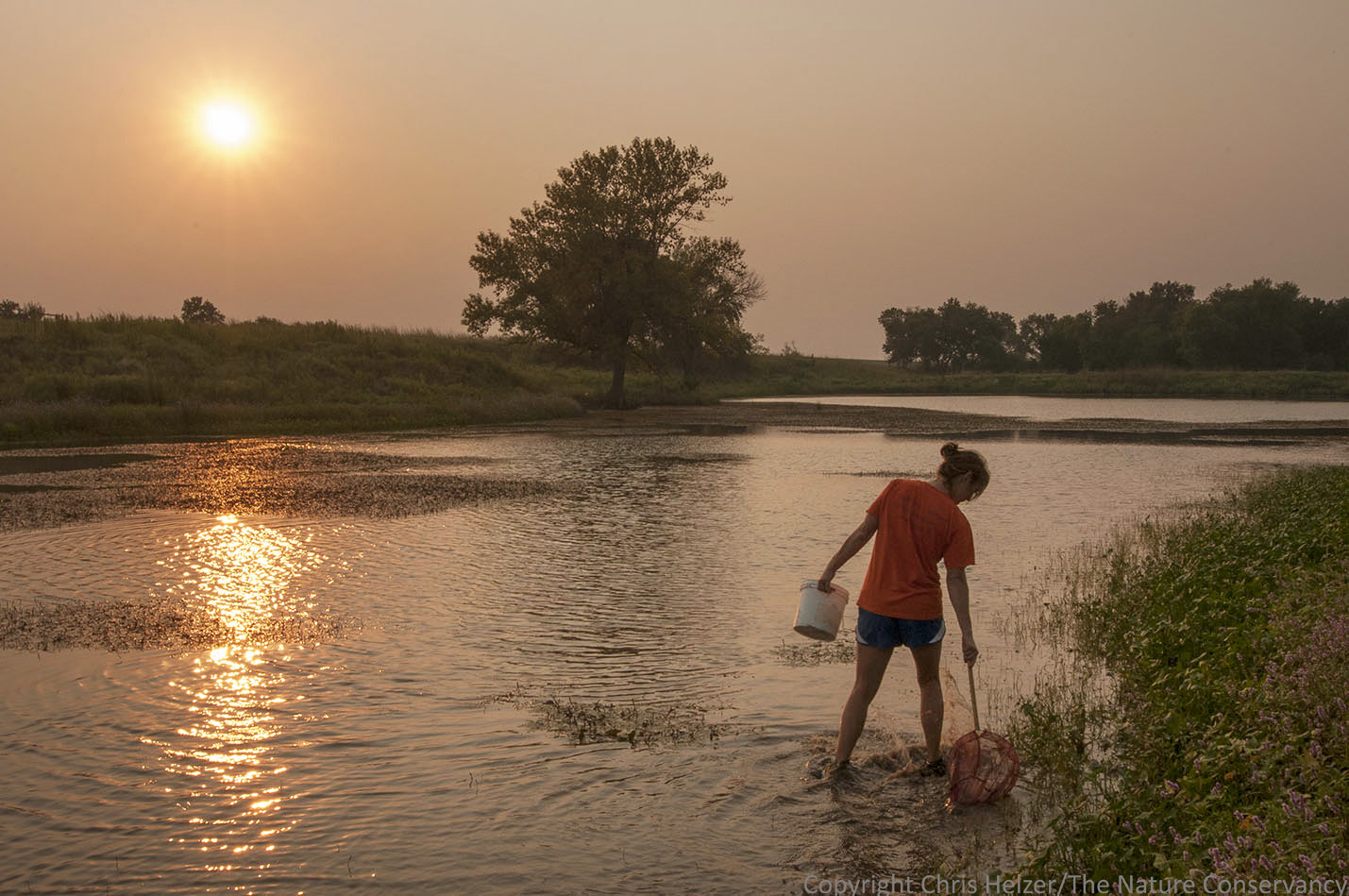
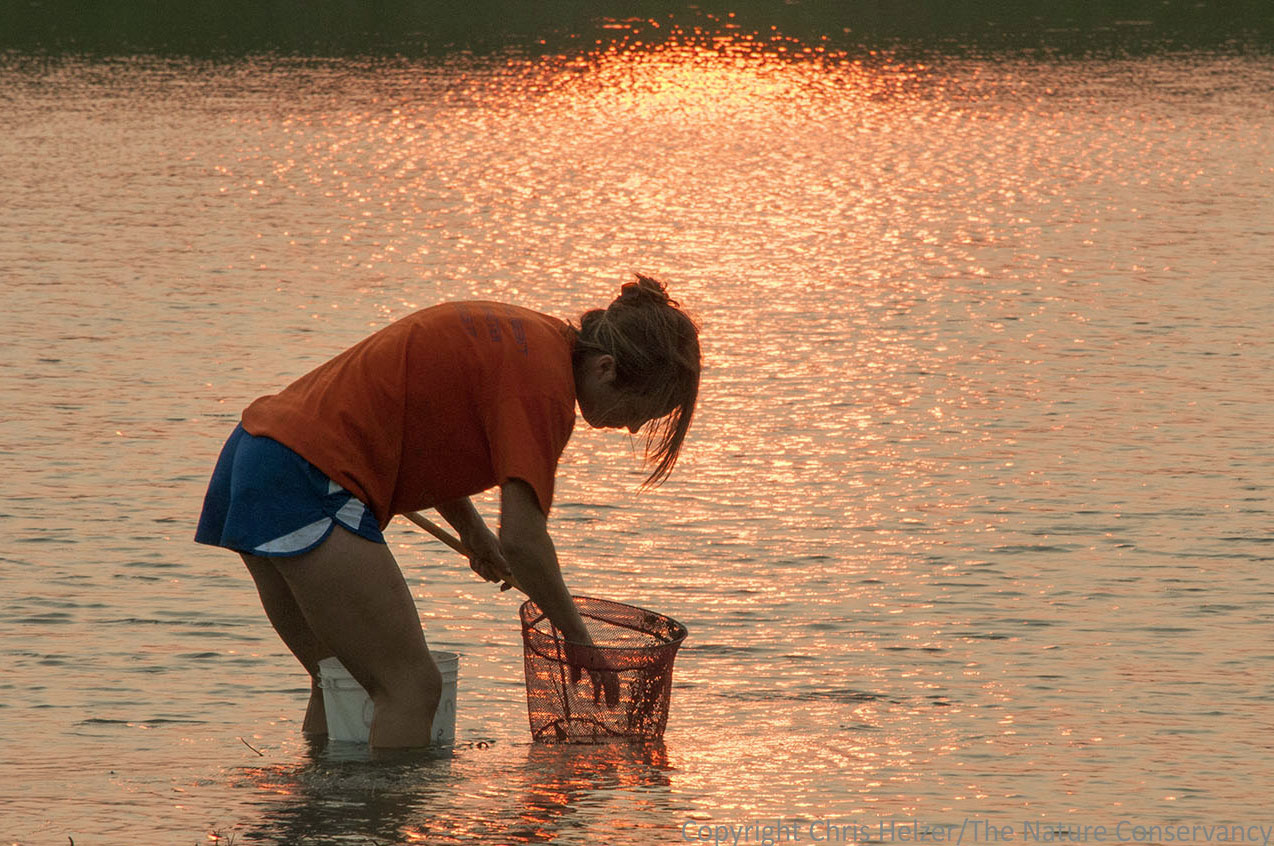
Dip netting for aquatic animals at SOAR 2010.  Daycamp for kids put on by Prairie Plains Resource Institute. Day 1 at Lake Mary, near Hordville, Nebraska.

Dip netting for aquatic animals at SOAR back in 2010.

I needed an activity that would keep the kids engaged for about 15 minutes and send them away with an appreciation of why prairies need to have so many species in order to function well.  With the help of my wife, I came up with a pretty good plan.  Then I refined it a little each time I presented it to a new group of kids.  It turned out well enough that I decided I’d share it here as well – I hope it helps you think about the same concepts I was trying to pass on to the kids.

I started off by talking about ordering food at a fast food restaurant.  When you walk in, you go up to the counter and order food from the cashier.  What happens if that cashier is sick that day?  Do you just go home hungry?  No, of course not – the restaurant has more than one person who can do that job, so someone else fills in and you still get to eat.  Well, the same kind of thing happens in nature.  Each organism in a prairie plays a certain role – it has a job to do – but if one species is unavailable (because of a disease outbreak, bad weather, etc.) other species can usually fill in and cover for it.

Next, I asked the kids for an example of a prairie species that plays an important role.  Most of the time, someone said “bees”, which was perfect.  If not, I provided that answer after discussing the ones they came up with.  We talked briefly about the importance of pollination, the number of bee species found in many prairies (often 50-100 species), and that most of those bee species are “solitary bees”, meaning a single female trying to build and care for a nest of eggs.  That female digs a tunnel in the ground (usually), lays an egg and then collects enough pollen and nectar to feed the larva until it becomes an adult.  She seals the egg and food into a cell and then starts another cell on top of it.

This

This tiny bee was visiting purple prairie clover outside our field headquarters yesterday.  Its nest must have been fairly close by because an insect that size can’t travel very far.

I then showed them a couple sweat bees, and we talked about how bees that small couldn’t fly very far from their nest.  Then I had them look at a circle of flags I’d put up around us (a circle with about a 50 meter radius) and told them that for some very small bees, a circle that size was basically their entire universe with their nest in the center.  Within that circle, a female bee would have to go out every day and find enough food to both stay alive and provision her eggs.

Next I split the kids into groups of two or three and handed them a little bag with a wildflower in it.  All of the flowers in the bags could be found within our circle of flags, but some were much more abundant than others.  I told the kids they were solitary bees and their job was to spend the next five minutes counting the number of flowers (blossoms, not plants) within the circle that matched the one in their bag.  Off they went!

After five minutes, I called them back in so we could talk about their search.  Some of the kids struggled to find any flowers that matched their sample, while others came back with counts of between 100 and 200 blossoms.  This led to a great discussion about the importance of plant diversity to bees.  If a bee relied on only one plant species and it wasn’t very common within the “universe” around its nest, it would probably starve – especially because it would be competing with other pollinators for the pollen and nectar from those few flowers.  Even if the bee’s flower species was really abundant, it might only bloom for a few weeks, so once it was gone, the bee wouldn’t have anything left to eat.  However, if the bee’s universe contained lots of flower species it could feed from, the bee was likely to find enough food for itself and its eggs throughout its entire life.

What would this prairie look like through the eyes of a tiny bee trying to find food for itself and its eggs?

What would this prairie look like through the eyes of a tiny bee trying to find food for itself and its eggs?

To wrap up, I reinforced the point that bees rely on having lots of choices of plant species to feed on.  If one plant species is unavailable, there are others that can provide the food the insects need.  At the same time, most flowers also do best when there are lots of pollinator species available to visit them.  In a prairie with a diverse community of bees, it’s less of a big deal when a few of those bee species are low in abundance because of weather or disease.  Other bee species can cover for them and flowers still get pollinated.

Finally, I said that while we’d been talking about bees and flowers, biological diversity was important in many other ways as well.  Many herbivores need lots of different kinds of plants so they can find high quality food all year round.  A wide range of available prey species is important to predators.  And so on.  When a prairie, or other ecosystem, loses too many species, it’s just like a restaurant losing too many employees.  At some point, there’s no one left to cover for someone who gets sick, and the system breaks down.

Two quick asides:

1. The fast food restaurant example I used with the kids was not my first idea.  I actually started talking about bank tellers, and asked the kids what would happen if the bank teller was sick when you went to get money out of your account.  However, my wife helpfully pointed out that most kids have probably never met a bank teller since so many people do their banking electronically or through ATM machines…

2. The circular “universe” around a solitary bee nest has been a really useful idea for me over the last several years.  While the size of that circle varies quite a bit by bee species, the concept has changed the way I evaluate our prairie restoration and management.  When I walk around our prairies, I often stop and think about what a solitary bee would experience if it were nesting there.  If you’re in charge of a prairie, I’d encourage you to try it sometime – maybe it’ll be helpful to you as well.